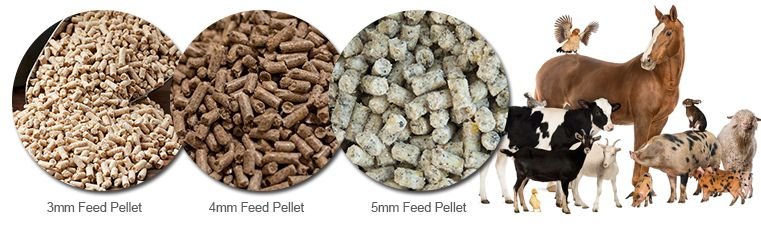
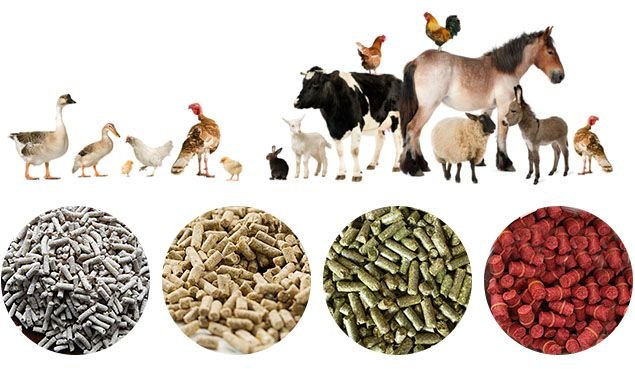
Livestock and poultry farming represents the backbone of Philippine agriculture. Every farmer faces the same challenge: producing high-quality, nutritious feed at competitive costs. The solution lies in investing in the right feed pellet production line that matches your specific requirements.
This comprehensive guide walks you through everything you need to know about selecting, purchasing, and operating a feed pellet production line in the Philippines. Whether you manage a small-scale poultry farm or operate a large commercial feed mill, understanding your options makes the difference between profitable operations and costly mistakes.
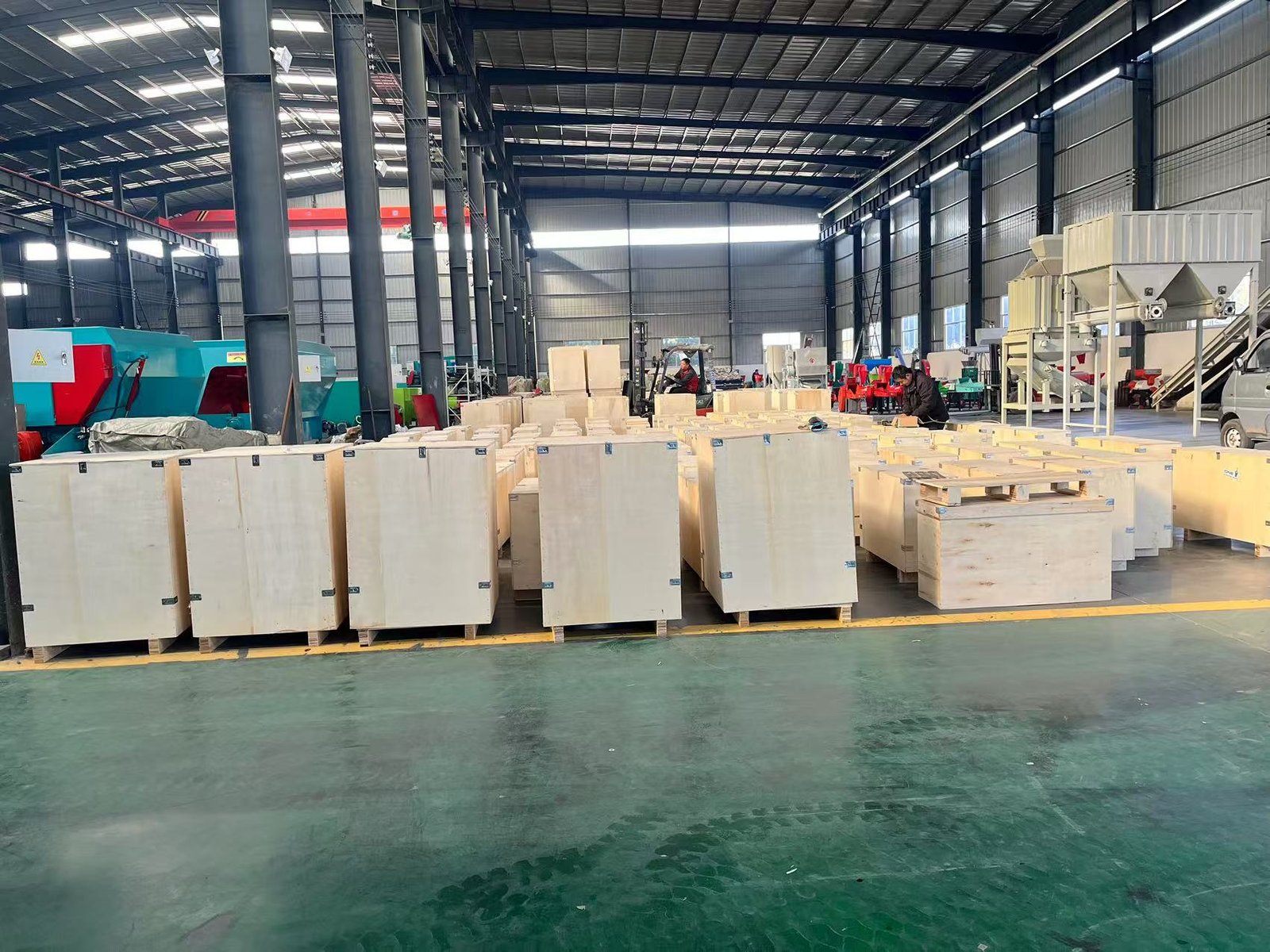
MAIKONG brings 22 years of manufacturing excellence to the Philippine market. Our production lines serve farms across Asia, the Americas, Europe, Africa, and the Middle East. We customize solutions from compact 200-kilogram units to massive 200-ton-per-hour industrial systems.
Get Your Custom Feed Production Solution Today
Connect with MAIKONG’s technical team to discuss your specific feed production requirements. We’ll design a solution that fits your capacity, budget, and livestock type.
Understanding Feed Pellet Production Line Systems
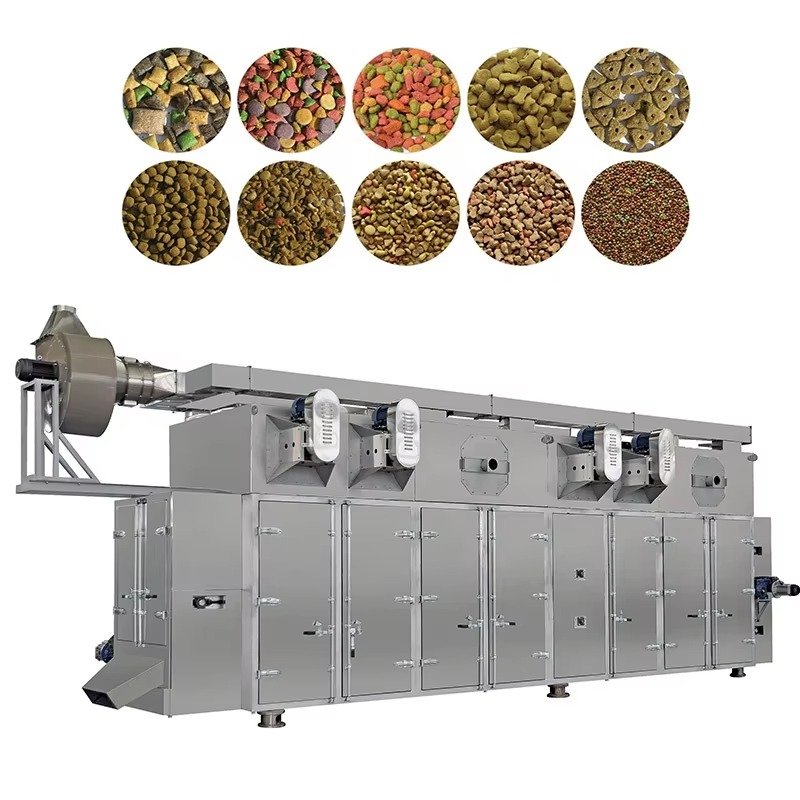
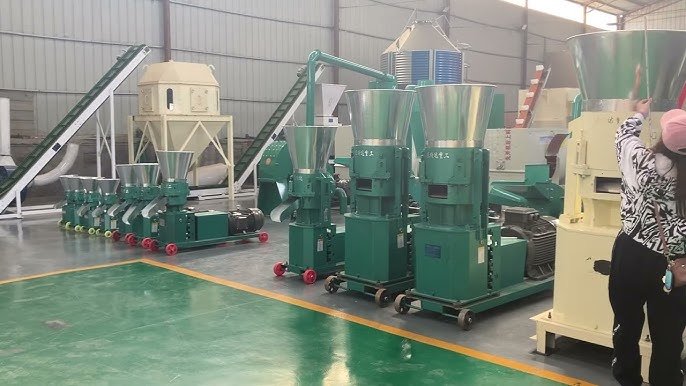
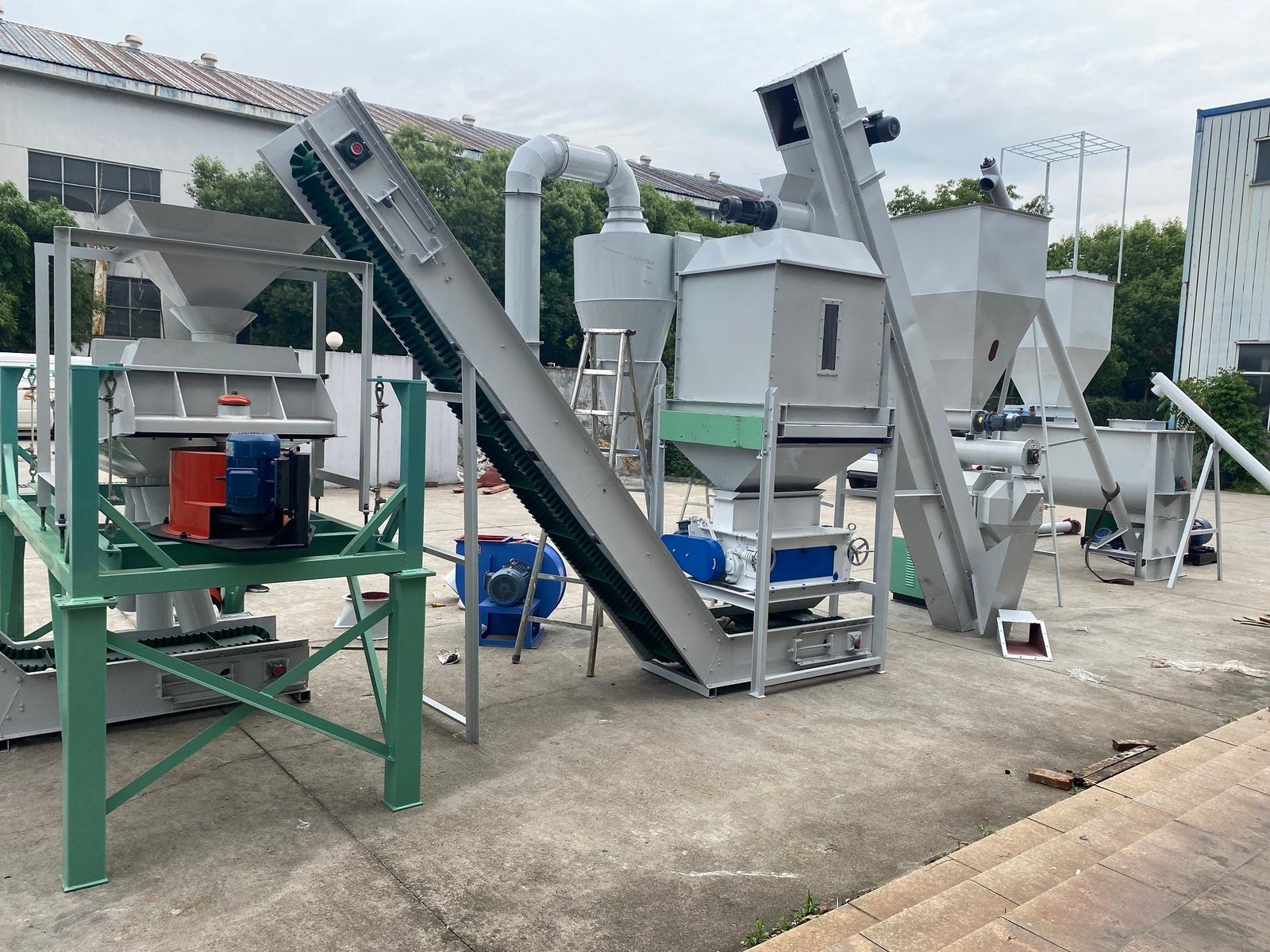
A complete feed pellet production line transforms raw agricultural materials into uniform, nutritious pellets that livestock digest efficiently. The system combines multiple pieces of equipment working in sequence to crush, mix, pelletize, cool, and package your feed products.
Core Components of a Feed Production Line
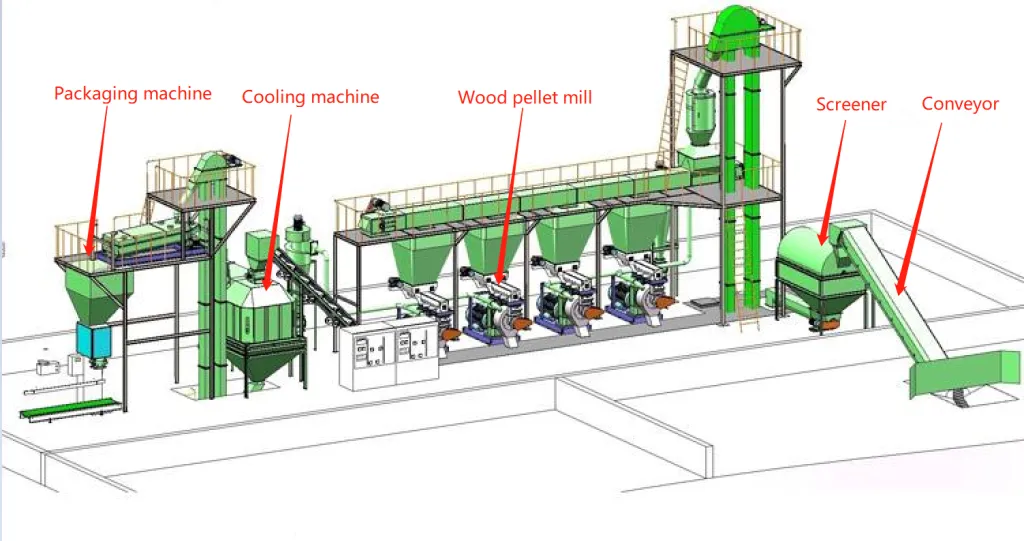
Every professional animal feed pellet system includes these essential machines:
- Raw material crusher for grinding corn, wheat, and other grains into consistent particle sizes
- Automatic batching system for precise ingredient measurement and mixing
- High-capacity mixer ensuring uniform distribution of nutrients and supplements
- Pelletizing machine compressing mixed materials into dense, durable pellets
- Cooling equipment reducing pellet temperature and moisture for storage stability
- Screening system separating properly sized pellets from fines and oversized pieces
- Packaging machinery weighing and bagging finished products for distribution
- Conveying systems transporting materials between processing stages
How Feed Pellet Production Technology Works
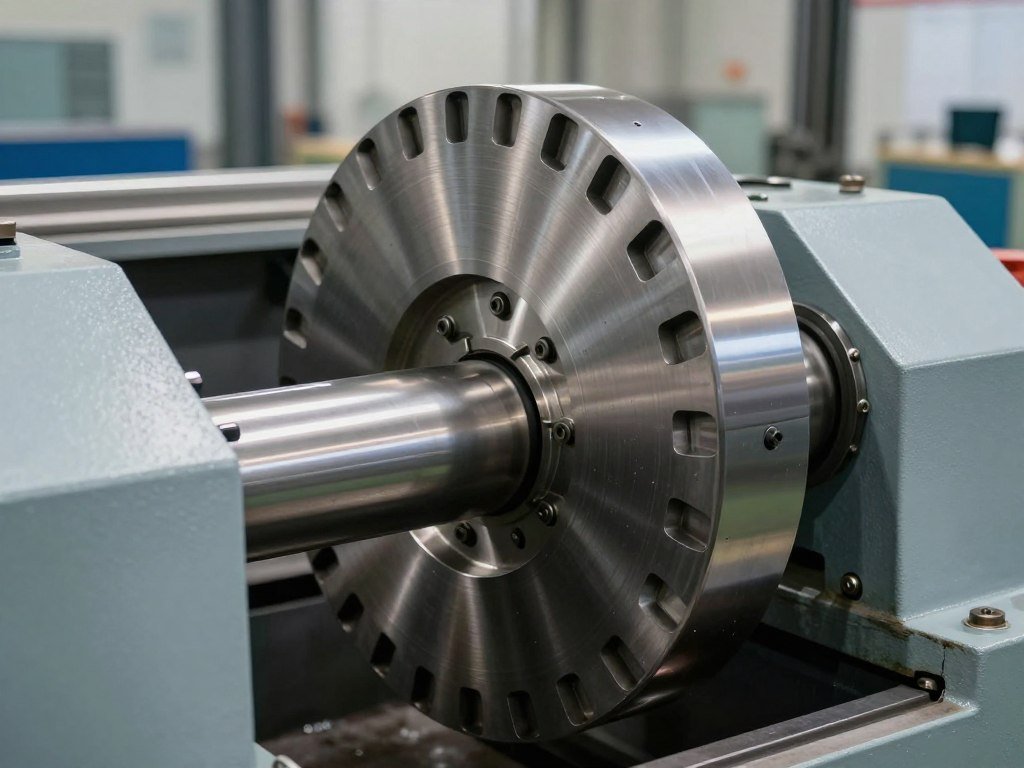
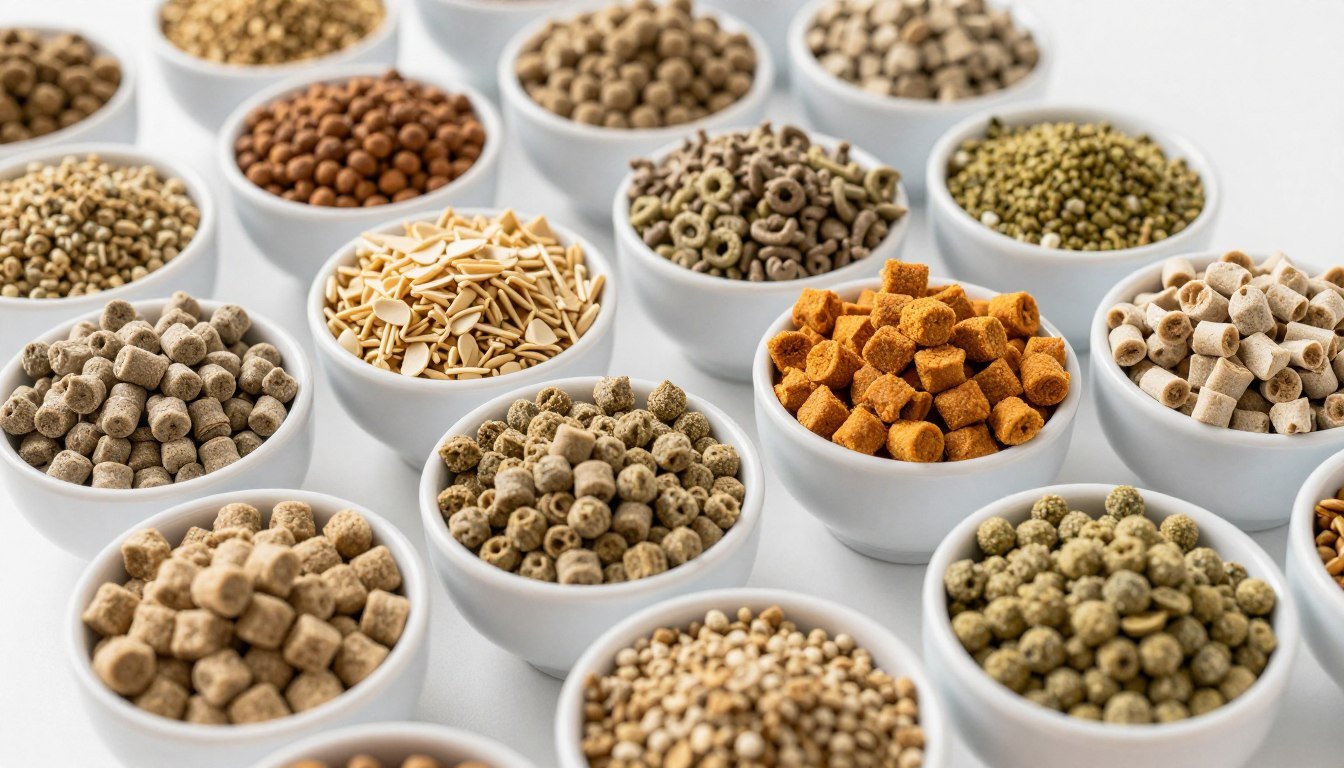
The pelletizing process applies heat, moisture, and mechanical pressure to transform powdered ingredients into compact cylindrical pellets. Raw materials enter the pellet mill where rotating rollers force the mixture through precision-drilled dies. This compression generates heat through friction, partially cooking the starches and creating natural binding.
Temperature during pelletization typically reaches 75-85 degrees Celsius for poultry feed and 65-75 degrees for aquatic feed. The heat treatment improves digestibility, reduces harmful bacteria, and extends shelf life. Modern pellet production line systems maintain precise temperature control throughout the process.
Traditional Feed Mixing
- Uneven nutrient distribution
- Ingredient separation during handling
- Dust generation and waste
- Lower feed conversion ratios
- Shorter storage capability
Feed Pellet Technology
- Uniform nutrient density in every pellet
- Stable pellet structure prevents separation
- Minimal dust and material loss
- Improved feed efficiency by 8-15%
- Extended storage up to 6 months
MAIKONG MK-L003 Feed Pellet Production Line Complete Specifications
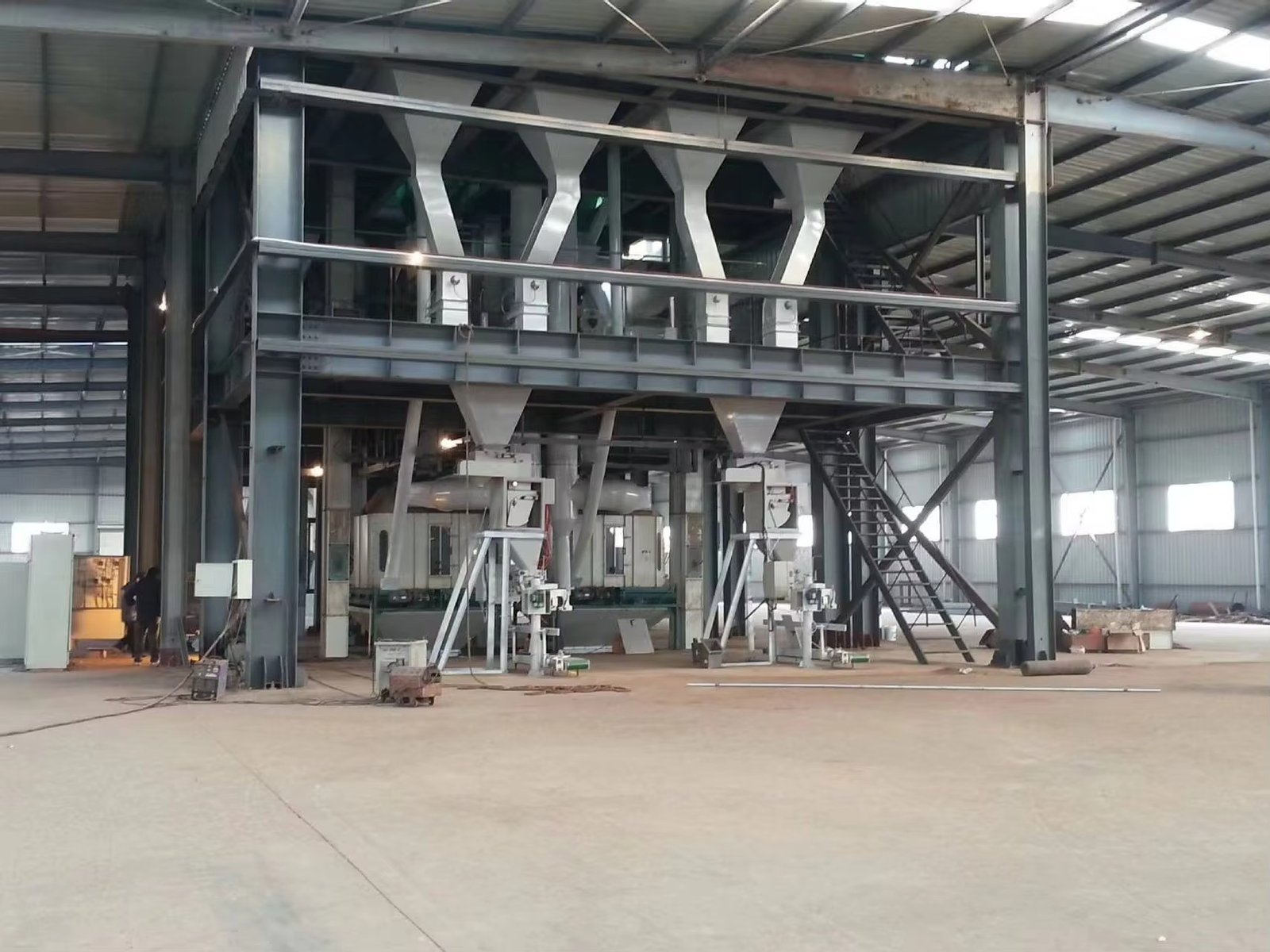
The MAIKONG MK-L003 represents our most versatile mid-capacity feed production line model, engineered specifically for Philippine agricultural conditions. This system balances production volume, energy efficiency, and operational flexibility.
Technical Specifications Table
| Specification | MK-L003 Details | Performance Metrics |
| Model Number | MK-L003 | Standard Configuration |
| Production Capacity | 1-3 tons per hour | Adjustable based on material |
| Main Material | ABS housing, stainless steel contact parts | Corrosion-resistant |
| Overall Dimensions | 12m (L) × 4m (W) × 3.5m (H) | Compact footprint design |
| Total Weight | 4,800 kg | Includes all components |
| Power Requirements | 380V/220V, 50/60Hz, 3-phase | Customizable for local standards |
| Total Power Consumption | 85-95 kW | Energy-efficient motors |
| Pellet Size Range | 2mm – 12mm diameter | Interchangeable dies available |
| Pellet Length | 5mm – 25mm adjustable | Precise cutter control |
| Moisture Content Output | 10-12% | Optimal for storage |
| Available Colors | Industrial Gray, Custom Options | Powder-coated finish |
| Current Stock Status | Available for immediate order | 4-6 weeks delivery to Philippines |
| Base Price Range | Contact for current pricing | Volume discounts available |
| Warranty Coverage | 24 months parts and labor | Extended plans available |
| Operator Requirements | 2-3 trained personnel | Training included with purchase |
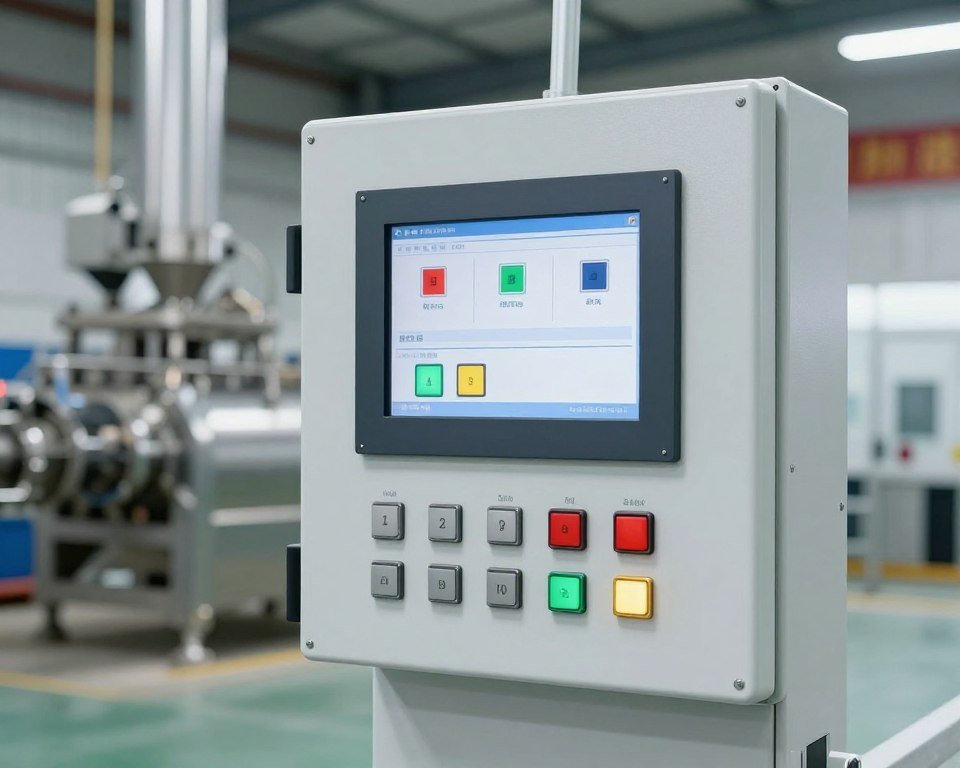
Component Breakdown and Individual Capacities
Crushing System
High-efficiency hammer mill processes 3-4 tons per hour of raw grains. Variable screen sizes control final particle dimensions from 1mm to 5mm. Dust collection system maintains clean working environment.
- Motor power: 22 kW
- Rotor speed: 2,800 rpm
- Screen options: 1-5mm
Mixing Equipment
Double-shaft paddle mixer ensures 95% homogeneity in 3-5 minutes. Stainless steel construction prevents contamination. Liquid addition system for oils and molasses included.
- Batch size: 500-800 kg
- Motor power: 11 kW
- Mixing time: 3-5 minutes
Pelletizing Unit
Ring die pellet mill with variable frequency drive controls production speed. Automatic lubrication system extends die life. Quick-change die design minimizes downtime during product changes.
- Motor power: 37 kW
- Die diameter: 350mm
- Capacity: 1-3 T/H
Cooling System
Counterflow cooler reduces pellet temperature to ambient plus 3-5 degrees Celsius. Uniform air distribution ensures consistent cooling. Automatic discharge prevents blockages.
- Cooling capacity: 3-4 T/H
- Cooling time: 8-12 minutes
- Temperature reduction: 60°C
Packing Machine
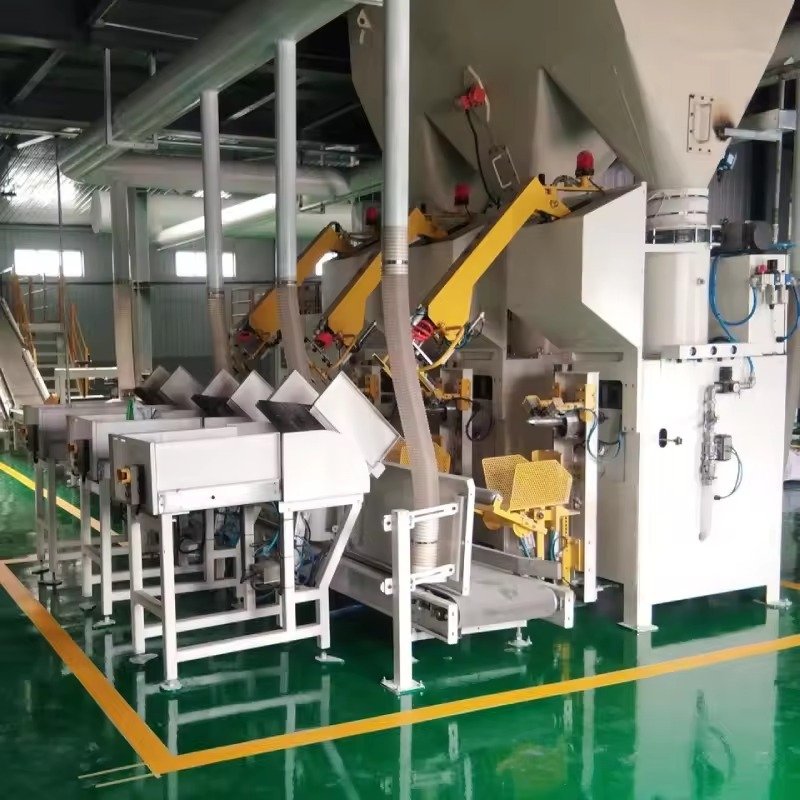
Automatic weighing and bagging system handles 25kg and 50kg bags. Digital scale ensures accuracy within ±0.2%. Heat sealing provides secure packaging for transport and storage.
- Packing speed: 6-8 bags/min
- Accuracy: ±0.2%
- Bag sizes: 25-50 kg
Conveying Systems
Bucket elevators and screw conveyors move materials between processing stages. Enclosed design prevents contamination and material loss. Variable speed drives optimize flow rates.
- Elevation capacity: 5 T/H
- Horizontal capacity: 8 T/H
- Total power: 8.5 kW
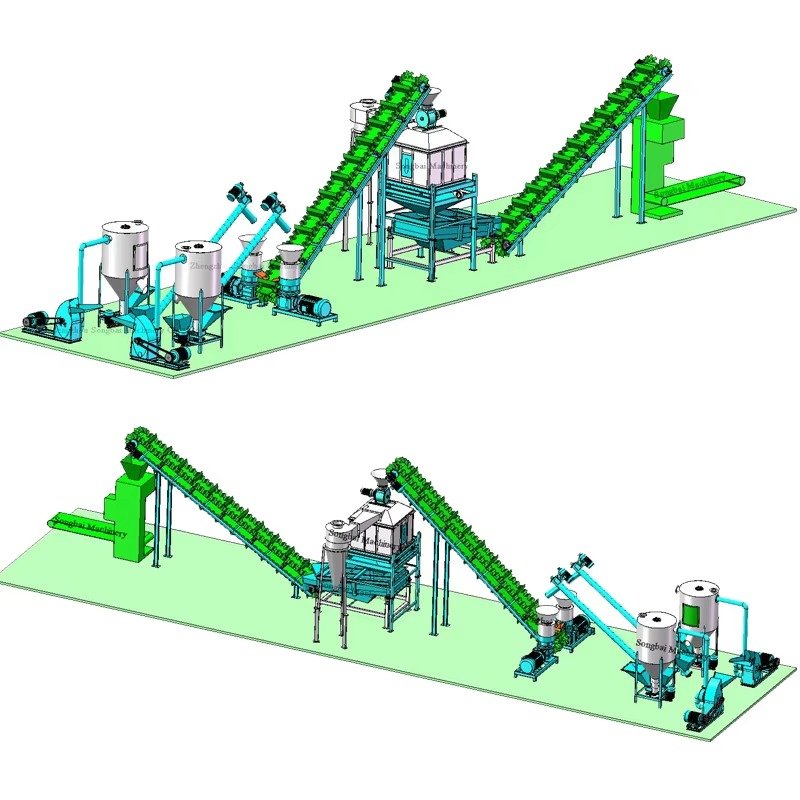
Request Detailed Quotation for MK-L003 System
Get comprehensive pricing including equipment, shipping to Philippines, installation support, and training. Our team provides detailed ROI calculations based on your production requirements.
Customization Options and Production Capacity Range
MAIKONG manufactures feed pellet production line systems across the complete capacity spectrum. Our engineering team designs solutions matching your exact throughput requirements, available floor space, and budget constraints.
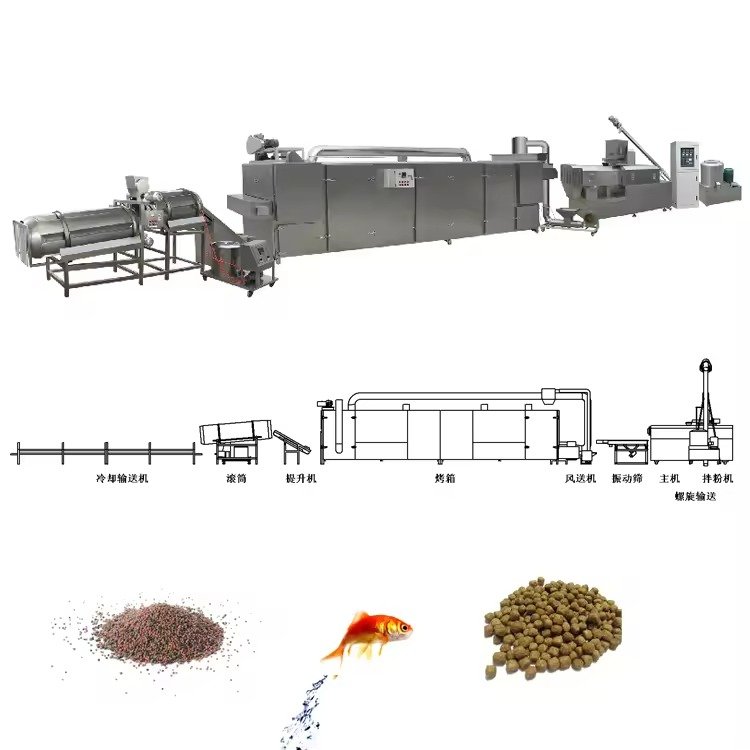
Complete Capacity Range Overview
| Capacity Category | Output Range | Typical Applications | Recommended Models |
| Small-Scale | 200-500 kg/hour | Family farms, small poultry operations, aquaculture startups | MK-L001, MK-L002 |
| Medium-Scale | 1-5 tons/hour | Commercial farms, cooperative feed mills, regional distributors | MK-L003, MK-L004, MK-L005 |
| Large-Scale | 5-15 tons/hour | Large commercial feed plants, livestock integrators | MK-L006, MK-L007 |
| Industrial-Scale | 15-200 tons/hour | Major feed manufacturers, export-oriented producers | MK-L008, MK-L009, Custom |
Feed Type Customization Options
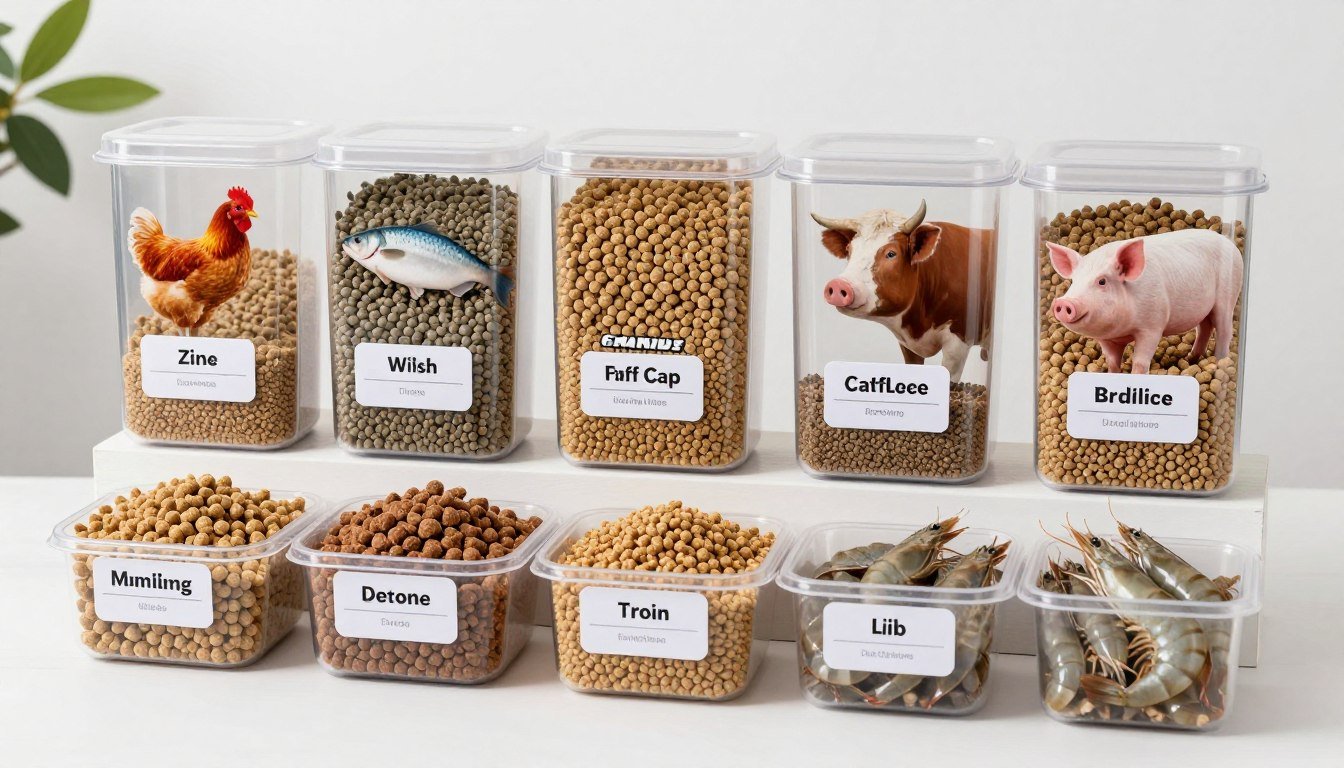
Every livestock category requires specific pellet characteristics. MAIKONG configures your animal feed production system with appropriate dies, formulation equipment, and processing parameters for your target species.
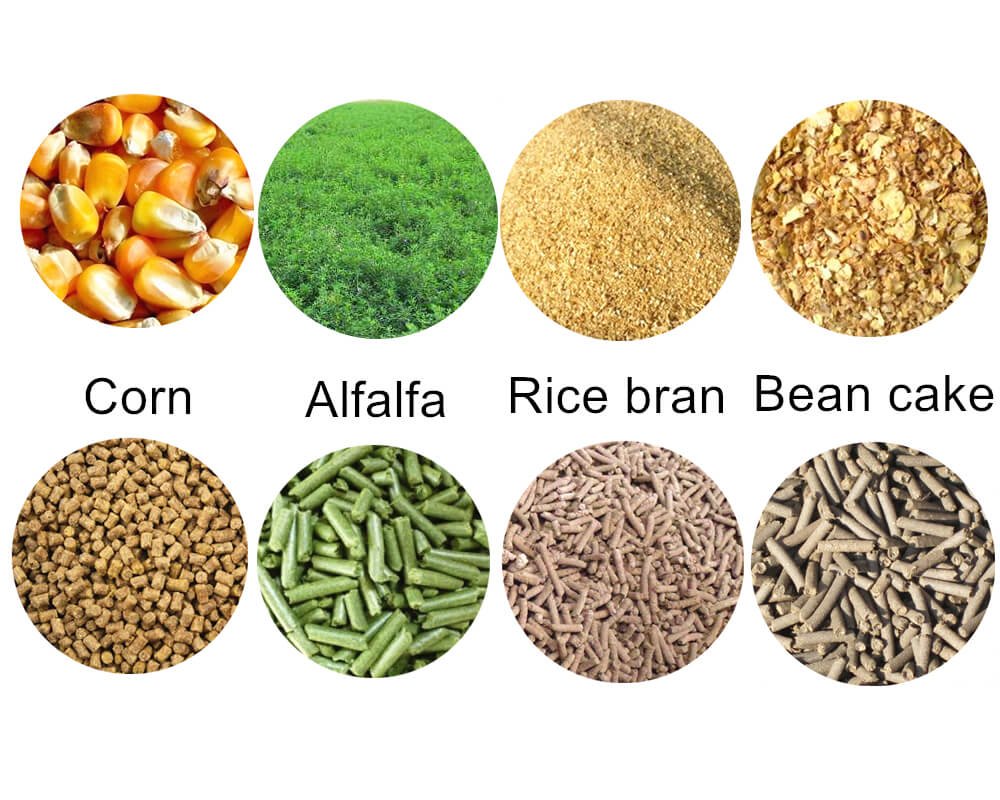
Poultry Feed Production Line
Specialized systems for broiler, layer, and duck feed manufacturing. Pellet diameters range from 2mm for chicks to 5mm for mature birds. High-temperature conditioning improves starch gelatinization and reduces salmonella risk.
- Crumble production for young birds
- Uniform pellet density ensures consistent nutrition
- Minimal fines reduce waste during feeding
- Cooling system prevents vitamin degradation
Fish Feed Production Line
Aquatic feed requires water stability and controlled sinking rates. Our feed pellet line configurations include extended conditioning and specialized dies producing pellets that maintain integrity for 8-12 hours in water.
- Floating pellets for surface feeders
- Slow-sinking pellets for mid-water species
- Fast-sinking pellets for bottom feeders
- Oil coating system enhances palatability
Cattle Feed Pellet Production Line
Ruminant feed systems handle fibrous materials like alfalfa and grass meal. Larger die holes produce 8-12mm pellets suitable for cattle and buffalo. Lower compression ratios preserve fiber structure essential for rumen function.
- High-fiber formula processing capability
- Molasses addition system for palatability
- Gentle processing preserves nutritional value
- Durable pellets withstand handling and transport
Pig Feed Production Line
Swine nutrition demands vary significantly across growth stages. Production lines include precision batching for separate starter, grower, and finisher formulations. Pellet sizes range from 3mm for piglets to 6mm for market hogs.
- Multi-phase production capability
- Amino acid and vitamin protection during processing
- Consistent pellet quality reduces feed waste
- Automated formula switching minimizes downtime
Shrimp Feed Production Line
Crustacean feed represents the most technically demanding application. Twin-screw extruders create highly water-stable pellets with controlled expansion. Specialized cooling and drying equipment prevents pellet degradation.
- Extended water stability exceeding 12 hours
- Precise nutrient distribution throughout pellet
- Attractant incorporation system
- Size range from 0.5mm to 5mm diameter
Pet Food Production Line
Companion animal nutrition emphasizes palatability and digestibility. Systems include flavor coating equipment and specialized packaging for retail presentation. Quality control ensures consistent appearance and nutritional content.
- Multiple shape and size options
- Low-temperature processing preserves vitamins
- Coating drum for flavor enhancement
- Small-batch flexibility for specialty formulas
Voltage and Electrical Customization
Philippine electrical standards vary between locations and facility types. MAIKONG configures all feed production lines to match your specific power supply characteristics.
Standard Philippine Grid
- Voltage: 380V, 3-phase
- Frequency: 60 Hz
- Connection: 4-wire system
- Protection: IP54 rated panels
Generator-Powered Systems
- Voltage stabilization included
- Soft-start motors reduce peak load
- Power factor correction equipment
- Automatic voltage regulation
Renewable Energy Integration
- Solar panel compatibility
- Battery backup options
- Hybrid grid-solar configuration
- Energy monitoring systems
Consult Our Engineers for Custom Configuration
Share your specific requirements for livestock type, production volume, and facility constraints. MAIKONG’s technical team designs optimized solutions with detailed equipment specifications and layout plans.
Feed Pellet Production Process and Workflow Management
Understanding the complete production workflow helps optimize your feed pellet plant operations. Each processing stage contributes specific value to the final product quality and production efficiency.
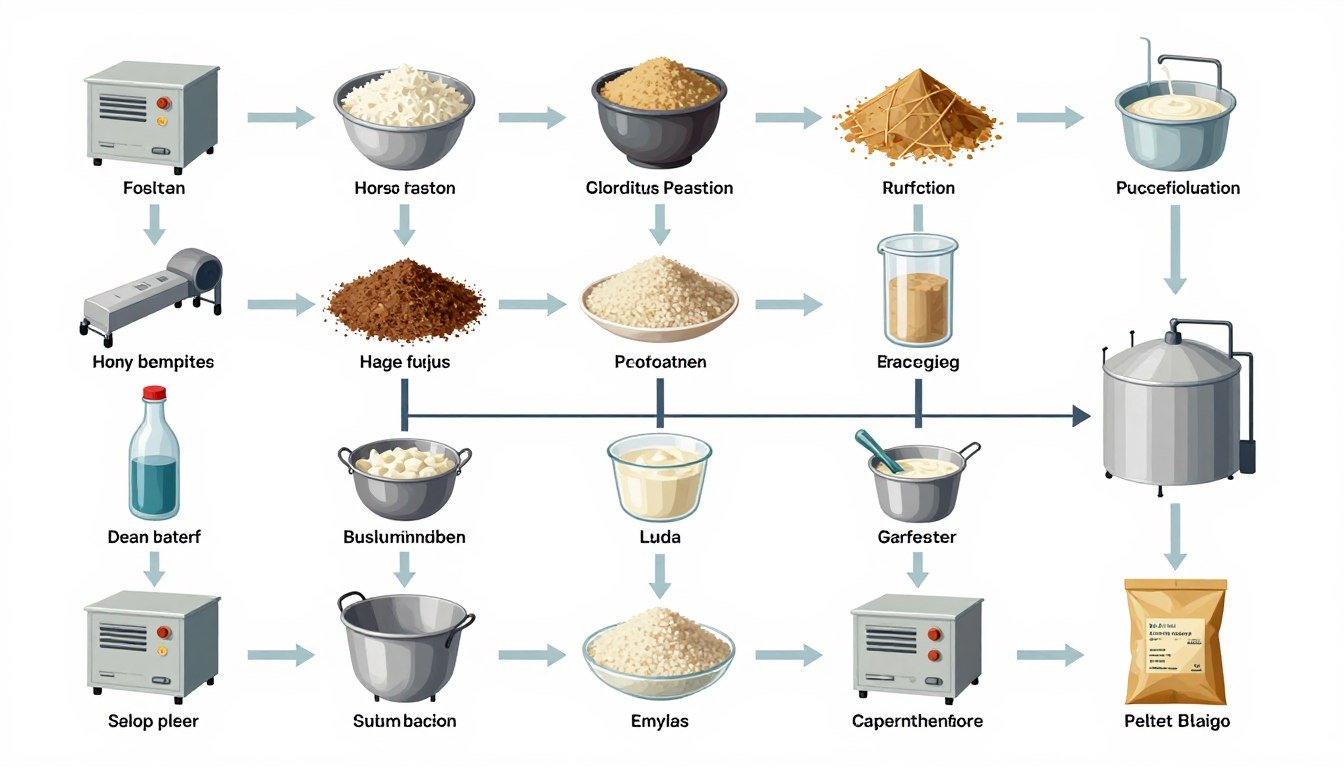
Stage-by-Stage Production Process
Raw Material Reception and Storage
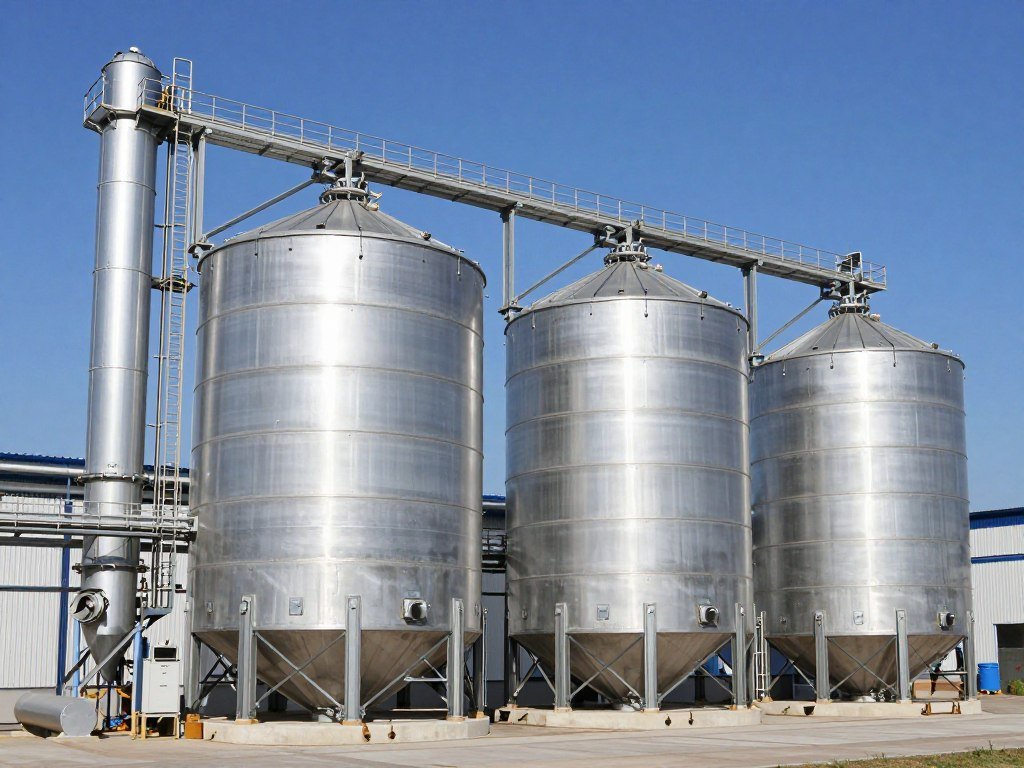
Production begins with proper material handling. Bulk ingredients like corn, soybean meal, rice bran, and wheat arrive via truck delivery. Reception equipment includes weighing systems, quality inspection stations, and pneumatic or mechanical conveying to storage silos.
- Automated truck scales record incoming weights for inventory management
- Sample collection points enable quality testing before acceptance
- Dust collection systems maintain clean receiving areas
- Material distribution systems route ingredients to appropriate storage locations
- Steel silos protect ingredients from moisture, pests, and contamination
- Temperature monitoring prevents spoilage during extended storage
Cleaning and Screening Operations
Raw agricultural materials contain foreign objects including stones, metal fragments, plastic, and other debris. Cleaning equipment protects downstream machinery while ensuring product safety.
- Magnetic separators extract ferrous metal contamination
- Vibrating screens remove oversized particles and fiber
- Destoning equipment separates heavy materials by density
- Aspiration systems remove dust and lightweight chaff
Grinding and Size Reduction
Particle size directly affects pellet quality and animal feed digestibility. Hammer mills reduce whole grains to optimal dimensions based on livestock species and age.
Poultry feed requires finer grinding between 600-800 microns. Ruminant feed performs better with coarser particles from 1,000-2,000 microns. Swine feed specifications fall in the middle range around 800-1,200 microns. Screen selection in the hammer mill controls final particle distribution.
Batching and Formula Management
Precision weighing ensures nutritional consistency across production batches. Modern feed production systems use computer-controlled batching with accuracy exceeding 99.5%.
- Automated weighing hoppers for major ingredients (corn, soybean meal, wheat)
- Micro-ingredient dosing systems for vitamins, minerals, and medications
- Recipe management software stores hundreds of formulations
- Traceability systems document exact ingredients in each batch
- Sequential batching prevents cross-contamination between formulas
Mixing and Homogenization
Thorough mixing distributes nutrients uniformly throughout the batch. Double-shaft paddle mixers achieve 95% homogeneity within 3-5 minutes for most formulations.
Mixing time requirements vary by formula complexity. Simple grain-based feeds mix quickly while formulas containing multiple micro-ingredients need extended mixing. Liquid addition during mixing incorporates oils, molasses, and other liquids that improve palatability and reduce dust.
Conditioning and Steam Treatment
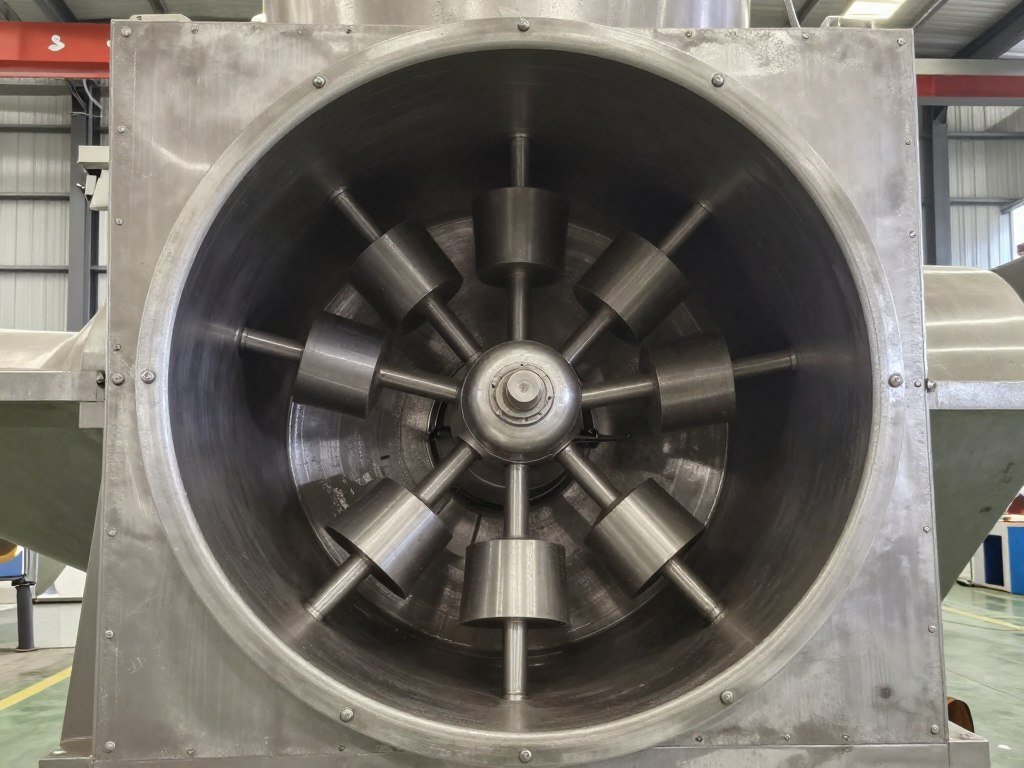
Steam conditioning precedes pelletizing in quality feed pellet production. This process adds moisture and heat, partially cooking starches and improving pellet binding.
- Steam injection raises material temperature to 75-85°C
- Moisture content increases from 12% to 15-16%
- Starch gelatinization improves binding and digestibility
- Pathogen reduction enhances feed safety
- Retention time typically ranges 30-60 seconds
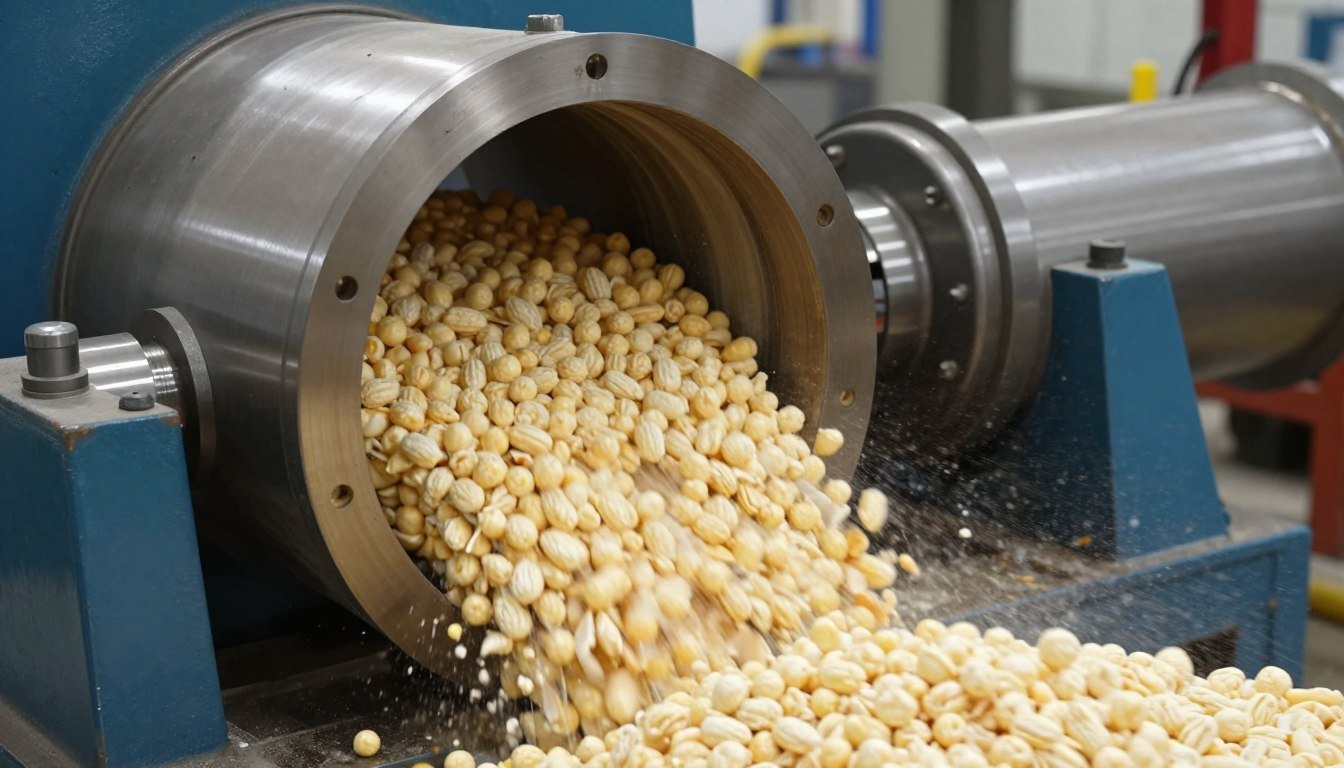
Pelletizing Operation
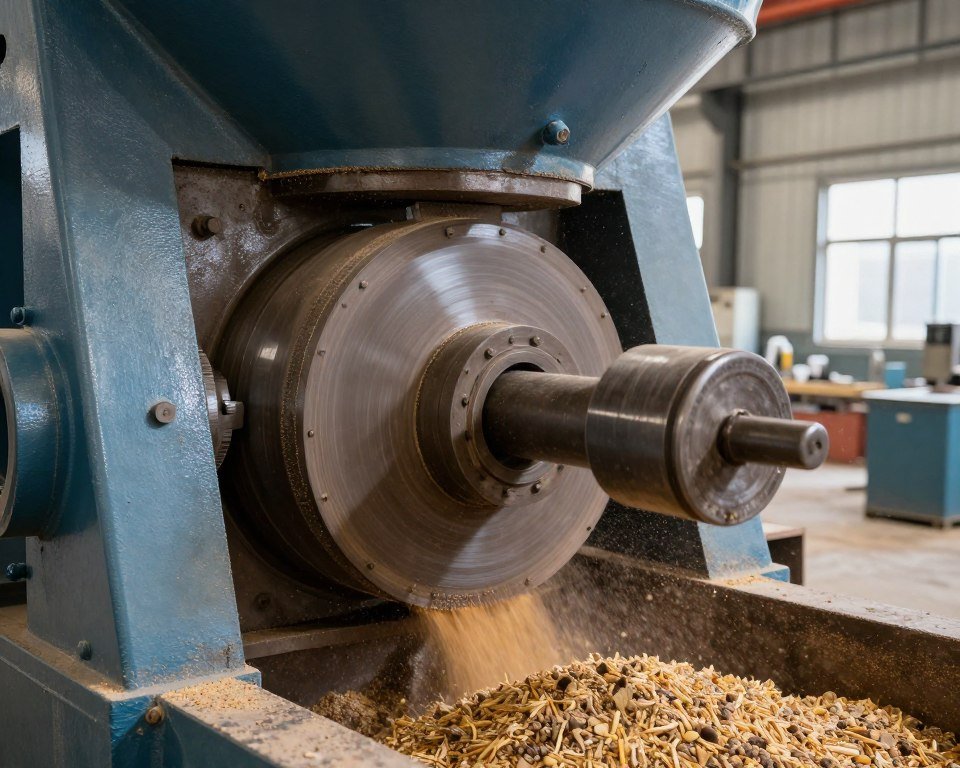
The pellet mill represents the heart of your pellet production system. Conditioned material enters the pellet chamber where rotating rollers compress it through precision-drilled die holes.
Die configuration determines pellet diameter and length. Smaller holes produce denser pellets with higher durability but require more power. Larger holes increase production capacity while reducing pellet hardness. MAIKONG provides multiple die options for each production line model.
Cooling and Drying
Fresh pellets exit the mill at 75-85°C with 15-16% moisture content. Immediate cooling prevents mold growth and bag condensation during storage. Counterflow coolers reduce temperature to ambient plus 3-5°C while lowering moisture to safe storage levels below 12.5%.
- Ambient air flows upward through descending pellets
- Cooling time ranges 8-12 minutes depending on pellet size
- Uniform air distribution ensures consistent cooling
- Automatic discharge prevents bridging and blockages
Screening and Quality Control
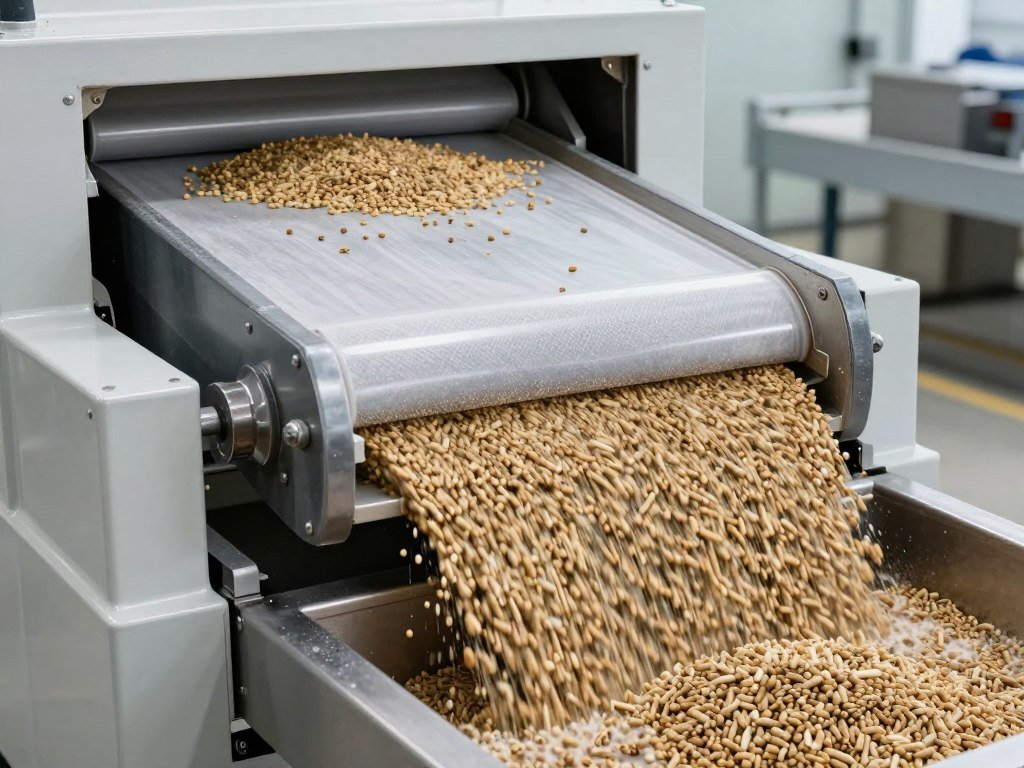
Screening separates properly sized pellets from fines and oversized pieces. Vibrating screens or rotary sifters classify pellets by length and diameter. Acceptable pellets proceed to packaging while fines return to the mixer for reprocessing.
Packaging and Finished Product Handling
Automatic bagging systems weigh and fill bags at rates exceeding 6 bags per minute. Heat sealing or stitching secures packages for distribution. Bag sizes typically include 25kg and 50kg options matching Philippine market preferences.
- Electronic scales ensure accurate fill weights
- Automatic bag placement reduces labor requirements
- Bag printing applies production dates and batch codes
- Palletizing equipment organizes bags for efficient warehousing
- Shrink wrapping protects palletized products during transport
Production Efficiency Optimization
Factors Increasing Efficiency
- Consistent raw material quality and moisture content
- Proper die conditioning and maintenance
- Optimal steam pressure and temperature
- Appropriate formula grinding specifications
- Regular equipment calibration and adjustment
- Trained operators following standard procedures
- Preventive maintenance scheduling
Common Efficiency Losses
- Excessive material moisture causing production slowdowns
- Worn dies reducing output and increasing power consumption
- Improper steam conditioning creating weak pellets
- Equipment breakdowns from deferred maintenance
- Formula changes requiring extended setup time
- Operator errors and inconsistent procedures
- Material handling bottlenecks between processing stages
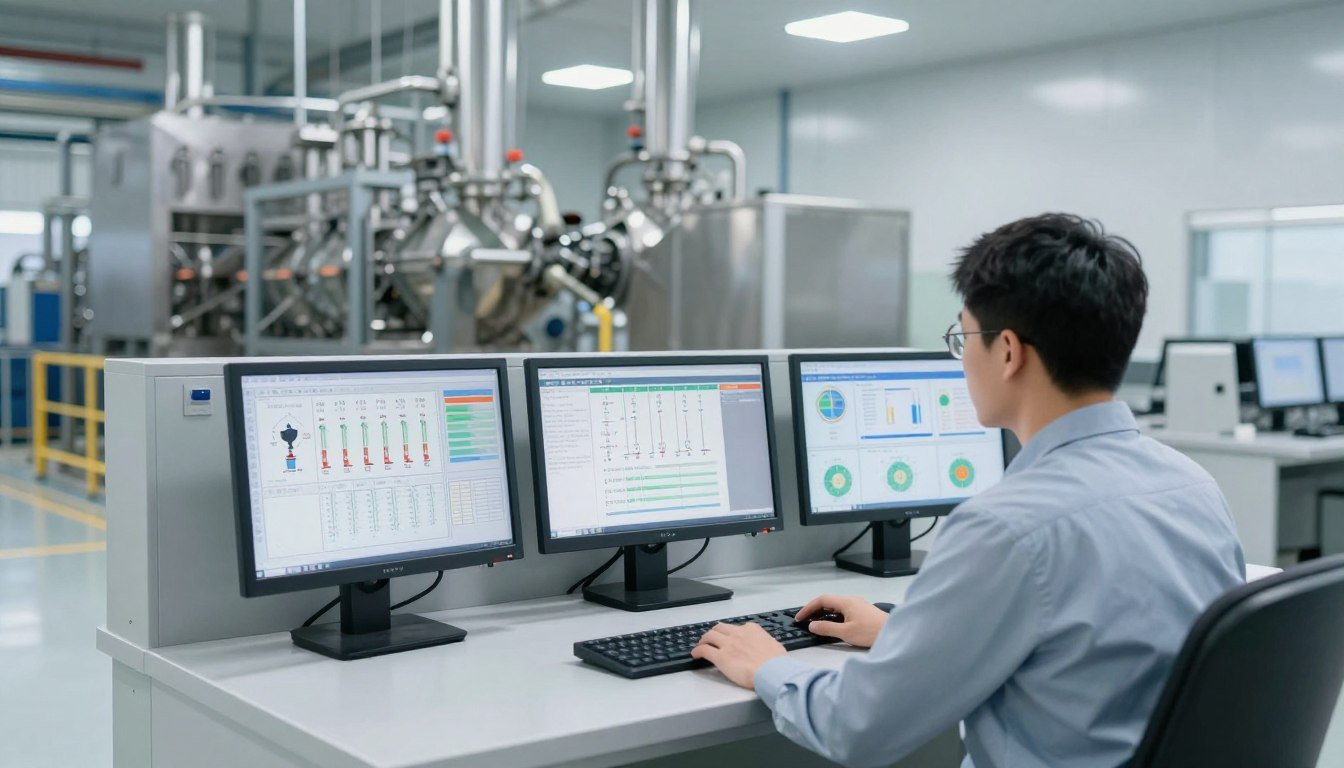
Global Success Stories: MAIKONG Pellet Production Line Installations
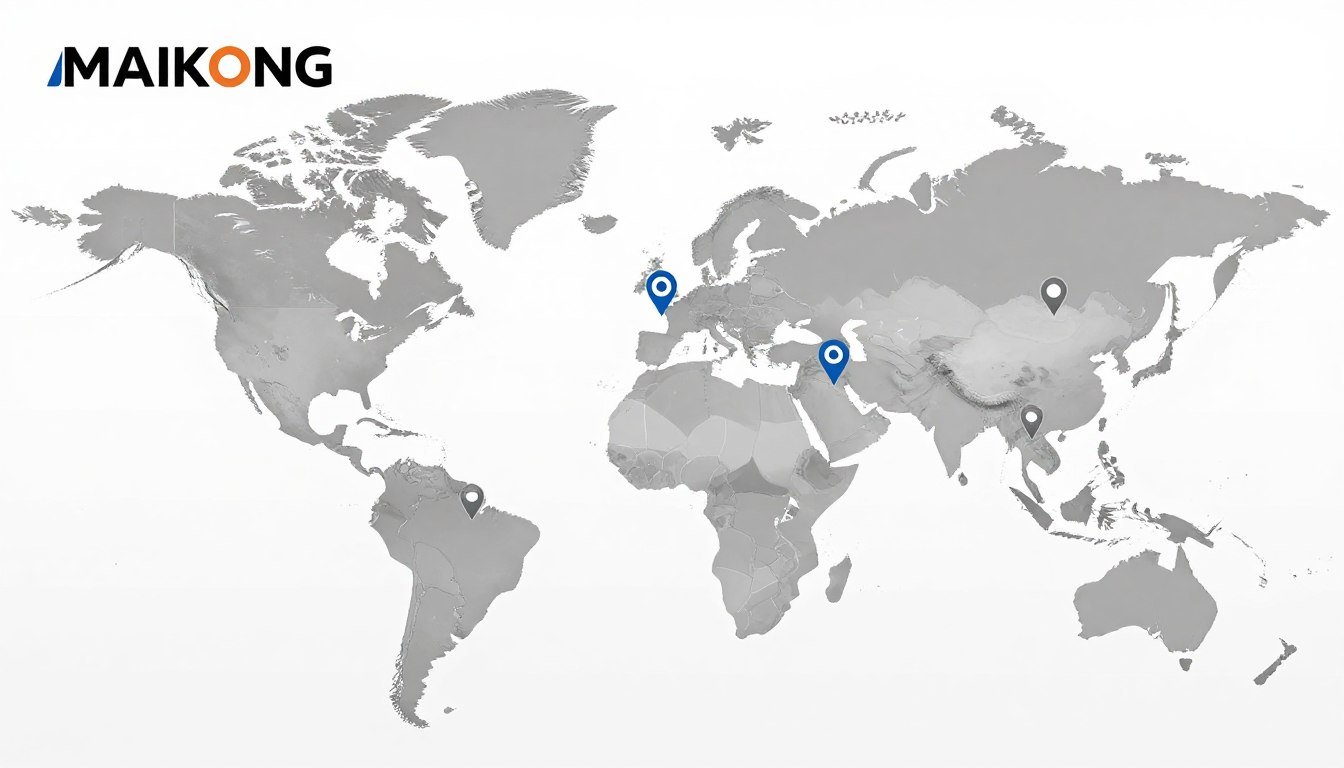
MAIKONG systems operate successfully across diverse climates, regulations, and production requirements. These case studies demonstrate proven performance in real-world applications.
Asia-Pacific Region Implementations
Thailand – 5 Ton/Hour Chicken Feed Production Line
A major Thai poultry integrator operates three MAIKONG MK-L005 systems producing layer and broiler feed. The installation processes 40,000 tons annually, serving company-owned farms and contract growers throughout central Thailand.
Project Specifications
- Capacity: 5 tons per hour
- Products: Layer mash, broiler starter, grower, finisher
- Operating schedule: 16 hours daily, 6 days weekly
- Annual output: 40,000 tons
Performance Results
- Feed conversion improved 12% versus previous mash feeding
- Equipment uptime exceeds 96%
- Pellet durability index consistently above 95%
- Energy consumption 18% below industry average
Customer Feedback
“MAIKONG equipment reliability allows us to maintain tight production schedules. Technical support response during our expansion project was exceptional. We’re planning a fourth line for next year.”
Vietnam – 10 Ton/Hour Aqua Feed Production Line
Vietnam’s rapidly expanding aquaculture industry demands high-quality feed for shrimp, pangasius, and tilapia production. This Mekong Delta facility operates a MAIKONG MK-L007 system producing floating and sinking pellets for multiple species.
- Extruded floating pellets for surface-feeding fish
- High-density sinking pellets for shrimp cultivation
- Water stability exceeding 12 hours for all products
- Production capacity supports 500 hectares of fish ponds
- Automated formula management handles 15 different recipes
Americas Region Success Stories
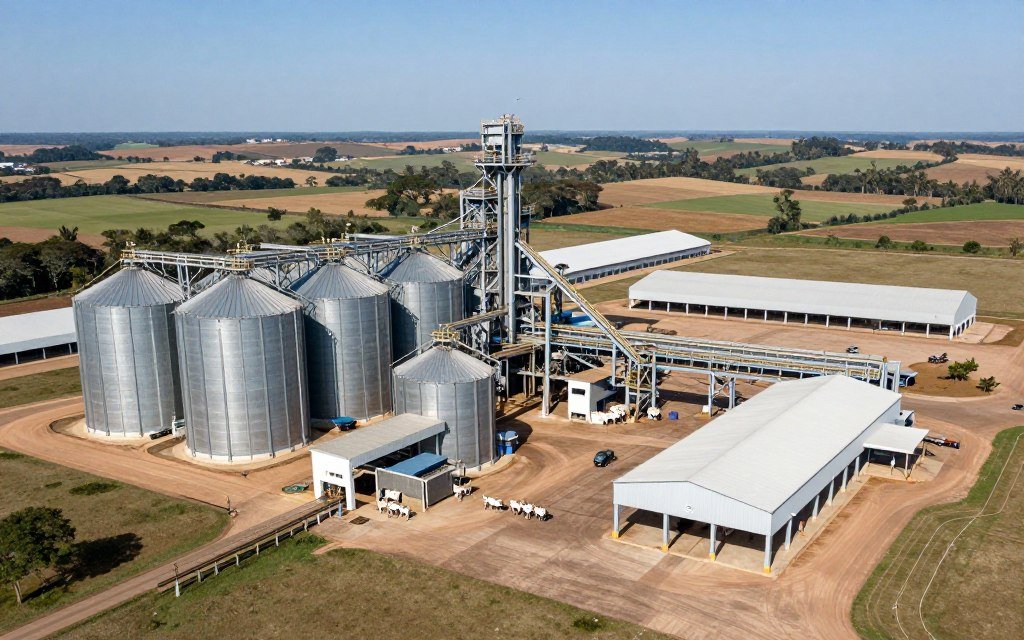
Brazil – 15 Ton/Hour Cattle Feed Manufacturing Complex
Brazil’s extensive cattle ranching industry requires massive feed production capacity. This Mato Grosso facility combines three MAIKONG production lines manufacturing supplements for 200,000 head of beef cattle.
Production Statistics
- Combined capacity: 45 tons per hour across three lines
- Annual production: 300,000 tons
- Product range: Protein supplements, mineral blocks, complete feeds
- Distribution: 800-kilometer radius via company fleet
Operational Benefits
- Reduced feed costs by 22% through in-house production
- Improved weight gain consistency across all ranch locations
- Custom formulations optimized for local forage quality
- Flexible production accommodates seasonal demand variations
European Market Installations
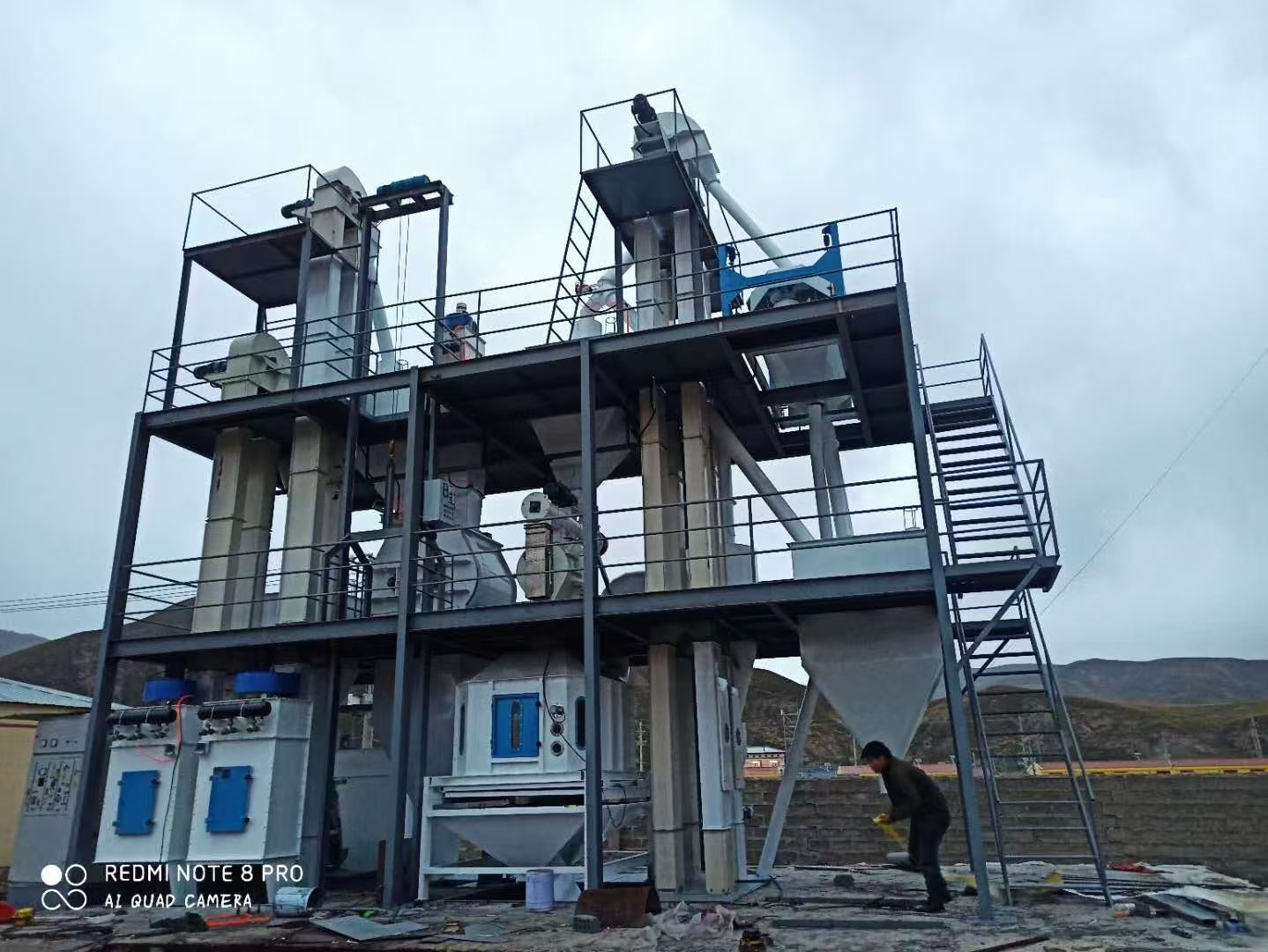
Poland – 3 Ton/Hour Organic Animal Feed Production Line
European organic certification requires stringent equipment cleanliness and traceability standards. This Polish cooperative produces certified organic feed for member farms raising pigs, poultry, and dairy cattle.
- Complete cleaning procedures between formula changes prevent contamination
- Documentation systems meet EU organic regulation requirements
- Non-GMO ingredient sourcing and verification protocols
- Production batch records track all ingredients to source farms
- Equipment materials comply with food-grade standards
Africa and Middle East Projects
Kenya – 2 Ton/Hour Poultry and Dairy Feed Plant
East African smallholder farmers increasingly adopt commercial feed to improve livestock productivity. This Nairobi facility produces affordable quality feed marketed to small-scale poultry and dairy operations.
Market Approach
Small package sizes (5kg, 10kg, 25kg) match farmer purchasing power. Regional distribution centers bring products closer to rural customers. Mobile payment integration simplifies transactions.
Local Impact
Employment for 45 local workers. Technical training programs educate farmers on proper feeding practices. Support for women’s poultry cooperatives through credit programs.
Production Data
Daily output: 32 tons. Product lines: layer feed, broiler feed, dairy supplements. Raw materials: 60% locally sourced. Distribution: 200-kilometer radius.
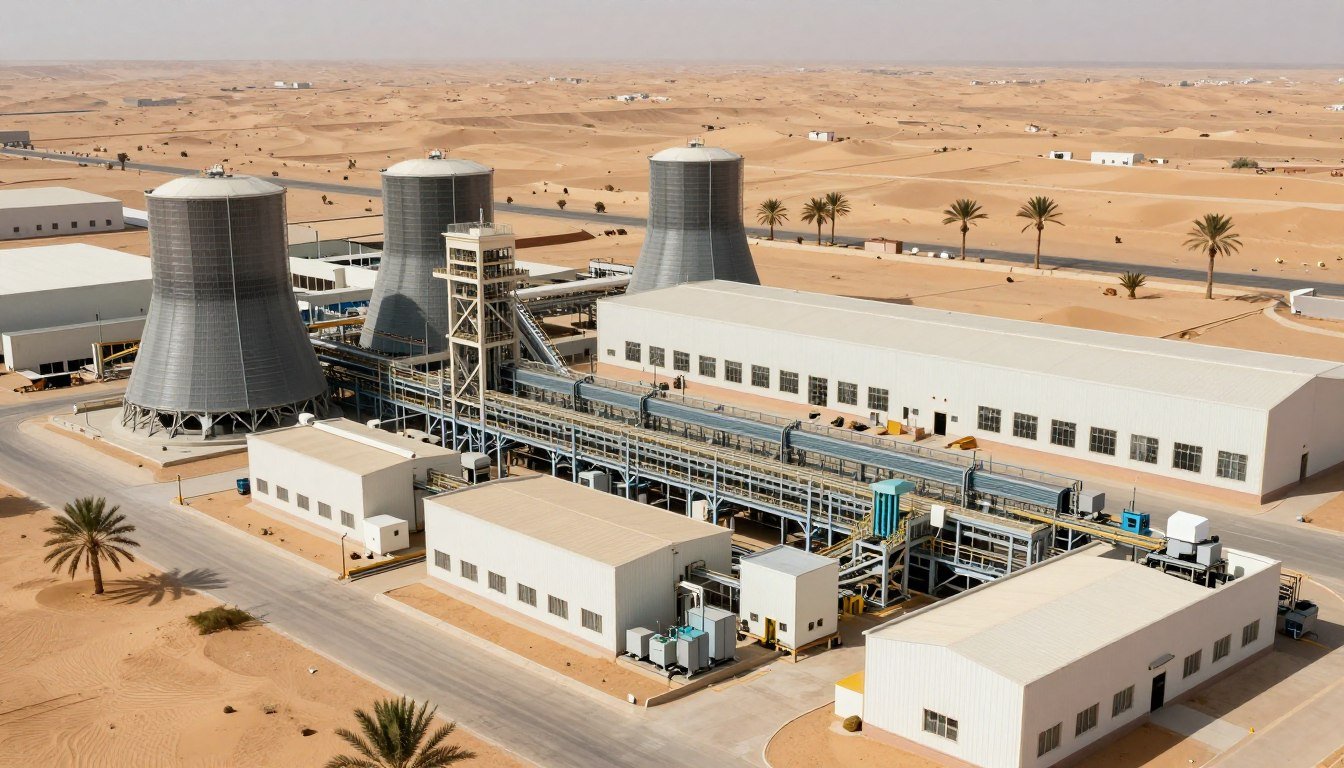
Saudi Arabia – 8 Ton/Hour Camel and Sheep Feed System
Middle Eastern livestock production includes species rarely encountered elsewhere. MAIKONG customized this system for camel racing feed and premium sheep fattening supplements.
- High-energy formulations for racing camel performance
- Specialized vitamins and minerals for desert climate conditions
- Pellet sizes optimized for camel and sheep consumption patterns
- Date palm by-products incorporated as local ingredients
- Production operates in extreme temperatures exceeding 45°C
Join 130+ Successful Partners Worldwide
MAIKONG equipment operates in more than 130 countries across all continents. Our proven track record demonstrates reliability in diverse conditions. Explore partnership opportunities as our authorized Philippine distributor and bring world-class feed production technology to local markets.
Philippine Market Considerations for Feed Pellet Production Line Investment
The Philippines presents unique opportunities and challenges for feed production businesses. Understanding local market dynamics ensures successful equipment investment and operations.
Philippine Livestock Industry Overview
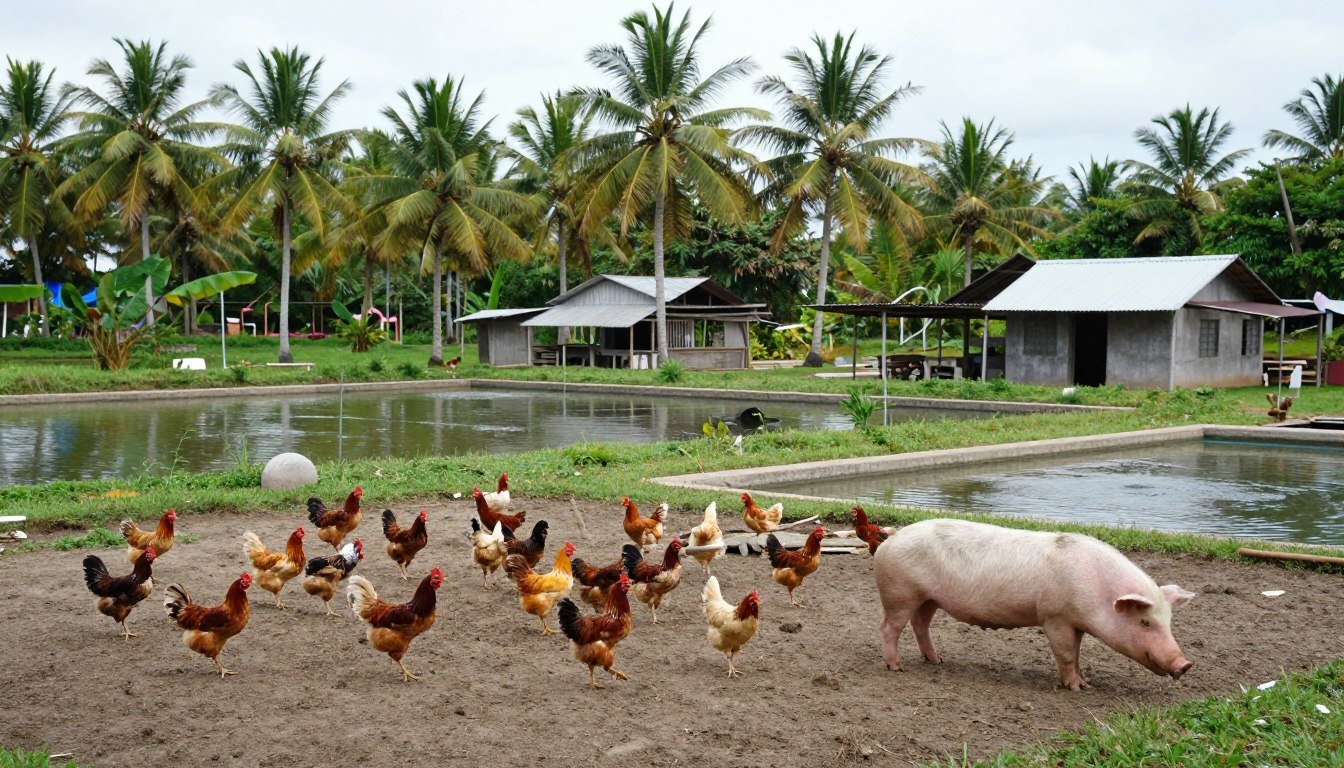
Philippine agriculture generates significant economic activity through livestock and aquaculture production. The industry faces growing demand as population increases and incomes rise, creating opportunities for efficient feed pellet manufacturing.
| Sector | Annual Production | Feed Consumption | Growth Rate |
| Poultry (Chicken) | 1.4 million metric tons | 4.2 million tons | 4.5% annually |
| Swine (Pork) | 1.8 million metric tons | 3.6 million tons | 3.2% annually |
| Aquaculture (Fish/Shrimp) | 2.2 million metric tons | 1.8 million tons | 6.8% annually |
| Cattle/Carabao | 0.3 million metric tons | 0.5 million tons | 2.1% annually |
| Eggs | 18 billion pieces | 1.4 million tons | 3.8% annually |
Regional Production Opportunities
Feed production potential varies significantly across Philippine regions based on livestock concentration, ingredient availability, and infrastructure development.
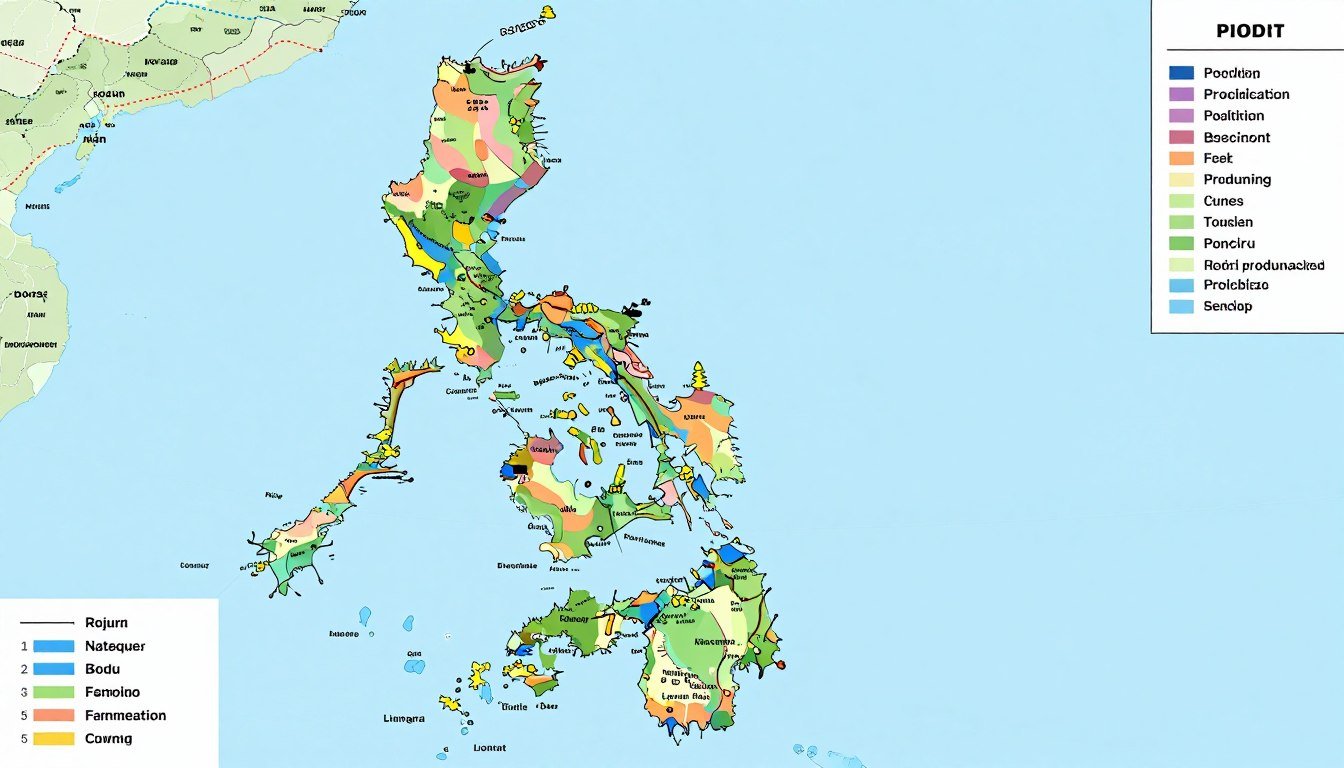
Luzon Region Opportunities
- Central Luzon: Intensive poultry and swine production creates strong feed demand
- Metro Manila proximity enables access to ingredient imports and export markets
- Bulacan and Pampanga host major integrators requiring consistent feed supply
- Established distribution networks facilitate finished product delivery
Visayas Region Potential
- Negros Island supports extensive cattle and hog raising operations
- Cebu’s commercial poultry industry requires large feed volumes
- Growing aquaculture in coastal areas drives fish feed demand
- Local corn and rice bran production reduces ingredient transportation costs
Mindanao Region Advantages
- Abundant local corn production provides competitive ingredient pricing
- Expanding poultry and swine operations need increased feed capacity
- Davao and General Santos concentrate commercial livestock production
- Tuna and milkfish farming creates aquafeed market opportunities
Investment Considerations and ROI Analysis
Successful feed pellet plant investment requires careful financial planning and realistic return expectations. MAIKONG helps customers develop comprehensive business models based on local market conditions.

Initial Investment Components
- Production equipment and installation: 40-50% of total
- Building and civil works: 25-30% of total
- Raw material inventory: 10-15% of total
- Working capital reserves: 10-15% of total
- Regulatory compliance and licensing: 2-3% of total
Operating Cost Factors
- Raw materials: 75-80% of production cost
- Labor and supervision: 8-10% of production cost
- Energy consumption: 5-7% of production cost
- Maintenance and repairs: 2-3% of production cost
- Packaging materials: 2-3% of production cost
Sample ROI Calculation – 3 Ton/Hour System
| Financial Parameter | Amount (PHP) | Amount (USD) | Notes |
| Equipment Investment | ₱12,000,000 | $215,000 | Complete MK-L003 system delivered and installed |
| Building and Infrastructure | ₱8,000,000 | $143,000 | Production facility, storage, office |
| Working Capital | ₱5,000,000 | $90,000 | Initial inventory and operations |
| Total Initial Investment | ₱25,000,000 | $448,000 | Complete turnkey project |
| Annual Production | 24,000 tons | – | 3 T/H × 16 hours × 300 days |
| Revenue (₱25/kg avg) | ₱600,000,000 | $10,700,000 | Mixed product portfolio |
| Gross Profit (8% margin) | ₱48,000,000 | $860,000 | After all operating costs |
| Simple Payback Period | 6-7 months | – | Before depreciation and financing |
These calculations demonstrate attractive returns possible with efficient operations and good market positioning. Actual results vary based on ingredient costs, market prices, capacity utilization, and operational efficiency.
Regulatory Requirements and Compliance
Philippine feed manufacturing operates under regulatory oversight ensuring product safety and quality. MAIKONG equipment meets all local requirements and international standards.
- Feed mill registration with the Bureau of Animal Industry (BAI)
- Good Manufacturing Practice (GMP) certification for facilities
- Product registration for each feed formula marketed
- Regular quality testing and documentation requirements
- Environmental compliance for dust, noise, and waste management
- Occupational safety standards for worker protection
- Local government business permits and zoning approval
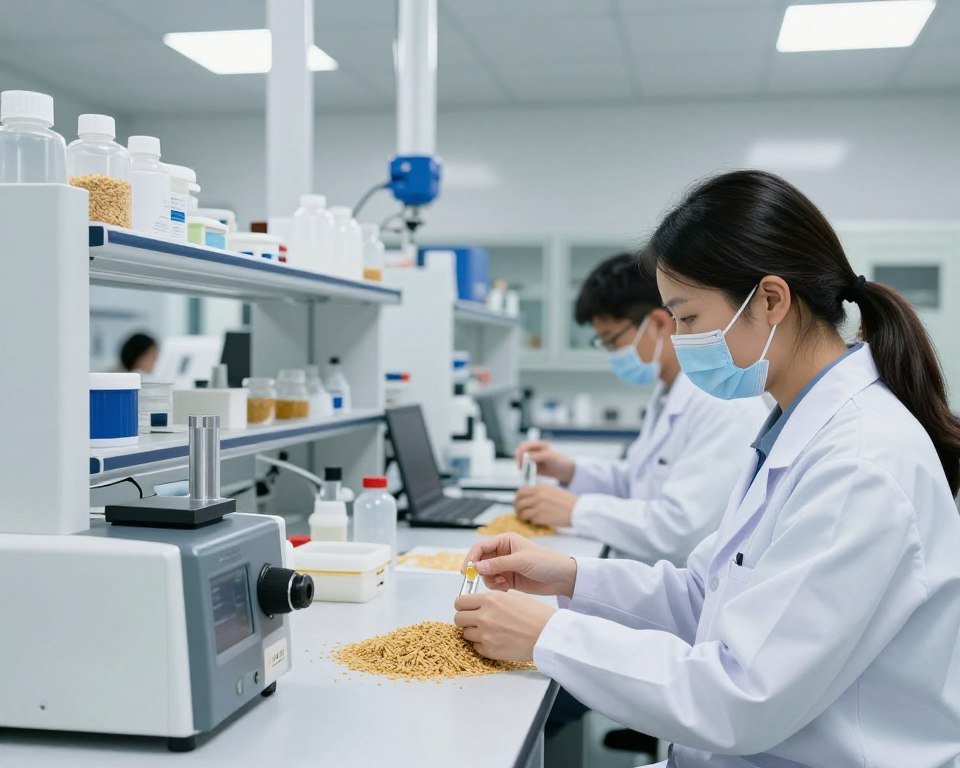
Why Choose MAIKONG for Your Feed Pellet Production Line
MAIKONG manufactures feed production lines and pellet machines in GD province, SZ city with 22 years of industry experience. Our commitment to quality, innovation, and customer success sets us apart in the competitive feed equipment market.
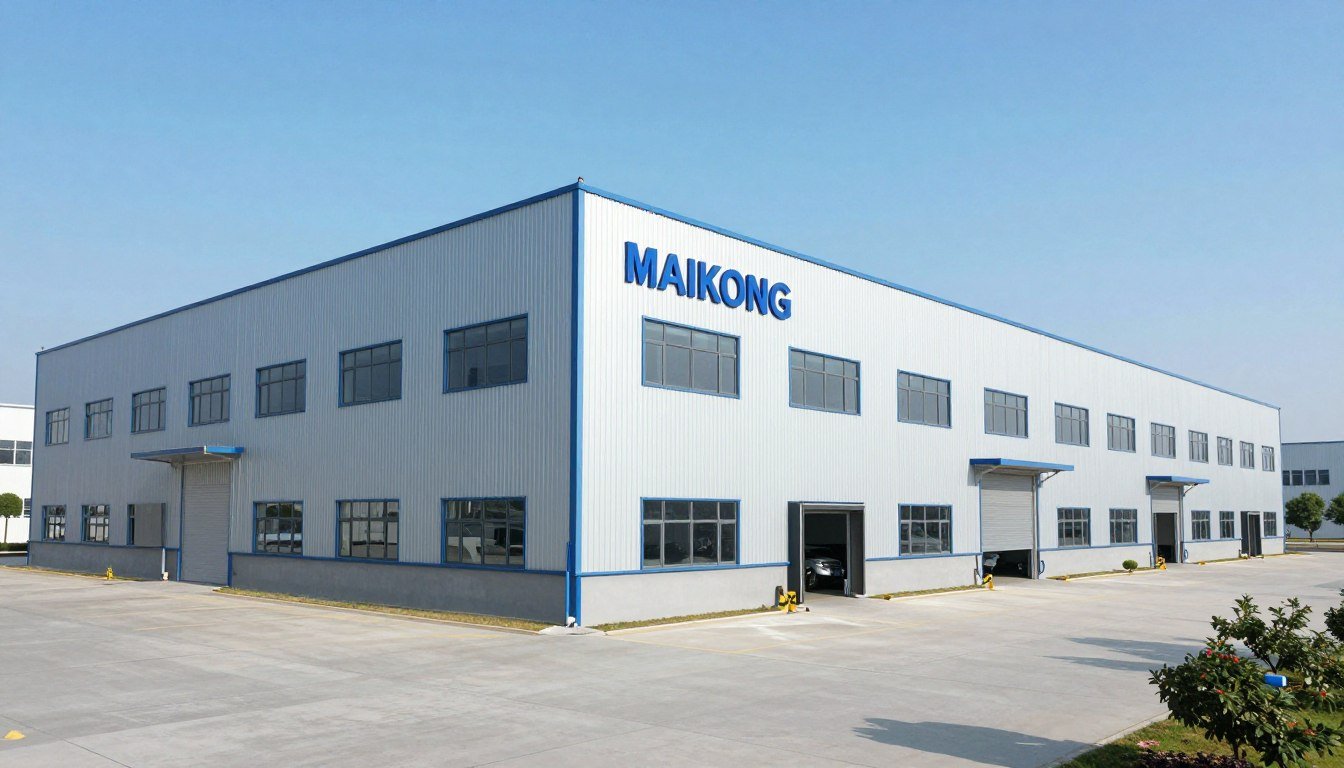
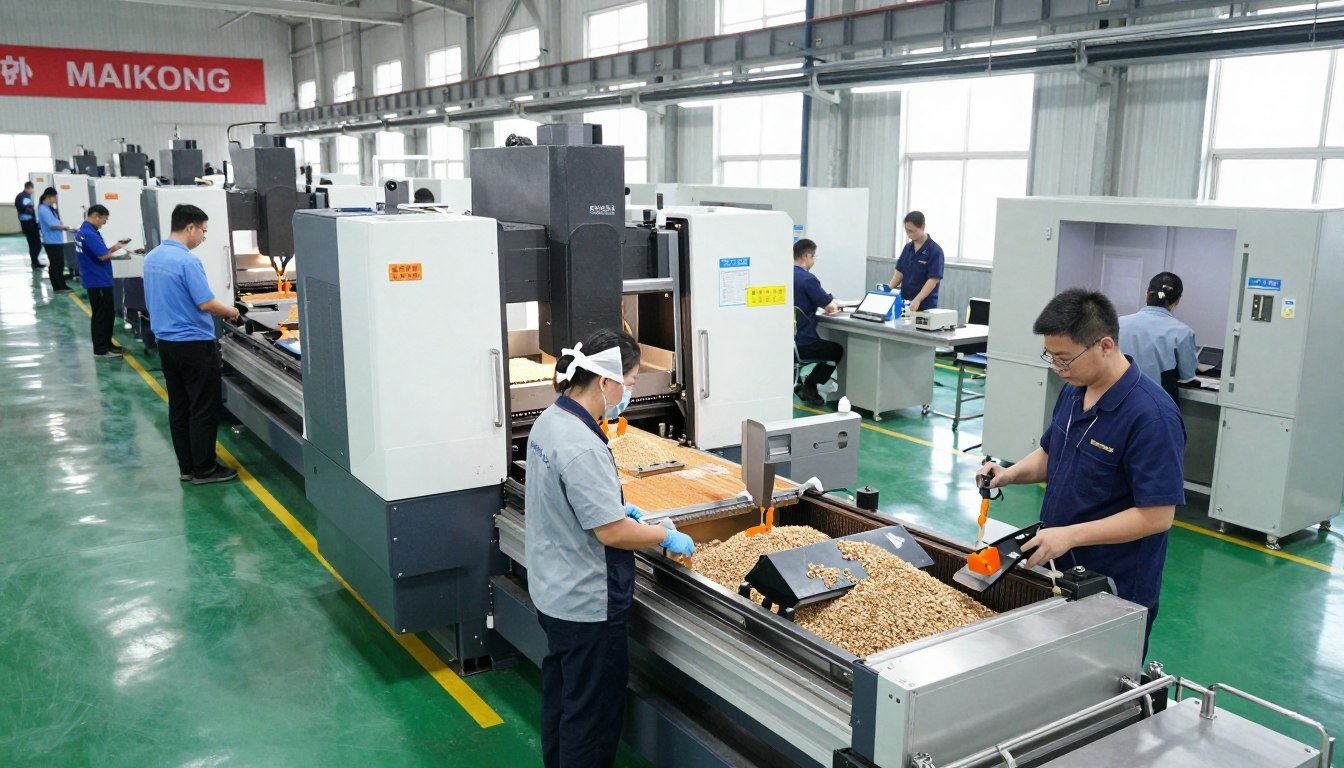
Manufacturing Excellence and Quality Standards
Every MAIKONG feed pellet production line undergoes rigorous quality control throughout manufacturing. We maintain ISO 9001 certification and implement advanced quality management systems ensuring consistent product standards.
Material Selection
- High-carbon alloy steel for wear parts
- Food-grade stainless steel for material contact surfaces
- Premium bearings from international suppliers
- Certified electrical components meeting CE standards
Manufacturing Processes
- CNC machining ensures precision tolerances
- Heat treatment increases component durability
- Automated welding produces consistent quality
- Multi-stage inspection verifies specifications
Testing Protocols
- Factory acceptance testing before shipment
- Load testing validates capacity claims
- Safety system verification
- Documentation package for customer records
Comprehensive Technical Support Services
MAIKONG provides complete support throughout equipment ownership. Our technical team assists from initial planning through daily operations and long-term maintenance.
Pre-Sale Engineering Support
- Free consultation on production requirements and feasibility
- Custom system design matching your specifications
- Detailed equipment layout drawings and specifications
- Energy consumption calculations and operating cost estimates
- ROI analysis and financial projections
- Site visit option for major projects
Installation and Commissioning
- Detailed installation manuals in English
- Remote technical guidance during installation
- On-site installation supervision available (optional)
- System commissioning and performance verification
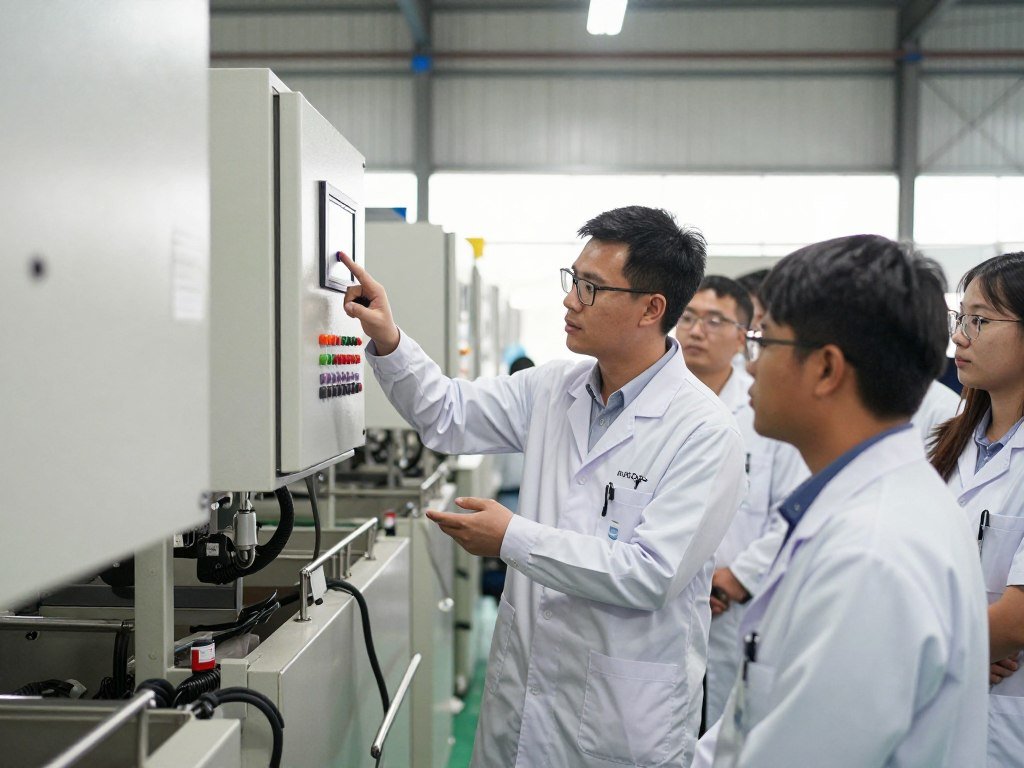
- Operator training on equipment operation and maintenance
- Production trial runs until specification achievement
After-Sales Support and Maintenance
- 24-month comprehensive warranty on all equipment
- Email and WhatsApp technical support responding within 24 hours
- Spare parts availability with fast shipping to Philippines
- Maintenance schedule recommendations and checklists
- Troubleshooting guides and video tutorials
- Annual equipment inspection service available
OEM and ODM Customization Capabilities
MAIKONG specializes in customized solutions for unique requirements. Our engineering team designs and manufactures equipment matching exact specifications for OEM partners and special applications.
OEM Manufacturing Services
We produce equipment under customer brands for distributors and integrators building their market presence. OEM services include custom paint colors, branded nameplates, modified specifications, and packaging design.
- Minimum order quantities negotiable based on customization level
- Confidentiality agreements protect proprietary designs
- Quality standards maintained regardless of branding
- Flexible payment terms for established partners
ODM Design Services
Original design manufacturing creates completely new equipment configurations. Our engineers collaborate with customers developing innovative solutions for specialized applications.
- Custom capacity ranges outside standard models
- Specialized pellet shapes and sizes
- Integration with existing production systems
- Automation levels from manual to fully automatic
Global Experience Serving Local Markets
MAIKONG equipment operates in more than 130 countries worldwide. This international experience helps us understand diverse market requirements, regulatory environments, and operational challenges.
Technical Advantages
- Energy-efficient designs reduce operating costs 15-20%
- Modular construction allows future capacity expansion
- Universal voltage compatibility (220V-480V, 50/60Hz)
- Automated control systems minimize labor requirements
- Durable construction ensures 15+ year service life
- Safety features exceed international standards
Business Benefits
- Competitive pricing without compromising quality
- Fast delivery times (4-6 weeks to Philippines)
- Flexible payment options for qualified buyers
- Dealer/distributor programs with territory protection
- Marketing support materials and technical documentation
- Ongoing relationship not just equipment sale
Customer Service Excellence
- English-speaking support team available
- Response time under 24 hours for technical inquiries
- Spare parts availability within 1 week
- Remote diagnostics capability for quick troubleshooting
- Customer training programs and certification
- Annual satisfaction surveys drive continuous improvement
Experience MAIKONG’s 22-Year Manufacturing Excellence
Learn more about MAIKONG’s history, capabilities, and commitment to customer success. Discover why livestock producers and feed manufacturers worldwide trust MAIKONG for their production equipment needs.
Complete MAIKONG Product Portfolio for Philippine Market
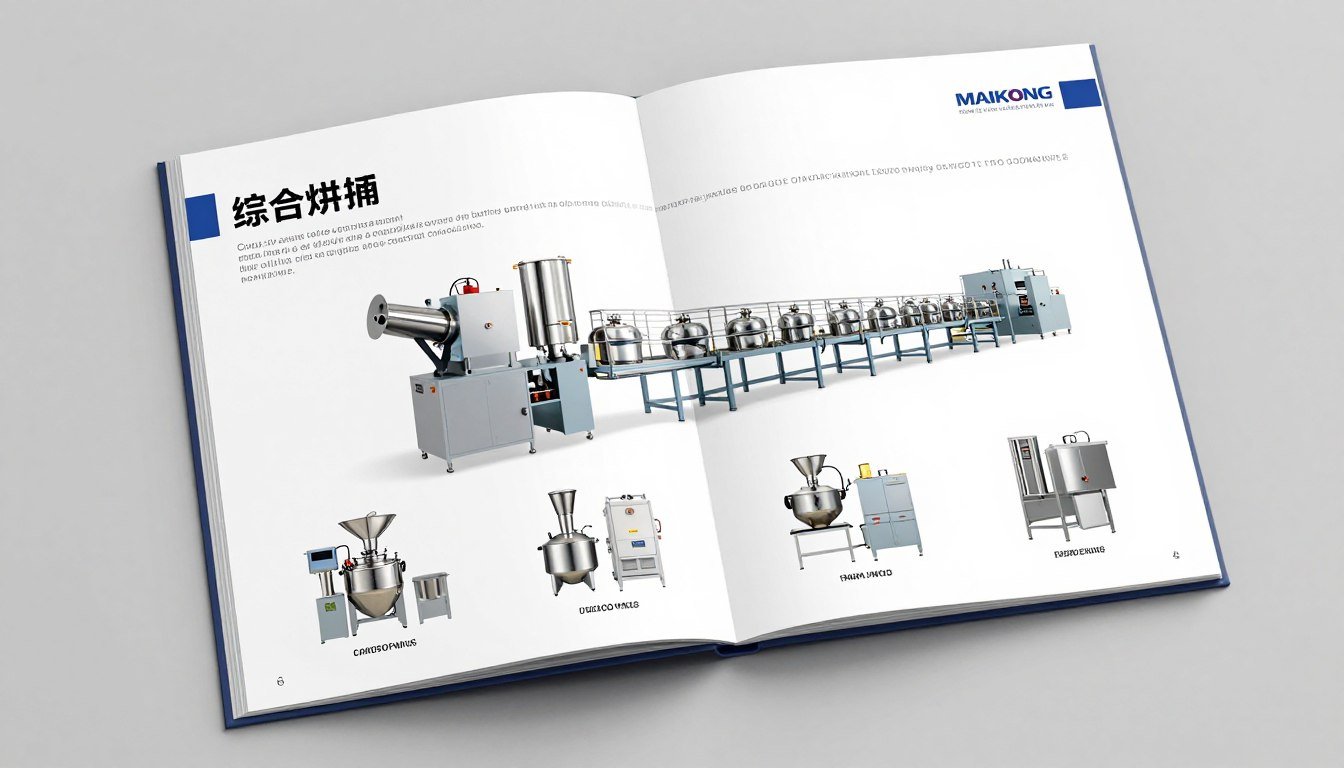
Beyond complete feed pellet production lines, MAIKONG manufactures individual equipment components and specialized machines serving diverse agricultural processing needs.
Individual Equipment and Components
Feed Pellet Machine
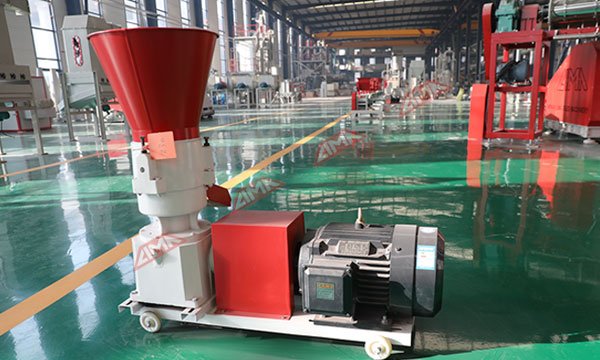
Standalone pellet mills from 200kg/hour to 2,000kg/hour capacity. Ring die and flat die configurations available. Suitable for small farms and testing laboratories.
- Compact footprint
- Simple operation
- Affordable pricing
- Multiple die options
Mini Pellet Machine Philippines
Entry-level equipment perfect for backyard farming and small-scale production. Manual and electric models serve different budget levels and application requirements.
- 200-300 kg/hour output
- Low power consumption
- Easy maintenance
- Portable design
Manual Pellet Machine
Hand-operated pelletizers for micro-scale production and demonstrations. No electricity required makes these ideal for remote locations and emergency backup.
- Zero operating cost
- Completely portable
- Simple construction
- Reliable operation
Specialized Production Lines by Application
Aquatic Feed Specialized Systems
Philippine aquaculture includes diverse species requiring different feed characteristics. MAIKONG designs systems producing floating, slow-sinking, and fast-sinking pellets matching fish feeding behavior.
- Fish Feed Production Line: Tilapia, bangus, and carp feed manufacturing
- Shrimp Feed Production Line: High water stability for extended feeding periods
- Aqua Feed Production Line: Multi-species capability for diversified operations
Livestock Feed Production Systems
Different livestock species require customized processing approaches. MAIKONG configures equipment matching the specific nutritional and physical requirements of each animal type.
- Poultry Feed Production Line: Layer, broiler, and duck feed manufacturing
- Pig Feed Production Line: Multi-phase swine nutrition production
- Cattle Feed Pellet Production Line: Ruminant supplement and complete feed systems
- Animal Feed Production Line: General purpose livestock feed manufacturing
- Pet Feed Production Line: Dog, cat, and specialty pet food production
Alternative Pelletizing Applications
Pelletizing technology extends beyond animal feed into agricultural, industrial, and environmental applications. MAIKONG equipment serves these diverse markets.
Biomass Pellet Machine
Convert agricultural waste into renewable fuel pellets. Rice husks, coconut shells, and sugarcane bagasse become valuable energy products.
- Reduces agricultural waste disposal costs
- Creates additional revenue streams
- Provides renewable energy source
- Supports environmental sustainability
Wood Pellet Machine
Sawdust and wood waste pelletizing for heating fuel and industrial applications. High-density pellets provide efficient energy storage and transport.
- Processes sawmill waste profitably
- Produces consistent quality fuel
- Reduces moisture for stable storage
- Creates uniform product for customers
Fertilizer Pellet Machine
Organic fertilizer pelletizing improves handling and application. Chicken manure, cow dung, and compost become convenient granular fertilizers.
- Converts waste into valuable products
- Improves fertilizer application efficiency
- Reduces dust and odor problems
- Extends product shelf life
Alfalfa Pellet Machine
Forage pelletizing preserves nutritional value while reducing storage volume. Alfalfa, grass, and hay become convenient feed supplements.
- Preserves leaf nutrition during handling
- Reduces storage space requirements
- Prevents selective feeding waste
- Extends forage storage capability
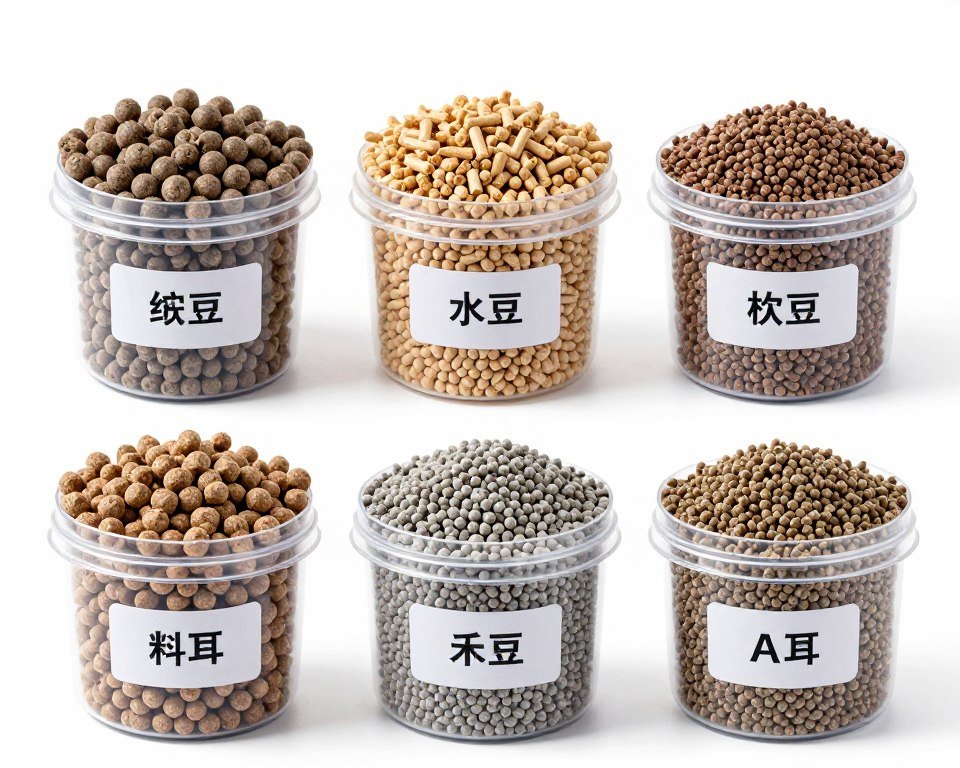
Become an Authorized MAIKONG Dealer in the Philippines
MAIKONG actively recruits qualified distributors and agents throughout the Philippines. We seek partners committed to customer service excellence and market development in their territories.

Dealer Partnership Benefits
Authorized MAIKONG dealers receive comprehensive support building successful equipment sales and service businesses. Our partnership program provides competitive advantages in local markets.
Exclusive Territory Rights
Qualified dealers receive protected sales territories preventing internal competition. Territory size depends on market potential and dealer capabilities.
- Provincial or regional exclusivity
- Protection from online direct sales
- Referrals from MAIKONG inquiries
- Territory expansion opportunities
Attractive Dealer Margins
Competitive pricing structure enables profitable operations while maintaining market competitiveness. Volume bonuses reward sales growth and market development.
- Base dealer discount on all products
- Volume incentive bonuses
- Special project pricing available
- Demo equipment programs
Technical Training and Certification
Comprehensive training programs develop dealer technical competence. Training covers equipment operation, installation, troubleshooting, and maintenance.
- Initial dealer training at factory
- Ongoing technical webinars
- Installation certification programs
- Advanced troubleshooting training
Marketing and Sales Support
Professional marketing materials and sales tools help dealers effectively promote MAIKONG products. Digital and print resources save development costs.
- Product catalogs and brochures
- Technical specification sheets
- Case study documentation
- Digital marketing content
After-Sales Support Infrastructure
Dealers access MAIKONG’s technical support team and spare parts inventory. Customer service excellence builds dealer reputation and repeat business.
- Direct factory support line
- Spare parts at dealer pricing
- Warranty administration assistance
- Technical documentation access
Business Development Assistance
MAIKONG helps dealers identify opportunities and develop strategies for market penetration. Collaborative planning ensures mutual success.
- Market analysis and research
- Customer lead generation
- Trade show participation support
- Joint customer visits available
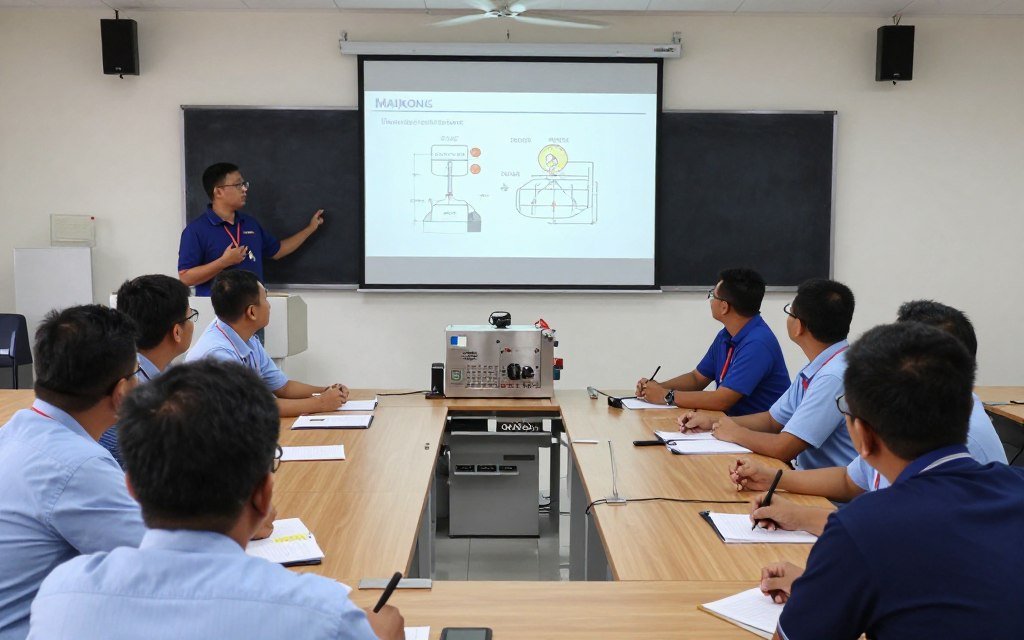
Ideal Dealer Profile and Requirements
Successful MAIKONG dealers typically possess agricultural equipment experience, established customer relationships, and service capabilities. We evaluate potential partners based on several criteria.
Preferred Qualifications
- Existing business in agricultural equipment, livestock supplies, or related field
- Technical staff capable of equipment installation and service
- Warehouse and demonstration facility for equipment display
- Financial stability supporting inventory investment
- Established customer base in livestock or aquaculture sectors
- Sales team with agricultural market knowledge
- Commitment to MAIKONG brand development in territory
Dealer Responsibilities
- Active marketing and sales efforts in assigned territory
- Customer consultation and needs assessment
- Equipment demonstrations and sample production
- Installation supervision and commissioning assistance
- Basic troubleshooting and maintenance service
- Warranty claim documentation and coordination
- Market feedback and competitive intelligence
- Participation in annual dealer meetings and training
Dealer Application Process
- Initial Inquiry: Contact MAIKONG expressing interest in dealer partnership. Provide basic information about your business, location, and market experience.
- Information Review: MAIKONG evaluates your application and territory availability. We assess market potential and fit with existing dealer network.
- Business Discussion: Detailed conversation via video conference or in-person meeting covers partnership terms, expectations, and support programs.
- Agreement Preparation: Legal documents formalize relationship including territory definition, pricing structure, and performance requirements.
- Initial Training: New dealers participate in comprehensive product and technical training program covering all equipment lines.
- Market Launch: Coordinated introduction to market includes marketing materials, demo equipment, and initial customer contacts.
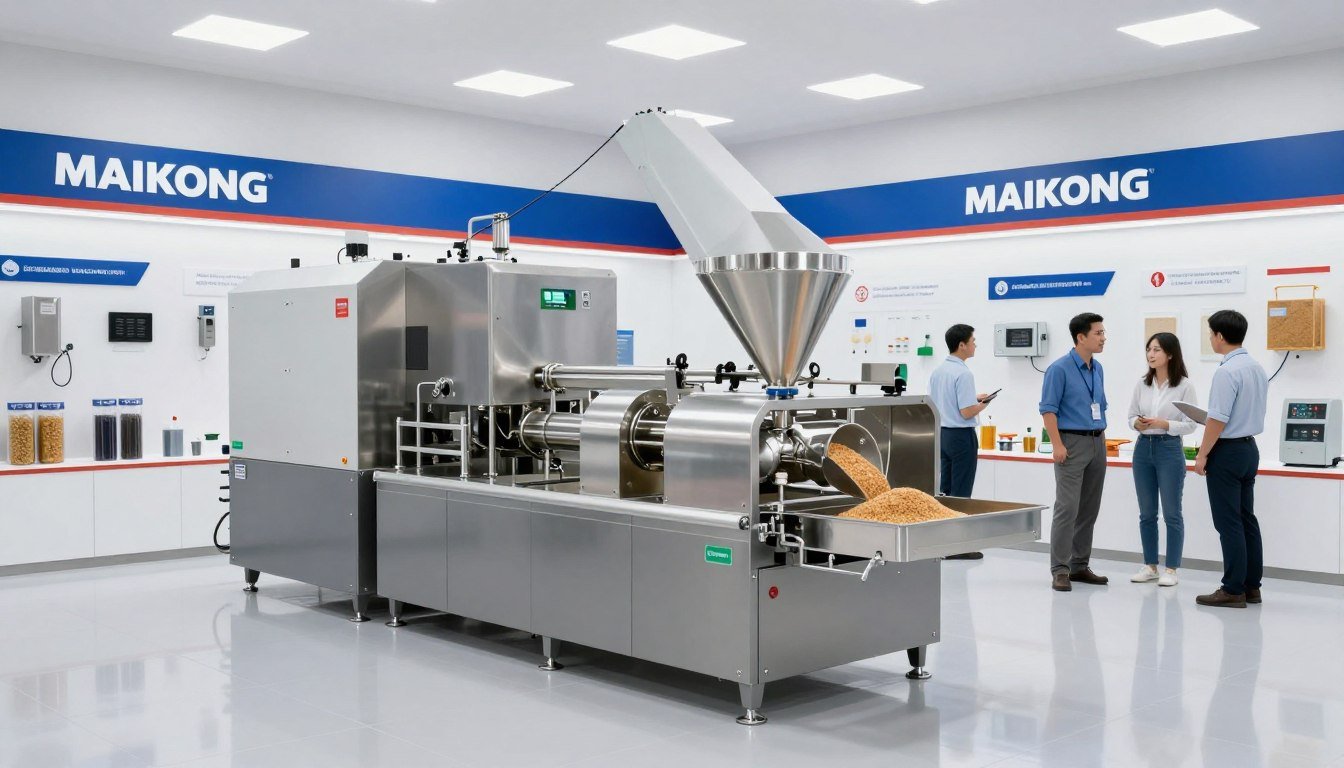
Start Your MAIKONG Dealer Partnership Application Today
Join our global network of successful equipment dealers and distributors. MAIKONG provides the products, support, and partnership commitment you need to build a profitable agricultural equipment business in the Philippines.
Frequently Asked Questions About Feed Pellet Production Line Investment
Prospective buyers commonly ask similar questions about equipment selection, operations, and support. These answers address the most frequent inquiries we receive from Philippine customers.
What production capacity do I need for my operation?
Capacity requirements depend on your animal population and feeding rates. Calculate total daily feed consumption across all livestock. Add 20-30% safety margin for growth and peak demand periods. Divide by planned operating hours (typically 8-16 hours daily) to determine required hourly capacity.
Example: 50,000 broilers consuming 100 grams daily equals 5,000 kg daily requirement. Operating 10 hours suggests 500-650 kg/hour capacity needed. A 1-ton/hour system provides comfortable margin.
How much space does a complete feed production line require?
Space requirements vary by capacity and configuration. Small systems (1-2 tons/hour) fit in 200-300 square meters. Medium capacity (3-5 tons/hour) needs 400-600 square meters. Large installations (10+ tons/hour) require 1,000+ square meters. Include additional space for raw material storage, finished product warehousing, and future expansion.
Building height requirements range from 4-6 meters depending on equipment configuration and material handling systems. MAIKONG provides detailed layout drawings showing exact space requirements for your specific system.
What power supply do I need for the equipment?
Most MAIKONG systems operate on 380V, 3-phase, 60Hz power matching Philippine industrial standards. Total power consumption ranges from 30-40 kW for small lines to 150-200 kW for large industrial systems. We customize voltage specifications for locations with different power availability including 220V and generator-powered operations.
Ensure your electrical service capacity exceeds equipment requirements by 25-30% for safe operation. Include provisions for motor starting currents which temporarily spike above running loads. Our engineers calculate exact power requirements during system design.
How long does installation and commissioning take?
Installation timeline depends on system complexity and site preparation. Small to medium systems (1-5 tons/hour) typically require 2-3 weeks for installation and commissioning with proper preparation. Large industrial installations may need 4-6 weeks. These timeframes assume completed building construction and utility connections.
MAIKONG provides detailed installation manuals enabling customer self-installation with remote technical support. On-site installation supervision available for additional fee, particularly recommended for first-time buyers or complex configurations.
What ongoing maintenance does the equipment require?
Regular maintenance ensures reliable operation and long equipment life. Daily tasks include visual inspection, cleaning, and lubrication checks. Weekly maintenance involves detailed inspection of wear parts like hammer mill screens, mixer paddles, and pellet dies. Monthly service includes bearing lubrication, belt tension adjustment, and electrical connection inspection.
Major maintenance occurs every 3-6 months including die replacement, roller bearing service, and motor maintenance. Annual overhaul addresses major component wear and system optimization. MAIKONG provides detailed maintenance schedules and procedures for all equipment.
How quickly can I get spare parts in the Philippines?
MAIKONG maintains spare parts inventory in China with fast shipping to Philippines. Common wear parts typically ship within 2-3 business days and arrive within 1 week via air freight. Major components may require 2-3 weeks for delivery. We recommend maintaining critical spare parts inventory locally to minimize downtime risk.
Authorized dealers stock commonly needed parts for faster local availability. Emergency shipments via express courier available when necessary. Parts orders placed with complete specifications and model numbers process fastest.
Can I start small and expand capacity later?
Yes, MAIKONG designs systems allowing future capacity expansion. Modular equipment configuration enables adding parallel processing lines without complete system replacement. Plan initial installation with adequate space and utilities for future growth. We can design systems operating at reduced capacity initially with simple upgrades increasing throughput as your business grows.
Example expansion path: Start with 1-ton/hour pellet mill, later add second identical mill doubling capacity. Shared material handling and utilities reduce expansion costs compared to completely separate systems.
What training do operators need to run the equipment?
Operators need basic mechanical aptitude and ability to follow procedures. No advanced technical degree required. MAIKONG provides comprehensive operator training covering equipment operation, routine maintenance, troubleshooting, and safety procedures. Training typically requires 3-5 days for complete proficiency.
We provide detailed operation manuals, instructional videos, and ongoing remote support. Operators gain experience through supervised production trials before independent operation. Additional technical training available for maintenance personnel requiring deeper equipment knowledge.
How do I finance a feed pellet production line purchase?
Several financing options exist for equipment purchases in the Philippines. Agricultural development banks offer equipment loans for qualified borrowers. Some government programs provide subsidized financing for feed mill development. MAIKONG works with Philippine financial institutions familiar with agricultural equipment lending.
Standard payment terms include 30% deposit upon order confirmation and 70% balance before shipment. Extended payment arrangements negotiable for qualified customers and larger projects. Leasing options may be available through third-party finance companies.
What certifications and compliance does MAIKONG equipment meet?
MAIKONG manufacturing facility maintains ISO 9001 quality management certification. Equipment designs comply with international safety standards including CE marking for electrical and mechanical safety. Materials meet food-grade requirements for feed contact surfaces. Electrical components carry appropriate certifications for Philippine installations.
We provide all documentation needed for Philippine regulatory compliance including BAI feed mill registration and GMP certification applications. Equipment specifications meet Philippine electrical codes and safety standards.

Taking the Next Step Toward Your Feed Pellet Production Line Investment
Investing in a quality feed pellet production line transforms your livestock or aquaculture operation. In-house feed manufacturing reduces costs, improves quality control, and creates additional revenue opportunities through contract production or retail sales.
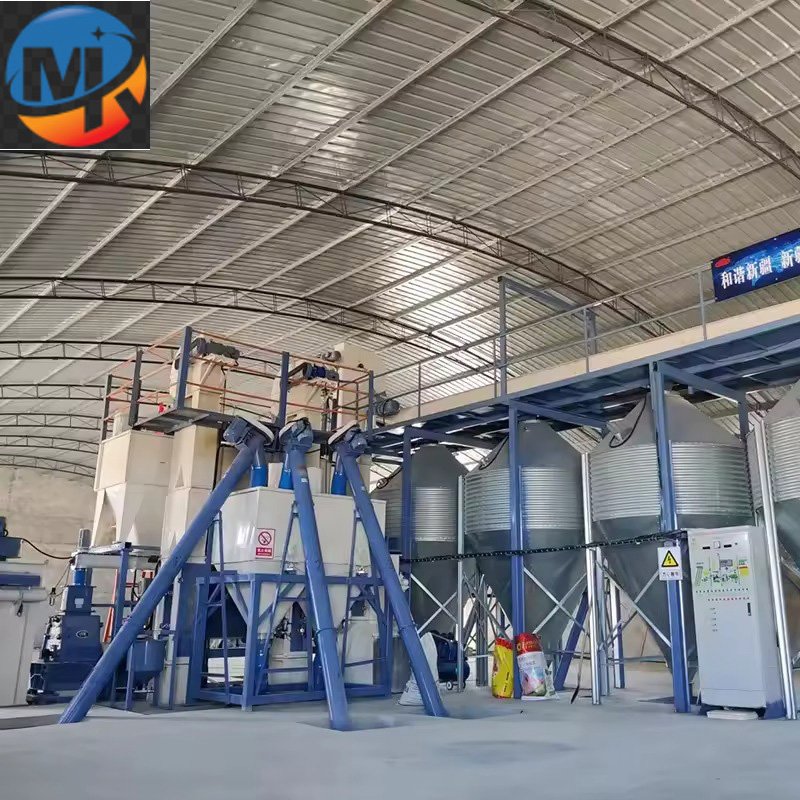
MAIKONG brings 22 years of manufacturing excellence and global experience to the Philippine market. Our comprehensive product range serves operations from small family farms to large industrial feed manufacturers. Technical support, competitive pricing, and proven reliability make MAIKONG your ideal equipment partner.
Whether you need a complete turnkey feed production line or individual equipment components, MAIKONG designs solutions matching your exact requirements. Our engineering team considers your livestock types, production volume, budget constraints, and future growth plans creating optimal system configurations.
Ready to Get Started?
The first step involves consultation with our technical team. Share information about your operation, production goals, and facility constraints. We’ll provide preliminary system recommendations and budget estimates at no cost or obligation.
For Equipment Purchase Inquiries
Contact our sales team with your production requirements. We’ll prepare detailed quotations including equipment specifications, delivery timeline, and installation support options.
For Dealer Partnership Applications
Qualified distributors and agents should submit dealer applications including business background, territory interest, and market development plans.
MAIKONG looks forward to supporting your success in Philippine livestock and aquaculture production. Our commitment extends beyond equipment sales to long-term partnership ensuring your operation achieves maximum productivity and profitability.
Connect With MAIKONG Today
Our team stands ready to answer questions, provide quotations, and discuss partnership opportunities. Reach out through your preferred communication channel and experience the MAIKONG difference in customer service and technical excellence.