
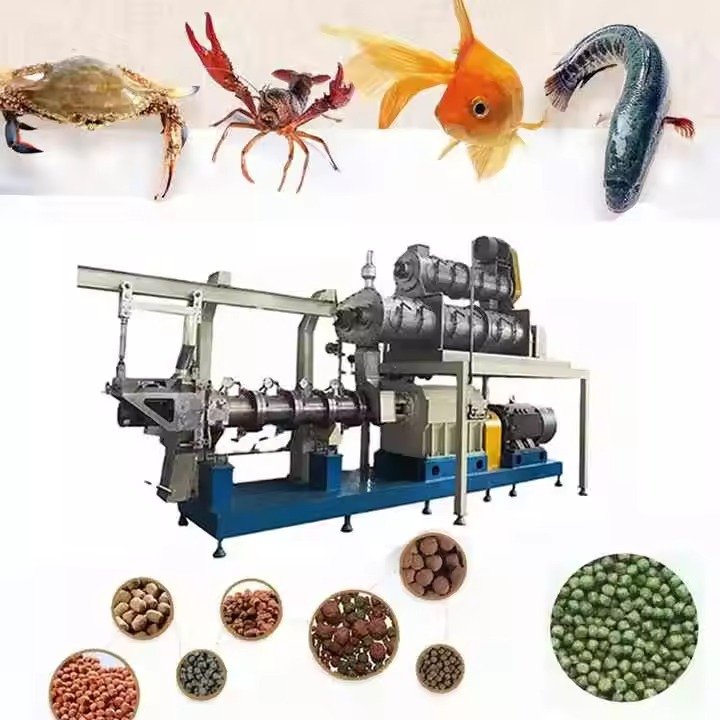
The aquaculture industry in the Philippines is growing rapidly. Fish farmers, shrimp cultivators, and feed mill operators face a common challenge: producing high-quality, cost-effective feed consistently. An aqua feed production line solves this problem by transforming raw materials into nutritious, water-stable pellets that support healthy aquatic animal growth.
Many farm owners struggle with rising commercial feed costs and inconsistent quality. Building your own production capacity gives you control over ingredients, pellet size, and nutritional formulation. Whether you operate a small fish pond in Laguna or manage a large-scale shrimp farm in Mindanao, understanding how these systems work helps you make informed investment decisions.
This guide explains everything about aqua feed production lines. You will learn about components, processes, capacity options, and real-world applications. We cover technical specifications, customization possibilities, and investment considerations specific to Philippine aquaculture operations.
Understanding the Aqua Feed Production Line System

An aquatic feed production line is an integrated manufacturing system. It converts raw ingredients into finished feed pellets through several automated stages. The system handles everything from ingredient preparation to final packaging.
The basic process follows a logical sequence. Raw materials enter the system first. Grinding equipment reduces particle size for uniform mixing. A precise batching system measures ingredients according to your formula. Mixing equipment blends components thoroughly. The pelletizing or extrusion stage shapes the feed. Drying removes excess moisture. Cooling brings pellets to ambient temperature. Screening separates oversized or undersized particles. Packaging prepares the finished product for storage or sale.
Modern aqua feed production lines incorporate automation for consistency. Control systems monitor temperature, pressure, and moisture levels. This automation reduces human error and improves product quality. The result is uniform pellets with predictable nutritional content and physical properties.
Key Components of a Complete System
Pre-Processing Equipment
Storage silos hold different raw materials separately. Weighing systems measure precise quantities. Hammer mills or crushers reduce particle size to specifications between 0.5mm and 2.0mm depending on final pellet size requirements.

Mixing and Conditioning
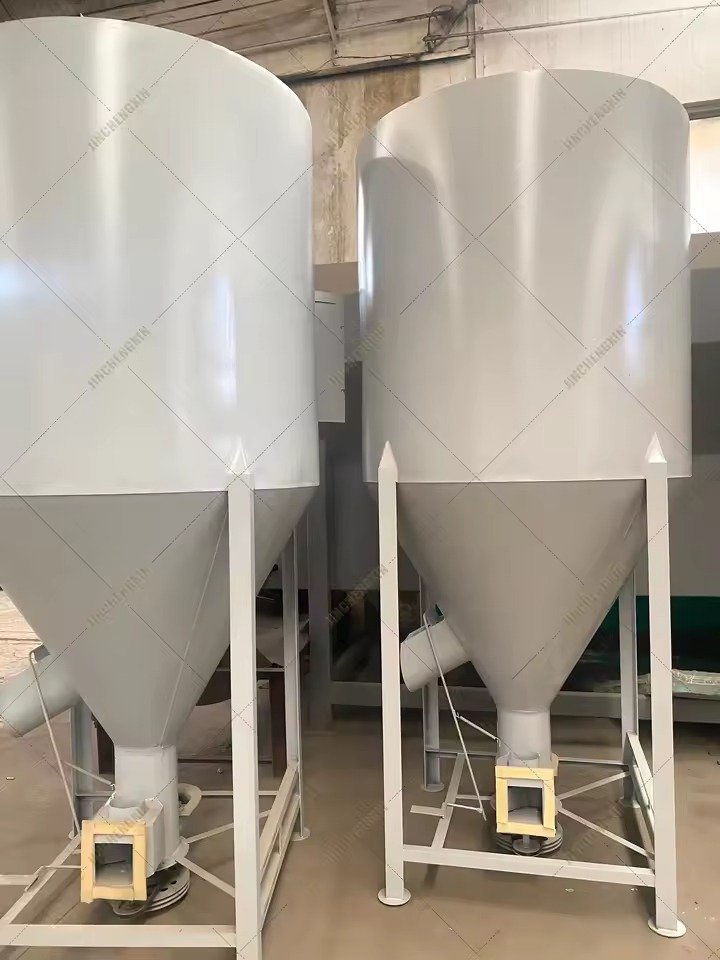
Ribbon mixers or paddle mixers blend dry ingredients uniformly. Liquid addition systems inject oils, molasses, or binders. Conditioners add steam and heat to prepare material for pelleting. This step is essential for pellet durability.

Pelleting or Extrusion
Ring die pellet mills compress conditioned material through die holes. Twin-screw extruders cook and shape material under high temperature and pressure. The choice depends on whether you need sinking pellets or floating feed.

Post-Processing Equipment
Belt dryers or fluidized bed dryers reduce moisture to safe storage levels. Counterflow coolers bring pellet temperature down. Crumbler machines break pellets to desired sizes. Screeners remove fines and oversized pieces.

Coating and Finishing
Vacuum coating systems apply fish oil, vitamins, or palatability enhancers. This step adds nutrients that cannot withstand high processing temperatures. It also improves water stability for aquatic feeds.
Packaging Systems
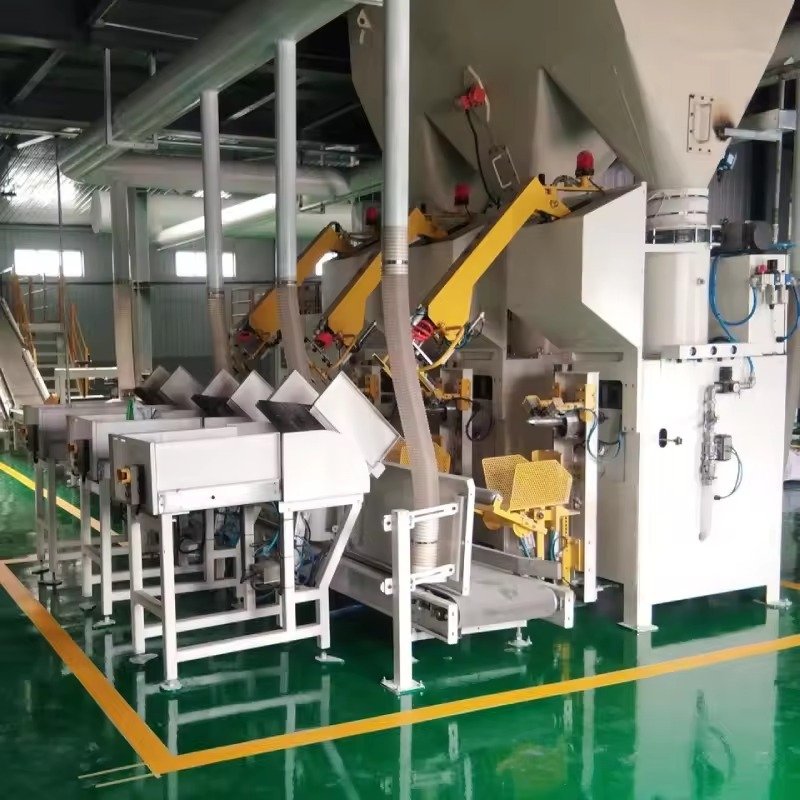
Automatic weighing and bagging machines fill bags to exact weights. Sewing machines or heat sealers close packages. Conveyors move finished bags to palletizing areas. Some systems include bag printing for branding.

How Raw Materials Become Feed Pellets
The transformation process requires careful control at each stage. Understanding the sequence helps operators troubleshoot issues and optimize production quality.
Step 1: Reception and Storage – Raw materials arrive at the facility. Fish meal, soybean meal, wheat flour, corn, rice bran, and vitamin premixes are common ingredients. Each material goes to designated storage bins. Proper storage prevents contamination and maintains freshness.
Step 2: Weighing and Batching – Computer-controlled systems or manual scales measure ingredients. Accuracy is critical for nutritional consistency. A typical bangus (milkfish) feed might contain 15-20% fish meal, 25-30% soybean meal, 20-25% wheat flour, 15-20% rice bran, 5-8% fish oil, and 3-5% vitamin mineral premix.
Step 3: Grinding – Ingredients pass through hammer mills. The screen size determines final particle size. Finer grinding improves mixing uniformity and pellet quality. However, very fine grinding increases energy costs and can reduce pellet water stability.

Step 4: Mixing – All ingredients combine in a mixer for 5-10 minutes. Uniform distribution ensures every pellet has the same nutritional profile. Poor mixing leads to nutrient segregation and inconsistent growth rates in your fish stock.
Step 5: Conditioning – Steam and heat soften the mixture. This process gelatinizes starches and activates binding properties. Conditioning temperature typically ranges from 80°C to 95°C. Proper conditioning improves pellet durability and water stability.
Step 6: Pelleting or Extrusion – For sinking pellets, material passes through a ring die pellet mill. Pressure forces the mixture through die holes. Knives cut pellets to desired length. For floating feed, twin-screw extruders cook material under high pressure (25-40 bar) and temperature (120-150°C). Sudden pressure release causes expansion, creating buoyant pellets.
Step 7: Drying – Fresh pellets contain 15-18% moisture. Dryers reduce this to 10-12% for safe storage. Belt dryers or rotary dryers provide gentle, even drying. Temperature control prevents nutrient degradation while removing moisture.
Step 8: Cooling – Pellets exit dryers at 70-80°C. Coolers bring temperature down to within 5°C of ambient. This prevents condensation in packaging and extends shelf life. Counterflow coolers provide efficient cooling with minimal pellet breakage.
Step 9: Screening and Quality Control – Vibrating screens separate finished pellets by size. Fines (undersized particles) return to the mixer. Oversized pellets go to the crumbler. This ensures uniform pellet size for consistent feeding.
Step 10: Coating (Optional) – For high-quality feeds, pellets pass through a coating drum. Vacuum systems spray fish oil, squid oil, or vitamin solutions onto pellet surfaces. This step adds heat-sensitive nutrients and improves palatability.
Step 11: Packaging – Clean, cooled pellets flow to bagging machines. Most Philippine operations use 15kg, 25kg, or 50kg bag sizes. Proper packaging protects feed from moisture, pests, and contamination during storage and transport.
Ready to Start Your Aqua Feed Production?
MAIKONG offers complete aqua feed production line solutions customized for Philippine aquaculture operations. Our engineering team provides free consultation to determine the optimal system configuration for your capacity needs and budget.
Types of Aquatic Feed Your Production Line Can Make
Different aquaculture species require different feed characteristics. An aqua feed production line can produce various feed types by adjusting equipment configuration and processing parameters.
Floating Feed (Extruded Pellets)

Floating feed remains on the water surface for extended periods. This type suits surface-feeding species like tilapia, bangus (milkfish), and ornamental fish. The production process uses twin-screw extruders operating at 120-150°C and 20-40 bar pressure.
The high temperature and pressure cook starches completely. When material exits the die, sudden pressure release causes expansion. This creates internal air pockets that provide buoyancy. Pellet density typically ranges from 0.3 to 0.6 g/cm³.
Floating feed offers several advantages. Farmers can observe feeding behavior easily. Uneaten feed remains visible, allowing feeding rate adjustments. This reduces waste and water pollution. However, floating feed requires higher energy input during production and costs more than sinking pellets.
Sinking Feed (Dense Pellets)

Sinking feed descends through the water column to reach bottom-feeding species. Shrimp, crabs, grouper, and catfish prefer this feed type. Production uses ring die pellet mills with conditioning but without the high-temperature extrusion process.
Pellet density exceeds 1.0 g/cm³, ensuring rapid sinking. The pellets must maintain structural integrity in water for 2-4 hours without dissolving. This gives slow-feeding species time to consume the feed.
Water stability is critical for sinking feed. Binders like wheat gluten or cassava starch improve pellet cohesion. Proper conditioning and adequate die compression create durable pellets. Testing involves placing pellets in water and observing disintegration time.
Slow-Sinking Feed
This intermediate type serves species that feed in mid-water zones. Pellet density ranges from 0.8 to 1.0 g/cm³. Production involves controlled extrusion with lower expansion or high-density pelleting with reduced compression.
Slow-sinking feed works well for species with varied feeding behaviors. In polyculture ponds with tilapia, catfish, and carp, slow-sinking feed accommodates all species. Some pellets float initially, then slowly sink as water penetrates the structure.
Micro-Pellets for Fry and Larvae

Young fish and shrimp require very small feed particles. Micro-pellets range from 0.3mm to 1.5mm diameter. Specialized equipment produces these small sizes through fine grinding, careful formulation, and precise die selection.
Crumbling systems break standard pellets into micro-sizes. Alternatively, extrusion through small die openings (0.8-1.5mm) followed by cutting produces uniform micro-pellets directly. The smaller the pellet, the more critical quality control becomes.
Nutritional density is higher in starter feeds. Fry have limited digestive capacity but high growth rates. Formulations often contain 40-50% protein from highly digestible sources like fish meal and processed soy protein.
Specialized Functional Feeds
Modern aquaculture uses feeds with specific health benefits. Immune-enhancing feeds contain vitamin C, vitamin E, and beta-glucans. Probiotic feeds include beneficial bacteria to improve gut health. Color-enhancing feeds for ornamental fish contain astaxanthin or spirulina.
Medicated feeds incorporate treatments for common diseases. Stress-resistant formulations include electrolytes and anti-stress vitamins for transport or handling periods. Your aquatic feed production line can manufacture these specialty products by adding specific ingredients during the mixing stage.
Production Considerations by Feed Type
Each feed type requires different equipment settings and quality checks. Understanding these differences helps you plan production schedules and maintain consistent quality.
Floating feed production demands precise temperature control. Extruder barrel temperatures must stay within ±5°C of setpoints. Screw speed affects retention time and cooking degree. Die configuration influences pellet expansion and final density.
Sinking feed quality depends on conditioning efficiency and die compression. Steam quantity, conditioning time, and die hole length-to-diameter ratio all affect water stability. Testing should verify that pellets maintain integrity for the required duration in your specific water conditions.

Tilapia Feed

Floating pellets, 28-32% protein, 2-6mm diameter depending on fish size. Production uses twin-screw extruders with controlled expansion for consistent floating properties.
- Starter feed: 0.5-1.5mm, 38-40% protein
- Grower feed: 2-3mm, 28-32% protein
- Finisher feed: 4-6mm, 26-28% protein
Shrimp Feed

Sinking pellets with high water stability (4+ hours), 35-42% protein, 0.8-2.5mm diameter. Requires excellent binding and water resistance for bottom feeding.
- Post-larvae feed: 0.3-0.8mm crumbles
- Juvenile feed: 1.0-1.5mm pellets
- Grow-out feed: 1.8-2.5mm pellets
Catfish/Grouper Feed

Dense sinking pellets, 32-38% protein, 3-8mm diameter. High fishmeal content for carnivorous species. Excellent water stability essential for slow feeders.
- Fingerling feed: 1.5-3mm sinking
- Grower feed: 4-6mm sinking
- Broodstock feed: 6-8mm with enhanced nutrition
Choosing the Right Production Capacity
Selecting appropriate capacity prevents over-investment and ensures your system meets demand. Philippine aquaculture operations range from small family fish ponds to large commercial shrimp farms. Your aqua feed production line capacity should match your actual consumption plus a reasonable growth margin.
Small-Scale Systems (200kg – 500kg per hour)
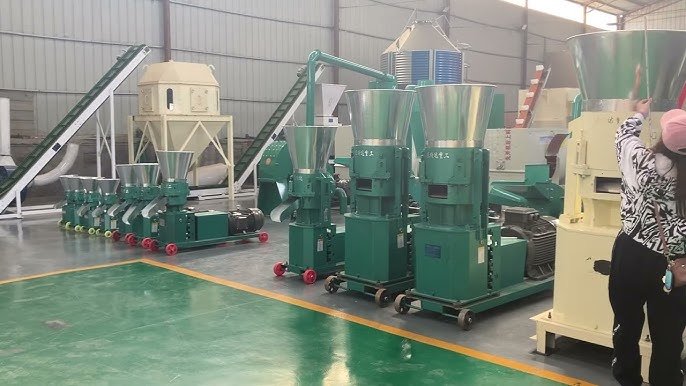
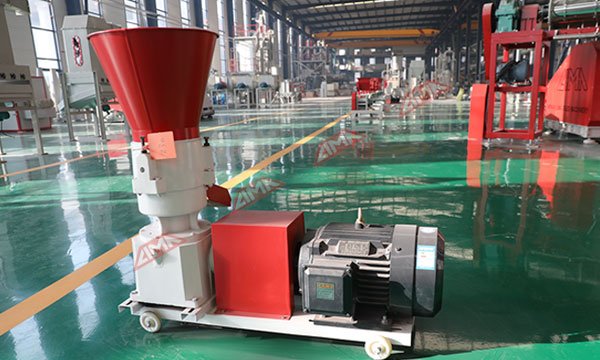
Small capacity systems suit individual fish farmers, village cooperatives, and startup feed businesses. These lines typically include a hammer mill, single-shaft mixer, pellet mill (ring die or single-screw extruder), simple belt dryer, and manual or semi-automatic packaging.
Investment costs range from ₱800,000 to ₱2,500,000 depending on automation level and whether you choose pelleting or extrusion technology. Operating costs per ton of feed are higher than larger systems due to economies of scale, but capital requirements are manageable.
A 300kg/hour line running 6 hours daily produces about 1.8 tons per day. Operating 25 days monthly yields 45 tons. This suits a fish farm consuming 40-50 tons monthly or a small commercial feed operation serving local farmers.
Small systems offer flexibility. You can produce different formulations in short runs. Recipe changes are simple. However, labor costs per ton are higher since most operations require manual intervention for recipe changes, quality checks, and packaging.
Medium-Scale Systems (1-5 tons per hour)

Medium capacity targets commercial feed mills, large farms, or regional feed distributors. These systems incorporate automated batching, continuous mixing, high-capacity pelleting or extrusion, automated drying and cooling, and automatic packaging lines.
Investment ranges from ₱5,000,000 to ₱25,000,000. The higher automation reduces labor costs per ton while improving consistency. A 2-ton-per-hour system operating 8 hours daily produces 16 tons. Monthly production reaches 400 tons at 25 working days.
This capacity serves multiple purposes. You can supply several large farms, operate a regional feed distribution business, or produce for both own-farm consumption and commercial sales. The economies of scale significantly reduce per-ton production costs.
Quality control becomes more systematic at this scale. Automated systems monitor moisture, temperature, and pellet quality continuously. Computerized recipe management ensures formula consistency batch after batch.
Large-Scale Industrial Systems (10-200+ tons per hour)

Large industrial plants serve regional or national markets. These sophisticated systems include multiple production lines, extensive raw material storage, fully automated processing, integrated quality control laboratories, and bulk handling systems.
Investment starts at ₱50,000,000 and can exceed ₱500,000,000 for state-of-the-art facilities. A 20-ton-per-hour line operating two 8-hour shifts produces 320 tons daily or 8,000 tons monthly.
Large plants achieve the lowest per-ton production costs through maximum automation, bulk raw material purchasing, efficient energy use, and optimized logistics. However, they require significant working capital for inventory and sustained high-volume sales channels.
These facilities often produce multiple product lines simultaneously. Separate systems handle floating feed, sinking feed, and specialty formulations. Computer-controlled systems manage the entire operation from raw material reception through finished product shipping.
| Capacity Range | Suitable For | Investment Range (₱) | Monthly Output (25 days) | Labor Required | Automation Level |
| 200-500 kg/hr | Small farms, startups, cooperatives | 800K – 2.5M | 30-75 tons | 2-4 workers | Manual to Semi-auto |
| 1-2 tons/hr | Large farms, small feed mills | 5M – 15M | 200-400 tons | 4-6 workers | Semi-auto to Auto |
| 3-5 tons/hr | Regional feed producers | 15M – 25M | 600-1,000 tons | 6-10 workers | Fully automated |
| 10-20 tons/hr | Large commercial mills | 50M – 150M | 4,000-8,000 tons | 15-25 workers | Fully automated + centralized control |
| 50-200 tons/hr | National/export producers | 200M – 500M+ | 20,000-80,000 tons | 30-60 workers | Full automation + AI optimization |
Calculating Your Required Capacity
Proper capacity planning prevents costly mistakes. Under-capacity systems create production bottlenecks and lost sales opportunities. Over-capacity wastes capital and increases per-unit costs due to underutilization.
Step 1: Determine Current Consumption – Calculate your actual monthly feed usage. For fish farms, use feeding records and stocking data. A 10-hectare tilapia farm at 30,000 fish per hectare with a 1.5 feed conversion ratio (FCR) and 4-month growing cycle needs approximately 45 tons per cycle per hectare, or 112 tons monthly across staggered production batches.
Step 2: Project Growth – Plan for reasonable expansion over 3-5 years. If you intend to expand pond area by 50% within three years, your feed requirements will increase proportionally. Building in 30-50% excess capacity accommodates growth without requiring new equipment.
Step 3: Consider Commercial Sales – If producing for sale to other farms, estimate realistic market demand. Survey neighboring farms about their feed needs and willingness to buy locally-produced feed. Start conservatively; it is easier to add capacity later than to carry debt on underutilized equipment.
Step 4: Account for Operating Hours – Small operations typically run 4-6 hours daily. Medium facilities operate 6-8 hours. Large plants may run 16-24 hours with shift work. Your effective capacity equals hourly capacity × daily hours × working days per month.
Step 5: Include Buffer Capacity – Equipment requires maintenance and experiences occasional downtime. Plan for 80-85% utilization as a realistic maximum. If you need 40 tons daily production, select a system capable of 47-50 tons daily to maintain supply during maintenance periods.
Not Sure Which Capacity Suits Your Operation?
MAIKONG’s technical team helps Philippine clients calculate optimal production capacity based on current needs and growth plans. We provide detailed ROI projections and capacity planning assistance at no cost.
MAIKONG Aqua Feed Production Line: Technical Specifications
MAIKONG has manufactured aqua feed production lines for 22 years. Our model MK-L002 represents our most popular configuration for Philippine aquaculture operations. This system balances capacity, cost, and functionality for medium-scale commercial production.
MK-L002 System Overview
Core Specifications
- Production Capacity: 1.5-2 tons per hour
- Power Requirement: 120kW total (customizable for 220V Philippine standard)
- Production Type: Floating or sinking feed (configuration dependent)
- Pellet Size Range: 0.8mm – 12mm diameter
- Moisture Content: Final product 10-12%
- Material: Food-grade stainless steel contact parts, ABS control panels
- Automation Level: Semi-automatic with PLC control option
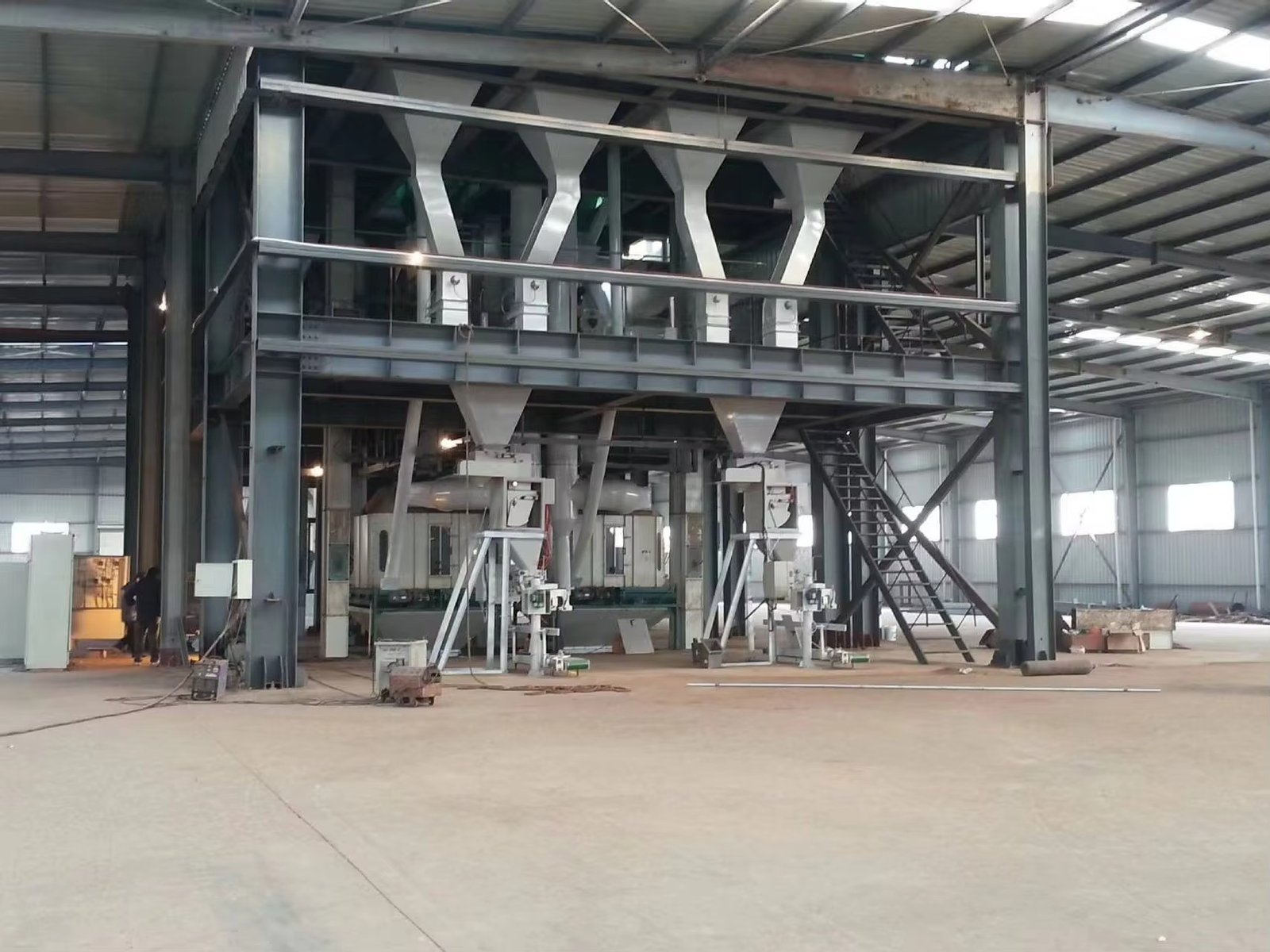
- Installation Space: 280m² minimum (15m × 20m × 6m height)

Complete System Components
Reception & Storage

- 6 × 10-ton storage silos (fish meal, soybean meal, corn, wheat, rice bran, additives)
- Pneumatic discharge system
- Level sensors and monitoring
- Dust collection system
Grinding System

- Water drop hammer mill, 37kW motor
- Screen sizes: 1.0mm, 1.5mm, 2.0mm
- Capacity: 2-3 tons/hour
- Magnetic separator for metal removal
Batching & Mixing

- Auto-weighing system, ±0.2% accuracy
- Twin-shaft paddle mixer, 500kg batch
- Mixing time: 5-8 minutes, CV ≤5%
- Liquid addition system for oils (6-8% capacity)
Conditioning Unit

- Steam-injection conditioner
- Temperature control: 80-95°C
- Retention time: 30-60 seconds
- Improves pellet durability and digestibility
Pelleting Equipment

For Floating Feed:
- Twin-screw extruder, 75kW
- Temperature: 120-150°C, Pressure: 25-40 bar
- Pellet density: 0.3-0.6 g/cm³
For Sinking Feed:
- Ring die pellet mill, 55kW
- Die sizes: 2.5mm – 8mm
- Pellet density: >1.0 g/cm³
Drying System

- Three-layer belt dryer
- Drying temperature: 80°C → 65°C → 50°C (gradient)
- Residence time: 20-30 minutes
- Final moisture: 10-12%
Cooling Equipment

- Counterflow cooler, 2.5 tons/hour capacity
- Cooling to ambient +3-5°C
- Prevents condensation in packaging
- Extends shelf life
Coating System

- Vacuum coating drum
- Oil application: fish oil, squid oil, vegetable oil
- Coating rate: 3-8% by weight
- Absorption rate: ≥95%
Screening & Grading

- Three-layer vibrating screen
- Separation efficiency: ≥98%
- Removes fines and oversized particles
- Ensures uniform pellet size
Packaging Line
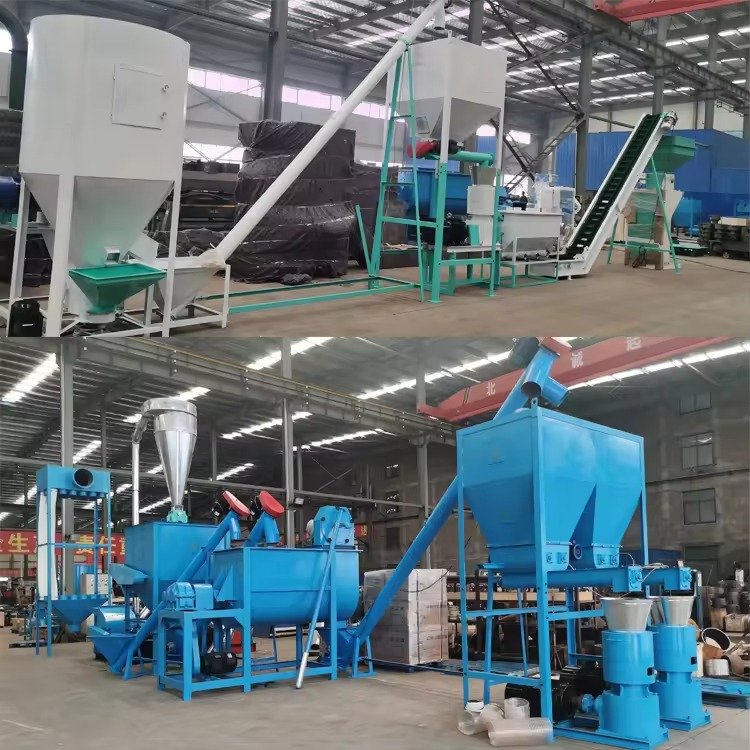
- Auto-weighing and bagging machine
- Bag sizes: 15kg, 25kg, 50kg
- Packing speed: 120 bags/hour (25kg)
- Sewing machine or heat sealer
Control System

- PLC-based control (optional)
- Touch screen interface
- Recipe management system
- Production data logging
- Remote monitoring capability
Environmental Equipment

- Dust collection system (cyclone + bag filter)
- Noise reduction enclosures
- Wastewater treatment (if washing required)
- Meets Philippine environmental standards
Customization Options for Philippine Operations
MAIKONG understands that Philippine aquaculture has specific requirements. We offer extensive customization to match local conditions and business models.
Electrical Customization
Philippine standard voltage is 220V/60Hz for most areas. We configure all motors, controls, and electrical components to match your local power supply specifications.
- Voltage stabilizers for areas with unstable power
- Generator-compatible wiring for off-grid locations
- Phase converters if required
- Energy-efficient motor options to reduce operating costs
Climate Considerations
The Philippine tropical climate affects equipment operation. High humidity, frequent rain, and elevated temperatures require special consideration.
- Corrosion-resistant coatings for coastal installations
- Enhanced ventilation systems for hot ambient conditions
- Moisture barriers for electrical components
- Weather-protected outdoor conveyors and elevators
Species-Specific Configurations
Different aquaculture species need different feed characteristics. We adjust equipment settings to produce optimal feed for your target species.
- Bangus (milkfish): Floating pellets, 2-6mm, moderate protein
- Tilapia: Floating feed, various sizes for life stages
- Shrimp: Sinking micro-pellets, high water stability
- Catfish/Grouper: Dense sinking pellets, high protein
Production Flexibility
Many operations need to produce multiple feed types. We design systems with quick changeover capability for maximum flexibility.
- Quick-change die systems (30-minute changeover)
- Recipe storage for up to 50 formulations
- Separate ingredient bins for different formulas
- Cleanout systems to prevent cross-contamination
Installation and Training Services
MAIKONG provides complete installation and operator training as part of every system purchase. Our installation timeline for the MK-L002 system typically follows this schedule:
| Phase | Duration | Activities | Client Preparation Required |
| Site Preparation | 2-3 weeks | Foundation work, electrical installation, utilities | Building structure, power supply, water supply |
| Equipment Delivery | 1 week | Shipping, customs clearance, transport to site | Clear receiving area, unloading equipment |
| Installation | 2-3 weeks | Equipment positioning, assembly, connections | Access for technicians, local labor support |
| Commissioning | 1 week | System testing, calibration, trial runs | Raw materials for testing, operator availability |
| Training | 1-2 weeks | Operator training, maintenance procedures, troubleshooting | Designated operators, production trials |
| Handover | 1 day | Final inspection, documentation, warranty activation | Final payment, acceptance documentation |
Total installation timeline: 7-10 weeks from site preparation start to full production capability. We provide ongoing technical support via phone, email, and WhatsApp after handover.
Key Benefits of Operating Your Own Aqua Feed Production Line

Investing in an aqua feed production line transforms your aquaculture business economics. The benefits extend beyond simple cost savings to include quality control, formula optimization, and business expansion opportunities.
Dramatic Cost Reduction
Feed typically represents 50-70% of total aquaculture production costs. Commercial feed prices in the Philippines range from ₱35-₱65 per kilogram depending on type and quality. Producing your own feed reduces costs by 30-50%.
A typical cost breakdown comparison shows the savings clearly:
| Cost Component | Commercial Feed (₱/kg) | Own Production (₱/kg) | Savings |
| Raw Materials | 28.00 | 18.00 | 35.7% |
| Processing | 8.00 | 4.50 | 43.8% |
| Packaging & Transport | 6.00 | 2.00 | 66.7% |
| Marketing & Profit | 8.00 | 0.00 | 100% |
| Total Cost | 50.00 | 24.50 | 51% |
For a fish farm consuming 40 tons of feed monthly, this translates to ₱1,020,000 in annual savings (₱50 – ₱24.50 = ₱25.50 × 40,000 kg × 12 months). Even accounting for equipment loan payments, most operations achieve positive cash flow within the first year.
Complete Quality Control
When you produce your own feed, you control every ingredient. This eliminates concerns about adulteration, contamination, or substandard materials that sometimes plague commercial feeds.
You can select premium raw materials tailored to your species. For example, using fresh local fish meal rather than aged imported meal improves palatability. Adding probiotics or immune enhancers becomes cost-effective when you control the formulation.
Quality control extends to physical characteristics. You adjust pellet size precisely for your fish dimensions. Water stability can be optimized for your specific pond conditions rather than accepting a one-size-fits-all commercial product.
Formula Customization and Optimization

Different growth stages require different nutritional profiles. Commercial feed manufacturers offer limited SKUs due to inventory costs. Your own production allows unlimited formula variations.
You can create starter feeds with 40% protein for fry, grower feeds with 32% protein for juveniles, and finisher feeds with 28% protein for market-size fish. Seasonal adjustments based on water temperature and fish metabolism become simple.
Local ingredients offer cost advantages. Rice bran, copra meal, and fish processing byproducts are abundant and inexpensive in the Philippines. Your formulation can incorporate these economically while maintaining nutritional adequacy.
Supply Chain Independence
Commercial feed shortages occur during peak seasons. Delivery delays happen. Prices fluctuate unexpectedly. Operating your own aqua feed production line eliminates these vulnerabilities.
You maintain strategic raw material inventory based on your production schedule rather than relying on feed supplier availability. This prevents costly production delays when fish are at critical growth stages.
Price stability is another advantage. You lock in raw material costs through advance purchasing or long-term supplier contracts. Commercial feed manufacturers pass price increases to customers immediately. Your costs rise only when you choose to replace raw material inventory.
Business Expansion Opportunities
Excess production capacity creates revenue opportunities. Many small fish farmers in your area need quality feed but lack access to reliable suppliers. You can supply neighbors while maintaining your own feed security.
Starting small and expanding works well. Initially produce only for your farm. As you gain experience and establish quality reputation, begin selling to nearby operations. Many successful Philippine aqua feed production line operators now derive 60-70% of revenue from commercial sales while using 30-40% for own-farm consumption.
Brand development becomes possible. Premium-quality local feed commands higher prices than generic commercial products. Your proximity to customers, ability to customize formulas, and fresh product advantage create competitive differentiation.
Environmental and Sustainability Benefits
Proper feed formulation and quality reduce waste. Well-made pellets with correct water stability minimize dissolved nutrients that degrade water quality. This reduces pond maintenance costs and disease risk.
Efficient feed conversion ratios (FCR) result from optimized nutrition and pellet quality. Reducing FCR from 1.8 to 1.5 means producing the same fish harvest with 17% less feed. This saves money while reducing environmental impact.
Local sourcing of raw materials supports community economy and reduces transportation emissions. Using byproducts from local food processing industries creates circular economy benefits.
Advantages of Own Production
- 40-50% cost savings vs. commercial feed
- Complete control over ingredient quality and safety
- Unlimited formula customization for specific needs
- Supply security independent of market availability
- Fresh feed always available (no storage degradation)
- Ability to generate revenue from sales to other farms
- Optimized pellet physical properties for your species
- Use of locally-available raw materials reduces costs
- Quick formula adjustments based on fish performance
- Build equity in equipment rather than paying supplier margins
Challenges to Consider
- Significant capital investment required (₱2M-₱25M+ depending on scale)
- Need technical knowledge for formulation and operation
- Requires dedicated staff and management attention
- Raw material quality control responsibility
- Working capital needed for ingredient inventory
- Equipment maintenance and occasional repairs
- Learning curve during initial operation period
- May need regulatory permits/licenses
- Minimum scale required for economic viability
- Market development needed if selling commercially
Return on Investment Calculations
Understanding payback period helps justify the investment. Let’s examine a realistic scenario for a medium-scale Philippine tilapia operation.
Scenario Parameters:
- Current feed consumption: 40 tons/month
- Commercial feed cost: ₱50/kg
- Monthly feed expense: ₱2,000,000
- Investment in 2-ton/hour production line: ₱12,000,000
- Own-production cost: ₱24.50/kg (including all operating costs)
Financial Analysis:
| Item | Monthly | Annual |
| Feed Requirement | 40 tons | 480 tons |
| Cost at Commercial Price | ₱2,000,000 | ₱24,000,000 |
| Cost with Own Production | ₱980,000 | ₱11,760,000 |
| Monthly Savings | ₱1,020,000 | ₱12,240,000 |
| Equipment Loan Payment (5 years, 8% interest) | ₱243,300 | ₱2,919,600 |
| Net Monthly Benefit | ₱776,700 | ₱9,320,400 |
Payback Analysis: With ₱776,700 net monthly benefit, the ₱12,000,000 investment pays back in approximately 15.5 months. After loan completion in 5 years, the full ₱12,240,000 annual savings flows to profit.
This conservative calculation assumes production only for own use. If you sell 40% of capacity (32 tons/month) to other farms at ₱42/kg (₱8 premium over your cost), additional monthly profit reaches ₱256,000, reducing payback to under 12 months.
Calculate Your Potential Savings
Every aquaculture operation has unique economics. MAIKONG provides customized ROI analysis based on your current feed costs, consumption volumes, and local raw material prices. Let us show you the financial benefits specific to your situation.
Successful Aqua Feed Production Line Installations Worldwide
MAIKONG has installed over 200 aqua feed production lines across five continents. These real-world case studies demonstrate system performance, ROI, and operational outcomes in diverse conditions.
Asia-Pacific Region Success Stories
Philippines – Pampanga Tilapia Cooperative

System: MK-L002, 1.5 ton/hour floating feed line
Application: Tilapia grower and finisher feeds for 8-member cooperative serving 45 hectares total pond area
Results:
- Feed cost reduced from ₱52/kg to ₱26/kg (50% savings)
- Investment: ₱10.5M, payback: 14 months
- Producing 35 tons monthly for members + 15 tons commercial sales
- FCR improved from 1.8 to 1.5 due to fresh, quality feed
- Members report 23% higher net profit per harvest cycle
Vietnam – Mekong Delta Shrimp Farms

System: Custom 3-ton/hour sinking feed line with micro-pellet capability
Application: Black tiger shrimp and whiteleg shrimp feeds, full size range from post-larvae to harvest
Results:
- Producing specialized shrimp feeds (0.3mm-2.5mm) with 4-hour water stability
- Serving 120 hectares intensive shrimp production
- Monthly output: 85 tons (own use) + 45 tons (commercial)
- Investment recovery: 16 months through cost savings and feed sales
- Shrimp survival rate increased 8% due to improved feed quality
Indonesia – Multi-Species Commercial Feed Mill

System: Dual-line installation: 5-ton/hour floating + 3-ton/hour sinking
Application: Commercial production serving regional tilapia, catfish, and grouper farmers across 3 provinces
Results:
- Monthly capacity: 3,200 tons across 15 different product SKUs
- Employs 32 staff, serves 450+ farm customers
- Investment: ₱42M, annual revenue: ₱165M
- Achieved profitability in month 8 of operation
- Expanded from 1 to 2 production lines within 3 years due to demand
Americas Region Installations
Brazil – Tilapia & Poultry Integration

System: MK-L002 with dual configuration for aqua feed (1.5 T/H) and poultry feed (5 T/H)
Key Features:
- Santa Catarina state installation
- Serves integrated tilapia-chicken operation
- Uses local raw materials: soybeans, corn, fish processing waste
- Monthly production: 40T tilapia feed + 120T poultry feed
- 21-month payback period
- Now supplies 15 neighboring farms
Ecuador – Shrimp Export Operation

System: High-capacity 8-ton/hour extruded sinking feed line
Key Features:
- Supports 400-hectare intensive shrimp farm
- Produces premium export-quality shrimp feed
- Incorporates automated quality control systems
- Monthly capacity: 1,600 tons
- Feed quality contributes to EU/US export certification
- ROI: 18 months despite high-spec requirements
European Operations

Spain – Mediterranean Aquaculture Research Center
System: Small-scale flexible 500kg/hour research-grade production line
Application: Experimental feed development for sea bass, sea bream, and turbot
Unique Requirements:
- Ability to produce 50+ different experimental formulations
- Small batch capability (5-20 kg batches)
- Precise control over all processing parameters
- Data logging for research documentation
- Produces both research feeds and small commercial quantities for local farms
Outcomes: Developed 8 commercial feed formulations now licensed to major European feed companies. System paid for itself through licensing fees and contract research work.
African Market Developments
Nigeria – Catfish Feed Production

System: 2-ton/hour sinking pellet line optimized for African catfish (Clarias gariepinus)
Context:
- Lagos state installation serving 25-hectare catfish operation
- Addresses challenge of limited commercial feed availability
- Uses local ingredients: groundnut cake, palm kernel meal, fish waste
- Monthly output: 45 tons own-use + 25 tons to local farmers
- Created 8 permanent jobs in rural area
- 15-month payback despite infrastructure challenges
Egypt – Nile Tilapia Commercial Mill

System: 4-ton/hour floating feed production line
Context:
- Serves Delta region tilapia farmers
- Produces competitively-priced local alternative to imports
- Monthly capacity: 800 tons
- Supplies 180+ fish farms
- Reduced local feed costs by 35% through competition
- Generated local economic activity and jobs
Middle East Aquaculture

Saudi Arabia – Desert Aquaculture RAS System
System: Specialized 1-ton/hour micro-pellet line for intensive RAS (Recirculating Aquaculture System)
Application: High-density tilapia production in controlled environment with strict water quality requirements
Special Adaptations:
- Extreme water stability requirements (6+ hours, minimal leaching)
- Low-phosphorus formulations to minimize biofilter load
- Climate control for equipment in 45°C+ ambient temperatures
- Dust suppression systems for desert conditions
- Produces 25 tons monthly of ultra-stable pellets
- Feed quality critical to system success – zero tolerance for quality variation
Results: RAS operation achieving 35 kg/m³ stocking density with 1.1 FCR – among the best globally. Feed quality identified as key success factor.
Common Success Factors Across Regions
Analyzing these diverse installations reveals consistent patterns that contribute to successful outcomes:
- Adequate Capacity Planning – Successful operations sized equipment for current needs plus 30-50% growth margin. Under-capacity creates bottlenecks; over-capacity wastes capital.
- Quality Raw Materials – Feed quality depends primarily on ingredient quality. All successful installations established reliable raw material supply chains before starting production.
- Proper Training – Operations that invested in thorough operator training achieved faster startup and better long-term quality. MAIKONG’s 2-week training program correlates with higher customer satisfaction.
- Maintenance Programs – Facilities with preventive maintenance schedules experience 40% less downtime than those doing only breakdown repairs. Regular maintenance protects your investment.
- Formula Development – Taking time to optimize formulations for local ingredients and target species pays dividends. Successful operations typically test 3-5 formula variations before settling on production recipes.
- Market Understanding – Operations selling feed commercially succeeded when they understood customer needs and quality expectations. Starting with own-use before commercial sales reduces risk.
Installation Note: MAIKONG has successfully installed aqua feed production lines in over 50 countries with climates ranging from Arctic (Norway salmon farms) to equatorial (Indonesia). We adapt equipment specifications to local conditions including voltage standards, ambient temperature ranges, humidity levels, and available infrastructure. Every system includes comprehensive documentation in English and optional local language support.
Join 200+ Successful MAIKONG Customers Globally
Our track record speaks for itself. From small family operations to industrial-scale feed mills, MAIKONG systems deliver reliable performance and strong ROI. Let us help you achieve similar success in your Philippine aquaculture operation.
Application Scenarios for Aqua Feed Production Lines
Different business models and operational scales require different production approaches. Understanding which scenario matches your situation helps you make the right equipment and capacity decisions.
Small Fish Farm – Own Consumption Only

Typical Profile: 3-10 hectare fish farm, single species or simple polyculture, owner-operated with family labor, 8-25 tons monthly feed consumption.
Recommended System: Small-scale 200-500 kg/hour capacity with basic automation. Ring die pellet mill for sinking feed or small single-screw extruder for floating feed. Simple belt drying or sun-drying (climate permitting). Manual or semi-automatic packaging.
Investment Range: ₱1,200,000 – ₱3,500,000
Benefits:
- Feed cost reduction from ₱50-55/kg to ₱25-30/kg
- Complete control over ingredient quality
- Fresh feed always available
- Formula adjustments for seasonal conditions
- Payback typically 18-24 months
Challenges:
- Higher per-kg production cost vs. larger operations due to scale
- Requires learning formulation and operation skills
- Must source quality raw materials in smaller quantities
- Time commitment for production operations
Success Strategy: Start with a single proven formula for your main production cycle. Source raw materials from cooperative buying groups to get better prices. Consider used equipment or simplified systems to reduce initial investment.
Medium Fish Farm – Own Use + Local Sales

Typical Profile: 10-30 hectare operation, possibly multi-species, employs several workers, consumes 40-80 tons monthly, has relationships with neighboring farms.
Recommended System: 1-2 ton/hour production line with good automation (MK-L002 is ideal for this category). Twin-screw extruder for floating feed or high-capacity pellet mill for sinking feed. Automated batching and mixing. Belt dryer and cooler. Semi-automatic packaging.
Investment Range: ₱8,000,000 – ₱15,000,000
Business Model:
- Produce 60-70% for own consumption
- Sell 30-40% to neighboring farms
- Price feed at ₱38-45/kg (below commercial ₱50+, above your cost ₱24-26)
- Generate ₱300,000-₱600,000 monthly gross profit from sales
- Use sales revenue to accelerate loan repayment
Success Strategy: Establish quality reputation through own-farm results first. Offer neighboring farms trial quantities. Provide technical support to customers (proper feeding rates, storage). Build recurring customer base before expanding capacity.
Commercial Feed Mill – Regional Distribution

Typical Profile: Dedicated feed production business, serves 100+ farm customers, multiple product lines (different species and sizes), professional sales and distribution network.
Recommended System: 3-10 ton/hour capacity depending on market size. May include multiple production lines for different feed types. Fully automated from raw material reception through packaging. Computerized recipe management and quality control. Bulk storage and handling systems.
Investment Range: ₱25,000,000 – ₱80,000,000
Business Model:
- 15-25 different product SKUs (species, sizes, specialized formulations)
- Monthly production: 500-2,000 tons
- Distribution radius: 50-150 km from mill location
- Gross margin: ₱12-20/kg depending on market positioning
- Employment: 15-40 staff
Success Factors:
- Location near concentrated aquaculture activity
- Established relationships with feed ingredient suppliers
- Quality reputation and technical credibility
- Competitive pricing vs. national brands
- Reliable supply and delivery service
- Technical support to customers
Integrated Agribusiness – Multiple Protein Sources

Typical Profile: Diversified operation producing tilapia, chickens, ducks, and possibly livestock. Synergies in feed production, waste utilization, and labor. Common in Philippine family corporate farms.
Recommended System: Flexible production line capable of producing both aqua feed and livestock feed. The MAIKONG MK-L002 can be configured for this dual purpose. Pellet mills handle poultry/livestock feed well. Add extruder for floating fish feed capability.
Investment Range: ₱12,000,000 – ₱25,000,000 depending on capacity and flexibility
Synergies:
- Share raw material purchasing and storage infrastructure
- Alternate production between aqua and livestock feed based on seasonal demand
- Use chicken manure for pond fertilization (integrated nutrient cycling)
- Cross-utilize labor during seasonal peaks
- Spread equipment investment across multiple revenue streams
Cooperative or Association Feed Mill

Typical Profile: 10-50 member fish farmers pooling resources to build shared production facility. Members contribute capital and receive feed at cost. May also sell to non-members.
Recommended System: 1.5-3 ton/hour capacity sized for total member consumption plus 20-30% commercial sales. Relatively high automation to reduce labor costs and complexity. Clear production scheduling system for member orders.
Investment Range: ₱10,000,000 – ₱20,000,000
Governance Considerations:
- Clear bylaws on equipment usage, costs, and pricing
- Professional manager/operator (not volunteer-run)
- Transparent financial reporting to members
- Formula development committee with technical expertise
- Maintenance fund contributions from members
Success Strategy: Start conservatively with basic feed types. Demonstrate value to members through cost savings and quality. Expand product range as experience grows. Use commercial sales to subsidize member pricing.
Contract Manufacturing – Producing for Brand Owners
Typical Profile: Production facility manufacturing feed under contract for brand owners who handle marketing and distribution. Common in regions with established aquaculture clusters.
Recommended System: High-quality, consistent production capability. Excellent quality control and documentation systems. Flexibility for different formulations. Capacity: 3-10+ tons/hour depending on contracts.
Investment Range: ₱30,000,000 – ₱100,000,000
Business Model:
- Long-term contracts with branded feed companies
- Production to customer specifications and formulations
- Revenue from production fees (₱3-6/kg typically)
- Lower marketing costs, stable volume
- Must meet stringent quality standards and certifications
Philippine Market Opportunity: The Philippines imports significant quantities of aqua feed ingredients and finished feeds. Local production using domestic raw materials creates import substitution opportunities. Government agencies like DA-BFAR and DTI often provide support for local feed manufacturing initiatives that reduce import dependence and create rural employment.
Matching System to Your Scenario
Choosing the right configuration requires honest assessment of your situation:
| If Your Situation Is… | Consider This Approach… | Typical Investment |
| Single fish farm, 5-15 hectares, learning aquaculture | Start with small 200-300 kg/hr system, basic automation, plan to upgrade later | ₱1.5M – ₱2.5M |
| Established farm, 15-30 hectares, stable production, some neighbors interested | Medium system 1-2 T/hr (MK-L002), good automation, build sales gradually | ₱10M – ₱15M |
| Feed business focus, established market, ready to commit full-time | Commercial scale 3-5 T/hr, full automation, professional operation | ₱25M – ₱40M |
| Cooperative with 15+ members, total 80+ hectares | Shared 2-3 T/hr facility, member governance, professional management | ₱15M – ₱22M |
| Integrated farm: fish + poultry + crops | Flexible 1.5-2 T/hr dual-purpose line, leverage synergies | ₱12M – ₱18M |
MAIKONG works with clients in all these scenarios. Our experience across diverse business models helps us recommend optimal configurations for your specific situation. Contact us to discuss which approach fits your goals and resources.
Why Choose MAIKONG for Your Aqua Feed Production Line
Selecting the right equipment manufacturer is as important as choosing the right capacity. Your aqua feed production line represents a significant investment that will serve your business for 15-20 years. MAIKONG’s 22-year track record in pellet machine manufacturing provides the foundation for your success.
About MAIKONG: Two Decades of Feed Equipment Excellence
MAIKONG was established in 2002 in GD Province, SZ City, focusing initially on small-scale pellet mills for local farms. Through consistent innovation and customer-focused development, we evolved into a comprehensive feed equipment manufacturer serving global markets.
Our facility now covers 28,000 square meters with dedicated manufacturing zones for different equipment types. We employ 156 staff including 23 engineers specializing in feed equipment design, process optimization, and automation systems.
The Philippine market holds special importance for MAIKONG. We recognize the unique challenges and opportunities in Philippine aquaculture. Our equipment specifications, service model, and business approach are tailored to support successful Philippine operations.
Comprehensive Product Range
MAIKONG manufactures complete production line solutions and individual components:
Feed Production Equipment
- Pellet machines – ring die mills, flat die mills, all capacities
- Feed pellet machines – specialized for different feed types
- Fish feed pellet machines – aquaculture-optimized designs
- Twin-screw extruders – floating feed production
- Single-screw extruders – alternative extrusion technology
Complete Production Lines
- Feed pellet production lines – general purpose
- Fish feed production lines – aquaculture focus
- Aqua feed production lines – complete systems
- Chicken feed production lines – poultry systems
- Poultry feed production lines – comprehensive solutions
- Animal feed production lines – livestock applications
- Pet feed production lines – companion animal feeds
- Pig feed production lines – swine nutrition
- Shrimp feed production lines – specialized crustacean feeds
- Cattle feed production lines – ruminant systems
Specialized Applications
- Fertilizer pellet machines – organic fertilizer production
- Biomass pellet machines – biofuel applications
- Wood pellet machines – forestry waste utilization
- Alfalfa pellet machines – forage processing
Additional Equipment
- Hammer mills and grinders
- Mixers (ribbon, paddle, twin-shaft)
- Dryers and coolers
- Coating and spraying systems
- Packaging and bagging equipment
- Control and automation systems
What Sets MAIKONG Apart
22 Years Manufacturing Experience

Two decades of continuous improvement and refinement. Our current equipment designs incorporate lessons from thousands of installations. We have seen what works and what fails in real-world conditions.
This experience translates to equipment that operates reliably under Philippine conditions. We anticipate challenges that newer manufacturers discover only through customer complaints.
Philippine Market Focus

We actively recruit dealers and distributors in the Philippines. This local presence means faster response to parts needs and technical support. Our goal is a MAIKONG dealer in every major aquaculture region.
Equipment arrives configured for Philippine voltage (220V), includes English documentation, and incorporates features based on feedback from your fellow Philippine operators.
Comprehensive OEM/ODM Capability

Standard equipment serves most needs well. But sometimes your situation requires customization. MAIKONG offers full OEM (Original Equipment Manufacturing) and ODM (Original Design Manufacturing) services.
We can modify equipment dimensions for your building constraints, adjust capacities for your specific throughput, or develop entirely new equipment configurations for unique applications.
Quality Control and Testing

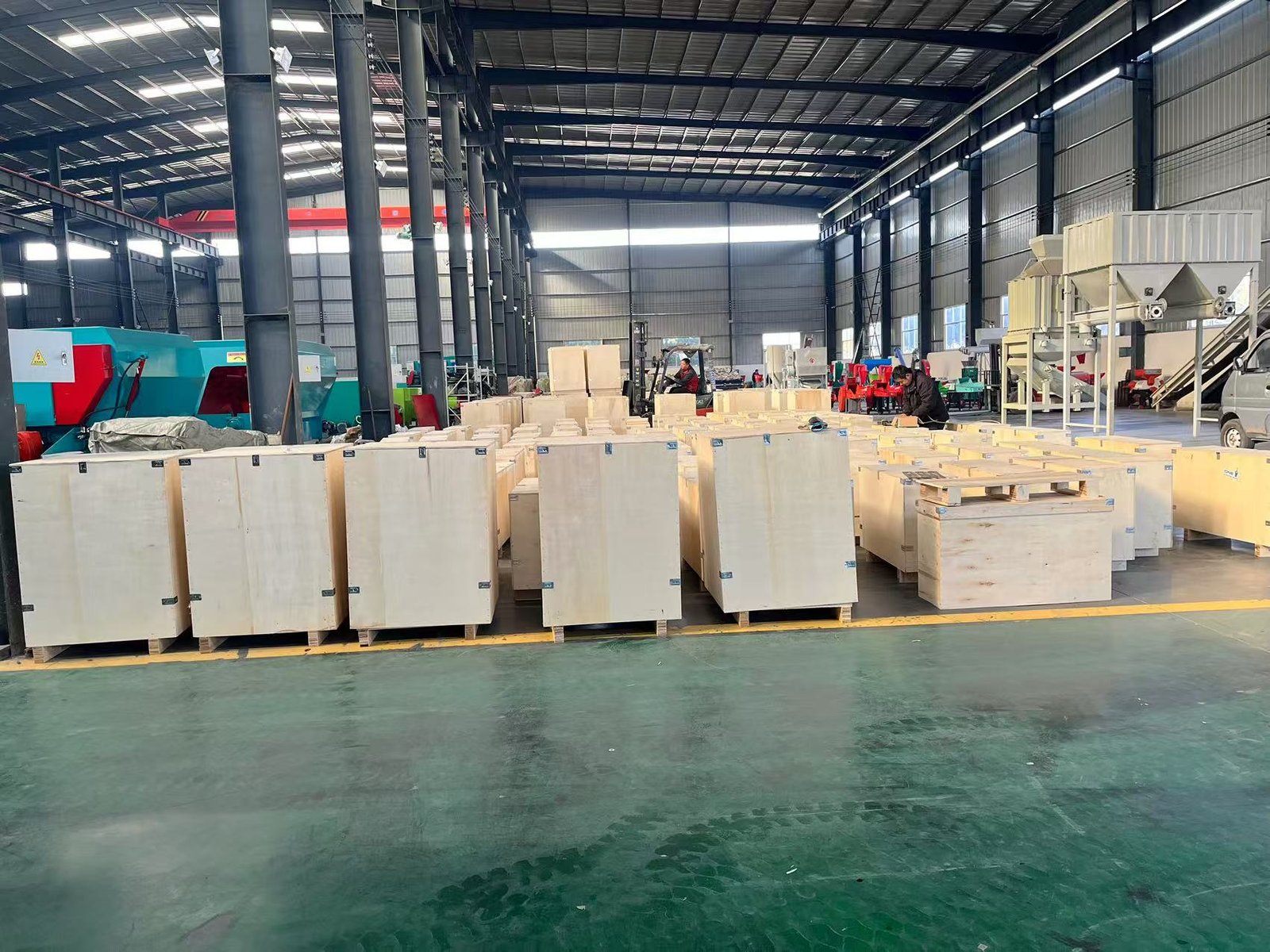
Every MAIKONG machine undergoes rigorous factory testing before shipment. Pellet mills run test batches. Extruders produce sample feeds. Automation systems complete full cycle tests.
Our QC process includes material verification, dimensional inspection, performance testing, and final assembly review. This catches issues in our factory rather than discovering them at your site.
Technical Support Team

Our Philippine-focused support team understands your operational challenges. They speak your language and work in your timezone. Contact via WhatsApp, email, or phone gets rapid response.
Technical issues receive priority attention. Our engineers can diagnose most problems remotely. For complex situations, we arrange on-site service visits with minimal delay.
Competitive Pricing Structure

We manufacture in our own facilities with efficient processes developed over 22 years. This efficiency translates to competitive pricing without quality compromises.
Our pricing includes comprehensive support: installation supervision, operator training, documentation, initial spare parts kit, and warranty service. No hidden costs surprise you later.
Customer Success Stories: Philippine Installations
“We purchased the MAIKONG MK-L002 system in 2021 for our 18-hectare tilapia farm in Pampanga. Initial concerns about operating a production line proved unfounded – the training was excellent and the equipment operates reliably. Our feed costs dropped from ₱51/kg to ₱27/kg. The system paid for itself in 15 months. We now supply 6 neighboring farms and the additional income more than covers our loan payments. MAIKONG’s technical support has been responsive whenever we had questions.”
“As a cooperative representing 12 member farms, we carefully evaluated several manufacturers before selecting MAIKONG. The deciding factors were the competitive pricing, the customization they offered for our specific situation, and their track record in Southeast Asia. Installation went smoothly. Production quality exceeded our expectations. Member satisfaction is very high because feed costs decreased while fish growth improved. The business case they presented proved accurate – we are on track for full payback in 18 months.”
Warranty and After-Sales Service
MAIKONG provides industry-leading warranty coverage and post-installation support:
- Equipment Warranty: 2 years on main equipment (pellet mill, extruder, motors). 1 year on ancillary equipment and automation components.
- Wear Parts: 6 months on dies, rollers, screens, and other consumables (with proper operation and maintenance).
- Installation Support: MAIKONG engineer supervises installation and commissioning. Typical duration: 2-3 weeks on-site.
- Operator Training: Comprehensive 1-2 week training program covering operation, maintenance, troubleshooting, and basic formulation.
- Documentation: Complete manuals in English including operation procedures, maintenance schedules, parts lists, troubleshooting guides, and recommended formulations.
- Spare Parts: Initial spare parts kit included. Ongoing parts availability through Philippine dealer network and direct from factory.
- Technical Support: Lifetime support via WhatsApp, email, and phone. Video call troubleshooting. Remote diagnosis capabilities.
- On-Site Service: Available when remote support insufficient. Service visit scheduling typically within 7-10 days for non-emergency situations.
Dealer and Distributor Opportunities
MAIKONG is actively building a dealer network throughout the Philippines. We seek partners in each major aquaculture region who can provide local sales, installation support, and after-sales service.
Ideal Dealer Profile:
- Established presence in agricultural or aquaculture equipment market
- Technical capability for installation and basic service
- Showroom or demonstration facility
- Financial capacity for inventory and customer financing support
- Commitment to MAIKONG brand development
Dealer Benefits:
- Exclusive territory rights
- Attractive dealer margins
- Marketing support and materials
- Technical training for dealer staff
- Demo equipment programs
- Priority parts allocation
- Co-op advertising programs
If you have an established agricultural business and interest in representing MAIKONG in your region, contact us to discuss dealer partnership opportunities.
Important Note: MAIKONG equipment is sold only through authorized dealers and direct from factory. Beware of unauthorized sellers offering used, refurbished, or counterfeit equipment. Always verify authorization before purchasing. Warranty and support apply only to equipment purchased through authorized channels.
How to Get Started with Your Aqua Feed Production Line

Starting your own aqua feed production line involves several important steps. Following a structured process increases your chances of success and helps avoid costly mistakes.
Step 1: Assess Your Needs and Feasibility
Begin with honest evaluation of your situation:
Current Feed Consumption Analysis
- Calculate actual monthly feed usage for past 12 months
- Identify seasonal variations in consumption
- Project consumption growth over next 3-5 years
- Determine feed types and sizes you use
Financial Feasibility
- Current annual feed expenditure
- Potential cost savings with own production
- Available capital for investment
- Financing options (bank loans, equipment financing)
- Expected payback period
- Working capital requirements for raw materials
Infrastructure and Resources
- Available space for production facility (minimum 200-500 m² depending on capacity)
- Electrical supply capability (verify capacity for equipment load)
- Water supply for processing and cooling
- Access for raw material deliveries and finished product distribution
- Available labor or willingness to hire operators
Step 2: Determine Optimal Capacity
Right-sizing your system is critical. Use this simple calculation:
Required Hourly Capacity Formula:
Hourly Capacity = (Monthly Consumption × 1.3) ÷ (Daily Hours × Working Days)
Example: 40 tons monthly consumption, 6 hours daily operation, 25 working days:
Hourly Capacity = (40,000 kg × 1.3) ÷ (6 hrs × 25 days) = 347 kg/hr
Recommended System: 400-500 kg/hr capacity provides appropriate margin
The 1.3 multiplier accounts for:
- Growth in consumption over time
- Equipment downtime for maintenance
- Possible commercial sales opportunities
- Seasonal demand variations
Step 3: Select Feed Type Configuration
Decide what types of feed you need to produce:
- Floating Feed Only: Simpler system with twin-screw extruder. Suitable if you produce only surface-feeding species like tilapia or bangus. Lower initial investment than dual-capability systems.
- Sinking Feed Only: Ring die pellet mill configuration. Ideal for shrimp, catfish, grouper. Less energy consumption than extrusion. Lower equipment cost.
- Both Floating and Sinking: Requires extruder for floating plus pellet mill for sinking, OR a versatile extruder that can produce both types by adjusting parameters. Higher investment but maximum flexibility.
- Multiple Species/Sizes: Plan for quick die changes and recipe management capability. This requires good automation and cleanout procedures to prevent cross-contamination between formulations.
Step 4: Contact MAIKONG for Consultation
Once you have basic parameters defined, contact our team for detailed consultation:
Free Consultation and System Design
MAIKONG provides no-obligation consultation to help you plan your aqua feed production line. Our engineers review your requirements and recommend optimal equipment configuration, capacity, and layout. We provide detailed quotations including all components, installation, training, and support.
Step 5: Site Preparation and Planning
While equipment is being manufactured, prepare your installation site:
Building Requirements
- Enclosed building recommended (open-sided acceptable in dry climates)
- Concrete floor capable of supporting equipment weight (150-300 kg/m² loading)
- Ceiling height minimum 4.5-6 meters for elevators and silos
- Good ventilation for heat and dust management
- Weather protection for electrical components
Utilities Installation
- Electrical service sized for total equipment load plus 20% margin
- Main disconnect and circuit breakers per equipment specifications
- Grounding system for safety
- Water supply for conditioning, cooling, and cleanup (5-10 liters/minute typical)
- Compressed air for automation (if using pneumatic controls)
Layout Planning
- Raw material receiving area with vehicle access
- Storage silos or bins for ingredients
- Processing equipment arranged for logical material flow
- Finished product storage area
- Shipping/loading area
- Maintenance work space
- Office/control room for supervision
Step 6: Installation and Commissioning
MAIKONG supervises the complete installation process:
- Equipment Delivery: Coordinate shipping to your site. Plan adequate labor for unloading (forklift or crane typically needed).
- Installation: MAIKONG engineer guides local contractors or your staff through equipment positioning, assembly, and connections. Duration: 2-3 weeks typically.
- Utility Connections: Electrical, water, compressed air connections completed per specifications.
- Testing and Calibration: Each component tested individually, then complete system testing with actual raw materials.
- Trial Production: Produce initial batches, evaluate quality, make adjustments as needed.
- Documentation: Complete documentation handover including manuals, drawings, maintenance schedules, and warranty information.
Step 7: Operator Training
Comprehensive training ensures successful operation:
Training Curriculum (1-2 Weeks)
- Day 1-2: Equipment overview, safety procedures, basic operation
- Day 3-4: Raw material handling, batching procedures, recipe management
- Day 5-6: Production operation, quality control, troubleshooting common issues
- Day 7-8: Maintenance procedures, preventive maintenance schedules, parts replacement
- Day 9-10: Advanced topics – formula optimization, seasonal adjustments, efficiency improvement
Training includes both classroom instruction and hands-on practice. Your operators produce actual batches under supervision until competent and confident.
Step 8: Raw Material Sourcing
Establish reliable ingredient supply before starting regular production:
Key Ingredients for Philippine Aqua Feed
| Ingredient | Typical Usage % | Local Sources (Philippines) | Quality Considerations |
| Fish Meal | 10-25% | Local fish processing, imports from Vietnam/Thailand | Protein content 60-65%, freshness critical |
| Soybean Meal | 20-35% | Imported (USA, Brazil), local feed mills | Protein 44-48%, low moisture |
| Wheat Flour | 10-20% | Flour mills nationwide | Binding properties, consistent quality |
| Corn Meal | 15-25% | Local grain suppliers, corn farms | Energy source, avoid aflatoxin |
| Rice Bran | 5-15% | Rice mills (abundant nationwide) | Fresh preferred, check oil rancidity |
| Fish Oil | 3-8% | Fish processing plants, specialty suppliers | Omega-3 content, storage stability |
| Vitamin Premix | 1-3% | Feed additive suppliers, imports | Storage conditions, expiration dates |
| Mineral Premix | 1-2% | Feed additive suppliers | Proper formulation for aquatic species |
Develop relationships with 2-3 suppliers for each major ingredient. This provides supply security and price negotiation leverage. Consider forming buying groups with other feed producers for better pricing on bulk purchases.
Step 9: Quality Control Procedures
Implement systematic quality control from day one:
- Raw Material Testing: Check moisture content, protein levels (for protein sources), contamination, storage conditions
- Batching Verification: Verify scales accuracy monthly, spot-check batch weights, maintain batch records
- Mixing Quality: Periodically test mix uniformity (CV should be ≤5%), check for ingredient segregation
- Pellet Quality: Test water stability daily (4-hour test for shrimp feed, 2-hour for fish feed), measure pellet dimensions, check moisture content, evaluate pellet durability
- Finished Product: Final moisture testing before packaging (target 10-12%), proper labeling with production date and formula code, storage in dry, cool conditions
Step 10: Start Small and Optimize
Begin with a conservative approach:
- Single Formula Start: Perfect one feed formulation before expanding to multiple products. Use this formula for initial production while learning equipment operation.
- Own-Use First: Produce only for your farm initially. This allows quality testing with your own fish before selling to others.
- Gradual Commercial Sales: Once confident in product quality and process consistency, begin supplying close neighbors or friends. Build reputation through quality and reliability.
- Formula Expansion: Add new formulations systematically based on customer requests or business strategy.
- Continuous Improvement: Keep detailed records of fish performance, feed conversion ratios, and growth rates. Use this data to refine formulations.
How long from order to production?
Typical timeline: 4-6 weeks equipment manufacturing → 2-3 weeks shipping and customs → 2-3 weeks installation → 1-2 weeks training and commissioning. Total: 9-14 weeks from order to full production capability. Site preparation should occur during manufacturing period to avoid delays.
What permits or licenses are required in the Philippines?
Requirements vary by location and scale. Commonly needed: Business permit from local government, Environmental Compliance Certificate (ECC) for larger operations, Fire safety permit, Occupational safety compliance, Food/feed safety registration for commercial sales. MAIKONG provides documentation to support permit applications. Consult local authorities early in planning process.
Can I finance the equipment purchase?
Yes, several options exist: Bank equipment loans (typically 3-5 years, 8-12% interest), DA-BFAR loan programs for aquaculture development, Cooperative financing for group purchases, Equipment leasing arrangements. MAIKONG works with customers to structure payment terms that facilitate financing approval. We provide all documentation needed for loan applications.
What ongoing costs should I budget?
Beyond raw materials: Electricity (₱0.50-1.50/kg of feed produced depending on type), Labor (₱15,000-25,000/worker monthly), Maintenance and parts (budget 3-5% of equipment cost annually), Packaging materials (₱0.50-2.00/kg depending on bag type), Quality control testing (₱5,000-15,000 monthly), Building/facility costs (rent/maintenance). Total operating cost typically ₱4-8/kg excluding raw materials.
What technical knowledge do I need?
MAIKONG training covers all operational requirements. Helpful but not essential: Basic understanding of aquaculture nutrition, Familiarity with mechanical equipment operation, Ability to follow standard operating procedures, Basic math for batching calculations, Attention to detail for quality control. We train operators from scratch – prior feed mill experience is not required.
Become a MAIKONG Dealer in the Philippines

MAIKONG is expanding our Philippine dealer network. We seek qualified partners in all major aquaculture regions to provide local sales, installation support, and after-sales service for our aqua feed production lines and related equipment.
Why Partner with MAIKONG as a Dealer
Strong Product Line
Represent a complete range of feed production equipment from small 200 kg/hr systems to industrial 200+ ton/hr installations. MAIKONG’s 22-year manufacturing experience and quality reputation make sales easier.
Our product range covers all aquaculture species and many livestock/poultry applications. This diversity creates cross-selling opportunities and larger average transactions.
Growing Market Demand
Philippine aquaculture continues rapid growth. Rising commercial feed costs drive interest in own-production solutions. Government support for local feed manufacturing creates favorable business environment.
The market opportunity extends beyond aquaculture: poultry farmers, livestock operations, organic fertilizer producers, and biomass fuel operations all need pelletizing equipment.
Attractive Dealer Economics
MAIKONG offers competitive dealer margins that support local business operations. Recurring revenue from spare parts, consumables, and service creates long-term income streams beyond initial equipment sales.
Training, marketing support, and technical assistance help dealers build successful businesses without requiring deep technical expertise at startup.
Manufacturer Support
MAIKONG provides comprehensive dealer support: Technical training for sales and service staff, Marketing materials and demonstration equipment, Installation supervision assistance, Warranty support and parts supply, Regular communication and business development assistance.
You are not alone – MAIKONG works as your partner for mutual success.
Ideal Dealer Profile
We seek dealers with these characteristics:
Strong Candidates
- Established agricultural equipment business (3+ years operation)
- Existing customer base in aquaculture or livestock sectors
- Technical service capability or willingness to develop it
- Showroom or demonstration facility
- Financial stability for inventory and customer financing
- Sales team with agriculture/aquaculture market knowledge
- Service vehicles and basic tools
- Commitment to brand development and market growth
- Good business reputation in local market
Also Considered
- Feed mill operators wanting to add equipment sales
- Large aquaculture operations with excess capacity to distribute
- Agricultural cooperatives serving member needs
- Construction/industrial equipment dealers expanding into agriculture
- Entrepreneurs with aquaculture industry connections and capital
- Import/distribution companies adding feed equipment line
Dealer Benefits and Support
- Territory Protection: Exclusive dealer rights for defined geographic area (typically province or region level)
- Competitive Margins: Dealer pricing structure supporting profitable operations while remaining competitive in market
- Marketing Support: Co-op advertising programs, trade show participation support, marketing materials, demo equipment programs
- Technical Training: Comprehensive training for dealer staff on product knowledge, installation, service, and troubleshooting
- Sales Tools: Product literature, technical specifications, ROI calculators, customer presentation materials
- Demo Equipment: Access to demonstration units for customer trials and exhibitions
- Installation Support: MAIKONG engineers available for installation supervision on dealer sales
- Warranty Administration: Clear warranty policies and support for warranty claims
- Parts Supply: Priority parts allocation and competitive dealer pricing on spare parts
- Business Development: Regular communication, market insights, new product introductions
Dealer Requirements and Commitments
In return for dealer benefits, MAIKONG expects:
- Sales Targets: Reasonable annual sales quotas based on territory potential (typically 3-8 systems annually to start)
- Inventory: Maintain demonstration equipment and common spare parts inventory
- Service Capability: Provide basic installation assistance and after-sales service to customers
- Customer Support: Respond promptly to customer inquiries and warranty issues
- Market Development: Active promotion of MAIKONG brand through advertising, customer visits, exhibitions
- Brand Standards: Represent MAIKONG professionally and maintain brand reputation
- Reporting: Regular sales reports and market feedback to factory
- Training Participation: Send staff to training programs as offered
Available Territories
MAIKONG is actively recruiting dealers in these Philippine regions:
Priority Markets (Currently Open)
- Luzon: Pampanga, Bulacan, Nueva Ecija, Pangasinan, Isabela, Cagayan, Batangas, Laguna
- Visayas: Iloilo, Negros Occidental, Cebu, Bohol
- Mindanao: Davao, General Santos, Zamboanga, Cagayan de Oro, Cotabato
Secondary Markets
- Other provinces with significant aquaculture or livestock activity
- Sub-dealer opportunities in areas with existing primary dealers
- Specialized dealers (e.g., organic fertilizer focus, biomass fuel focus)
How to Apply for Dealership
If you are interested in representing MAIKONG in your region, follow this process:
- Initial Contact: Reach out via email (Lucy@pelletmachine.ph), WhatsApp (8613-51090-74-01), or phone. Indicate your interest and provide basic company information.
- Preliminary Discussion: We will schedule a call or video meeting to discuss your business, market area, and mutual fit.
- Application Submission: Complete dealer application form providing details about your company, facilities, staff, financial capability, and market plan.
- Evaluation: MAIKONG reviews application and may request additional information or references.
- Facility Visit: For qualified applicants, MAIKONG representative visits your facility to assess capabilities and discuss territory and terms.
- Agreement Negotiation: Discuss territory boundaries, sales targets, support programs, and commercial terms.
- Dealer Agreement: Formal dealer agreement signed outlining rights, responsibilities, and terms.
- Training and Launch: Dealer staff attend training. Initial demo equipment and marketing materials delivered. Launch sales activities.
Investment Required
Becoming a MAIKONG dealer requires some initial investment:
| Investment Component | Estimated Amount (₱) | Notes |
| Demo Equipment | 500,000 – 3,000,000 | Smaller demo units, often at dealer cost or consignment |
| Spare Parts Inventory | 200,000 – 500,000 | Common consumables and replacement parts |
| Marketing Launch | 100,000 – 300,000 | Signage, initial advertising, promotional materials |
| Training & Setup | 50,000 – 150,000 | Staff training, travel, initial setup costs |
| Working Capital | Variable | For customer financing, deposits on orders, operating expenses |
Total initial investment typically ranges from ₱850,000 to ₱4,000,000 depending on territory size, facility situation, and existing business infrastructure. Some components may be reduced or financed depending on specific situation.
Success Stories: Existing MAIKONG Dealers
“We added MAIKONG feed equipment to our agricultural machinery business in 2020. It has become our fastest-growing product line. The aquaculture boom in our region created strong demand. MAIKONG’s quality and support make selling easy. Our first year we sold 4 systems. Last year we sold 11 systems plus substantial parts and service revenue. The dealership has been highly profitable and strategic for our business growth.”
Ready to Become a MAIKONG Dealer?
Join our growing network of successful dealers serving the Philippine aquaculture and agriculture markets. MAIKONG provides the products, support, and partnership you need to build a profitable equipment business.
Your Path to Feed Independence Starts Here

The decision to invest in an aqua feed production line transforms your aquaculture business fundamentally. Feed costs decrease by 40-50%. Quality improves because you control every ingredient. Supply security eliminates dependence on commercial feed availability. Growth potential expands through possible commercial sales to neighboring farms.
Philippine aquaculture continues growing rapidly. Tilapia, bangus, shrimp, and other species drive increasing feed demand. Rising commercial feed prices make own-production economics increasingly attractive. Government support for local feed manufacturing creates a favorable policy environment.
MAIKONG brings 22 years of feed equipment manufacturing experience to support your success. Our aqua feed production lines operate reliably in diverse conditions across 50+ countries. Philippine-specific configurations address your local requirements: 220V electrical systems, tropical climate considerations, species-appropriate feed types, and capacity ranges matching your scale.
Whether you operate a small family fish farm seeking cost reduction or plan a commercial feed mill serving regional markets, MAIKONG offers appropriate solutions. Our product range spans from 200 kg/hour starter systems to industrial 200+ ton/hour installations. Customization capabilities ensure your system matches your exact requirements.
The investment pays back quickly. Typical payback periods range from 12-24 months depending on your feed consumption and whether you pursue commercial sales. After payback, the savings flow directly to your profitability for the 15-20 year equipment lifespan.
Beyond economics, feed independence provides peace of mind. You know exactly what goes into your fish feed. You adjust formulations based on actual fish performance rather than accepting one-size-fits-all commercial products. You maintain supply during seasonal shortages when competitors struggle to find feed.
Next Steps
Ready to explore aqua feed production line opportunities for your operation? The process begins with conversation. Contact MAIKONG to discuss your situation, requirements, and goals. Our team provides:
- Free consultation on capacity selection and system configuration
- Customized ROI analysis based on your current feed costs and consumption
- Detailed quotations including all equipment, installation, training, and support
- Site planning assistance for optimal layout
- Financing guidance and documentation support
- Connections to existing customers for references
No obligation. No pressure. Just professional guidance to help you make informed decisions about your aquaculture business future.
Contact MAIKONG Today
Take the first step toward feed independence and improved aquaculture profitability. Our Philippine support team is ready to help you succeed.
MAIKONG Manufacturing Co., Ltd.
22 Years Feed Equipment Manufacturing Excellence
Location: SZ City, GD Province
Website: https://pelletmachine.ph/
Your successful aquaculture operation deserves the best feed production solutions. MAIKONG delivers quality equipment, expert support, and partnership for long-term success. Contact us today to begin your journey toward feed independence and improved profitability.