
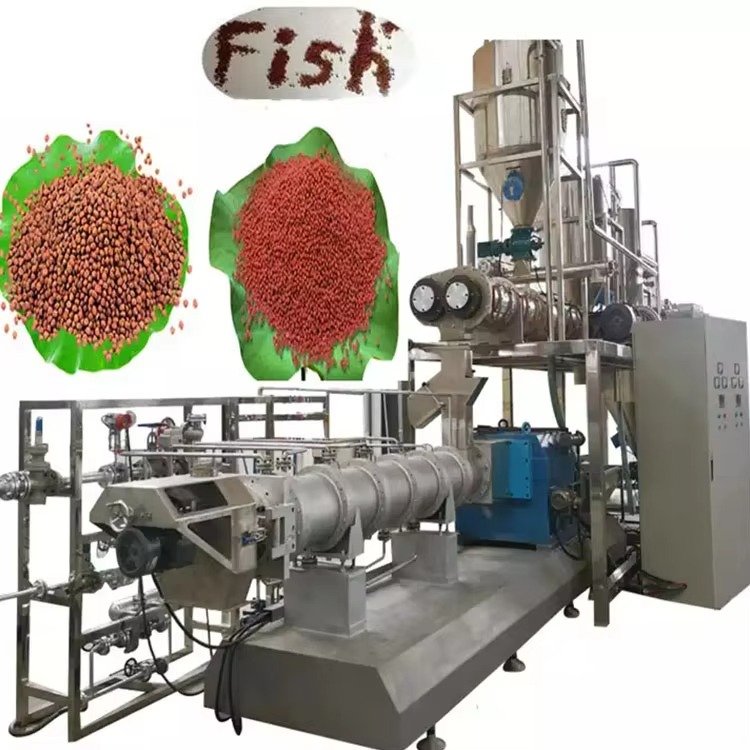
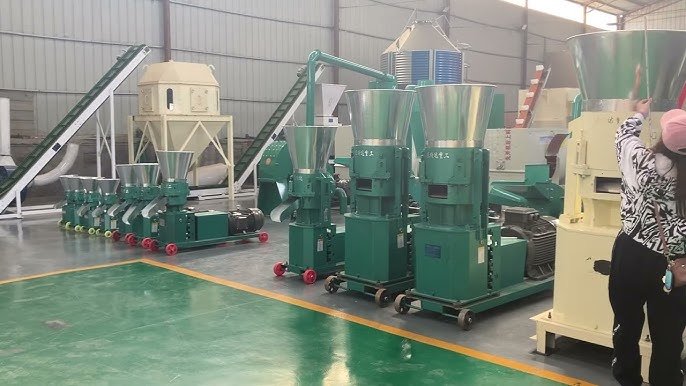
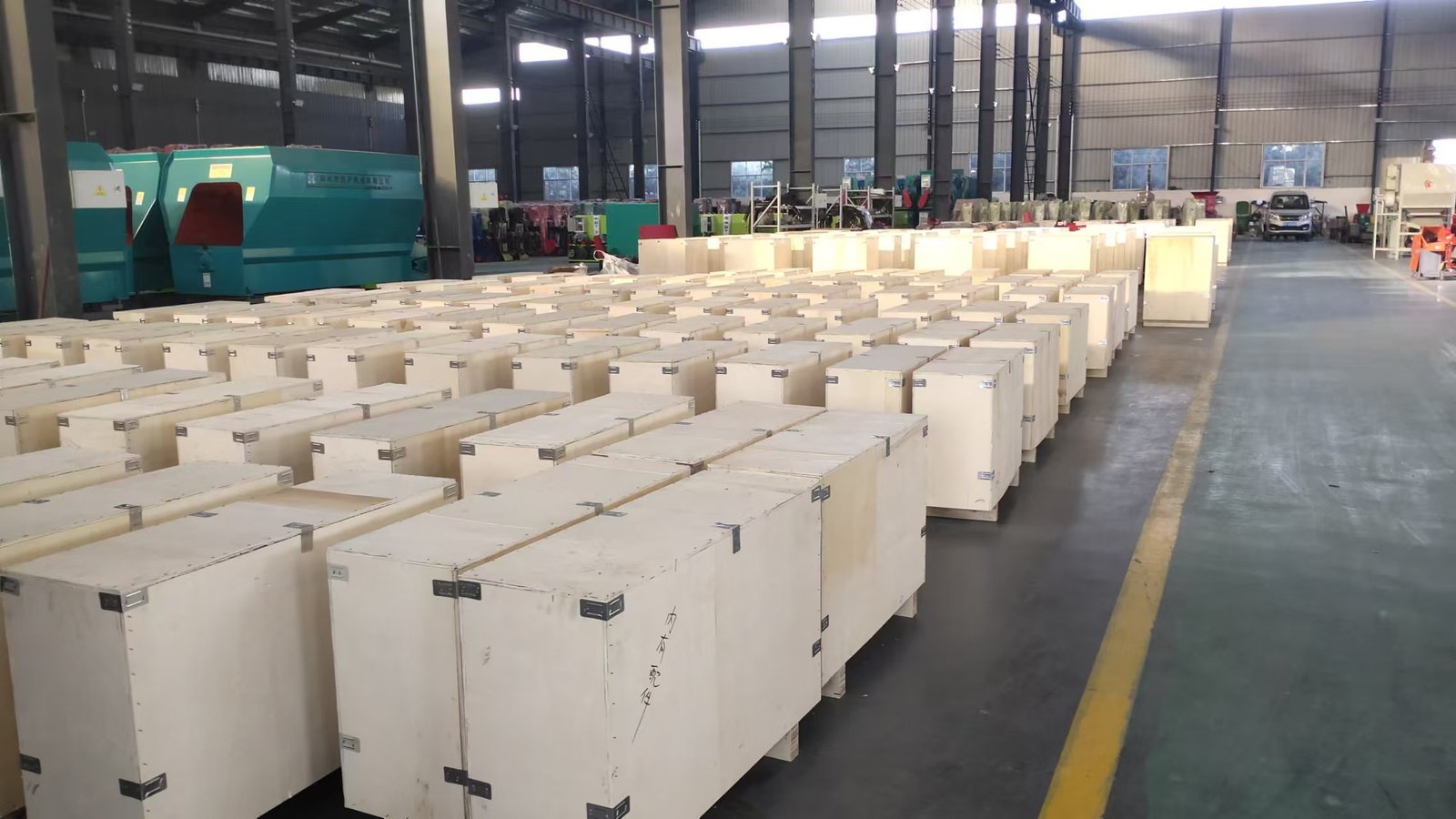
 Aquatic Feed Production Line-Starting your own feed production can cut costs by nearly half compared to buying commercial pellets. Many fish farm owners in Philippines face the same problem: rising feed prices eat up most profits. Your tilapia, bangus, or shrimp operation deserves better margins.An aquatic feed production line transforms raw materials like fish meal, corn, and soybeans into nutritious pellets tailored for your specific fish species. This complete system handles everything from grinding ingredients to packaging finished feed.Production capacity ranges from small 200-kilogram-per-hour units perfect for family farms to massive 200-ton industrial systems for commercial operations. The right setup depends on your current stock size and growth plans.
Ready to Reduce Your Feed Costs?
MAIKONG has helped over 300 aquaculture businesses across Asia cut feed expenses while improving fish growth rates. Let’s discuss your specific production needs.
What Is an Aquatic Feed Production Line and How Does It Work

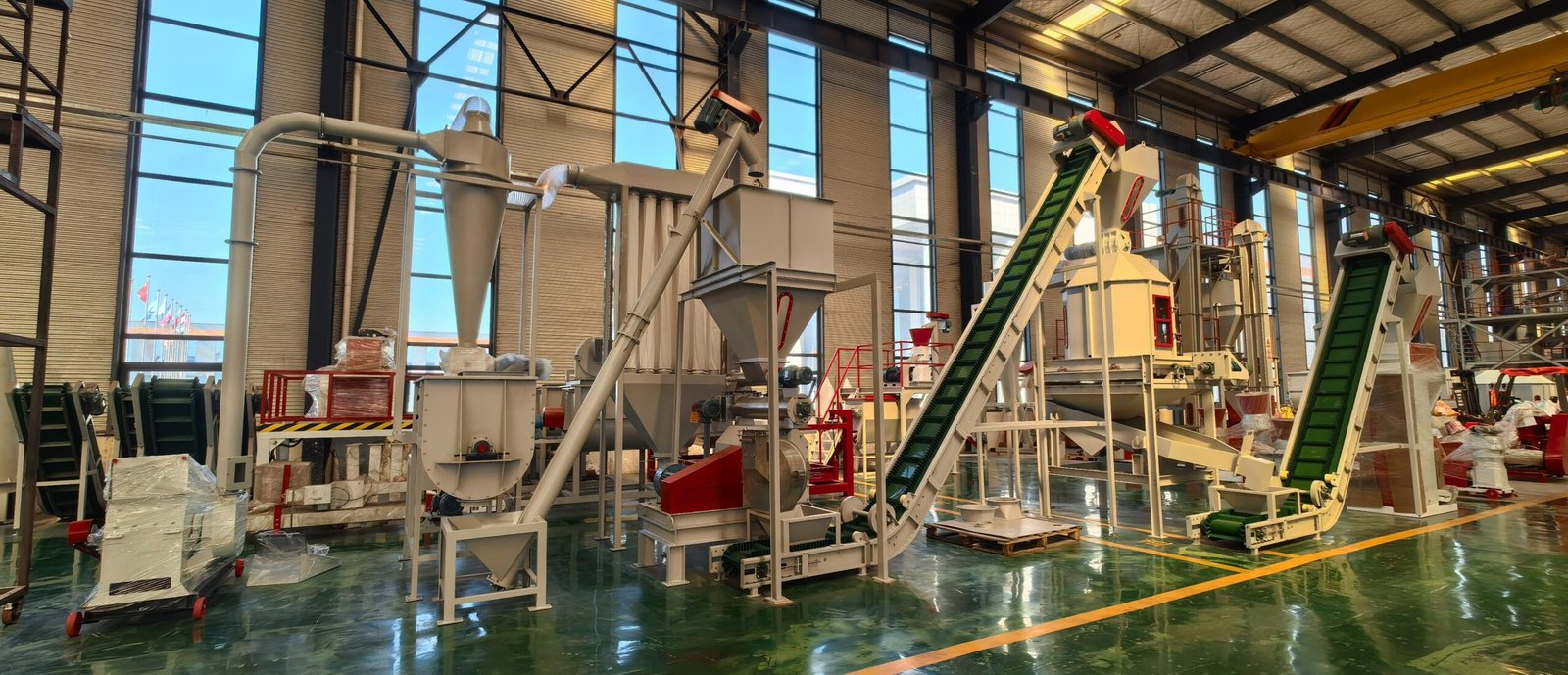
A complete aqua feed production line is an integrated system of machines working together to transform bulk ingredients into finished feed pellets. Each component plays a specific role in the manufacturing process.
The system starts with raw material storage silos that keep your corn, fish meal, soybean meal, and other ingredients dry and fresh. Proper storage prevents mold growth and maintains nutritional quality.
Main Components of a Feed Production System
Your feed production line includes several key machines that process materials step by step. Understanding each component helps you choose the right equipment for your operation.
Grinding and Mixing Equipment

The hammer mill crusher breaks down raw materials into fine particles. Smaller particle size improves digestibility and pellet quality. Most systems use 2-3 millimeter screens for aquatic feed.
After crushing, the mixer blends all ingredients uniformly. A good mixer achieves 95% homogeneity in just 5-8 minutes. This ensures every pellet contains the same nutritional profile.
Pelleting and Forming Machines

The pellet machine or extruder is your production line’s heart. It compresses mixed ingredients through heated dies to form pellets. Temperature and pressure determine pellet density and water stability.
Floating feed requires extrusion with steam and high temperature. Sinking pellets use standard pelleting with lower heat. Your target fish species determines which type you need.
Processing Steps from Raw Materials to Finished Feed
Raw ingredients travel through your aquatic feed production line following a precise sequence. Each step prepares materials for the next stage.
- Receiving and Storage: Raw materials arrive in bulk bags or trucks. Grain elevators or conveyors move ingredients to storage silos. Clean, dry storage prevents contamination.
- Dosing and Batching: Automated weighing systems measure exact amounts of each ingredient. Accuracy within 0.5% ensures consistent feed quality batch after batch.
- Grinding: The hammer mill reduces particle size to 1-3 millimeters. Finer grinding improves pellet binding and reduces waste during fish feeding.
- Mixing: All ground ingredients blend together with liquid additives like fish oil. Mixing time typically runs 6-10 minutes depending on batch size.
- Conditioning: Steam heats and moistens the mixed material before pelleting. This activates starches and improves pellet durability in water.
- Pelleting or Extrusion: Material passes through dies under high pressure. For floating feed, twin-screw extruders cook and expand the mixture. Standard pellet mills produce sinking feed.
- Drying: Fresh pellets contain 18-20% moisture. Belt dryers or rotary dryers reduce this to 10-12% for safe storage without mold growth.
- Cooling: Hot pellets from the dryer pass through counterflow coolers. This brings temperature down to within 5 degrees of room temperature.
- Coating: Optional oil and vitamin spraying adds nutrients that degrade with heat. Coating also improves pellet palatability and appearance.
- Screening: Vibrating screens remove broken pellets and fines. Only uniform, intact pellets reach the packaging stage.
- Packaging: Automatic bag fillers weigh and seal finished feed into 15kg, 25kg, or 50kg bags. Proper packaging extends shelf life to 3-6 months.
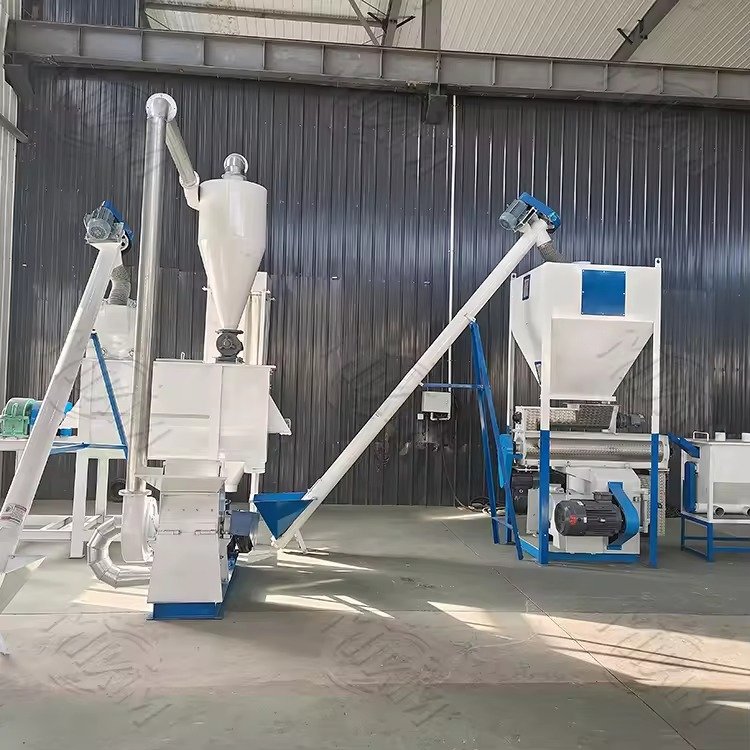
Key Point: A well-designed feed pellet production line operates continuously with minimal manual intervention. Automation reduces labor costs and improves product consistency.
Types of Aquatic Feed Production Lines for Different Fish Species

Not all fish eat the same way. Surface feeders like tilapia need floating pellets, while catfish and grouper require sinking feed. Your production equipment must match your target species’ feeding behavior.
Three main types of aquatic feed production line systems serve different aquaculture operations. Each type produces specific pellet characteristics suited for particular fish and farming methods.
Floating Feed Production Systems
Floating fish feed production line equipment uses extrusion technology to create buoyant pellets. High temperature and pressure expand the feed material, creating air pockets inside each pellet.
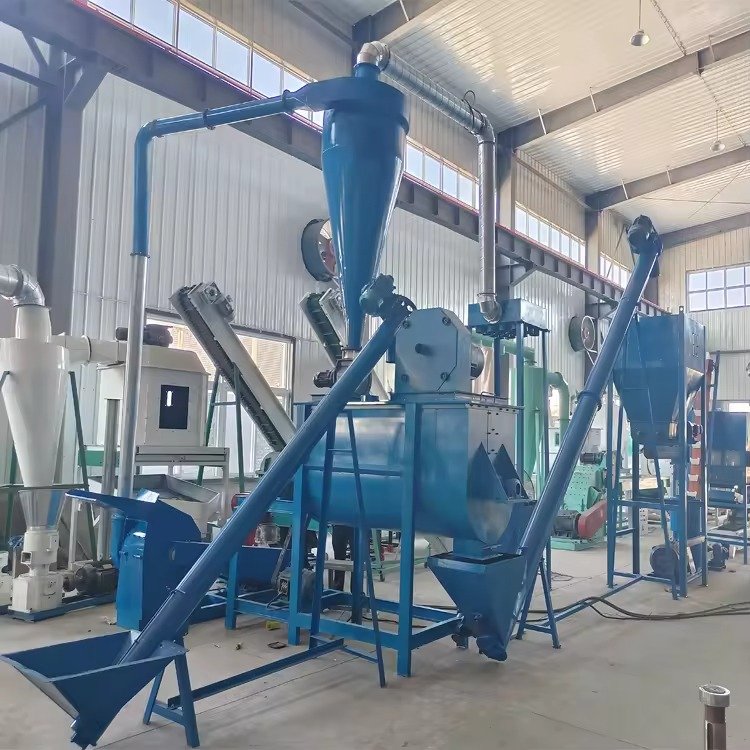
The twin-screw extruder is essential for floating feed. Two intermeshing screws cook ingredients at 120-180 degrees Celsius while pushing material through shaped dies. This process gelatinizes starches and creates expansion.Floating pellets stay on the water surface for 8-12 hours. Farmers can observe feeding behavior and adjust rations accordingly. This reduces waste and improves water quality in ponds.
Best Fish Species for Floating Feed
- Tilapia (Nile tilapia, Mozambique tilapia)
- Carp varieties (Common carp, Grass carp)
- Catfish (Channel catfish, African catfish)
- Ornamental fish (Koi, Goldfish)
- Freshwater prawns (Macrobrachium species)
- Trout (Rainbow trout, Brook trout)
Production capacity for floating feed systems ranges from 100 kilograms per hour for small farms to 10 tons per hour for commercial operations. MAIKONG offers models across this entire spectrum.
Sinking Feed Production Lines
Sinking pellet systems use compression rather than extrusion. A ring die pellet mill forces material through small holes, creating dense pellets that sink immediately when placed in water.
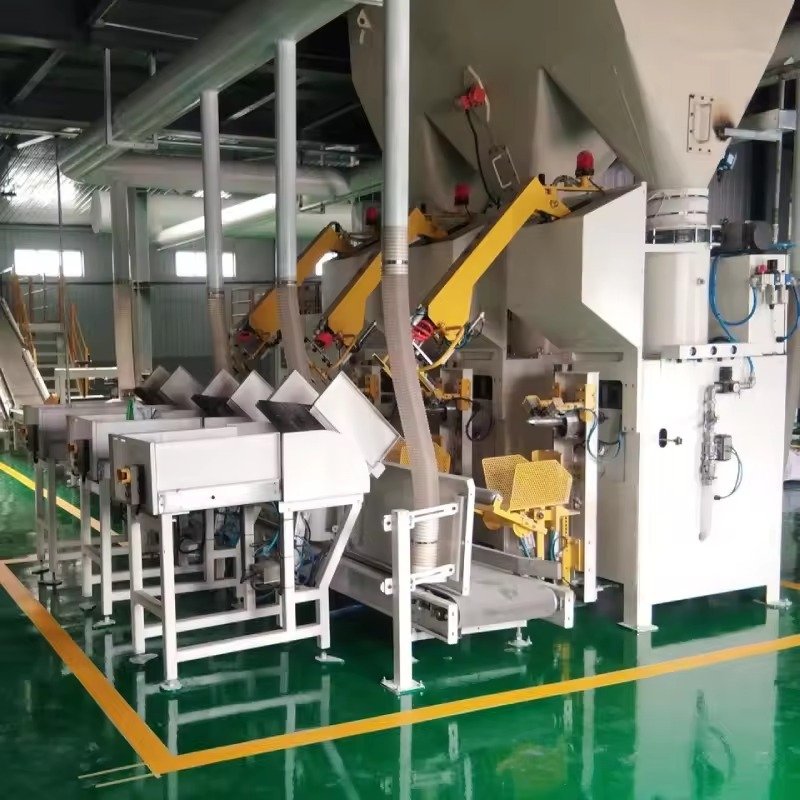
The pelleting process generates heat through friction and compression. Steam conditioning before the pellet mill raises material temperature to 75-85 degrees Celsius. This activates binders and improves pellet water stability.
Sinking feed works better for bottom-feeding fish that naturally forage on pond or tank floors. The pellets maintain integrity in water for 2-4 hours, giving fish adequate time to consume feed.
Advantages of Sinking Pellets
Dense sinking pellets offer specific benefits for certain aquaculture applications and fish species.
- Lower equipment cost compared to extrusion systems
- Higher production rates per machine horsepower
- Better for carnivorous fish requiring high protein
- Reduced surface feeding competition in crowded ponds
Target Species for Sinking Feed
Bottom-dwelling and mid-water fish species thrive on properly formulated sinking pellets.
- Shrimp (Vannamei, Black Tiger)
- Grouper and Sea Bass
- Milkfish (Bangus)
- Catfish varieties
Specialized Micro-Pellet Lines for Fry and Fingerlings
Young fish require extremely small feed particles. Standard pellet mills cannot produce the 0.3-1.5 millimeter sizes needed for fry feeding.

Specialized crumbling equipment or micro-extruders create tiny particles suitable for small mouths. Some systems grind standard pellets into controlled particle sizes, while others use fine dies for direct micro-pellet formation.
Production Tip: Fry feed must dissolve slowly in water without clouding. Proper binding agents and correct moisture content prevent rapid breakdown that degrades water quality.
Comparing Production Line Types
| Feature | Floating Feed Line | Sinking Feed Line | Micro-Pellet Line |
| Main Equipment | Twin-screw extruder | Ring die pellet mill | Micro-extruder or crumbler |
| Temperature Range | 120-180°C | 75-95°C | 80-120°C |
| Pellet Size Range | 2-12mm | 2-8mm | 0.3-2mm |
| Water Stability | 8-12 hours floating | 2-4 hours integrity | 30-60 minutes |
| Power Consumption | Higher (60-80 kWh/ton) | Lower (25-35 kWh/ton) | Medium (40-55 kWh/ton) |
| Initial Investment | $$$$ | $$ | $$$ |
| Production Capacity | 100kg/h – 10 tons/h | 200kg/h – 20 tons/h | 50kg/h – 2 tons/h |
| Best Applications | Tilapia, carp, surface feeders | Shrimp, catfish, grouper | Fry, fingerlings, ornamentals |
Not Sure Which Production Line Fits Your Farm?
Our aquaculture specialists help you select the optimal equipment configuration based on your fish species, production volume, and budget. Get a free production analysis today.
Production Capacity Options: From 200 KG to 200 Tons Per Hour
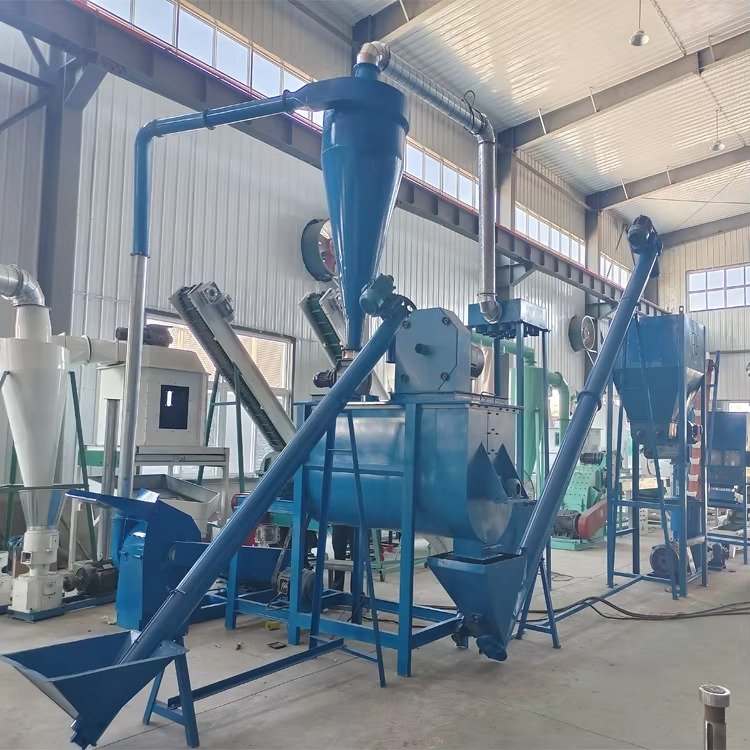
Your farm’s feed requirements determine the right aqua feed production line size. A small tilapia operation needs different capacity than a commercial shrimp hatchery producing thousands of kilograms daily.
MAIKONG manufactures systems across twelve capacity ranges. Each configuration balances production output, energy efficiency, labor requirements, and initial investment.
Small-Scale Systems (200-600 KG Per Hour)
Entry-level production lines suit family-run fish farms and small commercial operations. These compact systems occupy minimal floor space while delivering consistent quality.
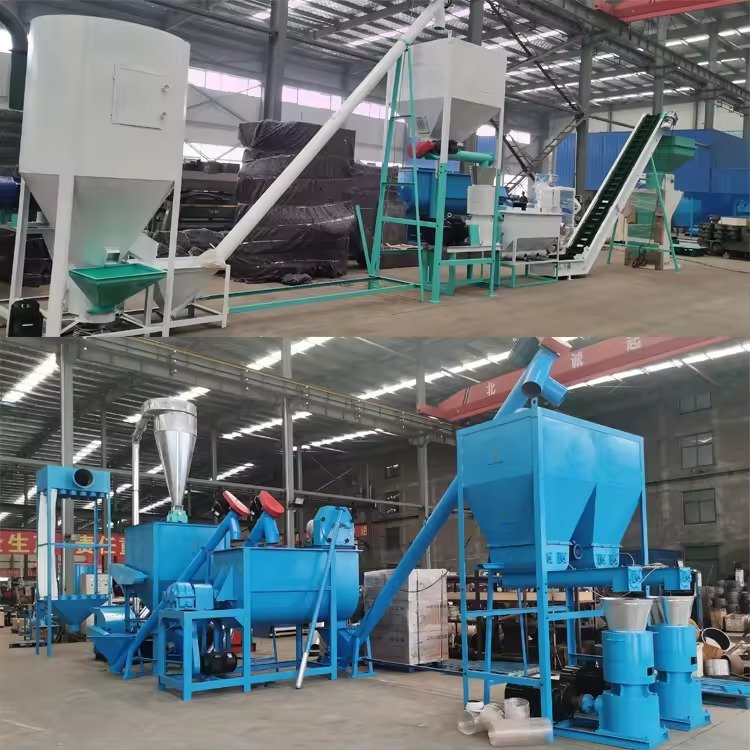
MK-L002 Starter Package (200-300 KG/H)
Perfect for farms with 5,000-10,000 tilapia or 20-30 fishponds. This system produces enough feed for daily operations while allowing formula experimentation.
- Footprint: 8m × 5m factory space
- Power requirement: 45-60 kW total
- Daily output: 1.6-2.4 tons (8-hour shift)
- Crew needed: 2-3 workers
- Voltage options: 220V/380V/440V
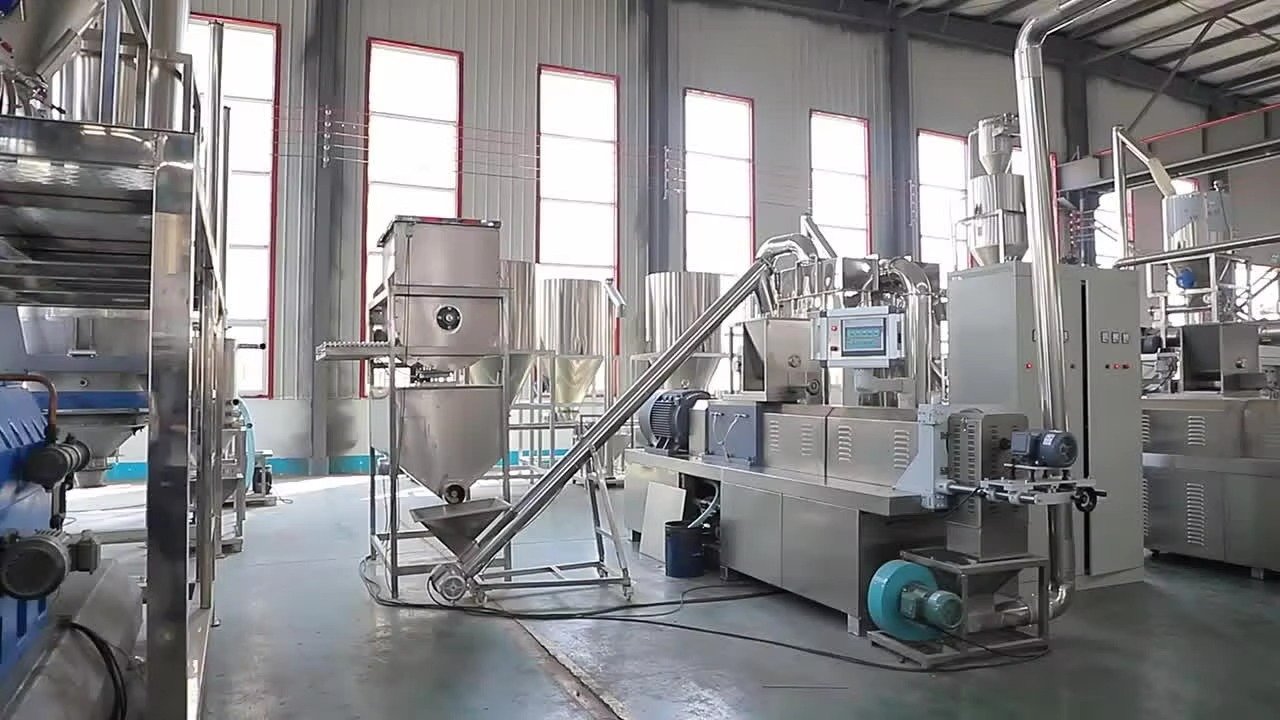
MK-L005 Growth Package (400-600 KG/H)
Designed for expanding operations and small commercial feed producers. This mid-range system handles multiple feed formulas with quick changeover.
- Footprint: 12m × 8m facility
- Power requirement: 75-95 kW
- Daily output: 3.2-4.8 tons
- Crew needed: 3-4 workers
- Includes automation controls
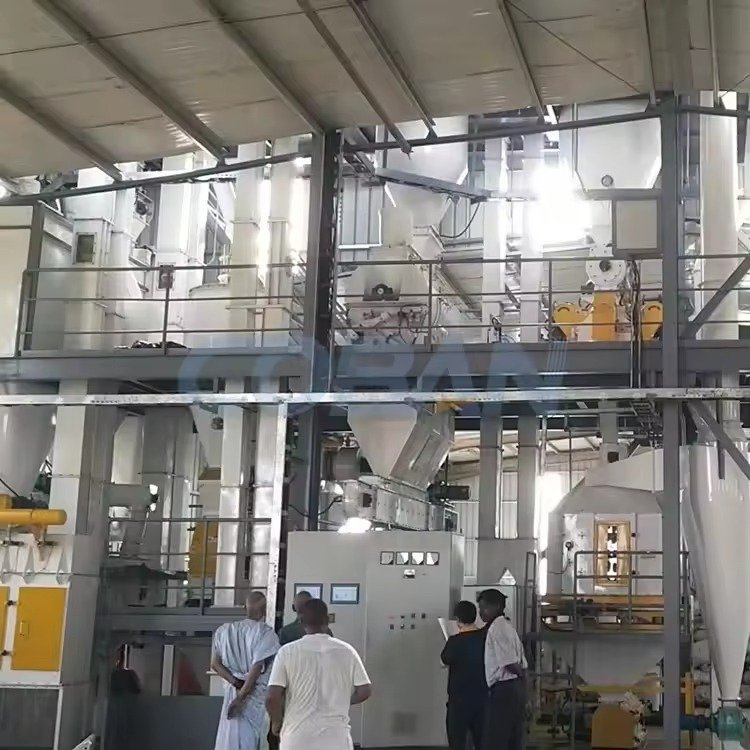
Benefits of Small Systems
Smaller production lines offer advantages beyond just lower initial cost.
- Lower initial capital investment
- Faster installation (2-3 weeks)
- Easier operation and maintenance
- Flexible formula testing capability
- Suitable for cooperative arrangements
- Expandable with modular additions
Medium-Scale Production (1-6 Tons Per Hour)
Mid-capacity feed pellet production line systems serve established fish farms, regional feed suppliers, and agricultural cooperatives. These lines balance automation with operational flexibility.

Most commercial tilapia and catfish farms in Philippines operate in this capacity range. A 2-ton-per-hour system produces 16 tons during an 8-hour shift, enough for large operations or distribution to smaller farms.
MK-L015 Commercial Series (1-2 Tons/Hour)
This configuration suits serious fish farming enterprises and small feed mills. Full automation reduces labor while maintaining quality control.
- PLC control system with touch screen
- Automatic batching accuracy: ±0.5%
- Twin-screw extruder option for floating feed
- Multi-layer dryer for consistent moisture
- Integrated dust collection system
- Remote monitoring capability
Space requirement: 20m × 12m minimum factory area. Power consumption runs 120-150 kW per hour under full load operation.
MK-L040 Regional Producer (3-6 Tons/Hour)
Large farms and regional feed distributors need this capacity level. The system handles multiple formulas with automated formula storage and recall.
- Produces 24-48 tons per shift
- Serves 200-500 hectares of fishponds
- Multiple pellet size capability (2-12mm)
- Automatic sack filling and palletizing
- Quality control lab integration
- Energy recovery systems included
This level requires 30m × 15m facility space and 200-280 kW power supply. Production planning software optimizes ingredient inventory and scheduling.
Large Industrial Systems (8-200 Tons Per Hour)
Major feed manufacturers and export-oriented producers operate industrial-scale aquatic feed production line facilities. These highly automated plants run 24 hours daily with minimal supervision.

An 8-ton-per-hour line produces 192 tons in a full day of operation. Systems above 20 tons per hour typically run multiple parallel lines for redundancy and product variety.
Industrial Scale Applications: These systems serve national feed brands, export markets, and integrated aquaculture corporations. Investment ranges from $500,000 to $5 million depending on automation level and included equipment.
Customization Options Across All Capacity Ranges
MAIKONG engineers configure each feed production line according to specific customer requirements. Standard customization includes:
Formula Flexibility
- Fish feed (tilapia, catfish, carp)
- Shrimp and prawn pellets
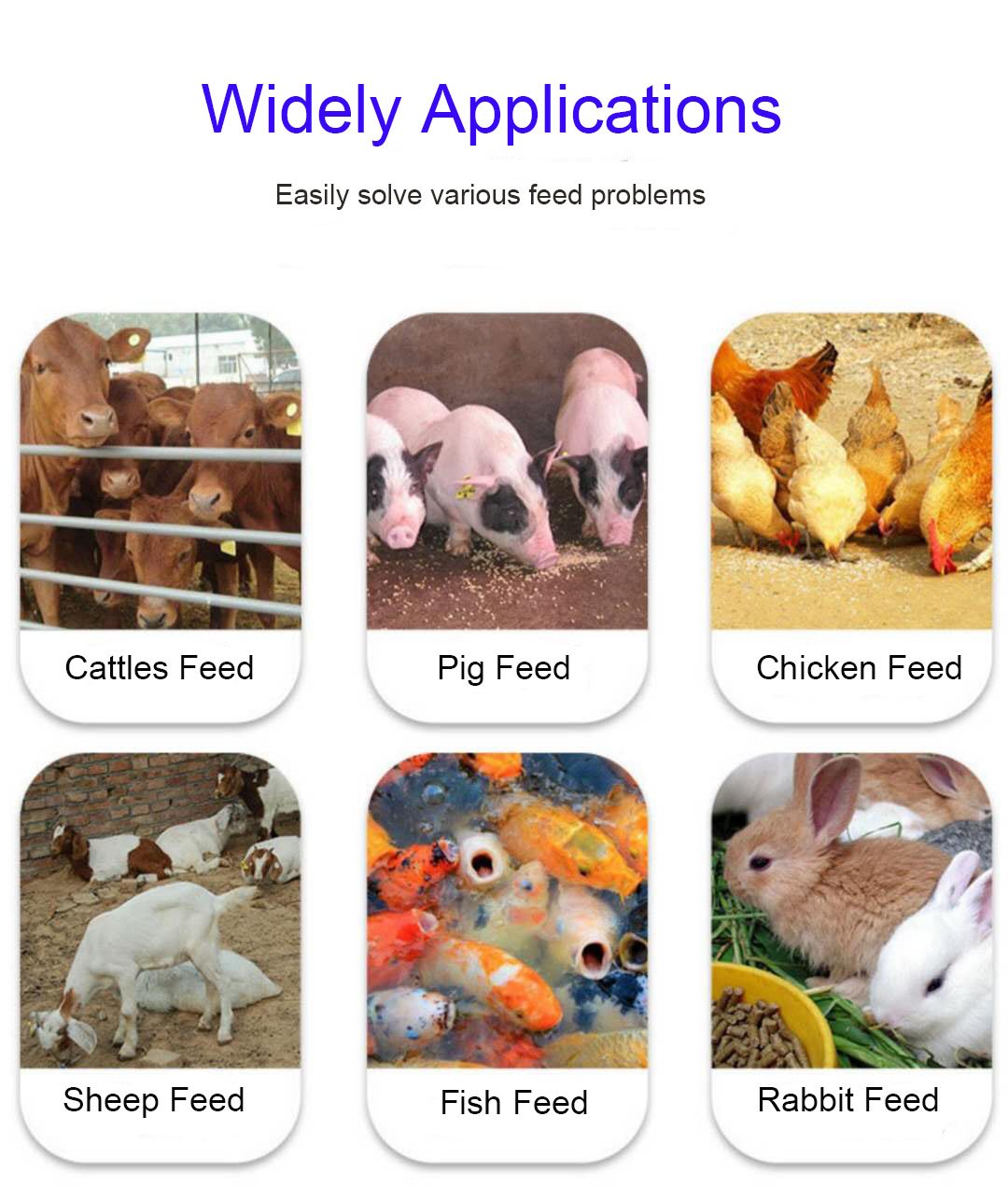
- Ornamental fish micro-pellets
- Chicken and poultry feed
- Cattle and livestock feed
- Pet food production
Technical Specifications
- Pellet diameter: 0.5mm to 12mm
- Floating or sinking capability
- Production speed adjustment
- Temperature control precision
- Moisture content targeting
- Oil coating percentage
Electrical Configuration
- Voltage: 220V/380V/440V/480V
- Frequency: 50Hz or 60Hz
- Single or three-phase options
- Generator compatibility
- Solar integration capability
- Voltage stabilization systems
| Capacity Range | Suitable Farm Size | Daily Output (8hrs) | Power Need | Worker Count | Investment Range |
| 200-300 kg/h | 5,000-10,000 fish | 1.6-2.4 tons | 45-60 kW | 2-3 | $25,000-$45,000 |
| 400-600 kg/h | 15,000-30,000 fish | 3.2-4.8 tons | 75-95 kW | 3-4 | $55,000-$85,000 |
| 1-2 tons/h | 50-100 hectares | 8-16 tons | 120-150 kW | 4-6 | $120,000-$180,000 |
| 3-6 tons/h | 200-500 hectares | 24-48 tons | 200-280 kW | 6-8 | $250,000-$450,000 |
| 8-10 tons/h | Regional distribution | 64-80 tons | 350-450 kW | 8-12 | $550,000-$850,000 |
| 15-20 tons/h | National market | 120-160 tons | 600-800 kW | 15-20 | $1.2M-$2.5M |
Calculate Your Exact Capacity Requirements
Share your current fish stock numbers, daily feeding rates, and growth projections. We’ll recommend the optimal system size and provide detailed ROI calculations for your specific operation.
Essential Equipment in a Complete Feed Production Line

A functional aqua feed production line requires coordinated operation of multiple machines. Each component performs specific tasks that contribute to final pellet quality.
Understanding equipment functions helps you identify necessary versus optional components. Budget-conscious buyers can start with core machines and add features later.
Crushing Equipment: Hammer Mills and Grinders
Raw ingredients arrive in various particle sizes. Whole corn kernels, large fish meal chunks, and soybean pieces must reach uniform fineness before mixing.

The hammer mill uses high-speed rotating hammers to pulverize materials. Ingredients pass through perforated screens that control final particle size. Most fish feed production applications use 1.5-3mm screens.
Hammer Mill Specifications
- Rotor speed: 2,800-3,600 RPM
- Hammer arrangement: Swing or fixed type
- Screen sizes: 0.8mm to 5mm options
- Capacity: 200kg/h to 15 tons/h
- Power consumption: 15-160 kW models
- Dust collection: Built-in or external
Quality hammer mills feature hardened steel hammers that resist wear. Replaceable screens allow quick particle size changes between production runs.
Grinding Best Practices
Proper crushing technique affects overall production efficiency and feed quality.
- Match screen size to target fish species
- Replace worn hammers every 6-12 months
- Clean screens weekly to prevent clogging
- Monitor power consumption for efficiency
- Use magnets to remove metal contaminants
- Balance rotor after hammer replacement
Finer grinding improves pellet binding but increases energy cost. Find the optimal balance for your specific formula.
Mixing Systems: Ribbon and Paddle Mixers
Uniform ingredient distribution ensures every pellet contains identical nutrition. Poor mixing creates batch-to-batch variation that affects fish growth consistency.

Twin-shaft paddle mixers achieve 95-98% homogeneity in 6-8 minutes. The counter-rotating shafts create complex material flow patterns that blend powders and liquids thoroughly.
Mixing Coefficient of Variation (CV): Professional feed production line systems target CV values below 5%. This means nutrient concentration varies less than 5% between any two samples from the same batch.
Mixer Types and Applications
| Mixer Type | Mixing Time | CV Value | Liquid Capacity | Best For |
| Ribbon Mixer | 8-12 minutes | ≤7% | 3-5% | Basic formulas, dry blending |
| Paddle Mixer (Single Shaft) | 6-10 minutes | ≤6% | 5-8% | Medium complexity feeds |
| Twin-Shaft Paddle | 4-6 minutes | ≤5% | 8-12% | High-quality aquatic feed |
| Intensive Mixer | 2-4 minutes | ≤3% | 10-15% | Premium formulas, high oil content |
Pelleting and Extrusion Equipment
The pellet machine transforms mixed powder into formed pellets. This critical component determines production capacity, pellet quality, and energy consumption.

Ring Die Pellet Mills for Sinking Feed
Traditional pellet mills use a rotating die with compression rollers. Material feeds into the die’s inner surface, rollers press it through holes, and knives cut pellets to length.
- Die diameter: 250mm to 850mm
- Die hole size: 1.5mm to 8mm for aquatic feed
- Production rate: 200kg/h to 25 tons/h
- Die speed: 200-400 RPM typical
- Pellet density: 550-750 kg/m³
- Water stability: 2-4 hours for quality pellets
High-quality dies use alloy steel with precise hole drilling. Die life ranges from 500 to 2,000 tons depending on formula abrasiveness and maintenance.
Twin-Screw Extruders for Floating Feed
Extrusion technology cooks ingredients under high temperature and pressure. The sudden pressure release when material exits the die causes expansion and creates floating pellets.

- Screw diameter: 60mm to 180mm
- Length-to-diameter ratio: 15:1 to 25:1
- Temperature zones: 4-8 independent sections
- Processing temperature: 120-180°C
- Expansion ratio: 1.3-2.5 times
- Bulk density: 300-450 kg/m³ (floating pellets)
Modular screw design allows configuration changes for different formulas. High-starch formulas need longer cooking sections, while high-protein feeds require shorter residence time.
Drying and Cooling Systems
Fresh pellets from the pellet mill or extruder contain 16-22% moisture. This exceeds safe storage levels and promotes mold growth.

Belt dryers or rotary drum dryers reduce moisture to 10-12%. Multiple temperature zones provide gentle drying that preserves heat-sensitive vitamins.
Drying Process Parameters
Proper drying extends feed shelf life to 3-6 months without refrigeration. Temperature control prevents nutrient degradation.
- Inlet temperature: 120-140°C
- Middle zone: 90-110°C
- Final zone: 60-80°C
- Residence time: 15-35 minutes
- Target final moisture: 10-12%
- Energy source: Natural gas, LPG, biomass, or electric
Multi-pass belt dryers provide better temperature control than single-pass units. Gentle drying preserves pellet integrity and prevents cracking.

After drying, pellets pass through a counterflow cooler. Cool ambient air flows upward while pellets descend. This brings product temperature to within 5°C of room temperature.
Coating and Enhancement Equipment
Oil and vitamin coating adds nutrients that degrade during high-temperature processing. Surface application also improves palatability and pellet appearance.

Vacuum coating systems apply 2-8% liquid coating evenly. The vacuum draws coating into pellet surface pores for better retention. Tumbling action ensures uniform coverage.
Coating Options and Benefits
- Fish oil: Omega-3 enrichment, palatability improvement
- Vegetable oils: Energy density increase, cost-effective option
- Vitamin premix: Heat-sensitive nutrient addition
- Probiotics: Digestive health enhancement
- Attractants: Feeding stimulation for picky species
- Binders: Additional water stability for tropical conditions
Screening and Packaging Equipment
Vibrating screens remove broken pellets and fine particles. Only whole, uniform pellets reach the packaging stage.

Multi-deck screens separate pellets into size categories. Oversized and undersized particles return for reprocessing. This maintains strict quality standards.
Automatic bagging machines weigh, fill, and seal bags at rates up to 600 bags per hour. Consistent bag weight and proper sealing extend product shelf life.
Design Your Complete Production Line
MAIKONG engineers create customized equipment layouts optimized for your space, capacity, and formula requirements. Receive detailed CAD drawings and equipment specifications.
Raw Materials and Feed Formulation for Aquatic Species

Feed quality depends equally on your production line equipment and ingredient selection. The right formula balances nutrition, cost, and availability of local materials.
Philippine aquaculture producers have access to excellent raw materials. Fish meal from coastal processing, corn from Luzon farms, and imported protein concentrates provide formula flexibility.
Primary Protein Sources
Protein forms the foundation of aquatic feed formulas. Fish require higher protein levels than livestock, especially carnivorous species.
Fish Meal (60-72% Protein)

Premium protein source with excellent amino acid profile. Local fish meal from sardine and anchovy processing costs less than imports.
- Digestibility: 85-90%
- Typical inclusion: 15-40%
- Local price: ₱55-75 per kg
- Best for: All carnivorous fish
Soybean Meal (44-48% Protein)

Most economical protein source. Widely available in Philippines through agricultural supply networks.
- Digestibility: 75-85% for fish
- Typical inclusion: 20-35%
- Local price: ₱28-38 per kg
- Best for: Omnivorous species
Additional Protein Options
Poultry By-Product Meal
- Protein: 60-65%
- Cost-effective alternative
- Good amino acid balance
- Maximum inclusion: 15-25%
Blood Meal
- Protein: 80-85%
- High lysine content
- Limited to 5-8% inclusion
- Palatability concerns
Protein Concentrates
- Protein: 65-75%
- Soy, corn, or wheat based
- Excellent digestibility
- Higher cost ingredient
Energy Sources and Binders
Carbohydrates provide energy and help bind pellets together. Starch gelatinization during pelleting or extrusion creates pellet structure.

| Ingredient | Starch Content | Digestibility | Binding Power | Philippine Price | Typical Inclusion |
| Corn (Yellow) | 65-70% | 80-85% | Good | ₱18-24/kg | 15-30% |
| Wheat Flour | 70-75% | 85-90% | Excellent | ₱22-30/kg | 10-25% |
| Rice Bran | 45-50% | 70-75% | Fair | ₱12-18/kg | 10-20% |
| Cassava Flour | 75-80% | 75-80% | Very Good | ₱15-22/kg | 15-25% |
| Wheat Middlings | 55-60% | 75-80% | Good | ₱16-22/kg | 10-20% |
Lipid Sources for Energy and Nutrition
Fats and oils provide concentrated energy and essential fatty acids. Post-pelleting oil coating allows higher lipid inclusion without affecting pellet formation.
- Fish Oil: Omega-3 EPA and DHA for growth and health (3-8% inclusion)
- Soybean Oil: Cost-effective energy source (2-6% inclusion)
- Palm Oil: Locally available saturated fat (2-5% inclusion)
- Poultry Fat: Economical option for non-carnivorous species (2-5% inclusion)
Sample Formulas for Common Species
These formulas serve as starting points. Adjust based on ingredient availability, cost, and fish performance.

Tilapia Grower Feed (28-32% Protein)
| Ingredient | Percentage |
| Fish Meal | 15% |
| Soybean Meal | 28% |
| Corn | 25% |
| Wheat Flour | 15% |
| Rice Bran | 10% |
| Fish Oil | 4% |
| Vitamin/Mineral Premix | 2% |
| Binder | 1% |
Formula Characteristics:
- Crude protein: 30%
- Crude fat: 6-7%
- Crude fiber: 4-5%
- Pellet type: Floating, 3-5mm
- Feed conversion ratio: 1.4-1.6
- Estimated cost: ₱35-42 per kg
This formula supports 1-1.5% daily weight gain in 100-500 gram tilapia. Adjust protein level based on fish size and water temperature.
Shrimp Feed (36-40% Protein)
| Ingredient | Percentage |
| Fish Meal | 30% |
| Squid Meal | 8% |
| Soybean Meal | 20% |
| Wheat Flour | 20% |
| Cassava Flour | 10% |
| Fish Oil | 6% |
| Lecithin | 2% |
| Vitamin/Mineral/Attractant Mix | 4% |
Formula Characteristics:
- Crude protein: 38%
- Crude fat: 8-9%
- Crude fiber: 3-4%
- Pellet type: Sinking, 1.5-3mm
- Water stability: 3-4 hours
- Estimated cost: ₱58-68 per kg
High protein and attractant levels optimize shrimp growth. Squid meal improves palatability. Excellent water stability prevents nutrient leaching.
Formulation Warning: Always calculate precise nutritional values using ingredient analysis certificates. Generic percentages vary significantly between suppliers and batches. Test formulas with small batches before full production.
Vitamin and Mineral Requirements
Micronutrients play critical roles despite small inclusion rates. Deficiencies cause poor growth, disease susceptibility, and skeletal deformities.
Essential Vitamins
- Vitamin A: Vision, growth
- Vitamin D3: Calcium metabolism
- Vitamin E: Antioxidant, reproduction
- Vitamin K: Blood clotting
- Vitamin C: Immune function, stress
- B-Complex: Energy metabolism
Critical Minerals
- Calcium: Bone formation
- Phosphorus: Energy transfer
- Magnesium: Enzyme cofactor
- Zinc: Growth, wound healing
- Iron: Oxygen transport
- Selenium: Antioxidant
Premix Options
- Standard aquatic premix: 2-3%
- Custom species-specific blends
- Organic trace mineral forms
- Chelated minerals for absorption
- Stability-enhanced vitamins
- Combined vitamin-mineral packs
Get Professional Feed Formulation Support
MAIKONG’s nutrition team helps you develop optimized formulas using locally available ingredients. Reduce costs while maintaining fish performance and health.
Step-by-Step Fish Feed Production Process

Understanding the complete production workflow helps you operate your aquatic feed production line efficiently. Each step requires specific parameters and quality checks.
Modern automated systems monitor and control critical parameters throughout production. This ensures consistent quality batch after batch.
Step 1: Raw Material Receiving and Quality Control
Production quality starts with ingredient inspection. Check every delivery for moisture content, contamination, and specification compliance.

Inspection Procedures
- Visual examination for mold, insects, foreign objects
- Moisture testing with digital meter (target:
- Sample collection for laboratory analysis
- Temperature check for refrigerated ingredients
- Bag integrity and proper labeling verification
- Weight verification against delivery documents
Reject ingredients that fail specifications. Poor input quality creates inferior feed regardless of equipment quality.
Storage Requirements
- Separate storage by ingredient type
- Elevated pallets prevent floor moisture contact
- First-in-first-out (FIFO) rotation
- Temperature control for fish meal (
- Rodent and pest control measures
- Proper ventilation to prevent condensation
Well-organized storage reduces waste and maintains ingredient freshness. Label all materials with receipt date and batch number.
Step 2: Accurate Batching and Weighing
Formula precision determines final feed quality. Automated batching systems weigh ingredients with ±0.5% accuracy.

Manual batching requires careful attention and proper scales. Cross-check weights before adding ingredients to the mixer. Small errors compound across large production runs.
Batching Best Practice: Pre-weigh micro-ingredients (vitamins, minerals, binders) separately and mix with a carrier before adding to the main batch. This improves distribution uniformity of ingredients used at
Step 3: Grinding to Optimal Particle Size
Particle size affects pellet quality, production efficiency, and fish digestibility. Most fish feed production operations target 1.5-3mm average particle size.
Grind ingredients individually or as a complete batch depending on your system design. Individual grinding allows different particle sizes for different ingredients.
Monitor hammer mill power consumption. Sudden increases indicate dull hammers or screen blockage. Regular maintenance prevents production interruptions.
Grinding Parameters by Ingredient
- Corn: 2-3mm screen, moderate speed
- Soybean meal: Already ground, may skip
- Fish meal: 1.5-2mm screen, low speed to prevent heat
- Wheat: 2-2.5mm screen, high speed
- Rice bran: 2.5-3mm screen, moderate speed

Step 4: Thorough Mixing of All Ingredients
Mixing time and sequence directly impact feed uniformity. Follow a consistent procedure for every batch.
- Add dry powder ingredients first (meals, grains)
- Mix dry ingredients for 2-3 minutes
- Add liquid ingredients through spray nozzles while mixing
- Continue mixing for additional 4-6 minutes
- Sample from multiple mixer locations to verify uniformity
- Discharge immediately after mixing completes

Over-mixing wastes energy without improving quality. Under-mixing creates nutritional variation. Find the optimal time for your specific mixer and formula.
Step 5: Conditioning Before Pelleting
Steam conditioning prepares material for efficient pelleting or extrusion. Heat and moisture activate starches and improve pellet durability.
Conditioning Parameters
- Steam temperature: 95-105°C
- Residence time: 30-90 seconds
- Target material temperature: 75-85°C
- Moisture addition: 2-4%
- Material fluffiness maintained
Conditioning Benefits
- Improved pellet durability
- Higher throughput rates
- Reduced die and roller wear
- Better starch gelatinization
- Partial sterilization
Step 6: Pelleting or Extrusion
This critical step transforms conditioned material into formed pellets. Process parameters determine pellet physical characteristics.
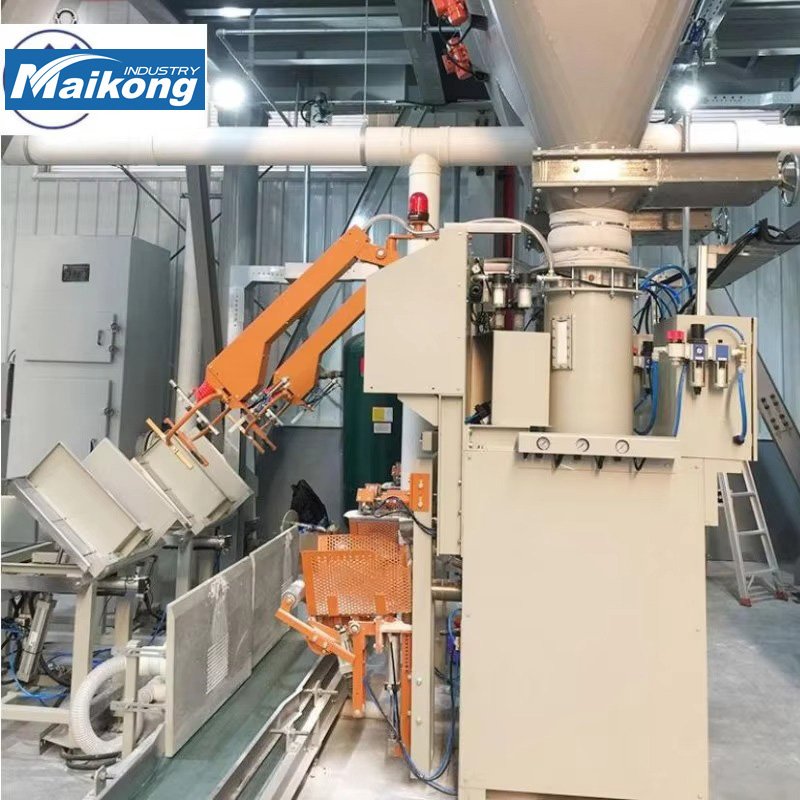
Ring Die Pelleting (Sinking Feed)
Material feeds into the die’s inner surface. Compression rollers force material through die holes. Friction generates additional heat that helps bind particles.
Critical Settings
- Die speed: 250-350 RPM
- Material temperature: 80-90°C
- Die compression ratio: 1:8 to 1:12
- Pellet length: 5-10mm before breaking
- Roller-die gap: 0.1-0.3mm
Quality Indicators
- Smooth pellet surface
- Minimal fines production (
- Consistent pellet length
- Appropriate bulk density
- Good water stability
Common Problems
- Soft pellets: Low temperature or moisture
- Excessive fines: Die worn or wrong gap
- Uneven length: Dull cutting knife
- Poor throughput: Conditioner malfunction
- Pellet crumbling: Formula lacks binder
Twin-Screw Extrusion (Floating Feed)
Extrusion requires precise control of multiple parameters. The process cooks ingredients while forming pellets.

- Barrel Temperature Profile: Gradual increase from feed zone (60°C) to die zone (160°C)
- Screw Speed: 200-400 RPM depending on capacity and formula
- Feed Rate: Controlled to maintain consistent barrel fill
- Steam Injection: Added at conditioning section for moisture and heat
- Die Temperature: 140-180°C for optimal expansion
- Knife Speed: Adjusted for desired pellet length
Expansion occurs when high-pressure material exits the die into atmospheric pressure. Steam flashes off, creating air pockets that make pellets float.
Step 7: Drying to Safe Moisture Content
Fresh pellets contain 16-20% moisture. Reduce this to 10-12% for safe storage and mold prevention.

Drying Best Practices
- Use multiple temperature zones
- Start hot (120-140°C), finish cool (60-80°C)
- Maintain adequate airflow
- Monitor product temperature continuously
- Check moisture content regularly
- Avoid over-drying (causes brittleness)
Gentle drying preserves vitamins and prevents pellet cracking. Rapid high-heat drying damages heat-sensitive nutrients.
Belt dryers provide better control than rotary dryers. Multiple passes through different temperature zones ensure uniform moisture reduction.
Target final moisture between 10-12%. Lower moisture extends shelf life but increases brittleness. Higher moisture risks mold growth.
Step 8: Cooling to Room Temperature
Hot pellets from the dryer continue to lose moisture during cooling. Rapid cooling causes surface cracking and internal stress.

Counterflow coolers work best for pellet cooling. Cool air enters at the bottom, flows upward through descending pellets, and exits at the top carrying heat and moisture.
Cooling time ranges from 8-15 minutes depending on pellet size and initial temperature. Product should discharge at ambient temperature plus 3-5°C maximum.
Step 9: Optional Oil and Vitamin Coating
Post-pelleting coating adds heat-sensitive nutrients and improves palatability. Vacuum coating systems achieve better absorption than simple spraying.

Coating Process Steps
- Load cooled pellets into coating drum
- Apply vacuum (0.3-0.6 bar below atmospheric)
- Spray oil while pellets tumble (3-6 minutes)
- Release vacuum slowly
- Continue tumbling for even distribution (2-3 minutes)
- Discharge coated pellets
Coating percentage typically ranges from 2-8% by weight. Higher levels improve energy density but increase cost and may affect water quality.
Step 10: Screening and Quality Control
Remove broken pellets, fines, and oversized pieces before packaging. Only uniform, intact pellets meet quality standards.

Multi-deck vibrating screens separate product into categories. Top screen removes oversized pieces. Bottom screen captures fines and broken pellets. Middle deck collects finished product.
Quality Control Checkpoints
| Parameter | Test Method | Target Value | Frequency |
| Pellet Diameter | Caliper measurement | ±0.3mm of specification | Every 30 minutes |
| Pellet Length | Visual + measurement | 5-12mm average | Every 30 minutes |
| Moisture Content | Digital moisture meter | 10-12% | Every hour |
| Bulk Density | Graduated cylinder | Per specification | Every 2 hours |
| Fines Percentage | Screen analysis | Every hour | |
| Water Stability | Water immersion test | Per pellet type | Every 4 hours |
| Floatability | Water float test | >95% floating | Every 2 hours (floating feed) |
Step 11: Automatic Packaging and Storage
Proper packaging protects feed quality during storage and transportation. Automated systems ensure consistent bag weights and reduce labor costs.

Packaging Options
- 15kg bags for small farms
- 25kg bags for general distribution
- 50kg bags for large operations
- 1-ton bulk bags for industrial buyers
- Moisture-barrier laminated bags
- Breathable woven polypropylene
Package Labeling Requirements
- Product name and species target
- Guaranteed analysis (protein, fat, fiber)
- Net weight
- Manufacturing and expiry dates
- Storage instructions
- Feeding recommendations
- Manufacturer contact information
Store finished feed in dry, cool warehouse conditions. Elevate bags on pallets to prevent moisture contact. Maintain temperature below 25°C and relative humidity below 60% for maximum shelf life.
Shelf Life Guidelines: Properly packaged and stored fish feed maintains quality for 3-6 months. Vitamin degradation accelerates after 3 months, especially in tropical climates. Produce smaller batches more frequently for optimal nutrition.
Global Success Stories: Aquatic Feed Production Line Installations

MAIKONG has installed over 320 complete feed production line systems across five continents. These success stories demonstrate equipment reliability and technical support quality.
Real customer experiences provide valuable insights into production challenges and solutions. Learn from operations similar to your planned facility.
Asia Pacific Installations
Asian aquaculture dominates global production volume. MAIKONG systems operate in major fish-farming regions across eight countries.

Vietnam Tilapia Feed Producer
System Details: 3-ton-per-hour floating feed production line installed in Mekong Delta region. Produces premium tilapia grower feed for 600 hectares of fishponds.
- Installation: March 2022
- Equipment: Twin-screw extruder system
- Daily output: 24 tons (8-hour operation)
- Feed types: Tilapia, catfish, ornamental fish
- ROI achieved: 18 months

Thailand Shrimp Feed Manufacturer
System Details: 6-ton-per-hour sinking pellet line dedicated to shrimp and prawn feed production. Supplies 200+ farms across southern Thailand.
- Installation: November 2021
- Equipment: Ring die pellet mill with coating system
- Daily output: 48 tons
- Specialization: Vannamei shrimp feed
- Energy savings: 22% vs. previous equipment
Indonesia Multi-Species Feed Plant
System Details: Flexible 2-ton-per-hour system producing both floating and sinking feeds for tilapia, catfish, and grouper operations.
- Installation: June 2023
- Equipment: Convertible extruder/pellet mill system
- Daily output: 16 tons mixed products
- Formula variations: 8 different recipes
- Market reach: Java and Sumatra regions
Americas Success Cases
South and Central American aquaculture grows rapidly. MAIKONG systems support this expansion with reliable tropical-climate equipment.

Brazil Tilapia Feed Operation

Capacity: 1.5-ton-per-hour combined fish and poultry feed system
Location: Santa Catarina state
Installed: January 2023
- Dual-purpose production capability
- Serves regional cooperative network
- Portuguese language control interface
- Humid subtropical climate adaptation
- Local ingredients: Soy, corn, fish meal
“MAIKONG understood our unique requirement for combined aquaculture and poultry feed production. The flexible system design serves both markets efficiently.”
Ecuador Shrimp Feed Producer

Capacity: 8-ton-per-hour high-capacity shrimp feed line
Location: Guayaquil region
Installed: September 2022
- Serves major shrimp export operations
- Produces 64 tons daily output
- Advanced water stability (4+ hours)
- Corrosion-resistant coastal design
- Emergency backup power integration
“Production consistency directly impacts our shrimp growth rates and survival. MAIKONG’s equipment delivers the pellet quality our operations demand.”
European and Middle Eastern Projects
Emerging aquaculture markets in Europe and Middle East invest in modern production technology. MAIKONG systems meet strict European quality standards.
Egypt Catfish Feed Facility
A 4-ton-per-hour system installed near Cairo supplies the growing Nile River aquaculture industry. Focus on African catfish and tilapia production.

- Commissioned: March 2023
- Climate control for desert heat
- Multi-language technical manuals
- Comprehensive operator training program
- Local spare parts distribution established
Spain Ornamental Fish Feed Producer
Specialized 500kg-per-hour micro-pellet line produces premium ornamental fish feed for European export markets.

- Commissioned: July 2022
- Pellet sizes: 0.5mm to 3mm range
- EU food safety compliance
- Advanced color enhancement formulas
- Premium ingredient processing capability
African Market Expansion
Africa’s aquaculture potential attracts investment. MAIKONG provides affordable technology suitable for developing market conditions.

Nigeria Catfish Feed Cooperative: Community-owned 800kg-per-hour production line serves 45 small fish farms. Reduced feed costs by 35% compared to commercial suppliers. Installation completed in April 2023 with extensive training for local operators.
See How MAIKONG Can Transform Your Aquaculture Business
Join over 300 successful fish feed producers worldwide. Our proven systems deliver consistent quality, reliable operation, and excellent return on investment. Get your personalized project proposal today.
Investment Costs and Return on Investment Analysis

Understanding complete investment requirements helps you plan financing and project profitability. Equipment cost represents just one component of total project expense.
Most feed production line projects achieve positive cash flow within 18-36 months. Actual payback depends on production volume, market conditions, and operational efficiency.
Complete Investment Breakdown
Budget for all project components from initial planning through first production batch. Hidden costs often surprise first-time buyers.
| Investment Category | Small System (500kg/h) | Medium System (2T/h) | Large System (6T/h) |
| Core Equipment | $65,000 – $85,000 | $150,000 – $180,000 | $380,000 – $450,000 |
| Shipping & Installation | $8,000 – $12,000 | $18,000 – $25,000 | $45,000 – $65,000 |
| Building/Infrastructure | $15,000 – $25,000 | $35,000 – $50,000 | $80,000 – $120,000 |
| Electrical Setup | $6,000 – $10,000 | $12,000 – $18,000 | $25,000 – $40,000 |
| Training & Commissioning | $3,000 – $5,000 | $6,000 – $10,000 | $12,000 – $20,000 |
| Initial Inventory (Raw Materials) | $8,000 – $12,000 | $20,000 – $30,000 | $50,000 – $75,000 |
| Spare Parts & Tools | $4,000 – $6,000 | $8,000 – $12,000 | $18,000 – $25,000 |
| Working Capital (3 months) | $15,000 – $25,000 | $35,000 – $50,000 | $80,000 – $110,000 |
| TOTAL PROJECT INVESTMENT | $124,000 – $180,000 | $284,000 – $375,000 | $690,000 – $905,000 |
Operating Costs and Production Economics
Monthly operating expenses determine profitability. Control costs through efficient operations and preventive maintenance.

Monthly Operating Expenses (2-Ton-Per-Hour System Example)
Fixed Costs
- Labor (6 workers): ₱180,000
- Facility rent/depreciation: ₱85,000
- Equipment depreciation: ₱95,000
- Insurance: ₱25,000
- Administrative overhead: ₱45,000
- Total Fixed: ₱430,000/month
Variable Costs (Per Ton Produced)
- Raw materials: ₱28,000 – ₱38,000
- Electricity (150 kWh): ₱1,800
- Packaging materials: ₱800
- Maintenance parts: ₱600
- Quality control: ₱200
- Total Variable: ₱31,400 – ₱41,400/ton
Producing 16 tons daily (480 tons monthly) at 85% capacity utilization generates these costs:
- Fixed costs: ₱430,000
- Variable costs: ₱15,072,000 – ₱19,872,000 (480 tons × variable rate)
- Total monthly operating cost: ₱15,502,000 – ₱20,302,000
- Cost per ton: ₱32,296 – ₱42,296
Revenue Projections and Profitability
Market prices vary by region, quality grade, and competitive conditions. Philippine fish feed wholesales between ₱42-65 per kilogram depending on protein level and pellet type.
| Feed Type | Production Cost | Wholesale Price | Gross Margin | Margin % |
| Basic Tilapia (28% protein) | ₱32/kg | ₱42/kg | ₱10/kg | 23.8% |
| Premium Tilapia (32% protein) | ₱38/kg | ₱52/kg | ₱14/kg | 26.9% |
| Catfish Feed (34% protein) | ₱40/kg | ₱55/kg | ₱15/kg | 27.3% |
| Shrimp Feed (38% protein) | ₱58/kg | ₱75/kg | ₱17/kg | 22.7% |
| Ornamental Fish (36% protein) | ₱45/kg | ₱65/kg | ₱20/kg | 30.8% |
Sample ROI Calculation (2T/H System)
Conservative scenario producing 400 tons monthly (83% capacity) of mixed tilapia feeds at average ₱47/kg wholesale:
Monthly Financial Performance
- Revenue: 400 tons × ₱47,000 = ₱18,800,000
- Operating costs: ₱16,200,000 (estimated)
- Gross profit: ₱2,600,000
- Gross margin: 13.8%
- Net profit (after taxes): ₱1,950,000
Annual Projections
- Annual net profit: ₱23,400,000
- Total project investment: ₱330,000,000 ($6M equivalent)
- Simple payback period: 14.1 months
- IRR (5-year): 68%
 This calculation assumes:
- Stable raw material prices
- Consistent market demand
- 85% average capacity utilization
- 10% annual equipment depreciation
- No major equipment failures
Actual results vary based on management efficiency, market conditions, and formula optimization.
Financing Options for Feed Production Projects
Several financing approaches help overcome capital constraints. Philippine investors access multiple funding sources.
Traditional Bank Loans
- Interest rates: 8-12% annually
- Term: 5-7 years typical
- Down payment: 20-30% required
- Collateral: Equipment and property
- Approval time: 4-8 weeks
- Best for: Established businesses
Government Programs
- DA-BFAR aquaculture support
- DTI CARES financing
- DOST grants for technology adoption
- Lower interest rates (4-6%)
- Longer approval process
- Best for: Qualified farmers/cooperatives
Cooperative Investment
- Shared ownership model
- Lower individual capital requirement
- Collective purchasing power
- Distributed operational responsibility
- Requires strong governance
- Best for: Community projects
MAIKONG Financing Support: We assist with project documentation for bank loan applications and government program submissions. Our technical team provides production forecasts and financial projections that strengthen your funding proposals.
Strategies to Maximize ROI
Smart operational decisions accelerate payback and improve long-term profitability.
Cost Reduction Strategies
- Bulk ingredient purchasing for volume discounts
- Local ingredient sourcing to reduce transport costs
- Energy efficiency optimization (LED lighting, efficient motors)
- Preventive maintenance to avoid costly breakdowns
- Cross-training staff for operational flexibility
- Waste reduction through quality control
Revenue Enhancement Strategies
- Custom formula development for premium pricing
- Contract production for established brands
- Seasonal capacity sharing with other producers
- Value-added products (medicated feeds, specialty formulas)
- Direct sales to eliminate middleman margins
- Export opportunities to neighboring countries
Get Detailed Financial Projections for Your Project
MAIKONG provides customized ROI analysis based on your specific capacity, market conditions, and ingredient costs. Make informed investment decisions with accurate financial modeling.
How to Choose the Right Aqua Feed Production Line Supplier

Equipment supplier selection critically impacts project success. The cheapest option often becomes most expensive through downtime, poor support, and premature replacement.
Evaluate suppliers across multiple dimensions beyond initial price. Long-term partnership value outweighs small upfront savings.
Critical Evaluation Factors
| Factor | What to Look For | Red Flags | Verification Method |
| Manufacturing Experience | 15+ years in feed equipment, documented installations, industry recognition | New company, no verifiable projects, generic website | Request customer references, visit factory if possible |
| Technical Expertise | In-house engineering team, custom design capability, process knowledge | Only sales staff, outsourced design, limited technical answers | Technical discussions, request sample calculations |
| Quality Standards | ISO certification, CE marking, material certifications | No certifications, vague quality claims, cheap materials | Request certification copies, material specifications |
| After-Sales Support | Local service presence, 24/7 hotline, spare parts stock | No local support, slow response, expensive parts | Test response time, check parts availability |
| Training Programs | Comprehensive operator training, maintenance courses, ongoing support | Minimal training, English-only materials, no follow-up | Review training schedule, ask for materials sample |
| Warranty Terms | 12-24 month warranty, clear coverage, responsive claims process | Short warranty, many exclusions, difficult claims | Read warranty document carefully, check claims history |
Why Choose MAIKONG as Your Partner
MAIKONG brings 22 years of specialized experience in pellet production technology. Our focus remains exclusively on feed and biomass pelleting systems.

MAIKONG Advantages
- Over 320 successful installations across 5 continents
- Dedicated aquatic feed equipment division since 2008
- In-house R&D team with 18 engineers
- Philippine dealer network for local support
- Comprehensive training in English and Tagalog
- Spare parts warehouse in Manila
- 24-month warranty on core components
- Free formula development consultation
- Remote monitoring and troubleshooting capability
- Flexible OEM/ODM customization options
- Competitive pricing without quality compromise
- Fast production lead times (8-12 weeks)
Common Industry Issues We Solve
- Poor after-sales support from overseas suppliers
- Long spare parts delivery times (3-6 months)
- Language barriers in technical communication
- Equipment not suited for tropical climate
- Inadequate operator training causing problems
- Hidden costs emerging after installation
- Low-quality materials causing premature failure
- Inflexible designs unable to accommodate changes
MAIKONG Product Range Overview
Beyond aquatic feed production line systems, MAIKONG manufactures complete solutions for various applications.
Aquaculture Feed Lines

Livestock Feed Equipment


Customer Support and Technical Services
Comprehensive support ensures your production line operates at peak efficiency throughout its service life.

Pre-Installation Services
- Site evaluation and layout design
- Electrical and civil requirements specification
- Production line customization
- Formula development assistance
- Financial modeling and ROI projections
- Regulatory compliance guidance
Installation and Commissioning
- Equipment installation supervision
- System integration and testing
- Performance verification trials
- Operator training (1-2 weeks)
- Production optimization support
- Quality control procedure setup
Ongoing Support
- 24/7 technical hotline
- WhatsApp direct engineer contact
- Video troubleshooting sessions
- Periodic maintenance training
- Production efficiency reviews
- Formula optimization consultations
Spare Parts and Upgrades
- Manila warehouse stock
- Express shipping to provinces
- Original manufacturer parts guarantee
- Retrofit kits for capacity increases
- Technology upgrade options
- Equipment trade-in programs
Common Challenges in Feed Production Line Operations

Understanding typical operational challenges helps you prevent problems before they disrupt production. Most issues trace to preventable causes.
Proper training, regular maintenance, and quality ingredient control eliminate 90% of common production difficulties.
Raw Material Quality Issues
Inconsistent ingredient quality creates unpredictable pellet characteristics and nutritional variation. Establish strict incoming material standards.
Common Raw Material Problems
- High moisture content: Causes molding during storage, poor pelleting performance
- Contamination: Foreign objects damage equipment, create safety hazards
- Particle size variation: Disrupts mixing uniformity, affects pellet quality
- Rancid oils/meals: Degrades feed palatability, reduces shelf life
- Incorrect specifications: Nutritional targets missed, formula imbalance
Prevention Strategies
- Test every ingredient delivery for moisture and quality
- Develop approved supplier list with quality guarantees
- Maintain FIFO rotation in storage areas
- Invest in proper storage with climate control
- Laboratory testing for critical parameters
- Reject substandard materials immediately

Equipment Operation Problems
Operator error and lack of understanding cause many production disruptions. Comprehensive training prevents costly mistakes.
Problem: Low pellet mill throughput and excessive energy consumption
Causes: Die and roller wear, improper conditioning, incorrect die compression ratio, poor formula design
Solutions: Replace worn components, verify steam quality and conditioning temperature, select appropriate die specifications for your formula, adjust binder levels if needed
Problem: Soft pellets with poor water stability
Causes: Insufficient conditioning, low protein content, inadequate binder, incorrect moisture level
Solutions: Increase conditioning time and temperature, add wheat gluten or other binders at 1-2%, optimize starch gelatinization, ensure proper moisture content (14-16% during pelleting)
Problem: Excessive fines and pellet breakage
Causes: Over-drying, rough handling, brittle formula, equipment misalignment
Solutions: Reduce final drying temperature, minimize drop heights in conveyors, reformulate with more fat/oil for flexibility, check and adjust equipment alignment
Problem: Inconsistent pellet size and appearance
Causes: Worn die holes, dull cutting knife, variable feed rate, inconsistent material conditioning
Solutions: Replace die when hole diameter exceeds specification by >10%, sharpen or replace knife regularly, stabilize feeding system, monitor and control conditioning parameters
Problem: Floating pellets sinking or sinking pellets floating
Causes: Wrong extrusion temperature, incorrect screw configuration, formula starch content issues, improper expansion
Solutions: Adjust barrel temperature profile, modify screw elements for target formula, reformulate to correct starch levels (18-25% for floating, >30% for controlled sinking), optimize die design and back pressure
Production Planning and Efficiency Issues
Poor scheduling creates unnecessary downtime and reduces overall capacity utilization. Smart planning maximizes productivity.

Efficiency Killers
- Frequent formula changes requiring cleanup
- Ingredient stockouts halting production
- Unplanned maintenance emergencies
- Inadequate quality control causing rework
- Poor coordination between shifts
- Equipment running below optimal capacity
Optimization Strategies
- Batch similar formulas together to reduce cleanouts
- Implement min/max inventory management
- Schedule preventive maintenance during slow periods
- Real-time quality monitoring prevents defects
- Detailed shift handover procedures
- Target 80-85% capacity utilization for sustainability
Tropical Climate Challenges
Philippines’ hot, humid conditions require special attention to ingredient storage and product preservation.
Climate Warning: Ambient temperatures above 30°C and humidity above 75% accelerate ingredient degradation and promote mold growth. Climate control investments pay for themselves through reduced waste and quality complaints.
Tropical Operation Best Practices
- Storage: Air-conditioned raw material warehouse maintains
- Production: Adequate ventilation prevents heat buildup in equipment areas
- Cooling: Extra cooling capacity brings product to ambient +3°C maximum
- Packaging: Moisture-barrier bags essential for shelf life extension
- Warehousing: Finished product storage with climate control for premium feeds
- Maintenance: Corrosion prevention through regular cleaning and protective coatings
Get Expert Problem-Solving Support
MAIKONG’s technical team has solved thousands of production challenges across diverse conditions. Access our knowledge base and direct engineering support to keep your line running smoothly.
Become a MAIKONG Dealer in Philippines

MAIKONG actively seeks qualified partners to expand our Philippine distribution network. We offer comprehensive support for dealers committed to aquaculture and feed industry growth.
This partnership opportunity suits agricultural equipment distributors, aquaculture input suppliers, and entrepreneurs with industry connections.
Dealer Benefits and Support Package
MAIKONG provides complete business development assistance beyond just product supply. We invest in partner success through training, marketing, and technical resources.

Comprehensive Training Programs
- Product knowledge and specifications training
- Sales and customer consultation techniques
- Installation and commissioning procedures
- Basic troubleshooting and maintenance
- Customer support best practices
- Annual refresher courses and updates

Marketing and Sales Support
- Professional marketing materials (print and digital)
- Product brochures and technical specifications
- Trade show participation support
- Lead generation assistance
- Customer presentation templates
- Social media content and campaigns

Attractive Commercial Terms
- Competitive dealer pricing and margins
- Volume incentive programs
- Exclusive territory assignments
- Demo equipment financing options
- Performance bonuses and rewards
- Extended payment terms for qualified partners
Dealer Qualifications and Requirements
We seek partners with genuine commitment to customer success and industry development. Ideal dealer candidates demonstrate:
Essential Qualifications
- Registered business with good standing
- Existing customer base in agriculture or aquaculture
- Technical staff or willingness to hire
- Showroom or demonstration facility space
- Financial capacity for inventory investment
- Commitment to MAIKONG brand values
Preferred Qualifications
- Experience in agricultural machinery distribution
- Established relationships with fish farms/cooperatives
- After-sales service capability
- Understanding of feed formulation and production
- Network in aquaculture industry associations
- Multi-provincial market coverage
Available Territories
MAIKONG currently seeks dealers in key aquaculture regions across Philippines. Priority territories include:
Luzon Region
- Central Luzon (Pampanga, Bulacan)
- Southern Tagalog (Batangas, Laguna)
- Bicol Region
- Ilocos Region
- Cagayan Valley
Visayas Region
- Western Visayas (Iloilo, Negros)
- Central Visayas (Cebu, Bohol)
- Eastern Visayas (Leyte, Samar)
Mindanao Region
- Northern Mindanao
- Davao Region
- SOCCSKSARGEN
- Zamboanga Peninsula

Partnership Application Process
Starting a dealer relationship with MAIKONG follows a straightforward qualification and onboarding process.
- Initial Contact: Submit dealer inquiry through email or WhatsApp expressing interest and basic company information
- Information Exchange: Receive detailed dealer information package and application forms. Provide business documentation and market information
- Evaluation Meeting: Video conference or in-person meeting to discuss opportunities, expectations, and partnership terms
- Territory Assignment: Negotiate and confirm exclusive or preferred territory based on capabilities and market potential
- Agreement Signing: Formalize partnership through dealer agreement outlining rights, responsibilities, and commercial terms
- Initial Training: Participate in 1-week comprehensive product and sales training at MAIKONG facility or online
- Market Launch: Begin sales activities with full support from MAIKONG sales and technical teams
- Ongoing Support: Regular communication, quarterly reviews, continuous training, and business development assistance
Success Stories from Current Dealers
“Partnering with MAIKONG opened new market opportunities we couldn’t access before. Their technical support gives us confidence when selling complex production line systems. First-year sales exceeded our targets by 40%.”
“What impressed us most is MAIKONG’s genuine partnership approach. They don’t just sell equipment and disappear. The ongoing training and customer support help us build long-term relationships with our clients.”
 Current MAIKONG dealers across Philippines report:
- Average 25-35% gross margins on equipment sales
- Additional service revenue from installation and maintenance
- Repeat business from satisfied customers
- Referrals generating 30-40% of new leads
- Growing market share in assigned territories
Ready to Explore Dealer Partnership?
Join the MAIKONG network and build a profitable business representing quality aquatic feed production equipment. Limited territories available in key regions.
Frequently Asked Questions About Aquatic Feed Production Line

What is the minimum investment required to start a small fish feed production business?
A complete entry-level system producing 200-300 kilograms per hour requires total investment of approximately ₱4.5-6.5 million (,000-115,000). This includes:
- Core equipment (crusher, mixer, pellet machine, cooler, packaging): ₱2.8-3.8 million
- Building and facility preparation: ₱800,000-1.2 million
- Installation and commissioning: ₱350,000-550,000
- Initial raw material inventory: ₱350,000-550,000
- Working capital for 2-3 months operation: ₱550,000-1.1 million
Many operators start with basic equipment and add automation features as production grows. MAIKONG offers flexible configurations matching your budget and growth plans.
How much space do I need for an aqua feed production line facility?
Space requirements scale with production capacity:
- 200-500 kg/h system: 100-150 square meters minimum (production area + raw material storage + finished product warehouse)
- 1-2 ton/h system: 250-350 square meters recommended
- 3-6 ton/h system: 500-750 square meters needed
- 8-10 ton/h system: 1,000-1,500 square meters required
Include adequate space for material receiving, production workflow, quality control laboratory, and future expansion. Ceiling height should accommodate conveyors and elevators (minimum 5 meters). MAIKONG provides detailed layout drawings optimized for your available space.
Can the same production line make both fish feed and poultry/livestock feed?
Yes, most feed pellet production line systems handle multiple feed types with minimal modifications. The core equipment (crusher, mixer, pellet mill, cooler, packaging) works for various formulas. Key considerations:
- Die changes: Different pellet sizes require different dies (quick-change systems available)
- Formula transition: Thorough cleaning between significantly different formulas prevents cross-contamination
- Extruder vs pellet mill: Floating fish feed needs an extruder, while livestock feed uses standard pellet mill (some systems offer both capabilities)
- Capacity difference: Livestock feed typically produces at higher rates than fish feed due to less stringent water stability requirements
Many Philippine customers operate dual-purpose systems, producing fish feed during peak aquaculture seasons and livestock feed during other periods for maximum equipment utilization.
How long does it take to install and start production after ordering equipment?
Complete project timeline from order to production:
- Manufacturing: 8-12 weeks depending on system complexity and current production schedule
- Shipping to Philippines: 3-4 weeks sea freight
- Customs clearance: 1-2 weeks
- Installation: 2-3 weeks including electrical and mechanical work
- Commissioning and testing: 1 week
- Operator training: 1-2 weeks
Total timeline: 4-5 months from deposit payment to full production capacity. Parallel facility preparation during equipment manufacturing shortens overall project duration. MAIKONG provides detailed project timeline and coordinates with installation contractors for smooth implementation.
What power requirements do I need for different capacity systems?
Electrical power needs vary significantly by production capacity:
- 200-300 kg/h: 45-60 kW total installed power, 30-40 kW operating demand
- 500-600 kg/h: 75-95 kW installed, 50-65 kW operating
- 1-2 ton/h: 120-150 kW installed, 85-105 kW operating
- 3-4 ton/h: 200-250 kW installed, 140-180 kW operating
- 6-8 ton/h: 350-420 kW installed, 250-320 kW operating
MAIKONG equipment accommodates Philippine voltage standards (220V/380V, 60Hz). Energy-efficient motors and optimized process design minimize power consumption. Include generator backup capacity for continuous operation during power interruptions common in some areas.
How do I source quality raw materials for fish feed in Philippines?
Philippines offers good access to major feed ingredients:
- Fish meal: Domestic production from sardine/anchovy fisheries (Zamboanga, General Santos). Import from Peru/Chile for premium grades
- Soybean meal: Imported from USA, Brazil, Argentina through Manila ports. Some domestic processing available
- Corn: Locally produced in Central Luzon, Mindanao. Consistent quality and competitive pricing
- Rice bran: Abundant local supply from rice mills nationwide. Very cost-effective
- Wheat products: Imported flour and middlings available through feed ingredient suppliers
- Vitamins/minerals: Specialized suppliers in Metro Manila stock premixes and individual nutrients
MAIKONG connects new producers with reliable ingredient suppliers and provides formula recommendations optimizing local material availability.
What certifications or permits do I need to operate a feed production business in Philippines?
Commercial feed production requires several regulatory approvals:
- Business Registration: DTI registration for single proprietorship or SEC registration for corporation
- Mayor’s Permit: Local government business permit from municipality
- FDA License to Operate: Feed manufacturing facility registration with Food and Drug Administration
- FDA Certificate of Product Registration: Each feed formula requires separate FDA registration
- Environmental Compliance: ECC (Environmental Compliance Certificate) for projects above threshold or CNC (Certificate of Non-Coverage)
- Fire Safety Inspection: BFP clearance for facility operations
- Occupational Safety: DOLE compliance for workplace safety standards
MAIKONG assists with technical documentation required for FDA and environmental permits. Processing time varies by location but typically requires 2-4 months for complete compliance.
Can I produce both floating and sinking feed with one production line?
This requires specific equipment configuration:
Option 1 – Dual Equipment: Install both extruder (for floating feed) and pellet mill (for sinking feed). Total cost higher but complete flexibility. Switch between systems based on production schedule.
Option 2 – Convertible System: Some advanced extruders produce both floating and sinking pellets by adjusting processing parameters and die design. Less capital investment but requires more technical expertise.
Option 3 – Sequential Investment: Start with one type based on primary market (most begin with sinking pellets using pellet mill). Add extruder later when floating feed demand justifies expansion.
Most small to medium producers focus on single pellet type initially. Large commercial operations justify dual equipment for maximum market flexibility. MAIKONG recommends configuration based on your target customers and growth strategy.
What is the typical lifespan of feed production equipment?
Quality equipment with proper maintenance delivers:
- Main machines (crusher, mixer, pellet mill, dryer, cooler): 15-20+ years service life
- Motors and electrical components: 10-15 years with quality brands
- Wearing parts (dies, rollers, hammers, screens): 6 months to 2 years depending on usage and material abrasiveness
- Conveyors and elevators: 10-12 years with regular bearing replacement
- Control systems: 8-12 years, upgradeable for extended life
MAIKONG equipment uses quality steel construction, premium bearings, and proven designs for maximum durability. Preventive maintenance schedule and genuine spare parts significantly extend operational life. Many installations exceed 20 years with proper care.
How much training is needed to operate a fish feed production line?
Operator competency develops through structured training:
Initial Training (2 weeks):
- Equipment operation and safety procedures
- Production process workflow
- Quality control procedures
- Basic troubleshooting
- Maintenance requirements
Skill Development (3-6 months):
- Formula variations and adjustments
- Production optimization techniques
- Advanced troubleshooting
- Efficiency improvement methods
MAIKONG provides comprehensive training in English or Tagalog during commissioning. Video manuals, troubleshooting guides, and ongoing technical support help operators develop expertise. Most crews achieve proficient operation within one month, with continuous improvement thereafter. Educational background in food processing or mechanical trades helpful but not required.
Start Your Aquatic Feed Production Line Journey Today

Investing in your own feed production line transforms your aquaculture operation’s economics. Control over feed quality, formula customization, and cost reduction create sustainable competitive advantages.
The Philippine aquaculture industry continues strong growth. Domestic tilapia, bangus, and shrimp production expands annually, driving demand for quality feed at competitive prices. Producers with their own manufacturing capability capture more value chain profit.
Key Takeaways from This Guide
Strategic Considerations
- Match equipment capacity to realistic production needs
- Choose between floating and sinking feed based on target species
- Plan complete investment including working capital
- Secure reliable ingredient sources before starting production
- Select experienced equipment supplier with local support
- Budget adequate time for permitting and facility preparation
Success Factors
- Comprehensive operator training ensures quality production
- Regular maintenance prevents costly breakdowns
- Quality raw materials create quality finished feed
- Proper formula development optimizes fish performance
- Efficient operations maximize profitability
- Strong customer relationships build sustainable business
Why Choose MAIKONG as Your Partner
MAIKONG’s 22 years specializing in pellet production technology delivers proven solutions. Our focus on aqua feed production line systems since 2008 creates deep expertise in this specific application.

MAIKONG Commitment: We succeed when our customers succeed. Every installation receives the same attention and support whether it’s a small 300kg/h system or a large 20-ton/h industrial facility. Your production challenges become our engineering team’s priorities.
Our Complete Value Proposition
- Technical Excellence: In-house R&D team continuously improves equipment performance and efficiency
- Quality Manufacturing: ISO-certified production facility using premium components and materials
- Customization Capability: Flexible OEM/ODM services tailor solutions to specific requirements
- Local Presence: Philippine dealer network provides accessible support and spare parts
- Comprehensive Training: Operator and maintenance training in English and Tagalog
- Proven Track Record: 320+ successful installations across 50+ countries
- Competitive Pricing: Direct manufacturer pricing without middleman markups
- Long-Term Partnership: Ongoing technical support, formula assistance, and upgrade options
Next Steps to Begin Your Project
Starting your aquatic feed production line project involves several important decisions. MAIKONG guides you through each step with expert consultation and detailed planning.
- Define Your Requirements: Clarify target production capacity, feed types, available space, and budget parameters
- Initial Consultation: Contact MAIKONG technical team to discuss your specific situation and receive preliminary recommendations
- Technical Proposal: Receive detailed equipment specifications, layout drawings, and cost quotation customized for your project
- Formula Development: Work with our nutritionists to develop optimized formulas using locally available ingredients
- Financial Planning: Review complete investment requirements, operating costs, and ROI projections
- Order Placement: Finalize equipment configuration and commercial terms, initiate production
- Facility Preparation: Prepare building, electrical supply, and supporting infrastructure while equipment manufactures
- Installation and Training: MAIKONG technicians install equipment and train your team for successful operation
- Production Launch: Begin commercial production with ongoing technical support and optimization assistance
Investment in Your Future
An aqua feed production line represents more than equipment purchase. This investment creates:
Business Independence
- Control over feed supply and pricing
- Reduced dependence on commercial suppliers
- Flexibility to adjust formulas for specific needs
- Ability to respond quickly to market changes
Competitive Advantages
- Lower production costs than purchased feed
- Custom nutrition for superior fish performance
- Quality consistency batch after batch
- Additional revenue from feed sales to other farms
Long-Term Value
- Asset appreciation over equipment life
- Skill development in your workforce
- Foundation for business expansion
- Contribution to local food security
Transform Your Aquaculture Business with MAIKONG
Join hundreds of successful fish feed producers who chose MAIKONG for reliable equipment, expert support, and sustainable profitability. Start your project consultation today.
📞 +86 135 1090 7401Available via phone or WhatsApp
Special Opportunities:
- Request Free Production Line Design and Layout
- Get Customized ROI Analysis for Your Project
- Download Technical Specifications and Case Studies
- Schedule Virtual Factory Tour
- Apply for Dealer/Distributor Partnership
- Inquire About OEM/ODM Customization
MAIKONG – Your Trusted Partner for Aquatic Feed Production Solutions Since 2002