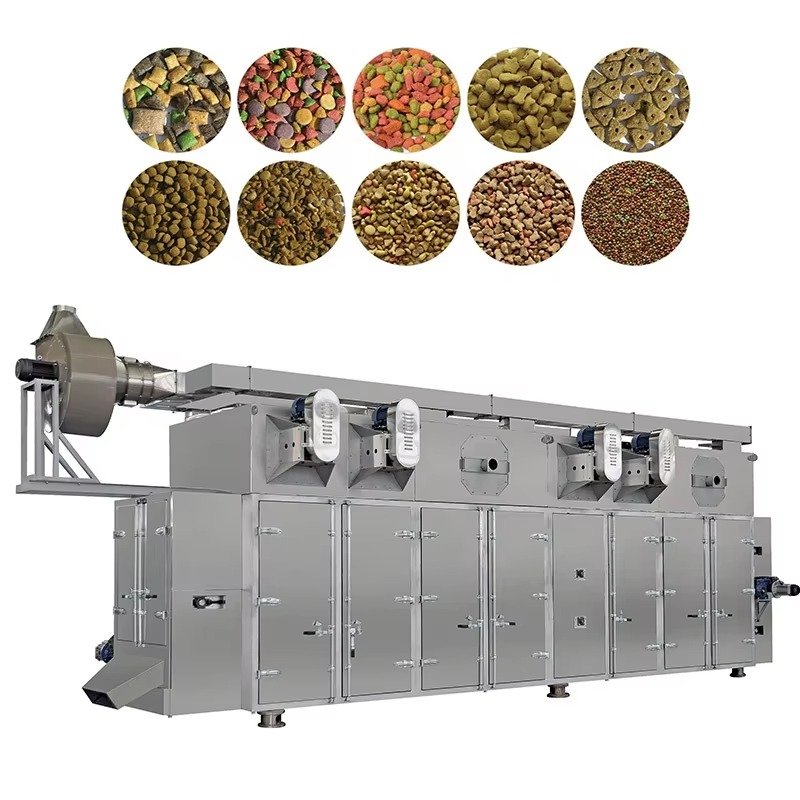
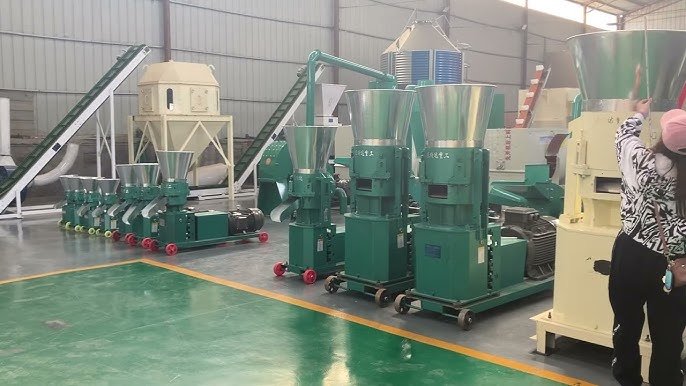
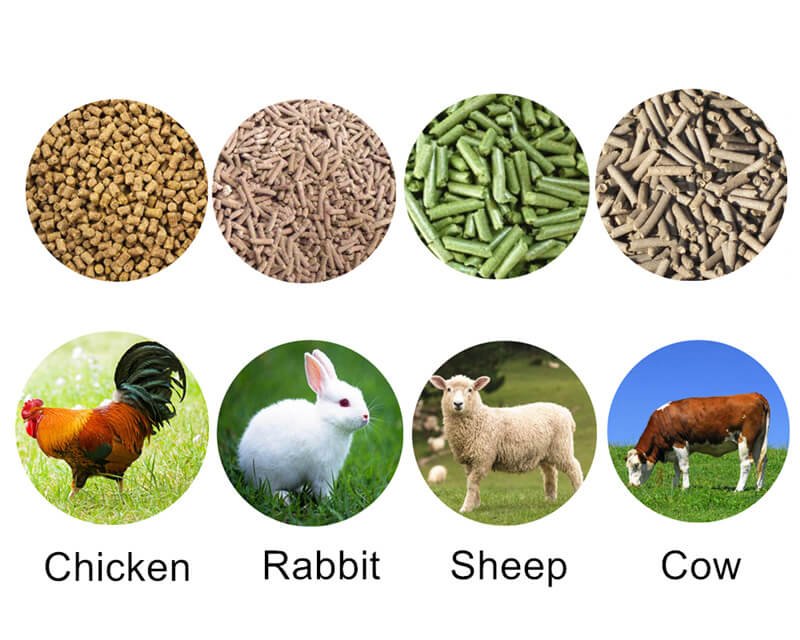
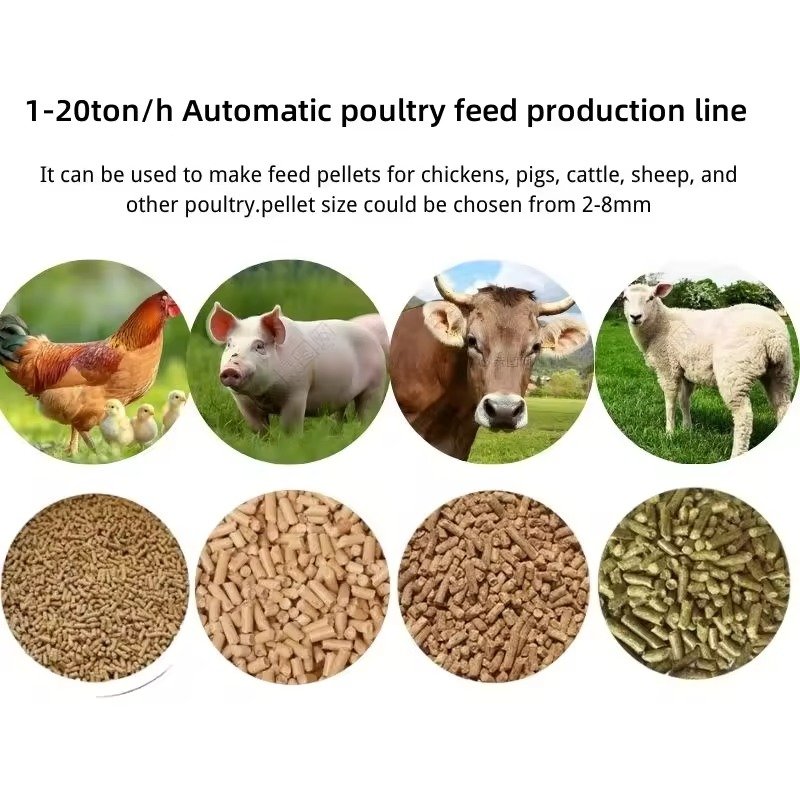
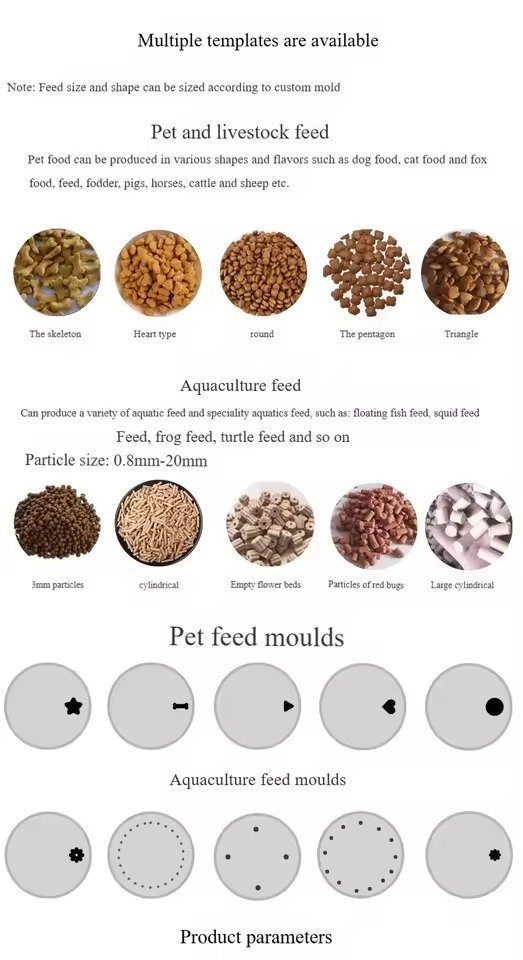
What Is a Poultry Feed Production Line
A poultry feed production line is an integrated system of specialized machines that transforms raw agricultural materials into nutritionally balanced feed pellets. The system handles the complete production process from receiving ingredients to packaging finished products. Unlike simple mixing equipment, a complete production line ensures consistent quality through controlled processing stages.
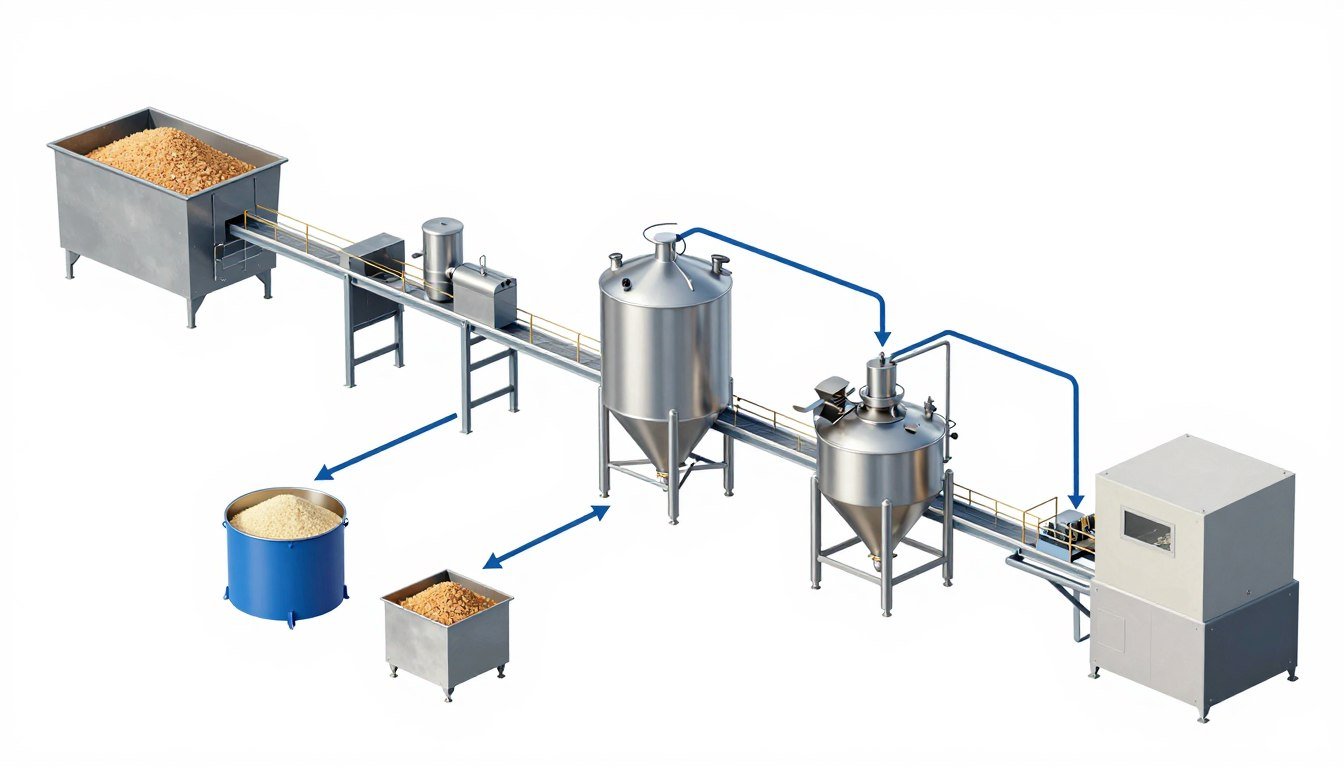
The basic poultry feed production line includes several critical components working together. Raw materials arrive at receiving hoppers with pre-cleaning systems to remove contaminants. Crushing machines reduce grain and other ingredients to proper particle sizes. Batching systems measure precise quantities according to nutritional formulations. Mixers blend ingredients uniformly. Pellet machines compress the mixture into dense pellets. Cooling equipment removes excess heat and moisture. Screening separates proper-sized pellets from fines. Finally, packaging systems fill bags or load bulk storage.
Core Equipment Components
Every poultry feed production line relies on essential machinery to function effectively.
- Hammer mills crush corn, grains, and ingredients into required particle sizes
- Batch weighing systems ensure accurate formulation ratios
- Ribbon or paddle mixers blend ingredients to homogeneous consistency
- Ring-die pellet mills compress mixed materials into durable pellets
- Counterflow coolers reduce pellet temperature and moisture content
- Vibrating screens separate oversized or undersized particles
Supporting Systems
Additional equipment enhances efficiency and maintains quality standards in modern installations.
- Bucket elevators transport materials vertically between process stages
- Screw conveyors move ingredients horizontally through the system
- Dust collection systems maintain clean air in the production facility
- Liquid addition systems inject oils, molasses, or medications precisely
- Automatic packing scales fill bags to exact weights consistently
- Control panels monitor and adjust all equipment from central locations
Production Capacities
Modern systems accommodate operations from small farms to industrial feed mills effectively.
- Small-scale lines process 200 to 500 kilograms per hour for individual farms
- Medium-capacity systems handle 1 to 5 tons per hour for commercial operations
- Large industrial installations produce 10 to 30 tons per hour continuously
- Ultra-high-capacity plants achieve 50 to 200 tons per hour for regional distribution
Automation Levels
Different degrees of automation match varying operational requirements and budgets.
- Manual systems require operators to control each production step individually
- Semi-automatic lines automate some processes while requiring manual intervention
- Fully automatic installations run complete batches with minimal supervision
- Computer-controlled systems store formulations and maintain production records digitally
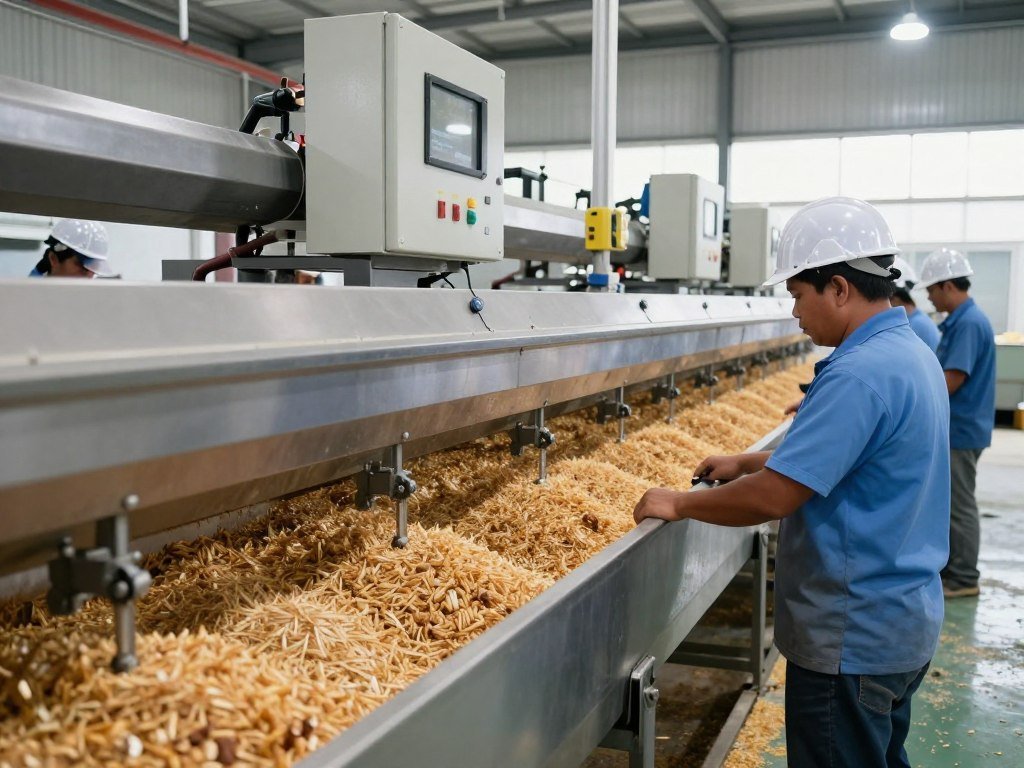
The sophistication of a poultry feed production line directly impacts product quality and operational efficiency. More advanced systems incorporate precise temperature control during pelleting, steam conditioning for better pellet durability, and post-pelleting liquid coating for palatability. They also include safety interlocks, emergency stops, and automated cleaning cycles that reduce maintenance requirements.
Understanding these components helps evaluate which system configuration matches specific operational needs. The choice between manual, semi-automatic, or fully automatic operation depends on production volume, available labor, and budget constraints.
Key Benefits for Poultry Farms in the Philippines
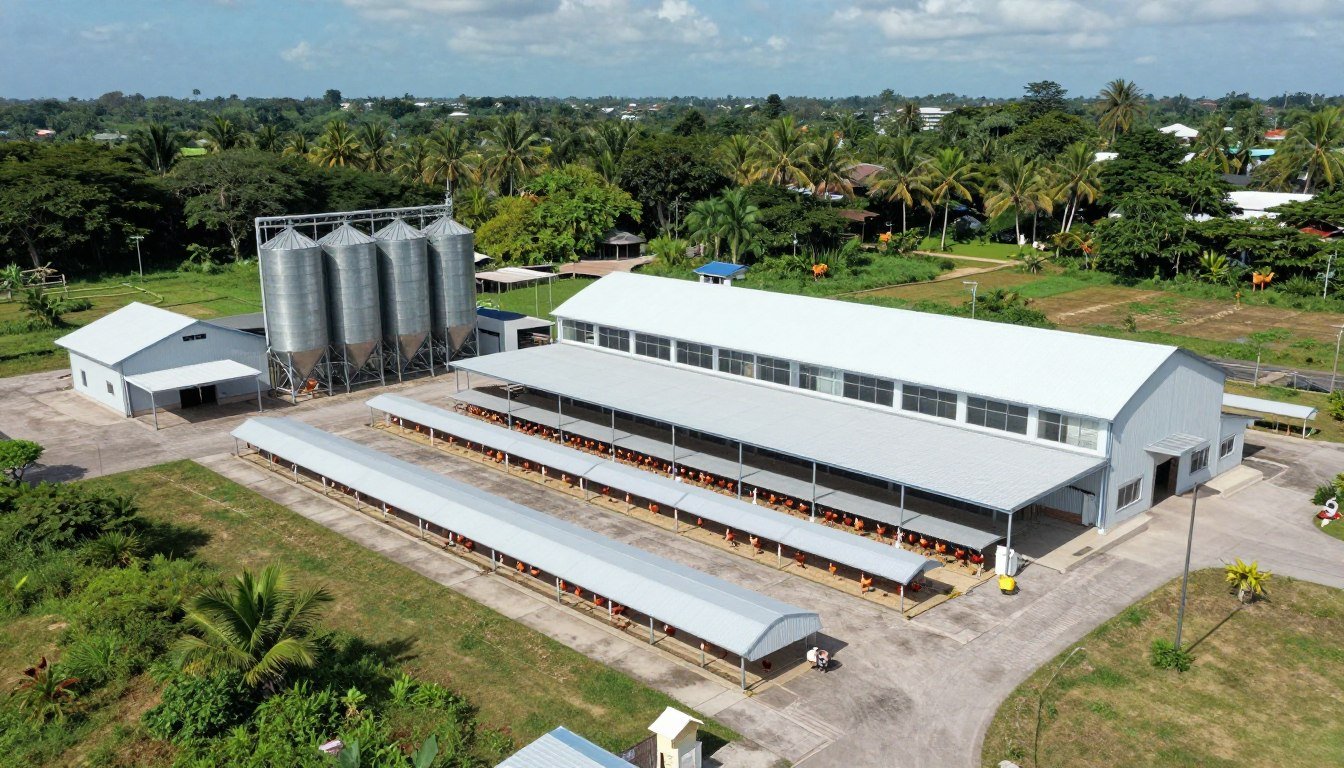
Installing an on-site poultry feed production line creates measurable advantages that directly improve farm profitability and operational control. Philippine poultry operations report significant cost reductions within the first year of production. The benefits extend beyond simple price savings to encompass quality control, formulation flexibility, and business expansion opportunities.
Dramatic Cost Reduction
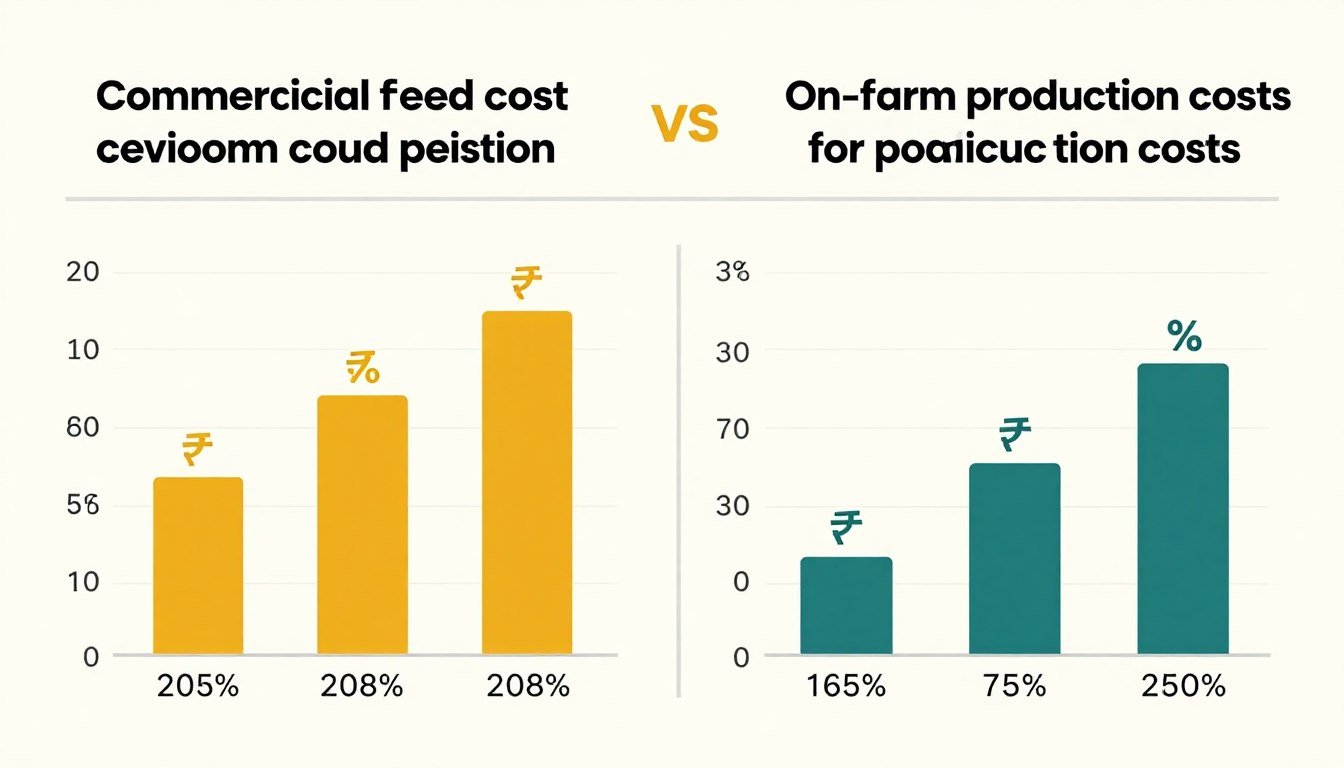
Feed costs dominate poultry production expenses. By manufacturing your own feed, you eliminate distributor margins, transportation surcharges, and packaging costs associated with commercial products. Raw ingredient prices fluctuate less dramatically than finished feed prices. Purchasing corn, soybean meal, and supplements in bulk quantities at harvest time locks in lower costs for extended periods.
Philippine farms with poultry feed production line installations report 20 to 35 percent savings on feed costs compared to purchasing commercial products. A 10,000-bird layer operation typically saves 800,000 to 1,200,000 pesos annually. Broiler operations see even faster returns due to shorter production cycles and higher feed consumption rates. These savings translate directly to improved profit margins or competitive pricing advantages in the market.
Complete Quality Control
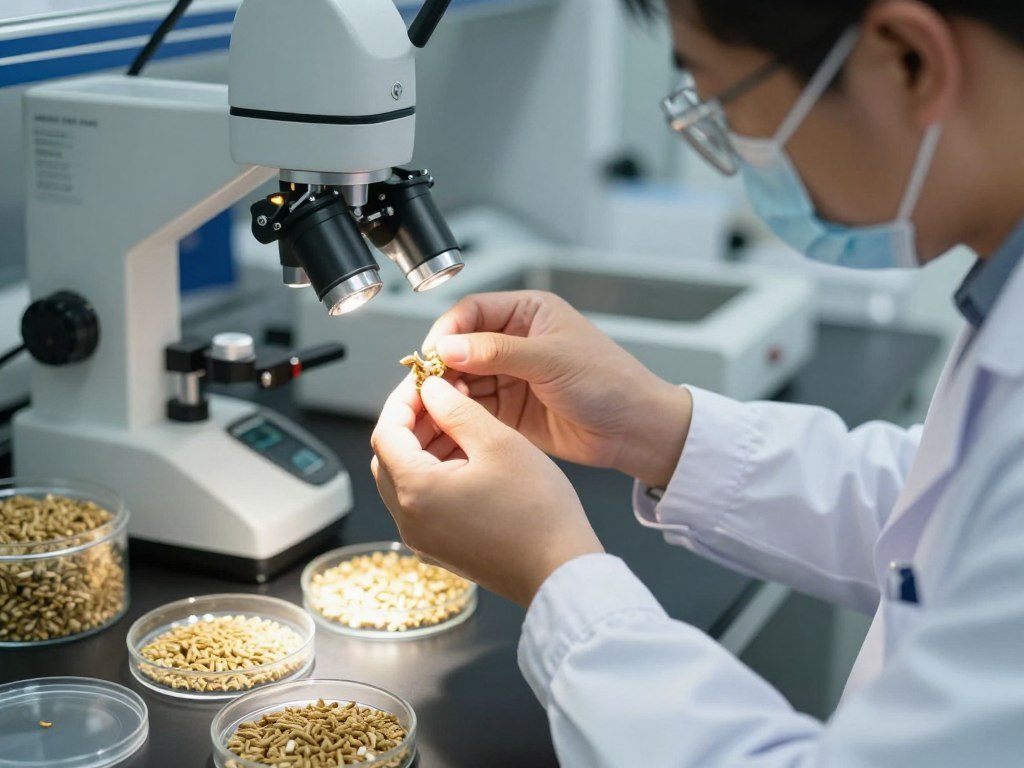
Commercial feed quality varies between suppliers and even between batches from the same manufacturer. Inconsistent nutrition affects bird performance unpredictably. Growth rates decline, egg production drops, and disease resistance weakens when feed quality fluctuates.
Operating your own poultry feed production line means controlling every ingredient that enters the feed. You verify corn quality visually and through testing. You source protein supplements from trusted suppliers with consistent specifications. You adjust formulations based on actual bird performance rather than relying on generic commercial products designed for average conditions.
Formulation Flexibility
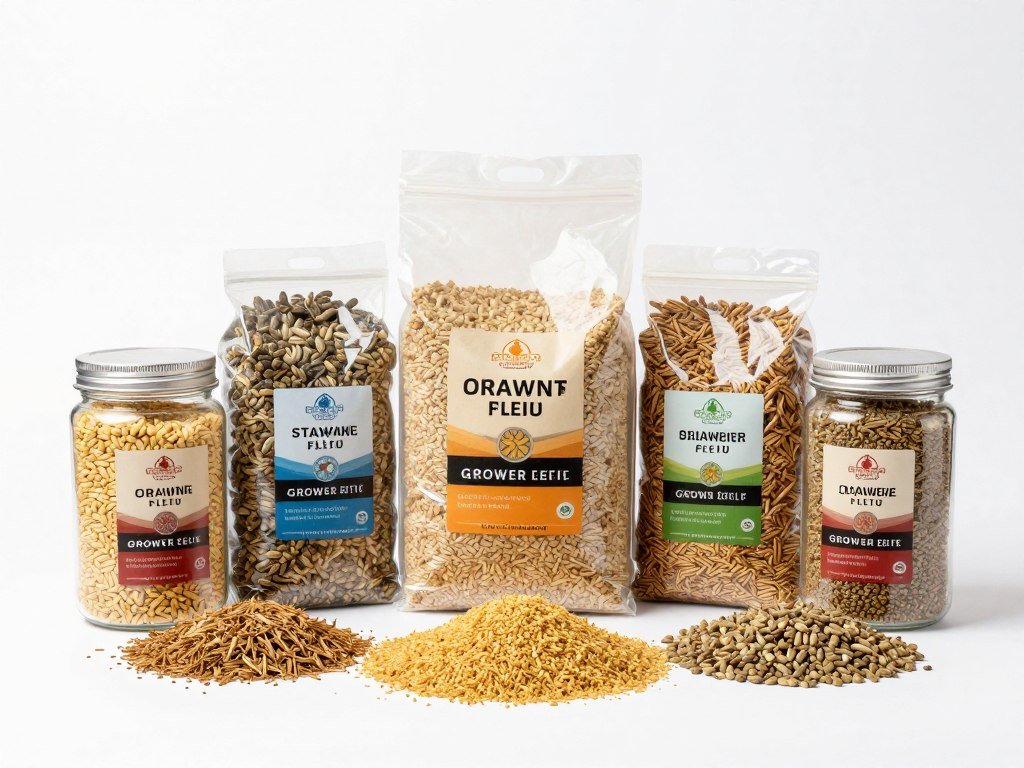
Commercial feeds come in standard formulations that may not match your specific bird strain, age, or production goals. A poultry feed production line allows customization for different poultry types and life stages. You create starter feeds for chicks, grower rations for developing birds, and layer or finisher feeds optimized for production.
Formulation adjustments respond quickly to changing ingredient availability or prices. When corn prices spike, you substitute alternative energy sources like cassava or rice bran in appropriate percentages. When local fish meal becomes available at favorable prices, you incorporate it for protein supplementation. This flexibility maintains nutritional standards while minimizing ingredient costs.
Business Expansion Opportunities
A poultry feed production line with capacity exceeding your farm’s requirements opens revenue opportunities beyond your own operation. Many Philippine farm owners begin selling excess production to neighboring farms. This creates additional income streams that accelerate equipment payback periods. Some operations transition entirely into feed manufacturing as their primary business, supplying multiple farms regionally.
Ready to Cut Your Feed Costs by Up to 35%?
MAIKONG’s 22 years of manufacturing experience helps Philippine poultry operations achieve measurable savings and improved flock performance. Our customizable systems range from 200KG to 200 tons per hour.
Supply Chain Independence
Commercial feed suppliers occasionally face stock shortages during peak seasons or ingredient supply disruptions. These shortages force farmers to accept substitute products, accept delays that interrupt feeding schedules, or pay premium prices for limited availability. Such disruptions negatively impact bird health and production performance.
Operating a poultry feed production line on your farm eliminates dependence on external feed suppliers. You maintain ingredient stocks sufficient for continuous production. You schedule production runs based on your feeding requirements rather than supplier delivery schedules. This independence proves especially valuable during extreme weather events, holidays, or other circumstances that disrupt normal supply chains in the Philippines.
Environmental Benefits
On-site feed production reduces environmental impact compared to purchasing commercial products. Transportation emissions decrease significantly when you eliminate repeated deliveries of bagged feed. Packaging waste drops substantially since you handle ingredients in bulk rather than managing thousands of feed bags annually. Many operations repurpose waste materials from feed production as fertilizer for agricultural partners, creating additional environmental and economic benefits.
Essential Equipment Components of Poultry Feed Production Line
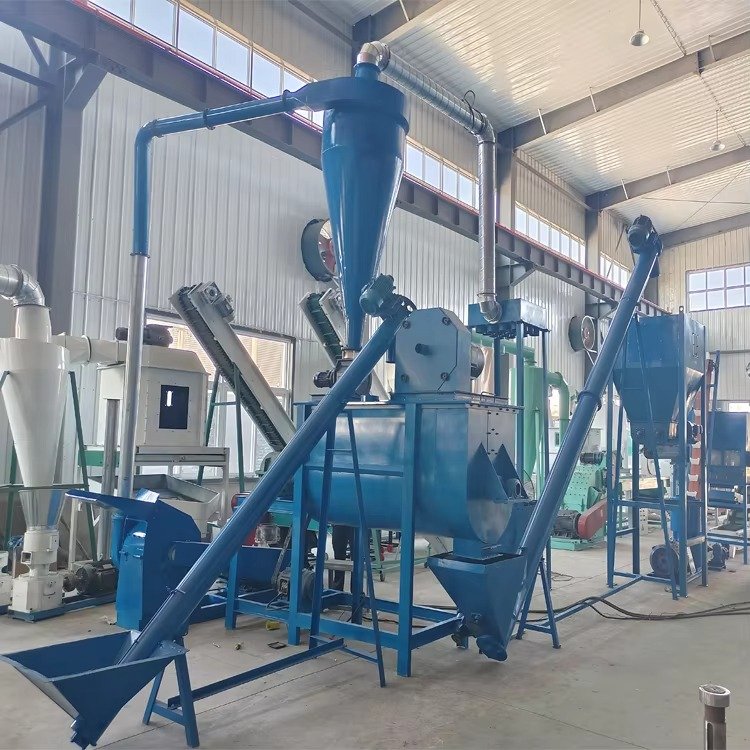
Understanding the function of each component in a poultry feed production line helps evaluate system quality and match configurations to specific operational requirements. While basic systems use simpler equipment, advanced installations incorporate specialized machinery that enhances efficiency, improves product quality, and reduces labor requirements.
Material Receiving and Pre-Cleaning
Raw materials entering the poultry feed production line often contain foreign objects, dirt, and contaminants. Receiving systems with integrated screening and magnetic separation remove these unwanted materials before processing begins. Permanent magnet separators extract metal fragments that could damage downstream equipment. Vibrating screens remove oversized stones, sticks, and debris. Pre-cleaning protects expensive pellet mills and mixers from damage while improving final product quality.
Size Reduction Equipment
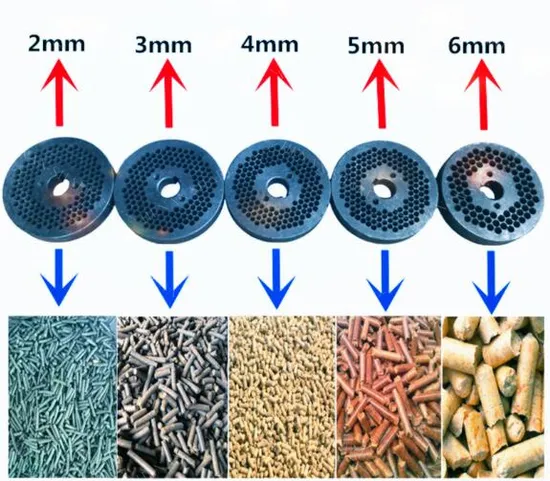
Hammer mills serve as the primary grinding equipment in most feed pellet production systems. These machines use rapidly rotating hammers to impact materials against perforated screens, reducing particle size to specifications required for effective mixing and pelleting. Screen hole sizes typically range from 2 to 6 millimeters depending on the target animal species and pellet formulation.
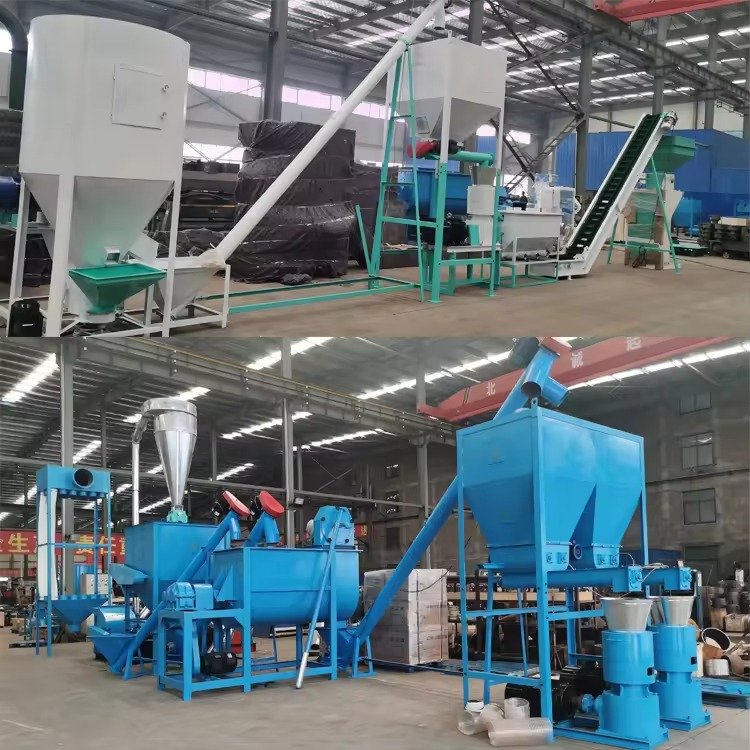
Grinder selection significantly impacts energy consumption and production capacity. Underpowered mills create bottlenecks that limit total line capacity. Oversized units waste electricity and capital investment. Proper matching of hammer mill capacity to overall system capacity optimizes both efficiency and economics. MAIKONG engineers calculate precise specifications based on ingredient characteristics, desired throughput, and target particle sizes.
| Equipment Type |
Function |
Capacity Impact |
Quality Impact |
| Hammer Mill |
Grinds raw materials to required particle size |
Determines maximum system throughput |
Particle uniformity affects pellet quality |
| Batching System |
Measures ingredients according to formulation |
Batch cycle time affects overall capacity |
Accuracy ensures nutritional consistency |
| Mixer |
Blends all ingredients uniformly |
Mixing time influences production speed |
Homogeneity critical for balanced nutrition |
| Pellet Mill |
Compresses mixture into dense pellets |
Main determinant of line capacity rating |
Die design affects pellet durability |
| Cooler |
Reduces temperature and moisture |
Cooling time can limit production speed |
Proper cooling prevents mold growth |
| Crumbler |
Breaks pellets into smaller particles for chicks |
Additional process step when required |
Produces optimal starter feed texture |
Batching and Weighing Systems
Precise ingredient proportioning forms the foundation of consistent animal feed quality. Automated batching systems use load cells and computer controls to dispense exact quantities of each ingredient according to stored formulations. Modern systems achieve accuracy within 0.5 percent of target weights. This precision ensures every batch meets nutritional specifications exactly.
Manual batching relies on operators weighing ingredients on platform scales. While functional, this approach introduces variability due to human error and fatigue. Semi-automatic systems combine manual ingredient selection with automated weighing, offering a cost-effective middle ground. Fully automatic systems with ingredient silos and pneumatic conveying eliminate manual handling entirely for maximum consistency and labor efficiency.
Mixing Equipment
Uniform distribution of all ingredients throughout each batch determines the nutritional consistency of finished feed pellets. Paddle mixers and ribbon mixers represent the two main types used in poultry feed production line installations. Paddle mixers use rotating paddles to lift and tumble ingredients. Ribbon mixers employ helical ribbons that move material in opposing directions simultaneously.
Mixing time and energy consumption both factor into equipment selection. Under-mixing results in segregation where some pellets contain excess protein while others lack essential nutrients. Over-mixing wastes time and electricity without improving quality. Optimal mixing typically requires 3 to 8 minutes depending on batch size, ingredient characteristics, and mixer design. MAIKONG specifies appropriate mixer sizes and types based on formulation requirements and production schedules.
Pelleting Equipment
The pellet mill represents the heart of any feed pellet production system. Ring-die pellet mills dominate commercial installations due to their high capacity, durability, and pellet quality. The machine forces ground, mixed feed through die holes using rollers that compress against a rotating cylindrical die. Heat generated by friction and pressure partially cooks starches, improving digestibility and binding the pellet together.
Die hole diameter and length-to-diameter ratio determine pellet size and hardness. Poultry feeds typically use 2 to 4 millimeter diameter dies. Longer dies with higher compression ratios produce harder, more durable pellets that resist breakage during handling and transportation. Steam conditioning before pelleting introduces moisture and heat that further improve pellet quality. Modern pellet machine designs from MAIKONG incorporate automatic lubrication, precision bearings, and quick-change dies that maximize production uptime.
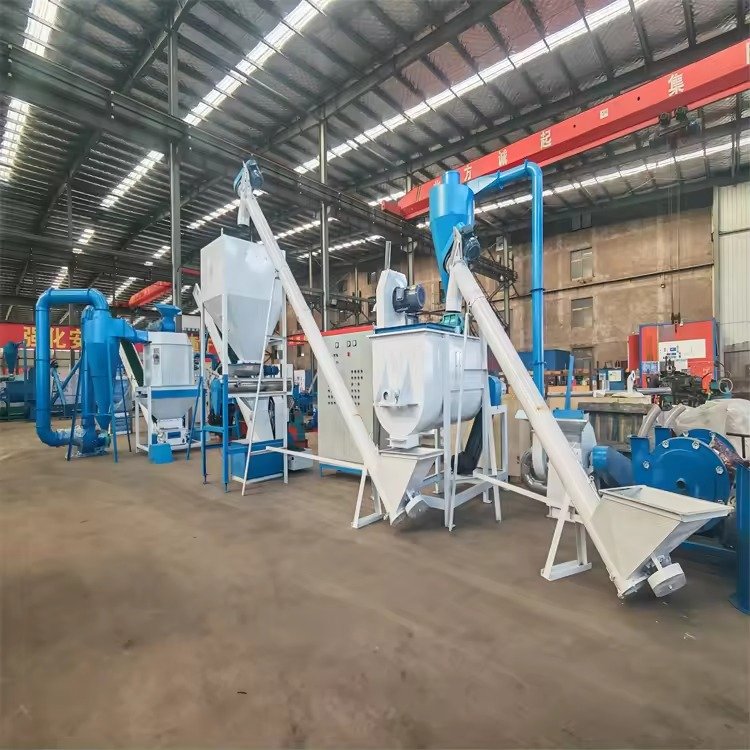
MAIKONG Model MK-L003 Pellet Mill
Specifications: 3-5 tons/hour capacity, 75KW main motor, ring die diameter 420mm, suitable for various poultry feed formulations, steam conditioning compatible, ABS housing components.
Dimensions: 1,850mm (L) × 1,200mm (W) × 1,650mm (H)
Weight: 2,850 kg
Available Colors: Industrial grey, custom colors on request
Stock Status: Available for immediate shipment
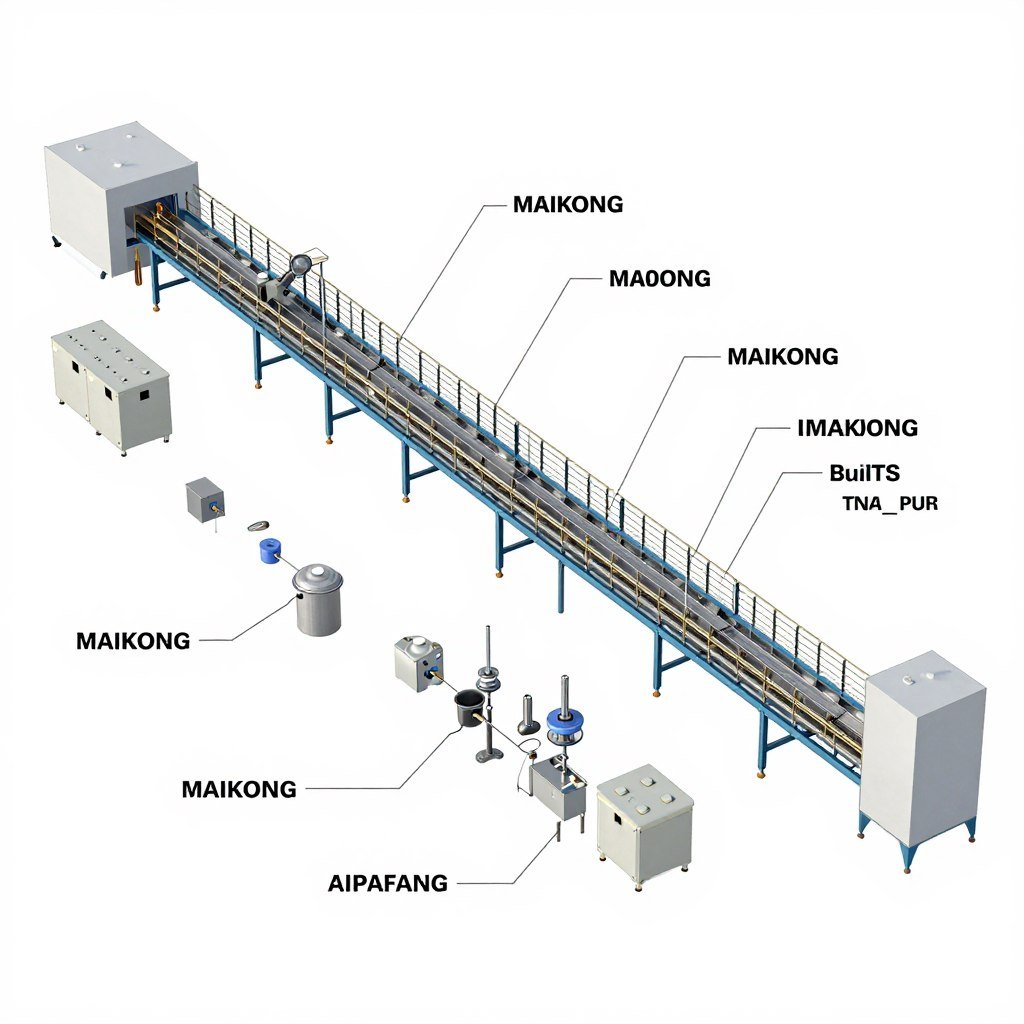
Complete 5-Ton System Configuration
A typical 5-ton-per-hour poultry feed production line includes coordinated equipment sized for balanced operation. This configuration suits medium-scale commercial farms and small feed mills serving local markets.
- SFSP66×80 hammer mill with 75KW motor
- SLHJ2 twin-shaft paddle mixer, 2,000kg batch capacity
- PLC-controlled batching system with 6 ingredient bins
- MAIKONG MK-L003 ring die pellet mill, 420mm die
- SKLN12×12 counterflow cooler
- SSLG20×140 pellet crumbler for starter feeds
- Complete conveying system with bucket elevators
- Dust collection and air filtration system
- DCS-50 automatic bagging scale
- Central control panel with recipe storage
Cooling and Screening
Fresh pellets exit the pellet mill at temperatures between 75 and 85 degrees Celsius with moisture content around 15 to 17 percent. Immediate cooling reduces temperature to within 5 degrees of ambient and moisture content to 12 to 13 percent. This prevents mold growth during storage and improves pellet hardness as they cool.
Counterflow coolers provide the most efficient cooling by passing ambient air upward through descending pellets. Properly sized coolers prevent production bottlenecks while ensuring adequate residence time for complete cooling. Following cooling, vibrating screens separate fines (undersized particles) from acceptable pellets. Fines return to the mixer for reprocessing while finished pellets proceed to packaging or bulk storage.
Packaging and Material Handling
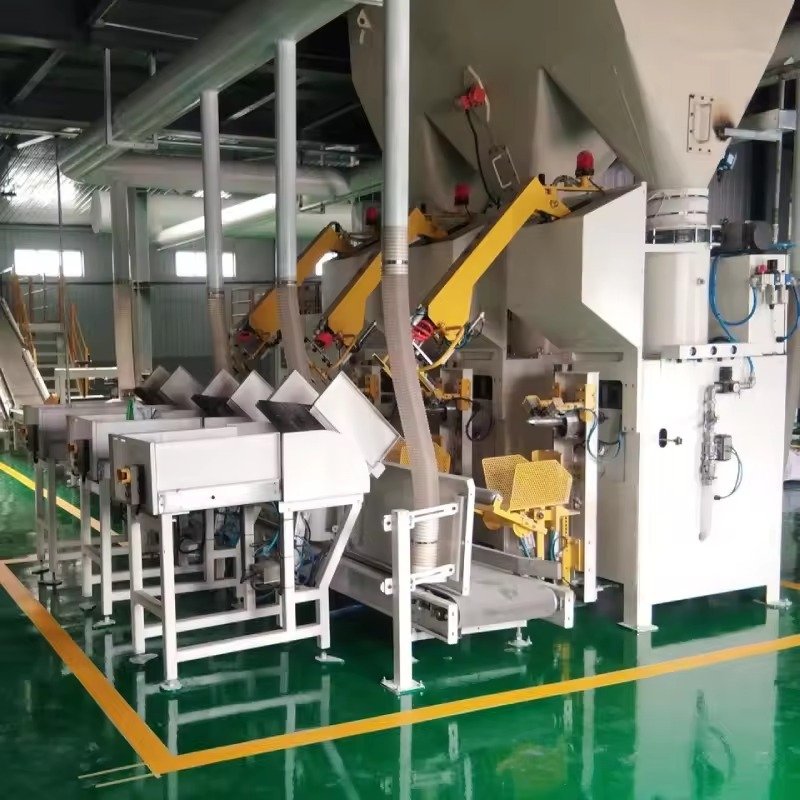
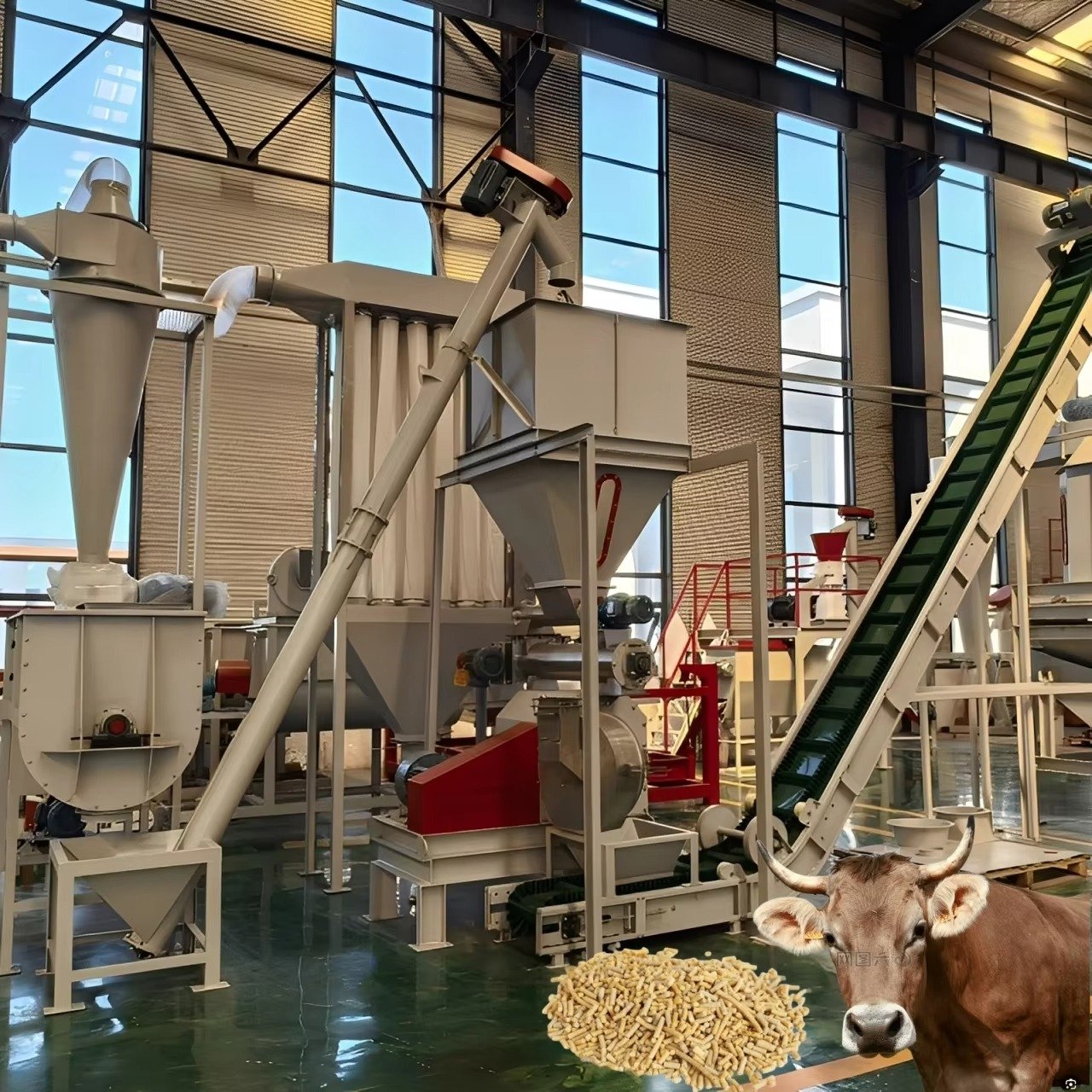
Finished feed production requires packaging for distribution or transfer to bulk storage systems. Automatic bagging scales offer the most efficient packaging solution for commercial operations. These machines fill bags to preset weights, typically 50 kilograms for the Philippine market, then automatically discharge filled bags for sewing or heat sealing.
Material handling equipment moves ingredients and products between process stages. Bucket elevators lift materials vertically. Screw conveyors transport materials horizontally or at slight inclines. Pneumatic conveying systems use air pressure to move powdered materials through pipes, offering advantages where dust control is critical. Proper material handling design prevents bottlenecks, minimizes product degradation, and reduces labor requirements significantly.
Poultry Feed Production Process Flow
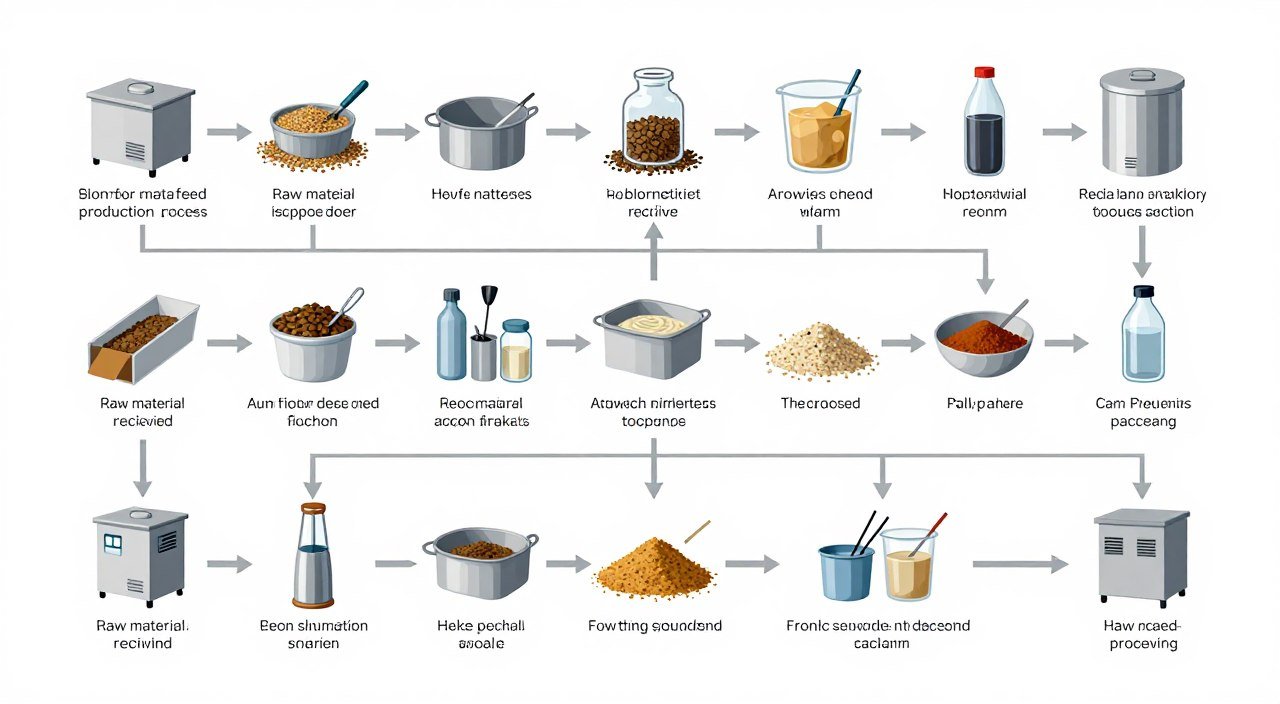
The poultry feed production line follows a logical sequence of operations that transforms raw agricultural materials into nutritionally complete pellets. Understanding this workflow helps identify potential efficiency improvements and quality control points. Each stage contributes to the final product characteristics and overall production economics.
Stage 1: Raw Material Receiving and Storage
Corn, soybean meal, wheat bran, and other ingredients arrive at the facility in bulk trucks or bags. Initial inspection checks for obvious quality issues, moisture content, and contamination. Accepted materials move into dedicated storage bins or warehouse areas segregated by ingredient type. Proper storage with moisture and temperature control maintains ingredient quality until processing.
Inventory management systems track ingredient quantities, purchase dates, and lot numbers. This traceability proves essential for quality control and allows rapid response if ingredient problems emerge. Many Philippine operations schedule ingredient deliveries to coincide with harvest periods when prices typically fall to lowest annual levels.
Stage 2: Ingredient Dosing and Weighing
Production begins when the batching system dispenses precise quantities of each ingredient according to the selected formulation recipe. Automated systems retrieve ingredients from overhead bins through gates controlled by load cells. Manual operations require workers to weigh ingredients on platform scales then dump them into the mixer.
Formulation accuracy directly determines nutritional consistency. A typical layer feed formulation might include corn (60 percent), soybean meal (22 percent), rice bran (8 percent), calcium carbonate (8 percent), and premix (2 percent). Deviations of even 1 to 2 percent in major ingredients alter nutritional value measurably. Computer-controlled batching eliminates calculation errors and maintains records of every batch produced.
Stage 3: Grinding and Size Reduction
Whole grains and large particles require grinding before effective mixing can occur. The hammer mill reduces ingredient particle size to 2 to 4 millimeters typically. Finer grinding improves mixing uniformity but increases energy consumption and dust generation. Coarser grinding reduces energy costs but may compromise pellet quality.
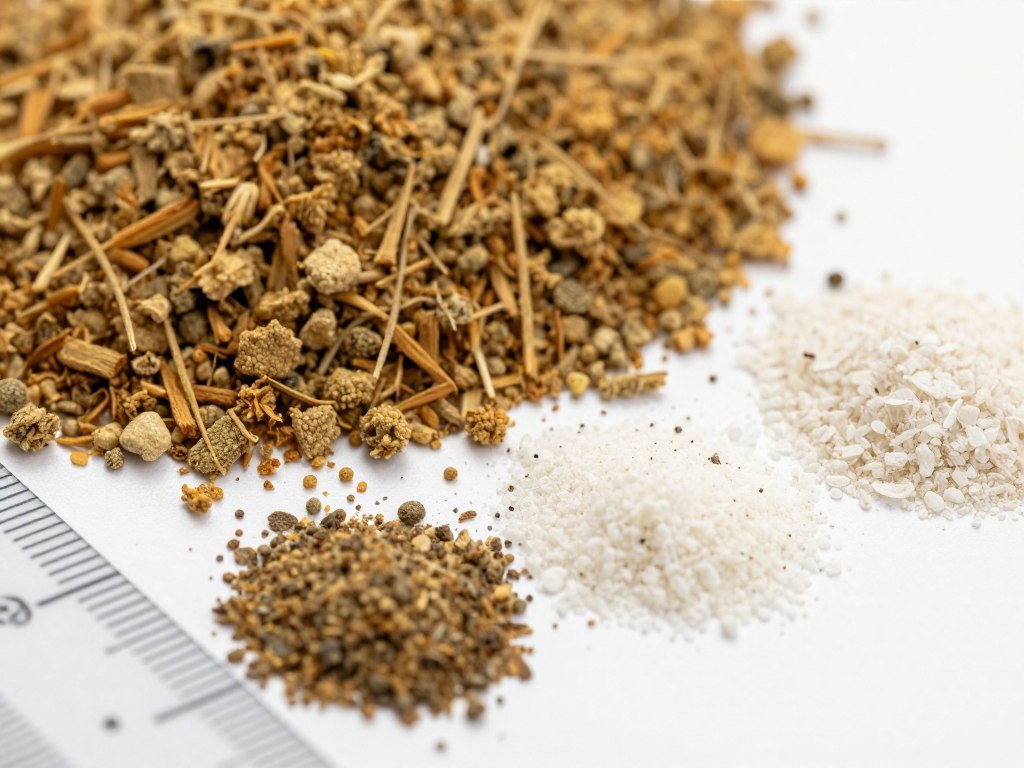
Screen selection in the hammer mill controls final particle size distribution. Poultry feeds generally use smaller particles than cattle feeds because birds lack teeth for mechanical breakdown. Proper grinding ensures all ingredients achieve similar particle sizes so they mix uniformly and pellet consistently.
Stage 4: Mixing and Blending
Ground ingredients flow into the mixer where rotating paddles or ribbons blend them into a homogeneous mixture. Liquid ingredients like vegetable oil or molasses inject during this stage through spray nozzles that distribute them evenly. Mixing time typically ranges from 4 to 7 minutes depending on batch size and mixer design.
Sample testing confirms mix uniformity before proceeding to pelleting. Coefficient of variation below 10 percent indicates acceptable mixing quality. Poor mixing results in some birds receiving excess nutrients while others experience deficiencies, compromising flock uniformity and production efficiency.
Stage 5: Conditioning and Pelleting
The mixed feed enters a conditioning chamber where steam injection adds moisture and heat. Conditioning temperatures typically reach 75 to 85 degrees Celsius. This process gelatinizes starches, softens ingredients, and improves pellet formation. Conditioning time ranges from 30 to 90 seconds in commercial systems.
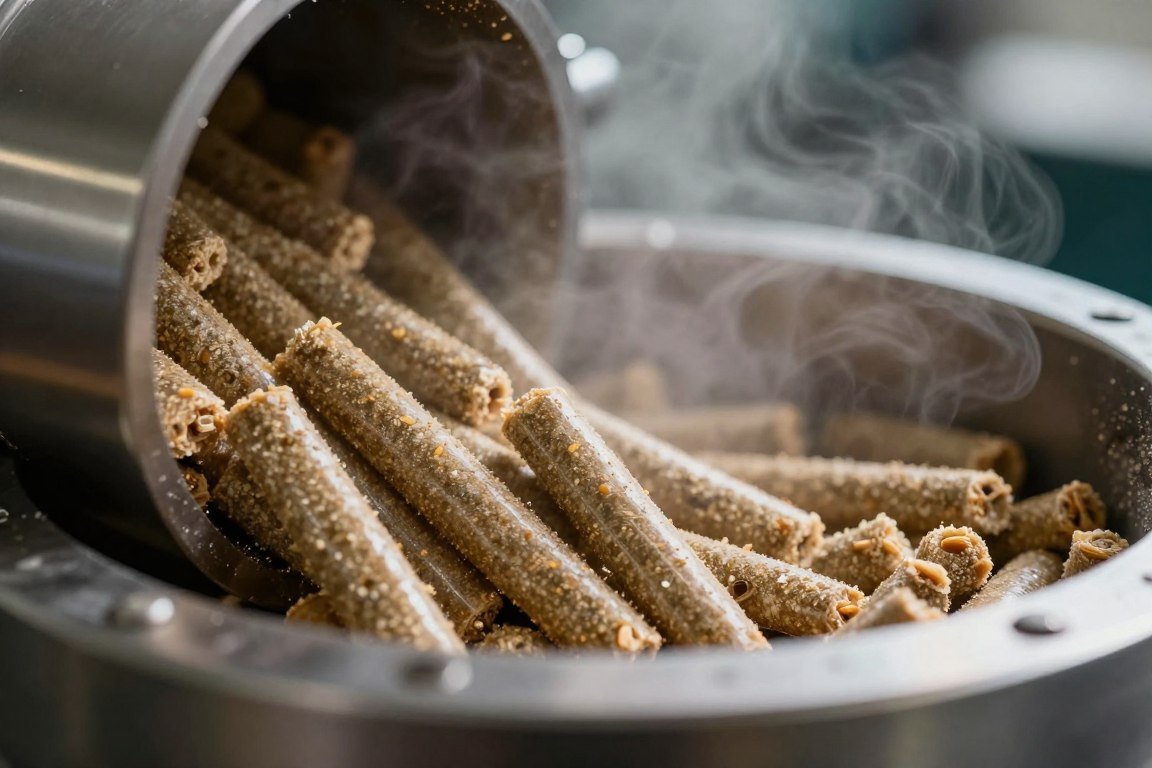
Conditioned feed then enters the pellet mill where rollers compress it through the die holes. The compression force combined with frictional heat binds particles together forming dense cylindrical pellets. Pellets break off at predetermined lengths as they emerge from the die face, typically 5 to 15 millimeters long for poultry feeds.
Stage 6: Cooling and Drying
Hot pellets with elevated moisture content require immediate cooling to prevent spoilage and improve handling characteristics. The counterflow cooler draws ambient air upward through a bed of descending pellets. Residence time in the cooler typically extends 8 to 12 minutes. Properly cooled pellets exit at temperatures within 5 degrees Celsius of ambient with moisture reduced to storage-safe levels around 12 to 13 percent.
Inadequate cooling creates problems during bagging and storage. Warm pellets generate condensation inside bags promoting mold growth. Excess moisture reduces pellet hardness and increases breakage during handling and transportation. Investment in appropriate cooling capacity protects product quality and prevents post-production losses.
Stage 7: Screening and Crumbling
Cooled pellets pass through vibrating screens that separate acceptable products from fines (broken and undersized particles). Fines typically represent 3 to 8 percent of production in well-operated systems. These materials return to the mixer for incorporation into subsequent batches, eliminating waste.
When producing starter feeds for chicks, whole pellets proceed to a crumbler that breaks them into smaller particles. Crumbles provide optimal particle size for young birds while maintaining the digestibility benefits of pelleting. Adjustable crumbler settings produce particle sizes appropriate for different bird ages.
Stage 8: Bagging and Storage
Finished pellets flow to automatic bagging equipment or bulk storage bins. Bagging scales fill bags to preset weights then discharge them for sealing. Workers or automated systems stack bagged products on pallets for warehouse storage or immediate shipment. Bulk storage systems pump pellets pneumatically into large bins for later retrieval.
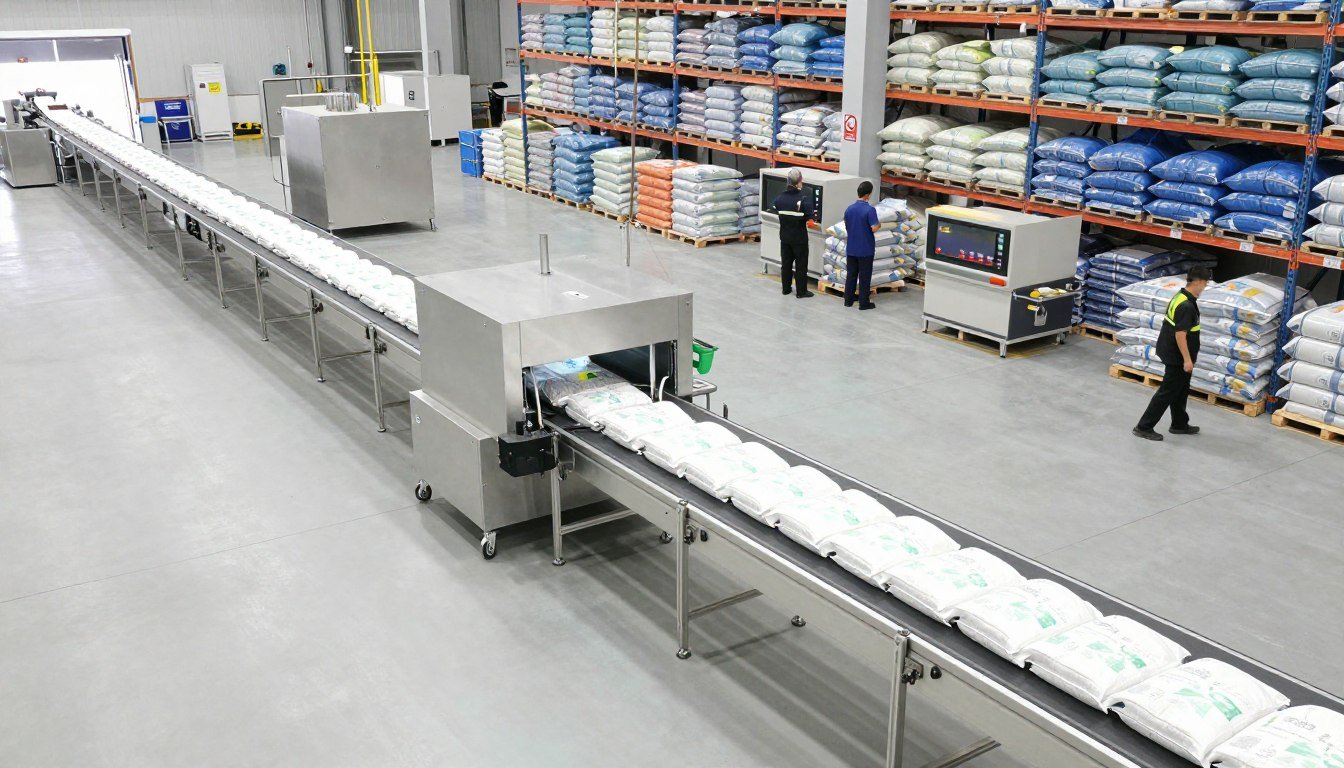
Proper storage conditions maintain feed quality until use. Covered warehouses protect products from rain and direct sunlight. Elevated pallets prevent ground moisture absorption. FIFO (first in, first out) inventory rotation ensures older products ship before newer production. Well-managed storage extends shelf life to 60 to 90 days without quality degradation.
Need Expert Guidance on Process Optimization?
MAIKONG’s technical team provides comprehensive process training and optimization support. Our 22 years of experience across Asia, Americas, Europe, Africa, and Middle East markets means we understand regional challenges and proven solutions.
Capacity Planning and Cost Analysis
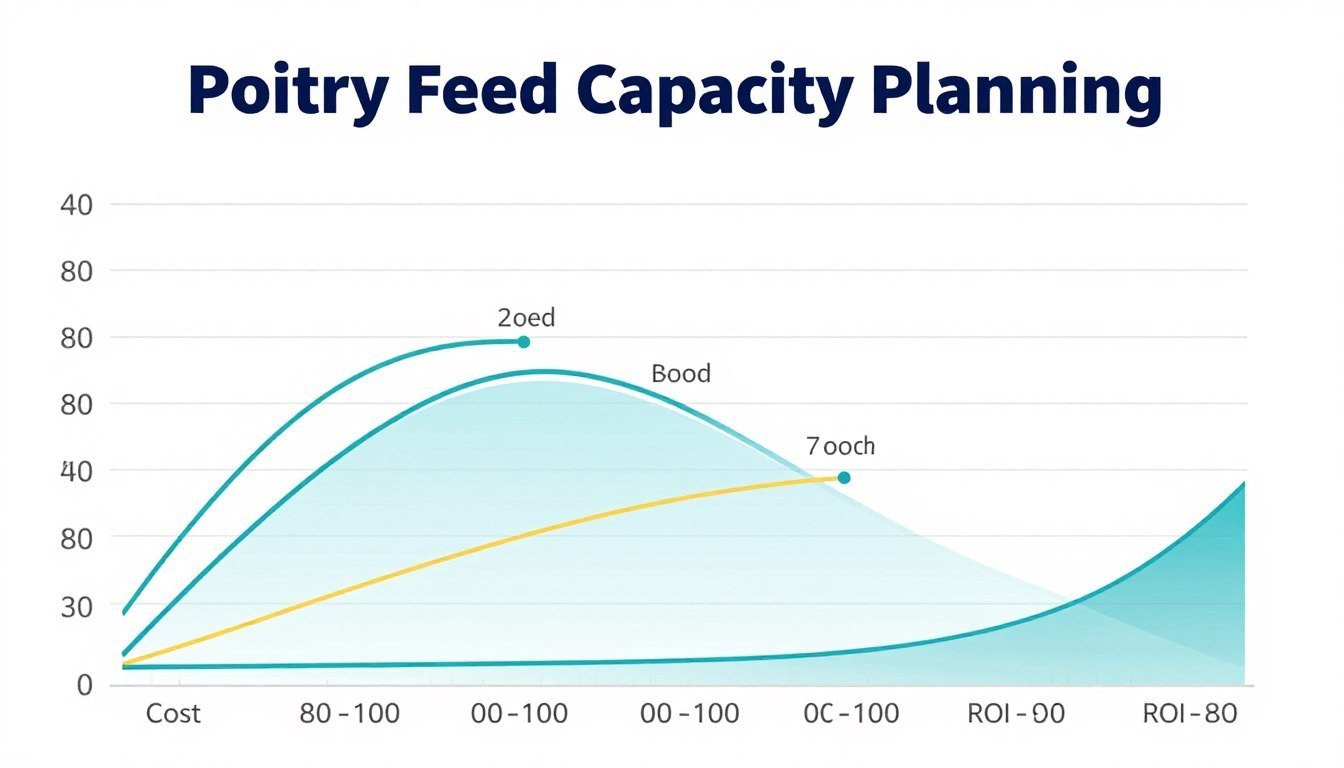
Selecting the right poultry feed production line capacity requires careful analysis of current needs, growth projections, and economic considerations. Undersized systems create frustrating bottlenecks that limit farm expansion. Oversized installations waste capital and operating expenses on unused capacity. Proper planning balances these factors to optimize return on investment.
Determining Required Capacity
Calculate daily feed consumption for your entire poultry population. Layer hens typically consume 110 to 120 grams per bird daily. Broilers eat approximately 150 to 180 grams daily depending on age and target weight. Multiply bird numbers by consumption rates then add 15 to 20 percent contingency for growth and inefficiencies.
A farm with 10,000 layers requires roughly 1,200 kilograms daily (10,000 birds × 120 grams). Operating a poultry feed production line six hours per day means minimum capacity of 200 kilograms per hour. Practical installations should target 300 to 400 kilograms per hour allowing shorter production runs, maintenance time, and future expansion. This same farm planning to expand to 20,000 birds within three years should consider 500 to 600 kilogram-per-hour capacity immediately.
Investment Cost Breakdown
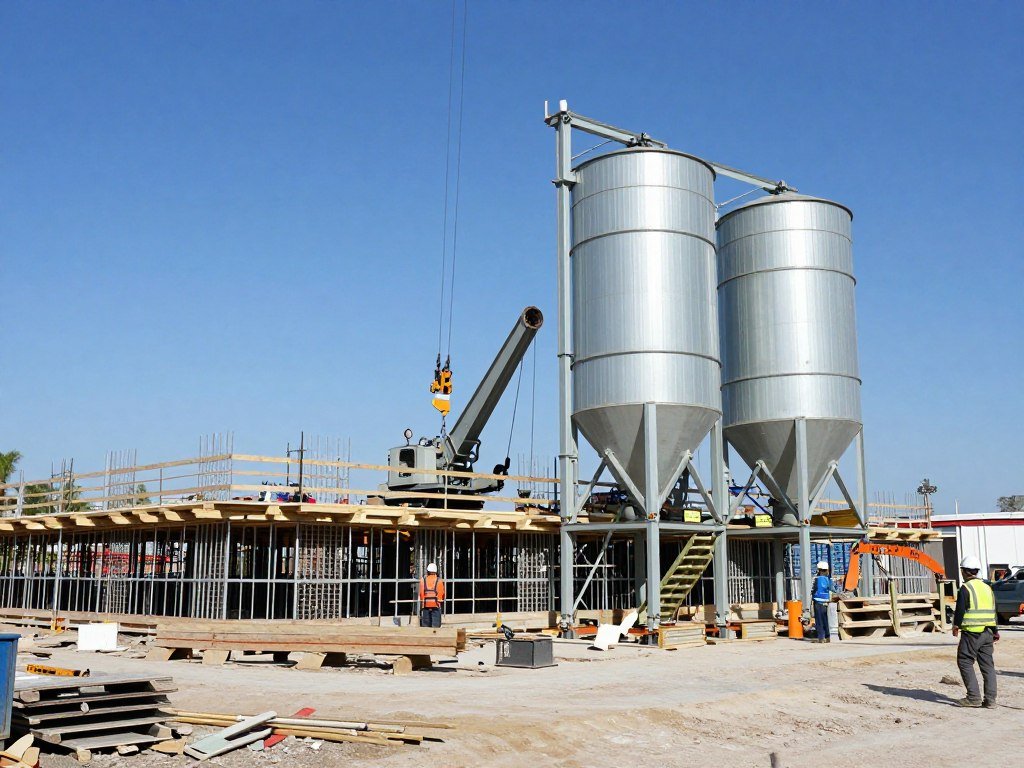
Total project costs for a poultry feed production line include equipment purchase, installation, facility construction or modification, auxiliary equipment, and working capital for initial ingredient stocks. Understanding these components helps develop accurate budgets and secure appropriate financing.
| Capacity Range |
Total Power |
Site Requirements |
Installation Time |
Equipment Cost (USD) |
| 1-2 T/H |
47-75 KW |
300-500 m² |
7-15 Days |
$10,000-$50,000 |
| 3-4 T/H |
53-165 KW |
300-700 m² |
15-20 Days |
$50,000-$120,000 |
| 5-7 T/H |
68-259 KW |
400-800 m² |
20-40 Days |
$70,000-$250,000 |
| 8-10 T/H |
125-410 KW |
800-2,000 m² |
45-60 Days |
$150,000-$300,000 |
| 12-20 T/H |
358-620 KW |
1,500-3,000 m² |
60-90 Days |
$250,000-$580,000 |
Equipment costs represent 50 to 65 percent of total project investment typically. Civil works including building construction, concrete foundations, and electrical systems add 20 to 30 percent. Installation, commissioning, and operator training contribute 8 to 12 percent. Initial ingredient inventory and working capital for the first production months requires the remaining 5 to 10 percent.
Operating Cost Considerations
Ongoing operating expenses include electricity, labor, maintenance, and ingredient costs. Electricity consumption varies by capacity and automation level. A 5-ton-per-hour system typically uses 70 to 80 kilowatt-hours per ton produced. At Philippine industrial electricity rates averaging 7 to 9 pesos per kilowatt-hour, power costs approximately 500 to 700 pesos per ton.
Labor requirements depend on automation level. Fully manual systems require 3 to 5 workers per shift. Semi-automatic installations operate with 2 to 3 workers. Fully automated systems may need only 1 operator plus periodic maintenance support. Labor costs in Philippine rural areas typically range from 400 to 600 pesos per worker daily.
Maintenance expenses average 3 to 5 percent of equipment value annually when proper procedures are followed. This includes replacement screens for hammer mills, dies and rollers for pellet mills, mixer paddles, and routine lubrication supplies. Preventive maintenance programs reduce unexpected breakdowns and extend equipment lifespan significantly.
Return on Investment Calculations
Payback periods for poultry feed production line investments typically range from 12 to 36 months depending on scale, utilization rate, and feed cost savings achieved. A properly sized system operating near capacity delivers faster payback than undersized equipment running continuously or oversized systems with excess idle time.
Consider a 10,000-layer farm producing 1.2 tons of feed daily. Commercial layer feed costs approximately 22,000 pesos per ton. Production costs including ingredients, electricity, and labor total approximately 15,000 pesos per ton. Daily savings equal 8,400 pesos (1.2 tons × 7,000 pesos savings). Annual savings exceed 3 million pesos. A 2-ton-per-hour system costing 2.5 million pesos total investment pays back in approximately 10 months.
Advantages of Higher Capacity Systems
- Lower per-ton production costs through economies of scale
- Faster production runs reduce labor time per ton produced
- Accommodation of farm growth without equipment replacement
- Opportunity to sell excess production to neighboring farms
- Better negotiating position for bulk ingredient purchases
Disadvantages of Oversized Systems
- Higher initial capital investment increases financing costs
- Larger facility footprint requirements
- Greater electrical service requirements and connection fees
- Lower equipment utilization rates reduce operational efficiency
- Higher fixed costs spread over fewer production tons
Financing Options for Philippine Buyers
Several financing mechanisms help Philippine agricultural businesses acquire poultry feed production line equipment. The Department of Agriculture through the Agricultural Credit Policy Council offers loans with favorable terms for productivity-enhancing investments. Land Bank of the Philippines and Development Bank of the Philippines provide specialized agricultural equipment financing programs.
Private commercial banks increasingly recognize feed production equipment as sound collateral for equipment loans. Typical terms include 20 to 30 percent down payment with the balance financed over 3 to 5 years at interest rates currently ranging from 8 to 12 percent annually. Some suppliers including MAIKONG offer equipment leasing arrangements that convert into ownership after specified payment periods.

Customization Options for Philippine Operations
Every poultry operation faces unique requirements based on bird types, production scale, facility constraints, and business objectives. MAIKONG’s poultry feed production line systems offer extensive customization to match these specific needs. Understanding available options helps specify equipment that delivers optimal performance for your particular situation.
Feed Type Customization
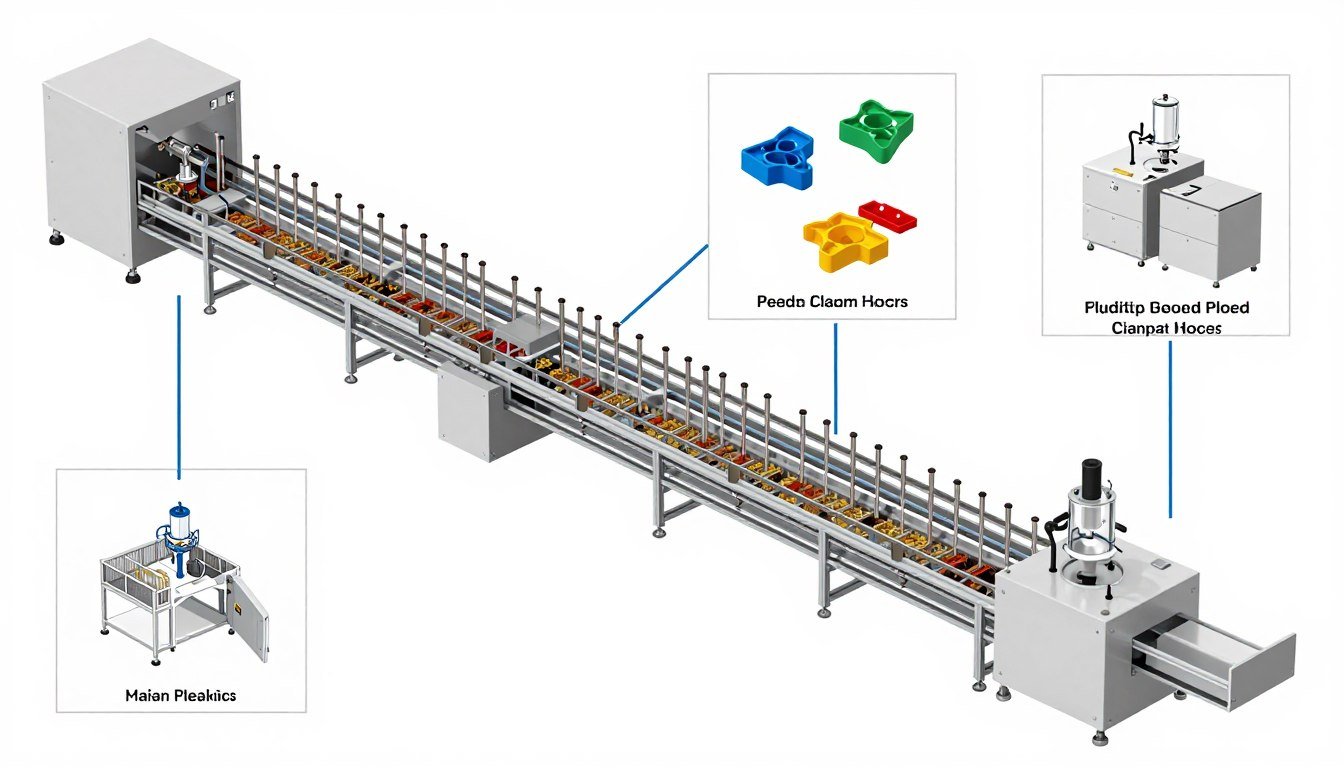
Different poultry species and production stages require distinct feed formulations and physical characteristics. Layer feeds emphasize calcium for strong eggshells. Broiler feeds maximize protein for rapid growth. Duck feeds accommodate higher moisture tolerance. The poultry feed production line configuration adapts to these requirements through die selection, crumbling capacity, and formulation flexibility.
Starter feeds for chicks typically use 2-millimeter pellets or crumbles. Grower feeds transition to 3-millimeter pellets. Finisher and layer feeds often employ 3.5 to 4-millimeter pellets. MAIKONG equipment accommodates quick die changes allowing production of multiple pellet sizes without extended downtime. Crumbling systems break standard pellets into appropriate sizes for young birds while maintaining nutritional benefits of heat processing.
Voltage and Power Configuration
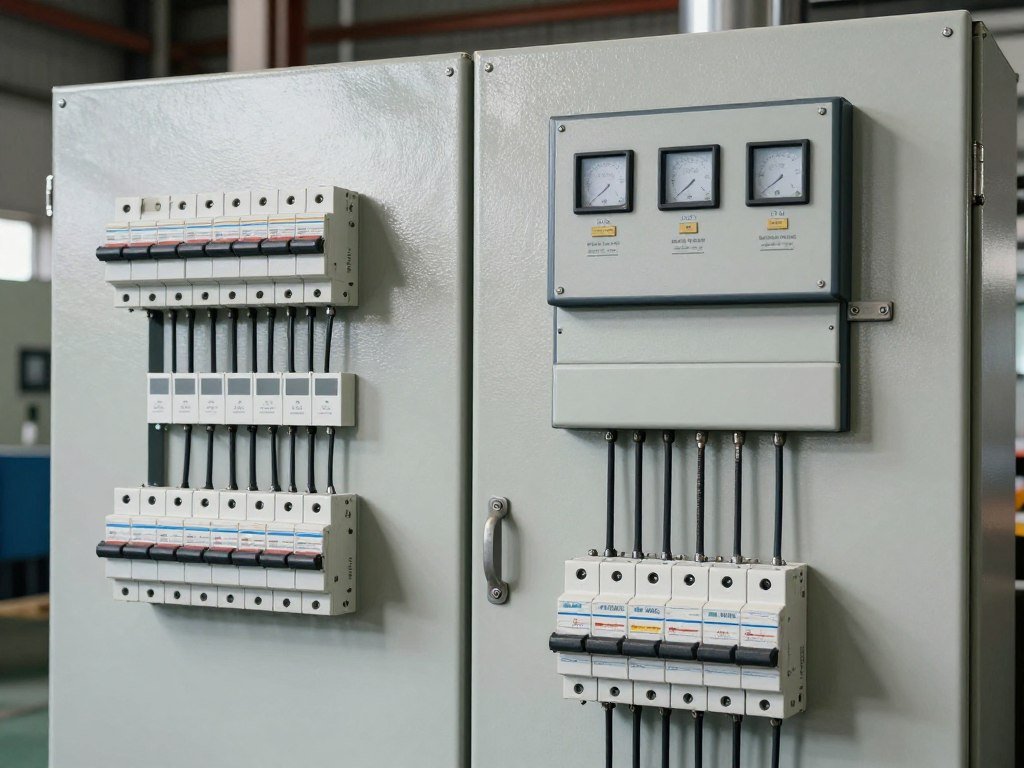
Philippine electrical service varies between regions and facility types. Rural areas typically receive single-phase 220-volt service. Industrial zones offer three-phase 380-volt or 440-volt power. MAIKONG engineers configure equipment motors and controls for available electrical service at your location.
Systems designed for areas with unstable power supply incorporate voltage regulators and surge protection. Backup generator compatibility allows continued operation during grid outages common in some Philippine regions. Motor sizing accounts for local voltage variations ensuring reliable starting and operation under actual field conditions.
Production Capacity Scaling
MAIKONG poultry feed production line systems span from 200 kilograms per hour for small farm operations to 200 tons per hour for large regional feed mills. Modular design allows capacity expansion by adding parallel processing streams or upgrading individual components.
A farm might initially install a 500-kilogram-per-hour system then add a second pellet mill and cooler when expanding from 10,000 to 20,000 birds. This staged investment approach matches capital expenditure to revenue growth. Common expansion paths include doubling capacity by adding duplicate equipment or upgrading to larger machines when replacing worn components.
Ingredient Handling Customization
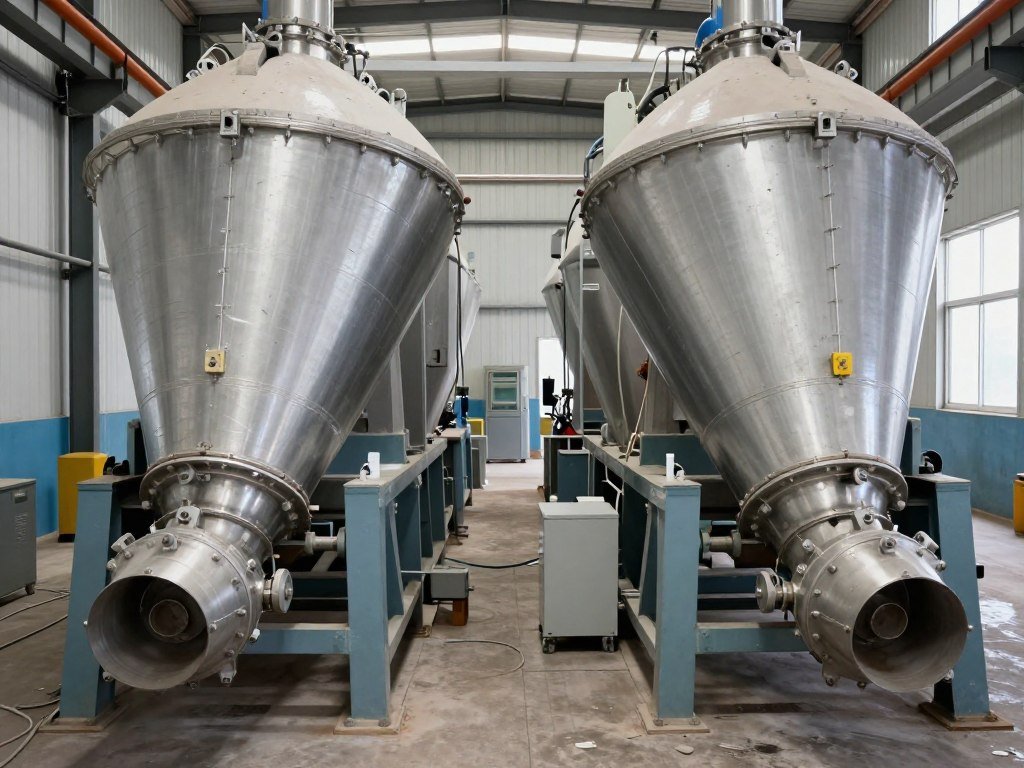
Local ingredient availability varies across Philippine regions. Corn-based formulations dominate in Luzon provinces with extensive corn production. Rice bran becomes economically attractive in rice-growing areas. Coastal regions access fish meal at competitive prices. MAIKONG designs ingredient receiving, storage, and batching systems to accommodate specific raw materials used in your formulations.
Some ingredients require special handling. Fish meal needs moisture-proof storage. Molasses requires heated storage tanks and pumping systems. Limestone demands dust collection due to fine particle characteristics. MAIKONG engineers specify appropriate storage vessels, conveying equipment, and batching mechanisms for the exact ingredients in your formulations.
Automation Level Selection
Labor costs, operator skill availability, and production scale determine optimal automation levels. Small operations with limited budgets often choose manual or semi-automatic systems. Medium-scale commercial farms benefit from automated batching and pelleting with manual bag handling. Large feed mills justify fully automated systems with computerized process control and automated packaging.
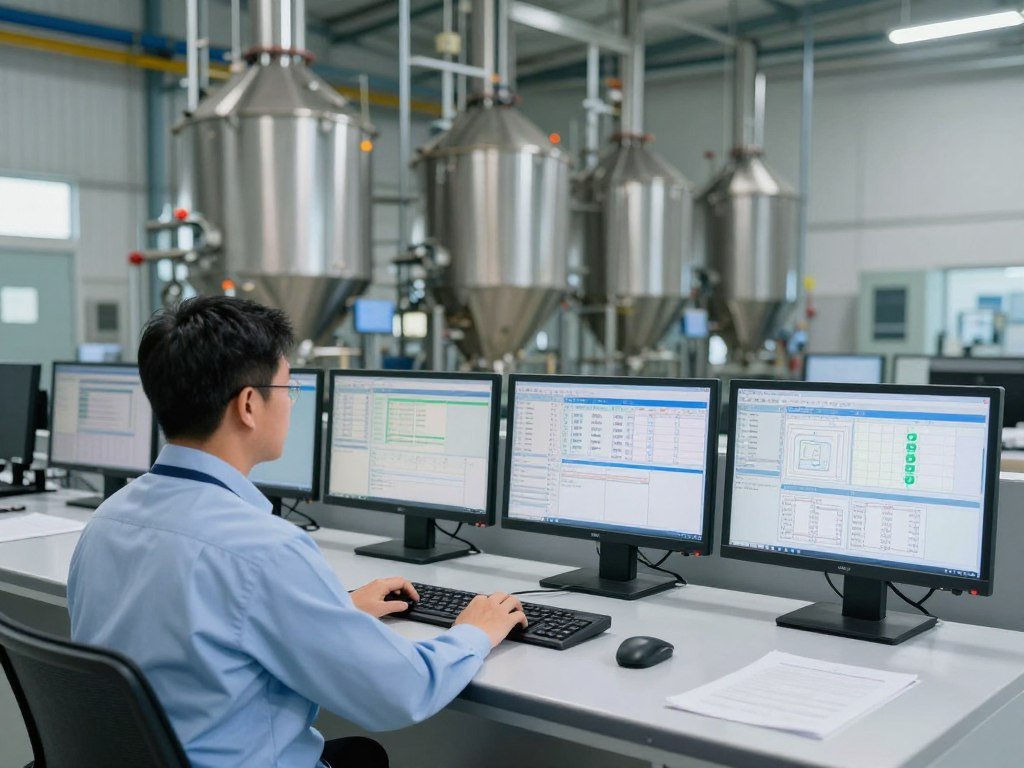
Manual systems require workers to weigh ingredients, start and stop equipment, and monitor production visually. Semi-automatic systems automate critical functions like batching and pelleting while requiring manual material handling. Fully automatic installations run complete production cycles from stored formulations with minimal operator intervention. Computer systems record all production data for quality control and inventory management.
Climate Adaptation Features
Philippine tropical climate presents specific challenges including high humidity, temperature extremes, and seasonal typhoons. MAIKONG equipment incorporates design features addressing these conditions. Stainless steel construction resists corrosion in humid coastal environments. Enhanced cooling capacity compensates for high ambient temperatures. Electrical components use tropical-rated insulation and moisture seals.
Facilities in typhoon-prone regions benefit from reinforced structures and equipment anchoring systems. Emergency shutdown systems protect equipment during power fluctuations common during severe weather. Proper facility design with adequate ventilation prevents heat buildup that reduces equipment lifespan and worker comfort.
Future Expansion Provisions
Well-designed poultry feed production line installations include provisions for future capacity growth. Oversized building structures accommodate additional equipment without costly reconstruction. Electrical services include spare capacity for additional motors. Ingredient storage areas allow adding bins for new formulation components. Control systems support adding sensors and automation features later.
This forward planning reduces future expansion costs significantly. Adding a second pellet mill to existing infrastructure costs 40 to 60 percent less than building a completely new facility of the same total capacity. MAIKONG’s planning service identifies reasonable expansion scenarios and incorporates appropriate provisions during initial installation.
Ready to Discuss Your Custom Configuration?
MAIKONG’s engineering team provides free consultation to determine optimal equipment configuration for your specific needs. We consider your bird types, capacity requirements, ingredient sources, facility constraints, budget, and growth plans to recommend the most cost-effective solution.
Successful Installations and Case Studies
Real-world examples demonstrate how Philippine and international poultry operations benefit from properly specified poultry feed production line systems. These case studies highlight common challenges, solutions implemented, and measurable results achieved. Learning from these experiences helps avoid pitfalls and replicate success factors.
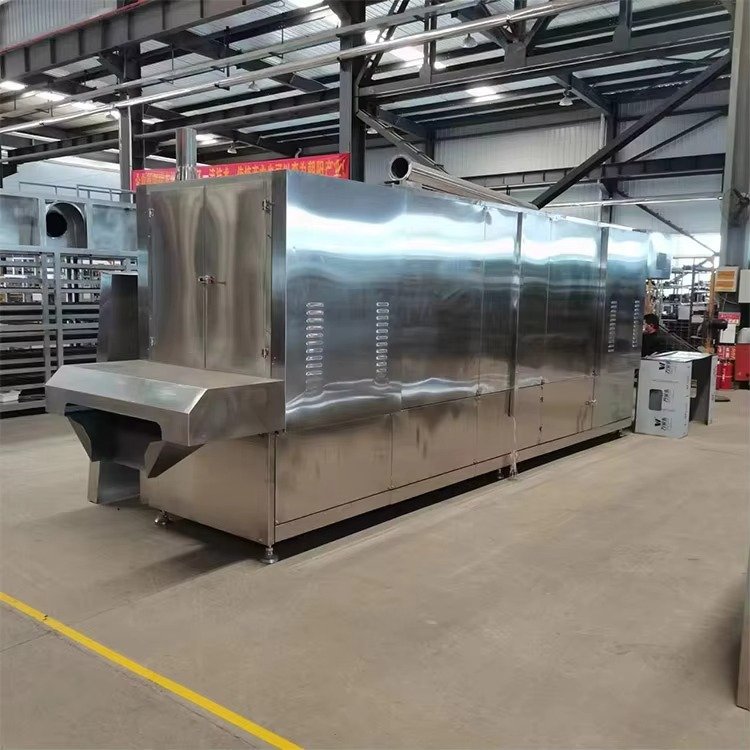
Central Luzon Layer Farm Success
A 15,000-bird layer operation in Tarlac province faced rapidly increasing commercial feed costs that eroded profitability. Feed expenses exceeded 65 percent of total operating costs. The farm owner investigated poultry feed production line options to reduce dependence on commercial suppliers and improve profit margins.
MAIKONG installed a 2-ton-per-hour system in late 2022. The configuration included a hammer mill, paddle mixer, ring-die pellet mill model MK-L003, counterflow cooler, and semi-automatic bagging scale. Total project cost reached 3.2 million pesos including building modifications and electrical upgrades. The farm began producing 1.5 tons of layer feed daily, enough for current birds plus 20 percent growth capacity.
Results after 18 months of operation exceeded expectations. Feed cost per kilogram dropped from 22 pesos for commercial product to 15.50 pesos for farm-produced feed. Daily savings averaged 9,750 pesos (1,500 kilograms × 6.50 pesos savings). Annual savings exceeded 3.5 million pesos, delivering complete payback in 11 months. The farm owner now sells excess capacity to three neighboring layer farms, generating additional revenue of 180,000 pesos monthly.
Mindanao Broiler Integration Project
A broiler integrator in Davao del Sur managing contract growers for 200,000 birds needed centralized feed production to ensure consistent formulations across all farms. Previous reliance on multiple commercial feed suppliers resulted in variable bird performance and quality inconsistencies that affected processing yields.
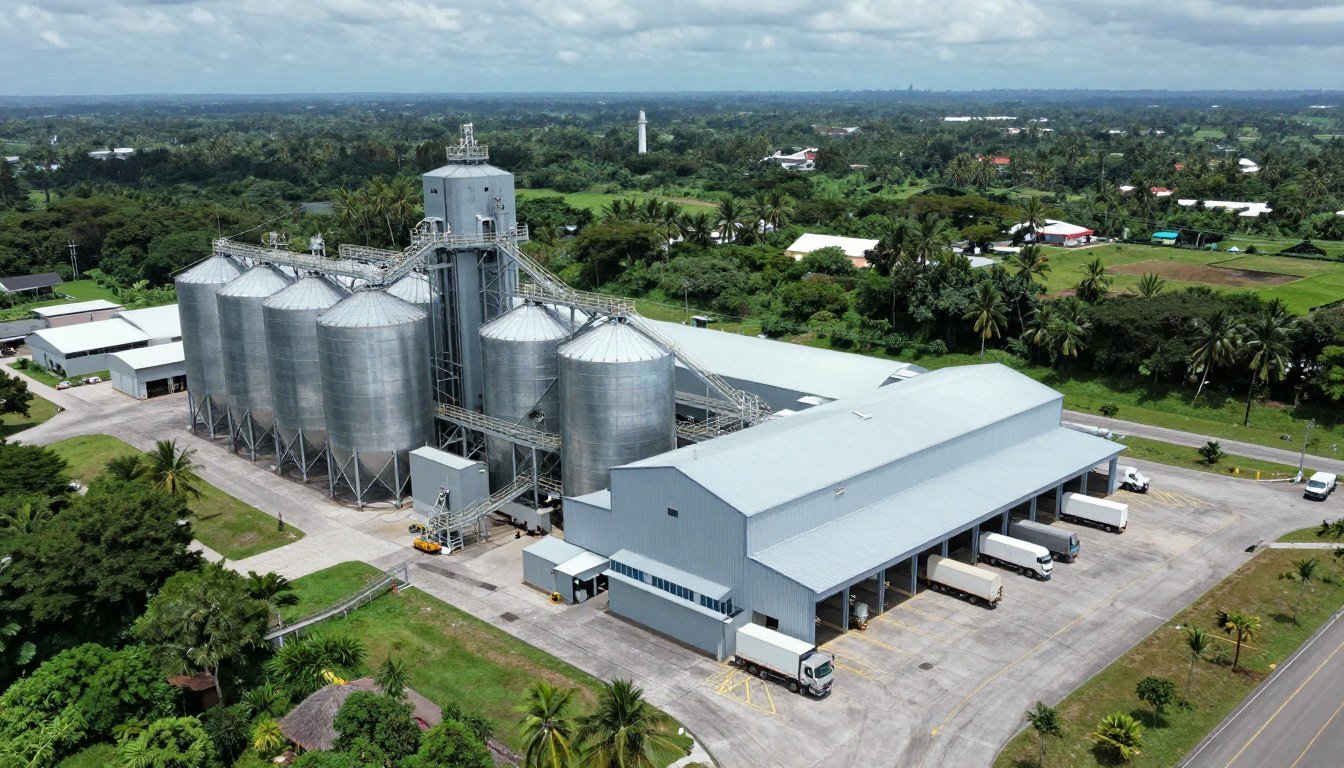
MAIKONG designed and installed a 12-ton-per-hour poultry feed production line at a central location serving the integration network. The system features automated batching for 12 ingredient bins, twin pellet mills for redundancy, capacity for producing multiple formulations daily, and bulk delivery capability to member farms. Total investment exceeded 18 million pesos but addressed the integration’s feed quality and cost control requirements.
The integrator now produces starter, grower, and finisher feeds to exact specifications for optimal bird performance. Feed cost per kilogram decreased from 19.50 pesos to 13.80 pesos, saving 5.70 pesos per bird over the 35-day growth cycle. For 200,000 birds annually raised in six cycles, total savings exceed 41 million pesos yearly. Improved feed consistency increased average processing weights by 120 grams per bird, adding further value. The project achieved payback in 5.5 months.
International Success in Southeast Asia
A Malaysian layer farm cooperative with 80,000 birds across member farms partnered with MAIKONG for centralized feed production. The cooperative previously purchased commercial feed individually at retail pricing. Bulk ingredient purchases and shared production facilities promised substantial savings while maintaining member farm independence.
The installed 8-ton-per-hour system serves 12 member farms through scheduled production runs of different formulations. Each farm’s specific requirements—organic certification, non-GMO ingredients, specialty layer feeds—are accommodated through careful process control and batch segregation. Investment totaled 12 million pesos with members contributing proportionally.
Results showed feed cost reduction of 28 percent compared to previous commercial purchases. Production scheduling flexibility allows members to adjust formulations seasonally for heat stress or disease challenge periods. The cooperative exports premium eggs at higher prices justified by feed quality control and ingredient transparency that retailers value. Member farms improved net income by 18 to 24 percent through both reduced feed costs and premium egg prices.
African Feed Mill Expansion
A Nigerian commercial feed mill serving poultry farms needed capacity expansion from 15 to 30 tons per hour. Limited floor space in the existing facility prevented installing a completely new parallel production line. MAIKONG engineers designed an upgrade path using existing building infrastructure.
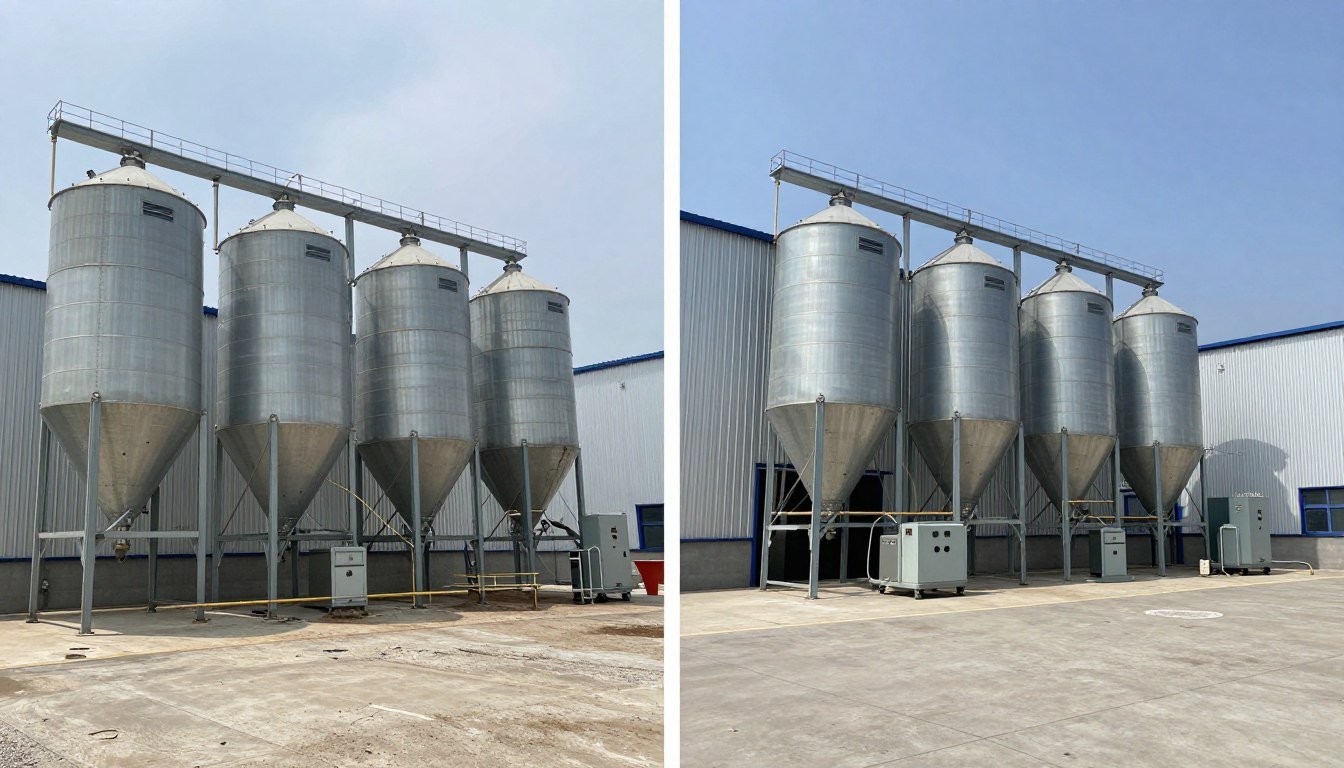
The project replaced the original 15-ton pellet mill with two 15-ton units sharing common conditioning and cooling systems. Existing hammer mills and mixers had sufficient capacity for the increased throughput with minor modifications. New bulk loading systems expedited truck filling for customer deliveries. Total cost of 8.5 million pesos proved 40 percent less than building a completely new 30-ton facility.
The mill now serves twice as many customers with the same number of employees. Energy consumption per ton produced decreased 12 percent due to improved equipment efficiency. Production scheduling flexibility improved significantly as one pellet mill can continue operating during maintenance on the other. The expansion enabled the company to accept a major contract supplying government poultry development programs, increasing annual revenue by 35 percent.
Common Success Factors
Analysis of successful poultry feed production line installations reveals consistent patterns. Proper capacity planning that balances current needs with reasonable growth expectations prevents expensive overcapacity or frustrating bottlenecks. Realistic budgeting including equipment, facilities, installation, and working capital avoids mid-project funding problems. Comprehensive operator training ensures staff can maintain production quality and address minor issues without constant external support.
Ongoing technical support relationships with equipment suppliers like MAIKONG provide troubleshooting assistance and process optimization guidance. Regular preventive maintenance following manufacturer recommendations prevents unexpected breakdowns and extends equipment life. These elements combine to deliver the reliable, economical operation that justifies poultry feed production line investment.
Maintenance and Technical Support
Long-term success with a poultry feed production line depends on proper maintenance practices and reliable technical support. Equipment running continuously under demanding conditions requires regular attention to maintain performance and prevent costly breakdowns. MAIKONG provides comprehensive support ensuring Philippine customers achieve maximum equipment value and operational uptime.
Preventive Maintenance Programs
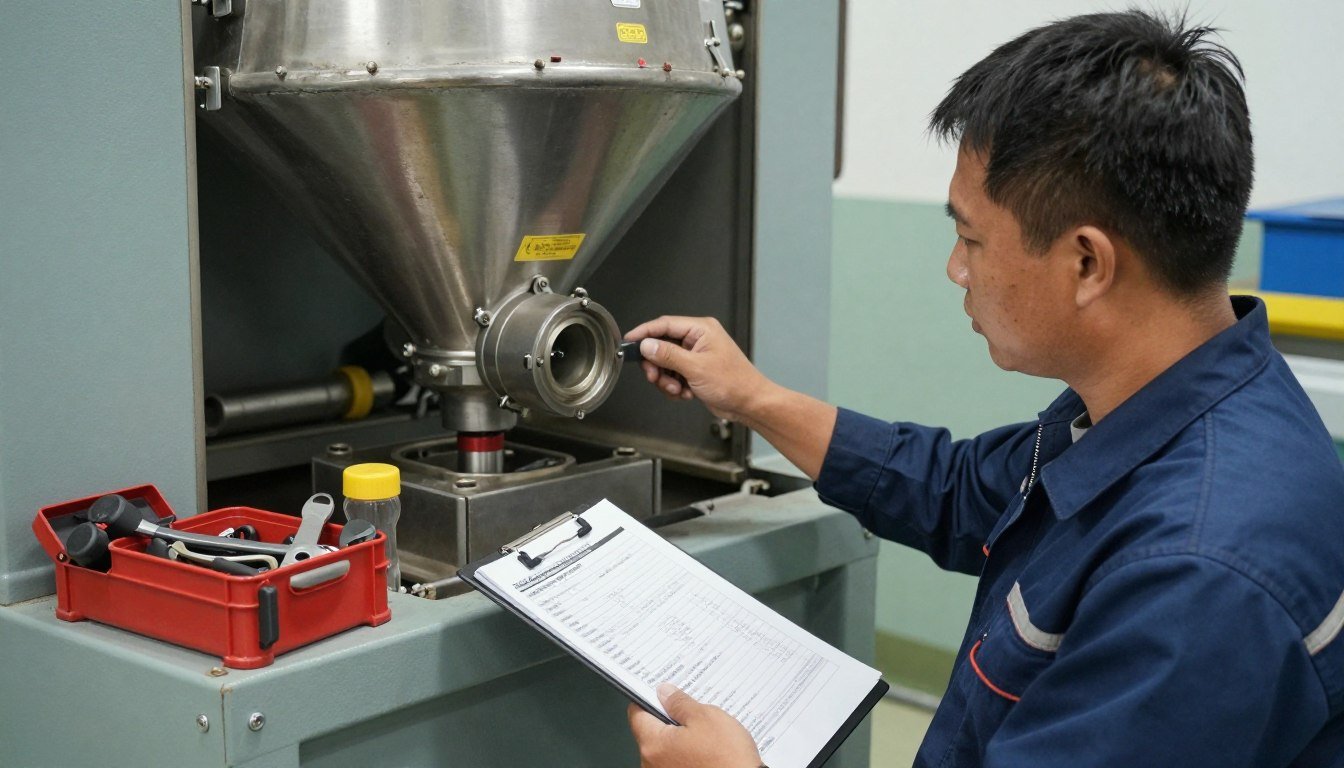
Scheduled maintenance prevents most equipment failures while extending component life significantly. Daily tasks include visual inspections, lubrication point checks, and cleaning procedures. Weekly maintenance adds detailed equipment inspections and adjustment verification. Monthly schedules incorporate component wear measurement and performance testing. Annual overhauls include complete disassembly, part replacement, and system recalibration.
MAIKONG provides detailed maintenance schedules and procedures with every poultry feed production line installation. These documents specify exact lubrication points, inspection procedures, adjustment methods, and wear limits for critical components. Following these schedules typically reduces unplanned downtime by 70 to 85 percent compared to reactive maintenance approaches that address problems only after failures occur.
| Equipment |
Daily Tasks |
Weekly Tasks |
Monthly Tasks |
Critical Wear Parts |
| Hammer Mill |
Check noise levels, vibration, screen condition |
Inspect hammers, clean air passages |
Measure hammer thickness, check bearings |
Hammers, screens, bearings |
| Mixer |
Verify mix time, check door seals |
Inspect paddle wear, lubricate shaft |
Check gearbox oil level, test motor current |
Paddles, shaft seals, gearbox |
| Pellet Mill |
Monitor amp draw, check pellet quality, lubricate |
Inspect die and rollers, check feeder |
Measure die wear, check bearing temperature |
Die, rollers, bearings, belts |
| Cooler |
Check air flow, verify discharge temperature |
Clean air intake screens |
Inspect discharge gates, check fan bearings |
Fan bearings, discharge gates |
| Bagging Scale |
Verify weight accuracy, check bag placement |
Calibrate scale, clean load cells |
Inspect pneumatic cylinders, test controls |
Load cells, pneumatic seals |
Common Wear Parts and Replacement Intervals
Certain components experience predictable wear requiring periodic replacement. Hammer mill screens typically last 800 to 1,200 operating hours depending on ingredient abrasiveness. Hammers require replacement after 1,500 to 2,500 hours. Pellet mill dies endure 1,200 to 2,000 tons of production. Rollers last approximately twice as long as dies when properly maintained.
MAIKONG maintains spare parts inventory for all equipment models with rapid shipping to Philippine customers. Critical components ship within 48 hours of order. Standard parts arrive within 5 to 7 business days. Local parts distributors in Manila and Cebu stock frequently replaced items for immediate availability. This parts support minimizes production interruptions when component replacement becomes necessary.
Troubleshooting Common Issues
Understanding typical problems and solutions allows operators to resolve many issues without external assistance. Poor pellet quality often results from incorrect conditioning temperature, worn dies, or improper formulation moisture. Excessive fines indicate inadequate conditioning, worn equipment, or formulation problems. Unusual noise or vibration suggests worn bearings, loose fasteners, or component misalignment.
MAIKONG provides comprehensive troubleshooting guides addressing common symptoms, probable causes, and corrective actions. Phone and email support connects operators with experienced technicians who guide diagnosis and resolution. Video call capability allows technicians to visually assess problems and demonstrate repair procedures remotely. This support structure resolves most issues within hours rather than days or weeks.
Operator Training and Skill Development
Competent operators identify problems early and maintain consistent production quality. MAIKONG’s installation service includes comprehensive operator training covering equipment operation, quality control procedures, routine maintenance, basic troubleshooting, and safety practices. Initial training extends 3 to 5 days depending on system complexity and operator experience.
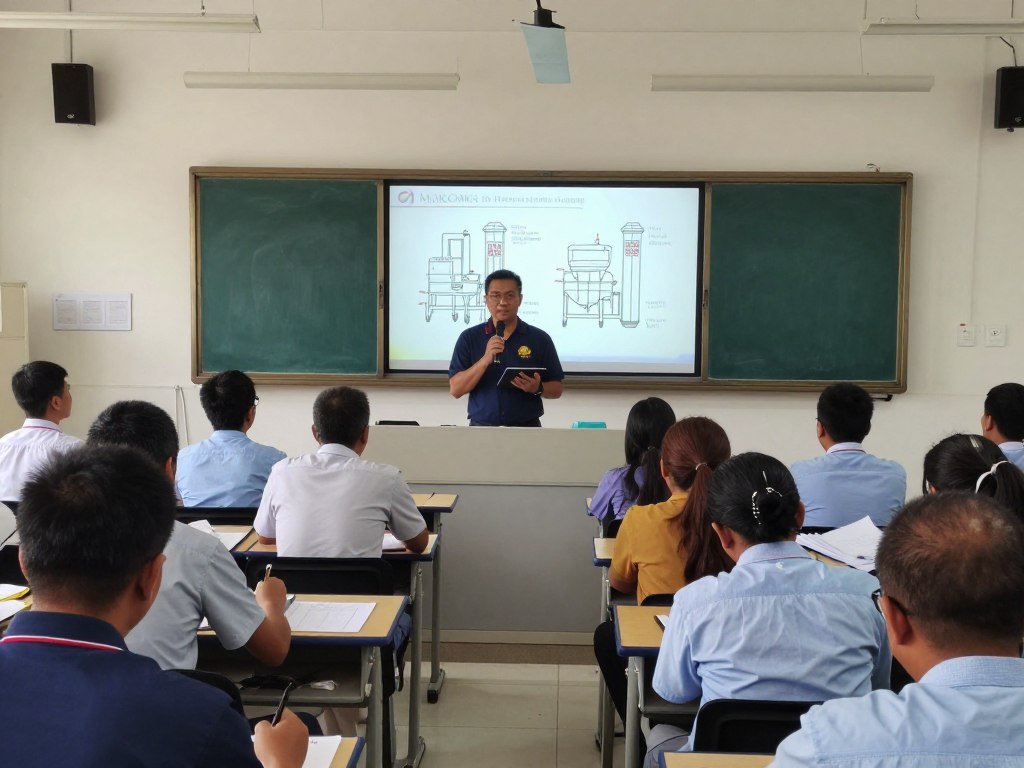
Advanced training programs help experienced operators develop deeper technical knowledge. These sessions cover pellet quality optimization, formulation troubleshooting, preventive maintenance techniques, and efficiency improvement methods. Annual refresher training keeps skills current and introduces operators to new techniques and equipment features. Well-trained operators reduce quality problems by 60 to 75 percent compared to untrained staff.
Remote Monitoring and Diagnostics
Modern poultry feed production line installations can incorporate remote monitoring systems that track performance parameters continuously. Sensors measure motor current, temperatures, production rates, and equipment status. Data transmits to cloud servers accessible from computers or smartphones. MAIKONG technical staff monitor critical parameters and alert customers to developing problems before failures occur.
This predictive maintenance approach prevents unexpected breakdowns by identifying wear patterns and performance degradation early. Scheduled maintenance occurs based on actual equipment condition rather than arbitrary time intervals. Remote diagnostics allow technicians to verify suspected problems before traveling to sites, ensuring they bring appropriate parts and tools. These capabilities reduce total maintenance costs by 15 to 25 percent while improving equipment availability.
Warranty and After-Sales Support
MAIKONG equipment includes standard one-year comprehensive warranty covering defects in materials and workmanship. Extended warranty options provide coverage for 2 to 5 years on major components. Warranty service includes parts replacement and technical labor at no charge. Customers pay only for consumable items, wear parts beyond normal life expectancy, and damage from improper operation or maintenance.
After-sales support continues throughout equipment life. Technical assistance remains available via phone, email, and video call. Parts availability continues for at least 10 years after installation. Software updates and process improvements developed for new equipment are offered to existing customers when applicable. This long-term support relationship protects customer investment and maximizes equipment value over its 15 to 20-year useful life.
Choosing the Right Poultry Feed Production Line Supplier
Selecting a poultry feed production line supplier involves more than comparing equipment prices. The relationship extends 15 to 20 years through installation, operation, maintenance, and eventual upgrades. Supplier capabilities, experience, support infrastructure, and business practices all impact long-term success and satisfaction. Careful supplier evaluation prevents costly mistakes and ensures productive partnerships.

Manufacturing Experience and Expertise
Experience matters significantly in feed equipment manufacturing. Companies operating 15 to 25 years have refined designs through thousands of installations across diverse applications and conditions. They understand regional challenges, ingredient variations, and operational requirements specific to different markets. MAIKONG’s 22 years manufacturing experience across Asia, Americas, Europe, Africa, and Middle East markets provides proven solutions to virtually any poultry feed production line challenge.
Review supplier project portfolios carefully. Look for installations similar to your planned capacity and application. Verify references from existing customers operating equipment 3 to 5 years or longer. Long-term customer satisfaction indicates reliable equipment, effective support, and honest business practices. Suppliers with primarily recent installations may lack long-term reliability data.
Technical Capabilities and Innovation
Leading suppliers invest continuously in research, development, and process improvement. They incorporate proven technologies from global feed industries adapted to local conditions and budgets. MAIKONG engineering team includes specialists in mechanical design, process optimization, automation systems, and facility planning. This expertise ensures customers receive modern, efficient systems rather than outdated technology.
Ask about recent product improvements and innovations. Progressive suppliers should demonstrate ongoing development of more efficient machinery, better automation options, improved durability, and enhanced safety features. Companies offering identical equipment designs for many years without improvement may lack technical capability for effective long-term support.
Manufacturing Quality Control
Equipment quality determines reliability and longevity. Reputable manufacturers implement comprehensive quality control through incoming material inspection, in-process verification, and final testing. ISO 9001 certification or equivalent quality management systems demonstrate commitment to consistent manufacturing standards.
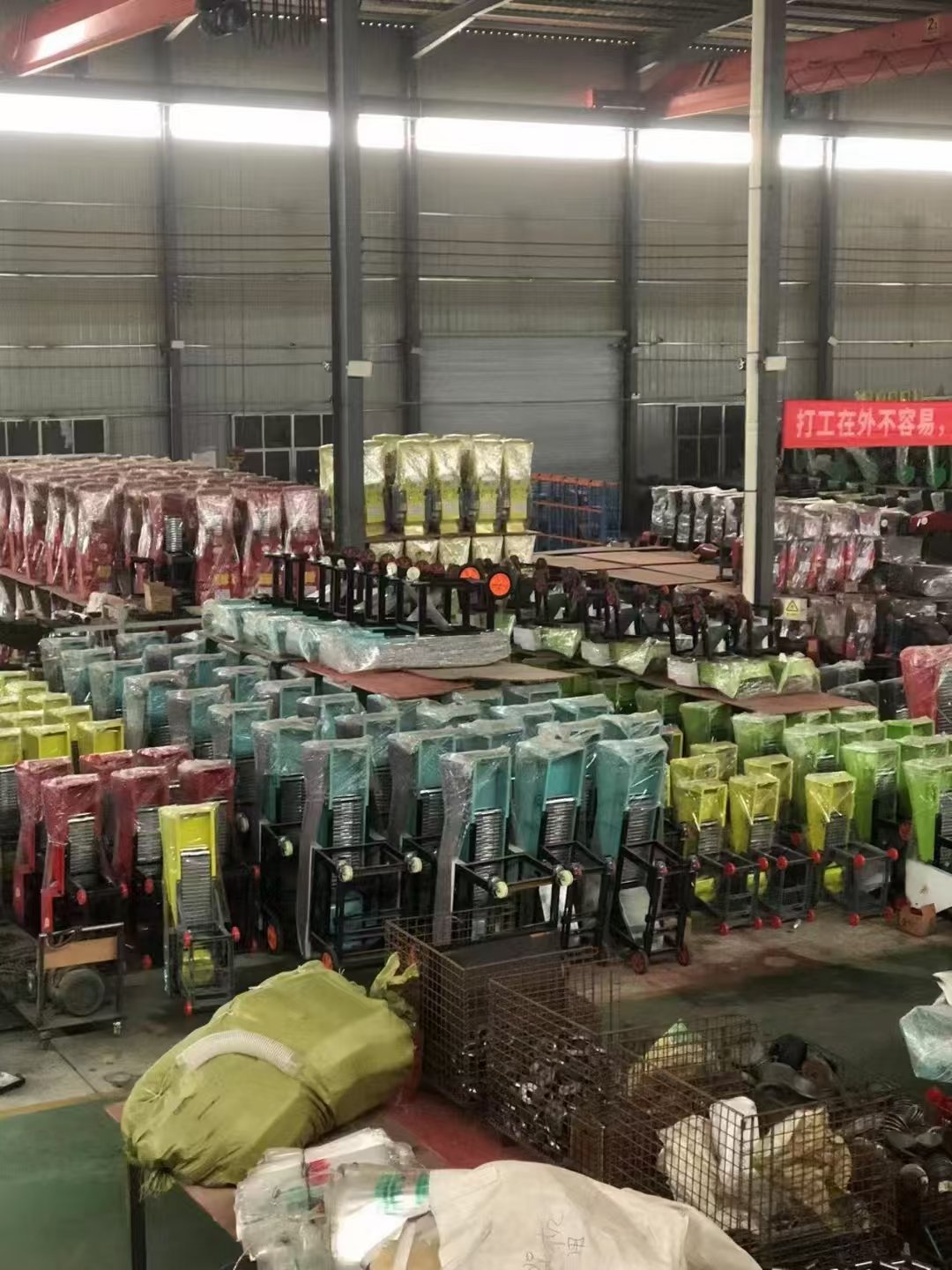
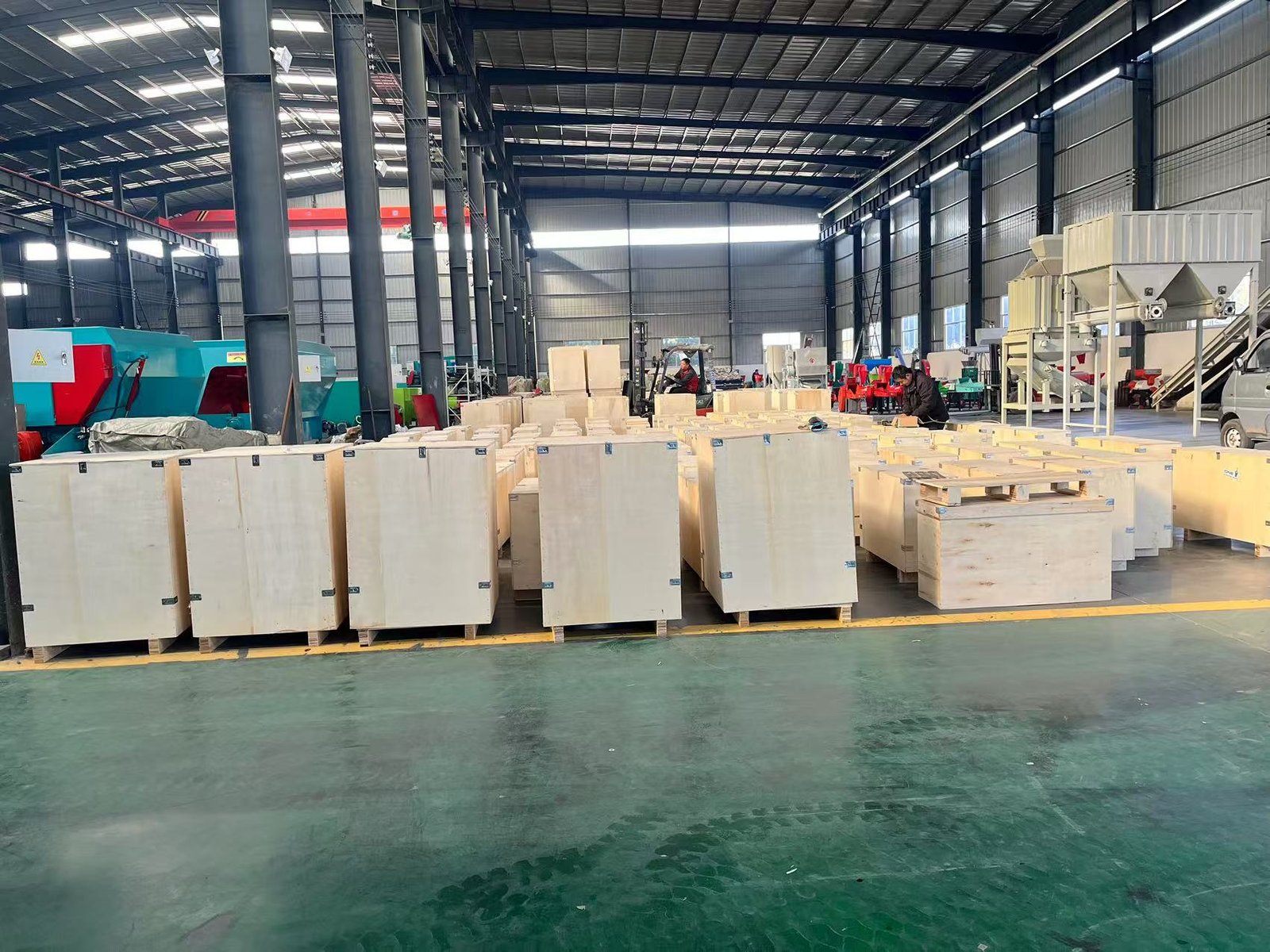
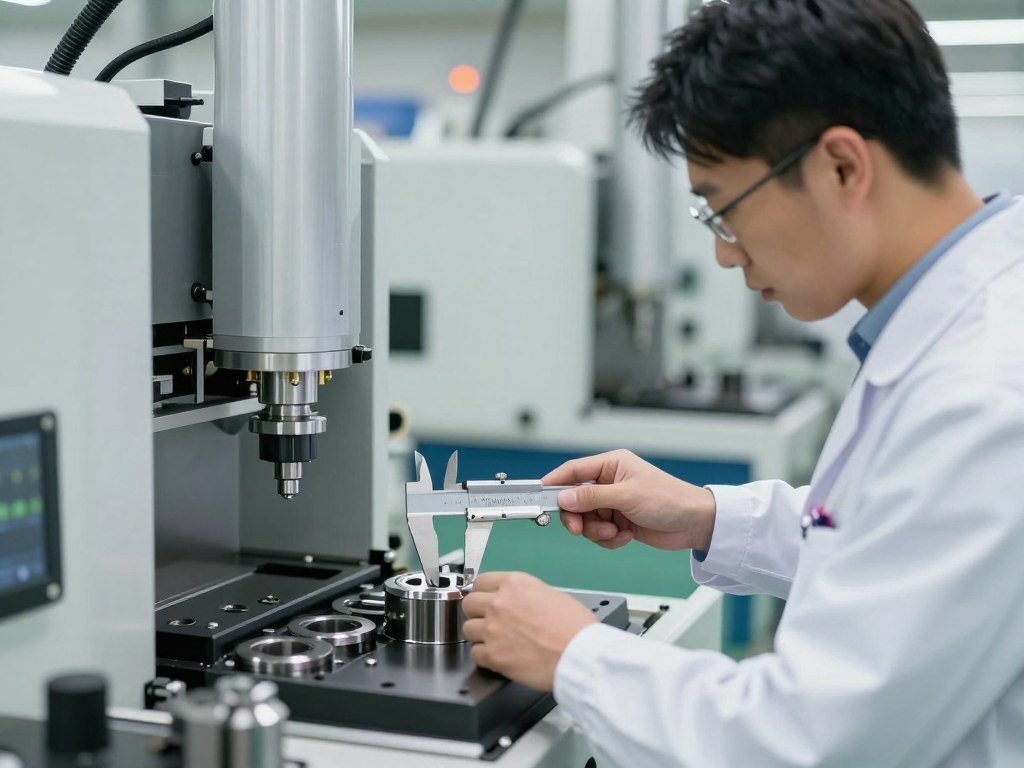
MAIKONG facilities in GD Province use precision machining equipment, skilled craftsmen, and multi-stage inspection procedures. Critical components undergo dimensional verification, hardness testing, and balance checking. Assembled machines run under load before shipping to verify performance specifications. This attention to quality reduces field problems and ensures equipment meets advertised capabilities.
Installation and Commissioning Services
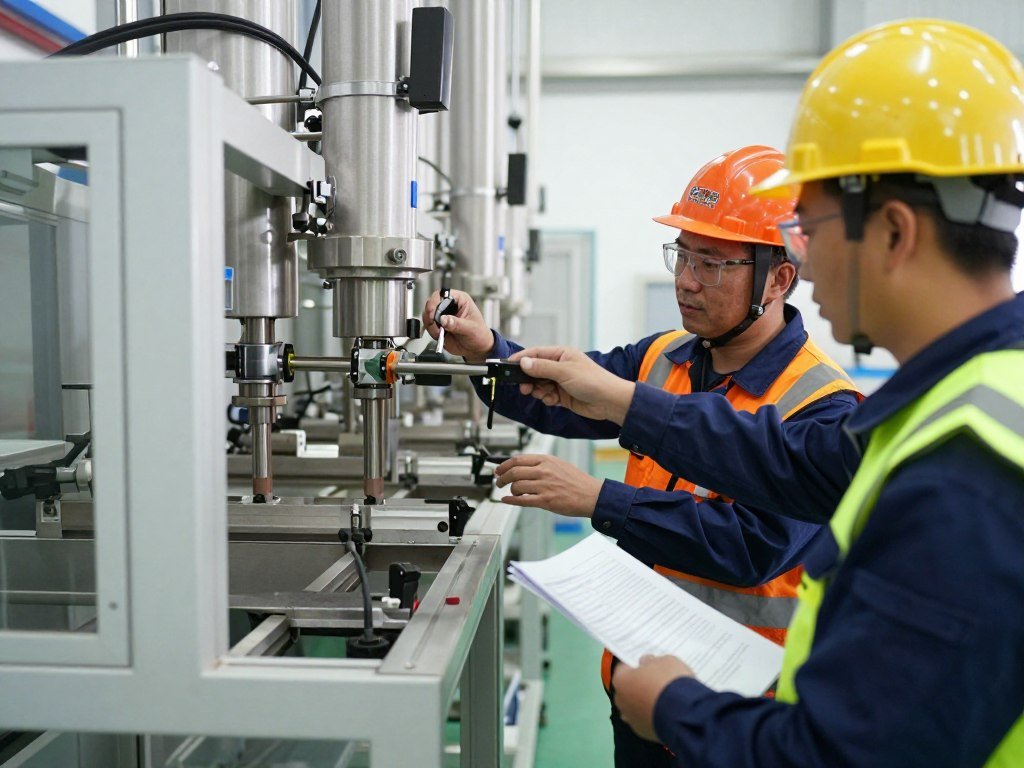
Proper installation proves critical to equipment performance and longevity. Suppliers should provide experienced technicians who supervise or perform complete installation including equipment positioning, alignment, connections, and initial operation. Commissioning services verify all systems function correctly before customer acceptance.
MAIKONG installation teams include specialists in mechanical, electrical, and control systems. They work with local contractors coordinating civil works, electrical service, and auxiliary systems. Comprehensive testing protocols verify capacity, power consumption, product quality, and safety systems before handover. This professional installation ensures trouble-free startup and immediate productive operation.
Spare Parts Availability
Equipment requires replacement parts throughout its operating life. Suppliers must maintain parts inventory and efficient distribution to minimize production interruptions when components fail. MAIKONG stocks complete parts catalogs for all current and legacy equipment models. Parts ship from GD Province warehouses within 48 hours internationally.
Philippine customers benefit from regional parts distribution through Manila and Cebu locations. Commonly replaced items like hammer mill screens, pellet dies, and mixer paddles stock locally for same-day availability. This parts support infrastructure protects your investment and maintains production schedules when maintenance becomes necessary.
Technical Support Infrastructure
Responsive technical support resolves problems quickly minimizing production losses. Evaluate supplier support capabilities including phone/email availability, response time commitments, remote diagnostic tools, and field service coverage. MAIKONG maintains dedicated technical support staff fluent in English and regional languages available during Philippine business hours.
Remote support via phone, email, and video call handles most issues without site visits. For complex problems requiring hands-on intervention, MAIKONG field service technicians travel to customer locations typically within 48 to 72 hours of request. This support network ensures productive equipment operation throughout its lifetime.
Business Practices and Reputation
Research supplier business reputation through customer references, industry associations, and online reviews. Companies with strong reputations deliver what they promise, stand behind their equipment, and treat customers fairly. Suppliers with patterns of customer complaints, unresolved problems, or questionable business practices should be avoided regardless of attractive pricing.
MAIKONG’s reputation across international markets reflects our commitment to customer success. Hundreds of installations in over 30 countries demonstrate consistent quality and support. Customer references in the Philippines and throughout Southeast Asia verify our capability to deliver successful poultry feed production line projects that meet or exceed expectations.
Price vs. Value Considerations
Lowest initial price rarely delivers best long-term value. Consider total cost of ownership including purchase price, installation costs, energy efficiency, maintenance requirements, parts costs, and expected equipment life. Higher-quality equipment with superior support typically costs 15 to 25 percent more initially but delivers 30 to 50 percent lower total lifetime costs.
MAIKONG equipment pricing reflects our commitment to quality components, thorough testing, and comprehensive support. While not the cheapest option, our systems consistently deliver reliable performance, minimal downtime, and long service life. Customers report that choosing MAIKONG based on value rather than price alone proved correct within the first year of operation.
About MAIKONG: Your Partner for Poultry Feed Solutions in the Philippines
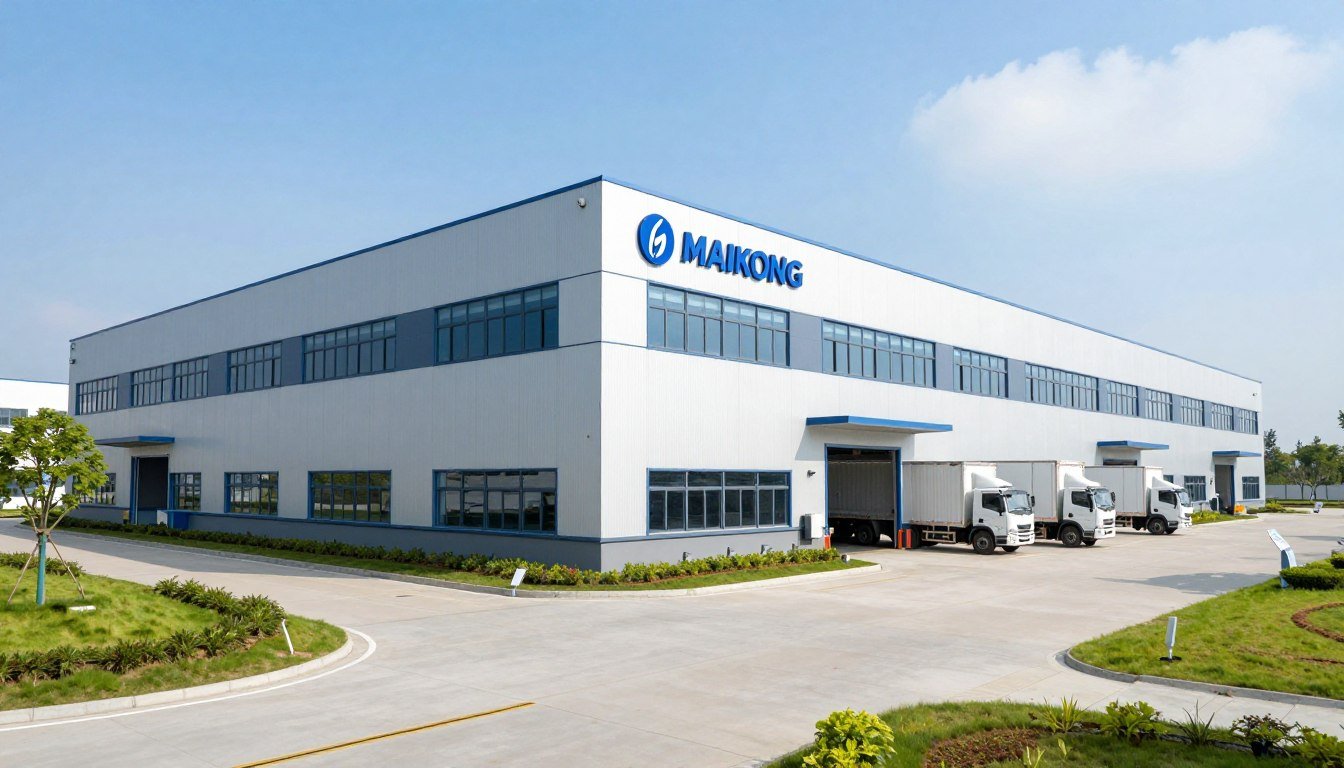
MAIKONG brings 22 years of feed equipment manufacturing excellence to Philippine poultry operations. Our company operates modern production facilities in GD Province, SZ City, where we design, manufacture, and test complete poultry feed production line systems ranging from 200 kilograms to 200 tons per hour capacity. Our mission focuses on helping agricultural businesses reduce costs, improve product quality, and increase profitability through effective on-site feed production.
Our Product Range
MAIKONG manufactures comprehensive equipment for various feed and pellet applications beyond poultry. Our product portfolio includes specialized systems for each market segment ensuring optimal performance for specific requirements. This breadth of experience translates into better solutions even for single-application customers through cross-industry innovations and proven technologies.
Feed Production Equipment
Why Choose MAIKONG
Philippine poultry operations partner with MAIKONG for numerous advantages that translate into better equipment value and business results. Our 22 years of continuous improvement means current equipment incorporates lessons from thousands of previous installations worldwide. We understand what works reliably under actual field conditions rather than just controlled factory testing.
Proven Global Experience
MAIKONG systems operate successfully across diverse conditions in Asia, Americas, Europe, Africa, and Middle East markets. This international experience means we understand challenges unique to tropical climates, developing infrastructure, and varied ingredient availability in the Philippines.
Complete Customization
Every poultry feed production line can be customized for specific requirements including capacity, feed types, ingredient handling, voltage, automation level, and budget. We don’t force customers into standard packages that don’t match actual needs.
OEM/ODM Capabilities
MAIKONG offers private label manufacturing for distributors, integrators, and companies wanting equipment branded under their own name. We provide complete engineering, manufacturing, and support while you maintain customer relationships and brand identity.
Technical Excellence
Our engineering team includes mechanical designers, process specialists, automation engineers, and installation technicians. This expertise ensures optimal system design, efficient operation, and responsive support throughout equipment lifetime.
Quality Manufacturing
Modern production facilities with CNC machining, precision fabrication, and multi-stage quality control ensure consistent equipment quality. Every system undergoes load testing before shipment verifying performance specifications.
Comprehensive Support
Installation supervision, operator training, technical support, spare parts availability, and process optimization assistance continue throughout equipment life. We succeed only when our customers succeed.
Our Commitment to Philippine Customers
The Philippine agricultural sector represents a strategic market for MAIKONG. We recognize the importance of livestock production to rural economies and food security. Supporting Philippine poultry operations with cost-effective feed production solutions aligns with our corporate mission of enabling agricultural productivity worldwide.
We actively seek qualified distributors and agents throughout the Philippines to provide local representation, technical support, and parts availability. Distributor partnerships offer exclusive territories, attractive margins, technical training, marketing support, and ongoing business development assistance. This network approach ensures Philippine customers receive responsive support from locally-based partners backed by MAIKONG’s international resources.
Contact MAIKONG Today
Whether you operate a growing poultry farm, manage a commercial feed mill, or want to become a MAIKONG distributor in the Philippines, we invite you to contact our team. We provide free consultations to discuss your specific requirements, answer questions, and develop preliminary system proposals customized to your needs.
Start Your Journey to Feed Independence
MAIKONG’s team is ready to help you reduce feed costs, improve flock performance, and increase profitability through on-site feed production. Contact us today to discuss your specific requirements and receive a customized proposal.

Become a MAIKONG Distributor in the Philippines
MAIKONG seeks qualified distributors and agents to represent our poultry feed production line and related equipment throughout the Philippines. Distributor partnerships offer exclusive territory rights, attractive commercial terms, comprehensive technical training, marketing support materials, and ongoing business development assistance.
Ideal distributor candidates bring established relationships in the poultry, livestock, or agricultural equipment sectors, technical service capabilities, and commitment to customer satisfaction. We provide everything needed for success including product training, installation support, parts inventory programs, and co-marketing initiatives.
If you have agricultural equipment distribution experience and want to represent a premier international brand in the growing feed production equipment market, contact our distributor development team today. We’ll discuss territory availability, commercial terms, support programs, and partnership requirements.
Conclusion: Transform Your Poultry Operation with MAIKONG
A properly specified poultry feed production line transforms farm economics and operational control. Reducing feed costs by 20 to 35 percent immediately improves profitability. Controlling ingredient quality and formulation precision enhances bird performance and product consistency. Independence from commercial feed suppliers eliminates supply uncertainties and price volatility.
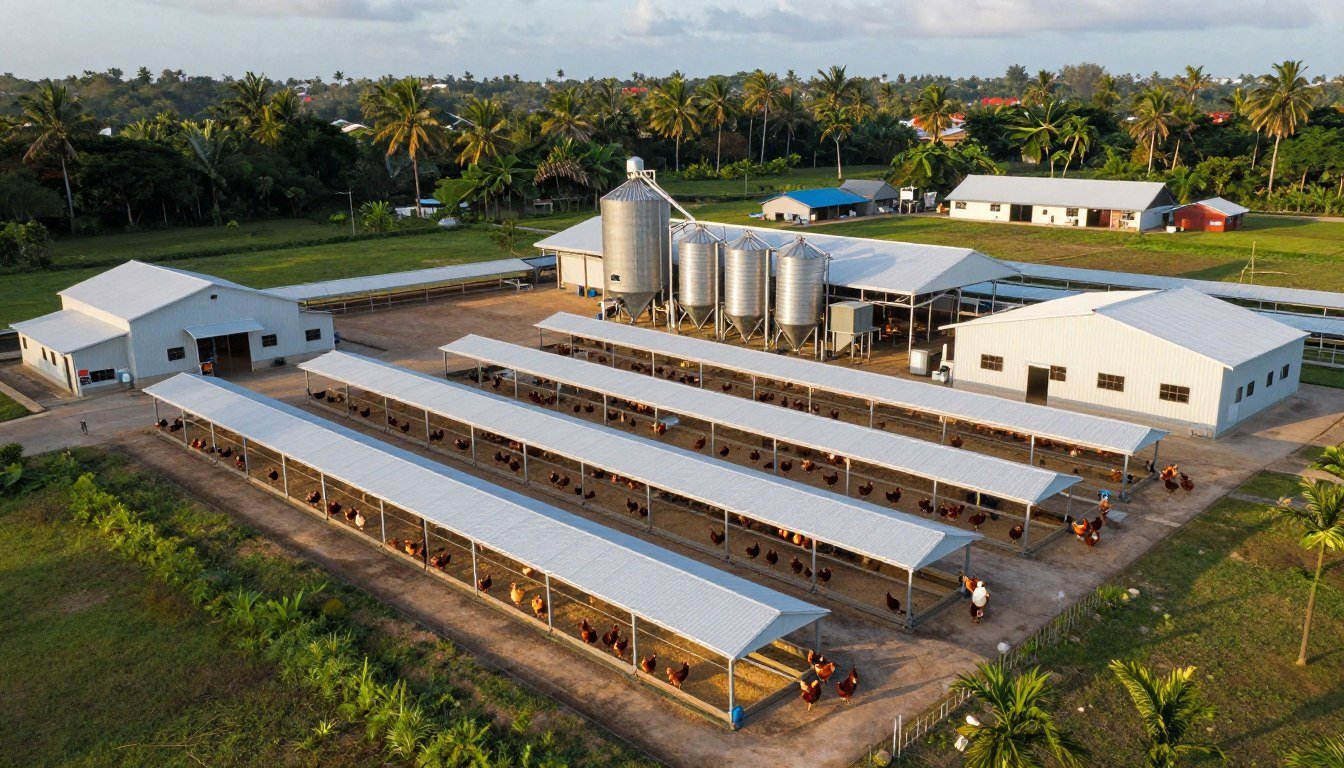
The decision requires careful consideration of capacity needs, customization requirements, supplier capabilities, and financial planning. Working with an experienced manufacturer like MAIKONG ensures you receive equipment matched precisely to your operational needs, budget constraints, and growth objectives. Our 22 years of international experience means we understand challenges unique to Philippine conditions and proven solutions that work reliably.
Whether you manage 5,000 birds or 500,000, operate layers or broilers, produce for your own farm or commercial customers, MAIKONG offers poultry feed production line solutions customized to your requirements. From initial consultation through installation, training, and ongoing support, we partner with you for long-term success.
Take the first step toward feed independence and improved profitability today. Contact MAIKONG’s Philippine support team via WhatsApp, phone, or email to discuss your specific situation and receive a customized proposal. Our technical experts will answer your questions, explain options, and help determine the optimal system configuration for your operation.
For distributors and agents interested in representing MAIKONG’s premium feed production equipment throughout the Philippines, we offer attractive partnership opportunities with comprehensive support. Join our growing network of successful partners serving the expanding Philippine agricultural equipment market.
Your Journey to Lower Feed Costs Starts Here
Contact MAIKONG today for a free consultation and customized proposal. Discover how our poultry feed production line solutions can reduce your costs, improve your flock performance, and increase your profitability.
MAIKONG looks forward to partnering with you to achieve your poultry production and business goals through effective feed manufacturing solutions tailored specifically for Philippine conditions.