
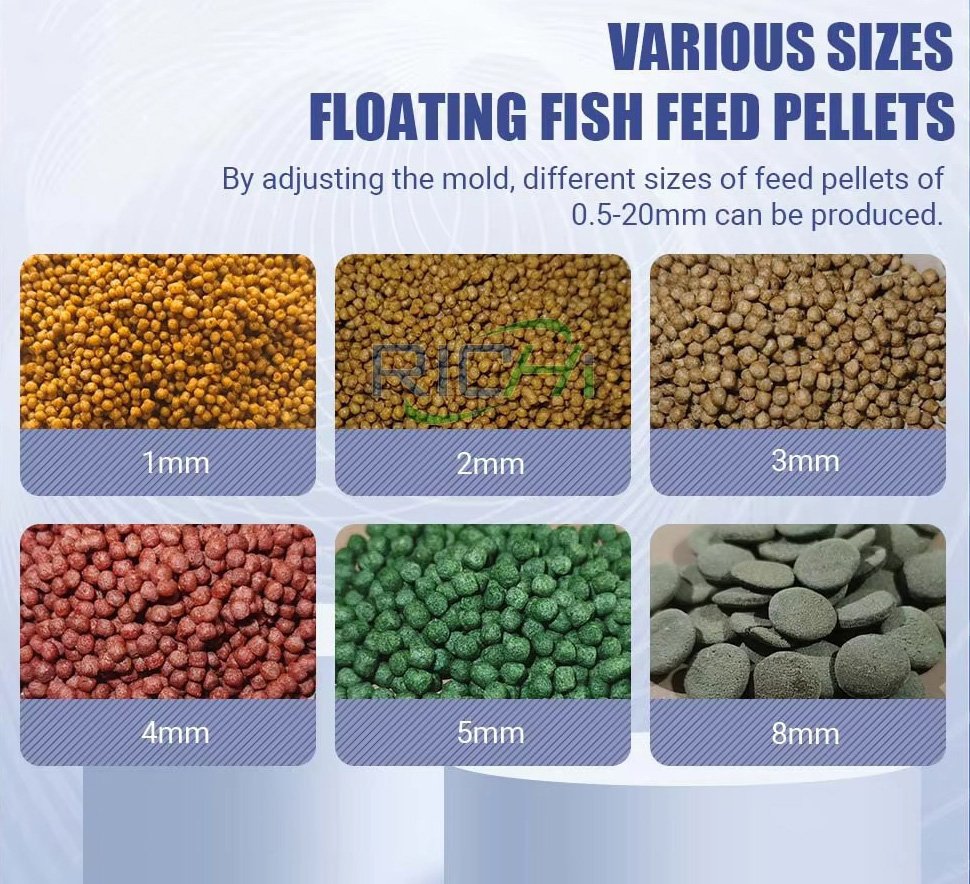
This guide compares flat die versus ring die pellet mills, analyzes capacity ranges from 200kg to 200 tons per hour, and explains which alternative equipment configurations work best for Philippine poultry, fish, cattle, and pig feed operations. You’ll understand equipment costs, raw material requirements, and why some pellet machines fail with Philippine ingredients while others consistently produce quality pellets.
Confused About Which Pellet Machine Fits Your Philippine Operation?
MAIKONG has supplied feed pellet equipment across the Philippines for over 22 years. Our technical team provides free consultations on equipment selection, capacity matching, and voltage requirements for Philippine conditions.
Direct Line: +86 15815556422
Understanding Alternative Equipment for Pellet Machine: Types and Core Differences
The term alternative equipment for pellet machine encompasses different mill types and supporting machinery that transform raw materials into finished feed pellets. Philippine buyers often confuse flat die mills with ring die mills, leading to equipment purchases that don’t match their production needs. Each pellet mill type operates on different compression principles and serves distinct capacity ranges.
Understanding these fundamental differences prevents costly mistakes. A poultry farm producing 500kg daily needs completely different equipment than a commercial feed mill manufacturing 10 tons per hour for regional distribution.
Flat Die Pellet Mills vs Ring Die Pellet Mills
Flat Die Pellet Machine Design
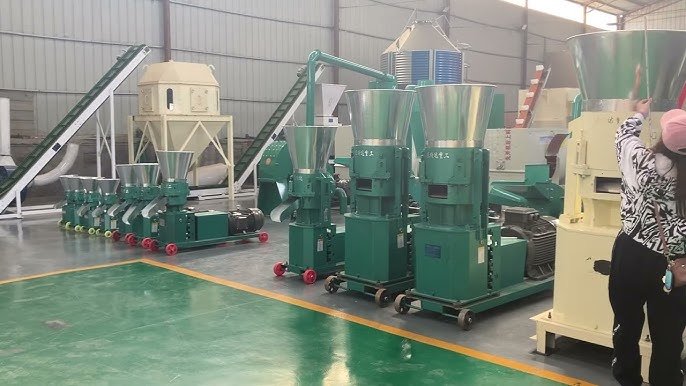
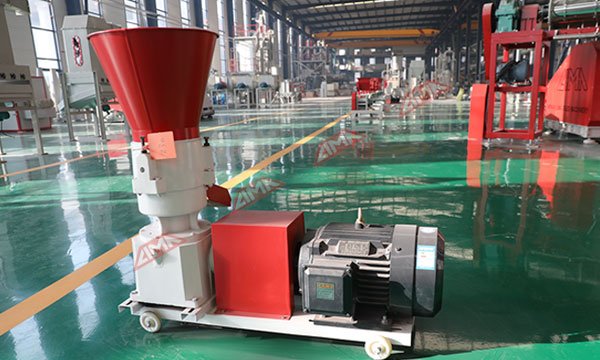
Flat die pellet mills use a horizontal circular die with rollers pressing material downward through die holes. This simpler design offers advantages for small-scale Philippine farm operations. The flat die configuration handles diverse raw materials including high-fiber content common in local feedstocks.
Philippine livestock farmers processing rice bran, coconut meal, and corn often prefer flat die models for on-farm feed production. These machines require less conditioning steam and operate effectively with materials at natural moisture levels. Maintenance remains straightforward – most Philippine farm workers can change dies and rollers without specialized training.
Capacity typically ranges from 200kg to 2 tons per hour. This suits individual farms, small cooperatives, and startup feed businesses. Initial investment costs run lower than ring die alternatives, making flat die mills accessible for Philippine agricultural entrepreneurs.
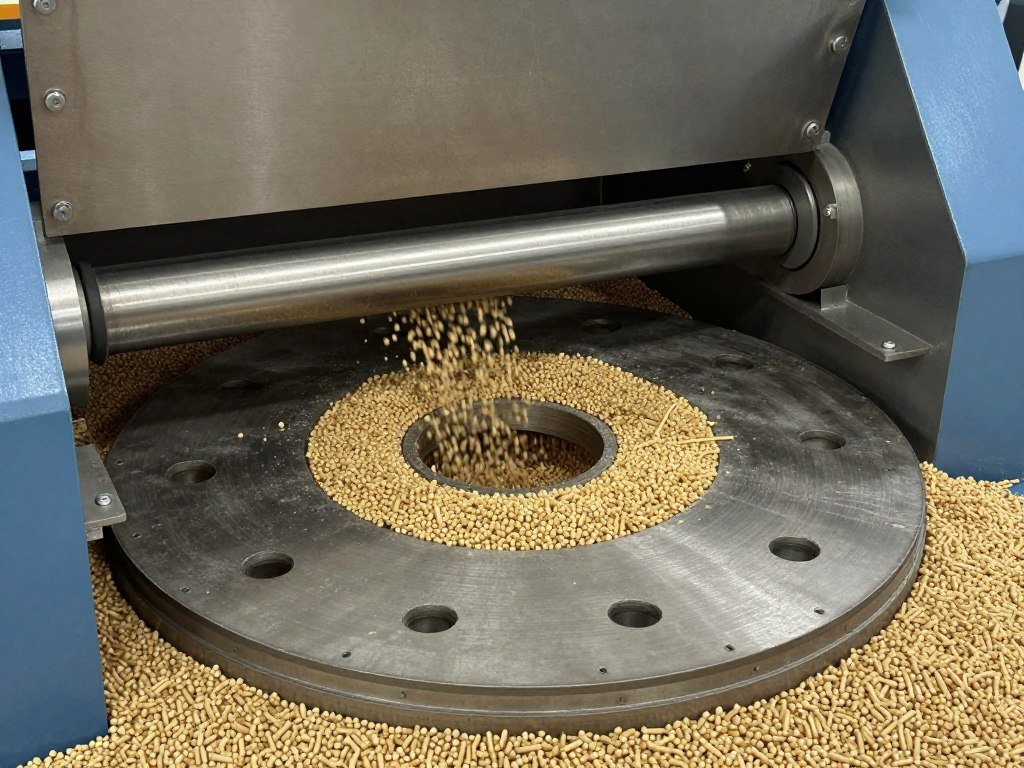

Ring Die Pellet Machine Design
Ring die pellet mills feature a vertical cylindrical die with internal rollers forcing material outward through die holes. This configuration delivers higher production capacities and creates more uniform pellets. Commercial Philippine feed mills serving multiple farms almost exclusively use ring die technology.
The ring die design requires steam conditioning before pelleting. This gelatinizes starches in grains, improving pellet binding and durability. For aquaculture feeds requiring water stability, ring die mills with proper conditioning produce superior results. Shrimp and fish feed manufacturers in the Philippines depend on this equipment.
Production capacity spans 1 to 40+ tons per hour depending on die diameter and motor power. Ring die mills demand higher initial investment and more technical operation knowledge. However, they deliver the consistent quality and volume commercial operations require.
| Comparison Factor | Flat Die Pellet Mill | Ring Die Pellet Mill |
| Compression Method | Vertical pressure through horizontal die | Radial pressure through vertical cylindrical die |
| Capacity Range | 200kg – 2 tons/hour | 1 – 40+ tons/hour |
| Philippine Application | Individual farms, small cooperatives | Commercial feed mills, large operations |
| Raw Material Flexibility | Excellent – handles high fiber without conditioning | Good – requires steam conditioning for best results |
| Pellet Quality | Good uniformity, adequate durability | Excellent uniformity, superior durability |
| Maintenance Complexity | Simple – basic tools and training | Moderate – requires technical knowledge |
| Investment Cost | ₱180,000 – ₱850,000 | ₱650,000 – ₱8,500,000+ |
| Energy Efficiency | Moderate – 15-25 kWh per ton | High – 10-18 kWh per ton at scale |
Need Help Choosing Between Flat Die and Ring Die for Your Philippine Materials?
MAIKONG’s engineering team analyzes your specific raw materials, production goals, and budget to recommend the optimal pellet mill configuration. We provide free capacity assessments for Philippine feed operations.
Supporting Alternative Equipment: Complete Production Line Components
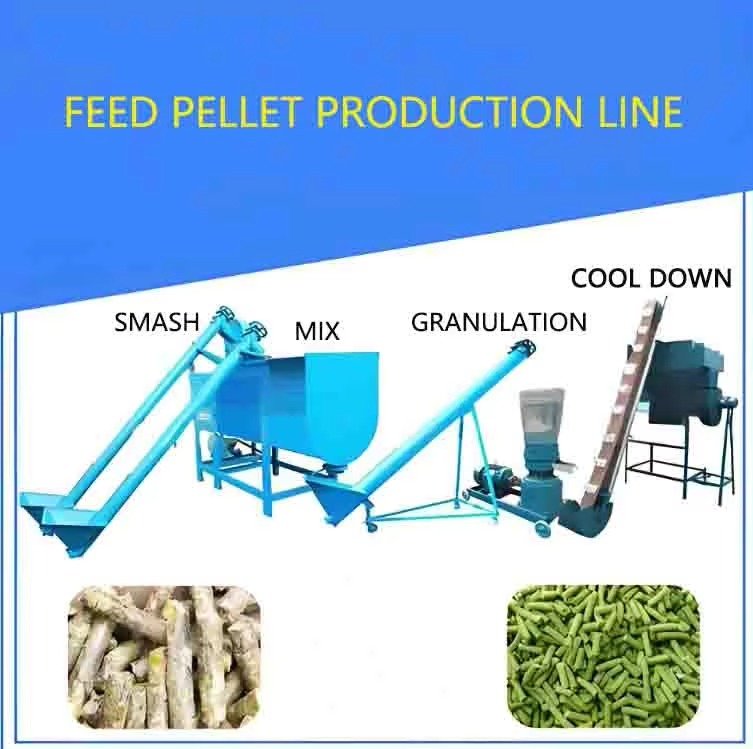
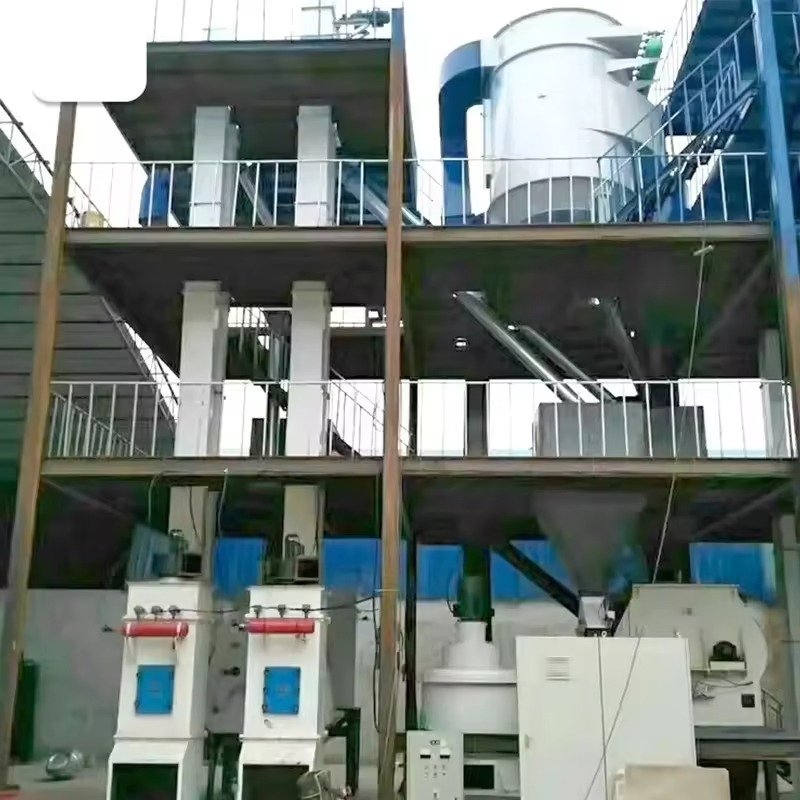
A pellet machine never operates alone. Successful feed production requires integrated equipment handling raw material preparation, pelleting, cooling, and packaging. Philippine feed mills must consider the complete production flow when evaluating alternative equipment for pellet machine installations.
Hammer Mills for Grinding
Hammer mills reduce raw materials to the particle size required for effective pelleting. Philippine feedstocks like whole corn, copra cake, and rice bran need grinding before pellet mill processing. Particle size directly affects pellet quality and production efficiency.
- Screen sizes: 2mm to 10mm depending on final pellet diameter
- Capacity matched to pellet mill output
- 220V/380V Philippine voltage compatibility
- Dust collection systems for tropical humidity conditions
Mixers for Formulation Blending
Batch or continuous mixers ensure uniform distribution of ingredients, vitamins, and minerals. Philippine feed formulations mixing fish meal, corn, soybean meal, and premixes require thorough blending for nutritional consistency across every pellet produced.
- Batch mixers: 250kg to 2,000kg per batch
- Continuous mixers: for high-volume operations
- Ribbon or paddle designs for different material types
- Stainless steel construction resists Philippine coastal corrosion
Pellet Coolers for Stabilization
Counter-flow coolers reduce pellet temperature from 80-90°C after pelleting to safe storage levels below 30°C. Philippine tropical heat makes cooling critical – hot pellets stored without cooling develop mold within days, destroying entire production batches.
- Cooling capacity matched to pellet mill output
- Counter-flow design maximizes efficiency
- Moisture removal prevents tropical mold growth
- Compact designs for limited Philippine facility space
Packaging Equipment
Semi-automatic or automatic bagging scales fill finished feed into 25kg or 50kg bags standard in Philippine distribution. Accurate weighing prevents product giveaway while meeting customer expectations and regulatory requirements.
- Manual bag placement or automatic bag feeding
- Electronic scales: ±50g accuracy
- Dust-sealed designs for tropical conditions
- Integration with conveyors and sewing machines
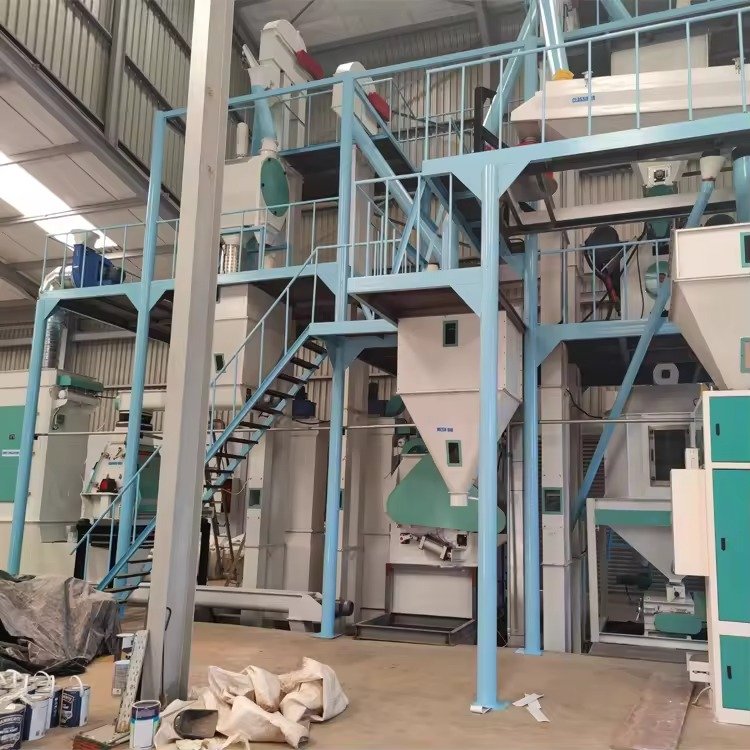
Capacity Selection: Matching Equipment to Philippine Operation Size
Philippine feed operations span from backyard poultry farms producing 100kg daily to commercial mills manufacturing 50 tons daily for regional distribution. Selecting alternative equipment for pellet machine capacity that matches actual production needs prevents both undercapacity bottlenecks and overcapacity waste.
Undersized equipment runs continuously without meeting demand. Operators face constant pressure, maintenance challenges from overuse, and inability to grow production. Oversized equipment wastes capital investment on unused capacity while consuming more energy than necessary for actual production volumes.
Small-Scale Philippine Farm Operations (200kg – 1 Ton/Hour)
Individual poultry farms, small pig operations, and fish pond owners typically need 200kg to 1 ton per hour capacity. These operations produce feed for their own livestock, gaining independence from commercial feed suppliers and controlling input costs.
MAIKONG Model MK-001 represents our entry-level solution designed specifically for Philippine small farms. This mini pellet machine philippines configuration balances affordability with reliability.
MAIKONG MK-001 Small Farm Pellet Mill
- Capacity: 800kg – 1,000kg per hour
- Dimensions: 1,200mm (L) × 650mm (W) × 1,350mm (H)
- Weight: 385kg
- Motor Power: 22kW (380V, 3-phase)
- Material: ABS control panel, heavy-duty steel frame
- Die Diameter: 250mm with quick-change system
- Pellet Sizes: 2mm to 12mm (interchangeable dies)
- Philippine Price: ₱485,000 – ₱520,000 (depending on configuration)
- Stock Status: Available – SZ facility ships within 5-7 days
- Color Options: Industrial gray or custom (minimum 3 units)
Ideal Philippine Applications: Chicken layer farms (2,000-5,000 birds), backyard pig operations (50-100 heads), tilapia pond farms (5-10 ponds), rabbit breeding operations, small cattle feedlots.
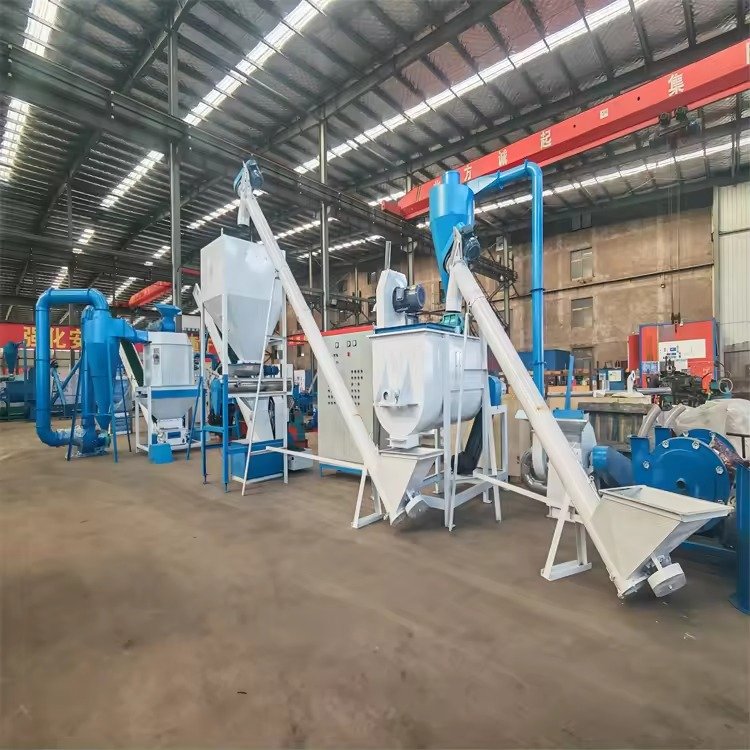
Medium-Scale Commercial Operations (3 – 10 Tons/Hour)
Feed distributors, farming cooperatives, and mid-sized livestock integrators require 3 to 10 tons per hour capacity. These operations supply multiple farms or manage large poultry/swine complexes. Equipment reliability becomes critical since downtime affects many customers or thousands of animals.
This capacity range suits chicken feed production line installations serving regional poultry farms or fish feed production line systems supplying aquaculture cooperatives.
| Model | Capacity (tons/hour) | Motor Power | Die Diameter | Philippine Applications | Investment Range |
| MK-320 | 3-4 | 37kW | 320mm | Cooperative feed mills, medium poultry integrators | ₱1,250,000 – ₱1,580,000 |
| MK-350 | 5-6 | 55kW | 350mm | Multi-species feed production, regional distributors | ₱1,680,000 – ₱2,150,000 |
| MK-420 | 10-12 | 110kW | 420mm | Large poultry/swine complexes, commercial feed brands | ₱3,250,000 – ₱3,890,000 |
Not Sure What Capacity Your Philippine Operation Needs?
MAIKONG provides free production capacity calculations based on your livestock numbers, feeding schedules, and growth projections. Our technical team has analyzed hundreds of Philippine farm operations and can accurately predict your equipment requirements.
Large-Scale Industrial Production (15 – 40+ Tons/Hour)
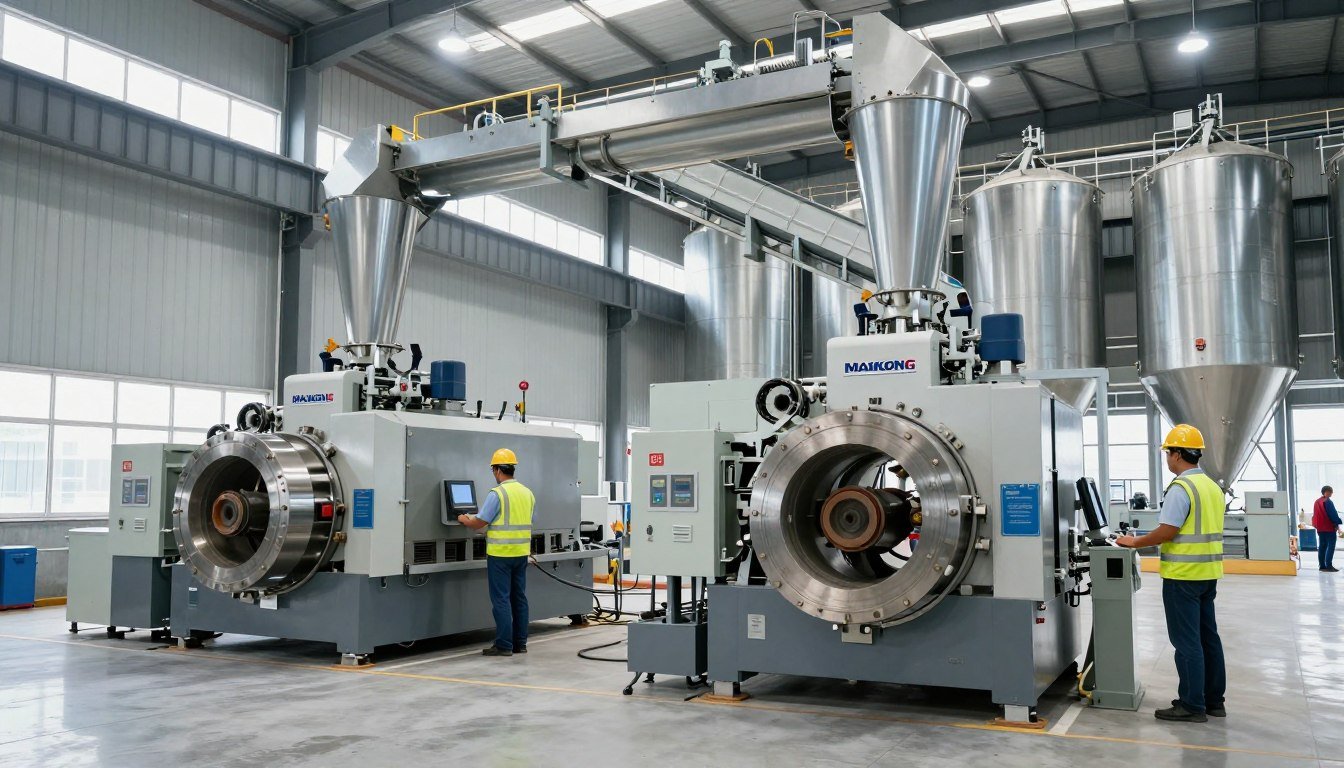
Major Philippine feed corporations, export-oriented manufacturers, and government agricultural programs operate at 15 to 40+ tons per hour capacity. These installations represent significant capital investments requiring expert engineering, proper civil works, and comprehensive training programs.
MAIKONG has supplied complete feed pellet production line systems across Southeast Asia, including multiple projects in the Philippines serving national poultry integrators and aquaculture export operations.
Large Capacity Advantages
- Lowest per-ton production cost
- Economy of scale for raw material purchasing
- Ability to serve export markets
- Multiple product line capability
- Advanced automation reduces labor
- Consistent quality at high volume
Large Capacity Challenges
- High initial capital requirement (₱15M – ₱85M+)
- Requires skilled technical operators
- Complex maintenance scheduling
- Significant electrical infrastructure needs
- Large physical footprint requirement
- Downtime affects major production volumes
Raw Material Compatibility: Philippine Feedstocks and Pellet Mill Selection
Philippine feed formulations use locally-available raw materials including rice bran, copra meal, corn, cassava, fish meal from local canneries, and agricultural by-products. Different pellet mill configurations handle these materials with varying effectiveness. Selecting alternative equipment for pellet machine operations without understanding material compatibility leads to production failures.
Rice bran contains high oil content that can blind pellet die holes during compression. Copra meal’s fiber structure requires specific die compression ratios. Cassava’s starch characteristics behave differently than corn during pelleting. Philippine feed producers must match equipment specifications to their actual raw material mix.
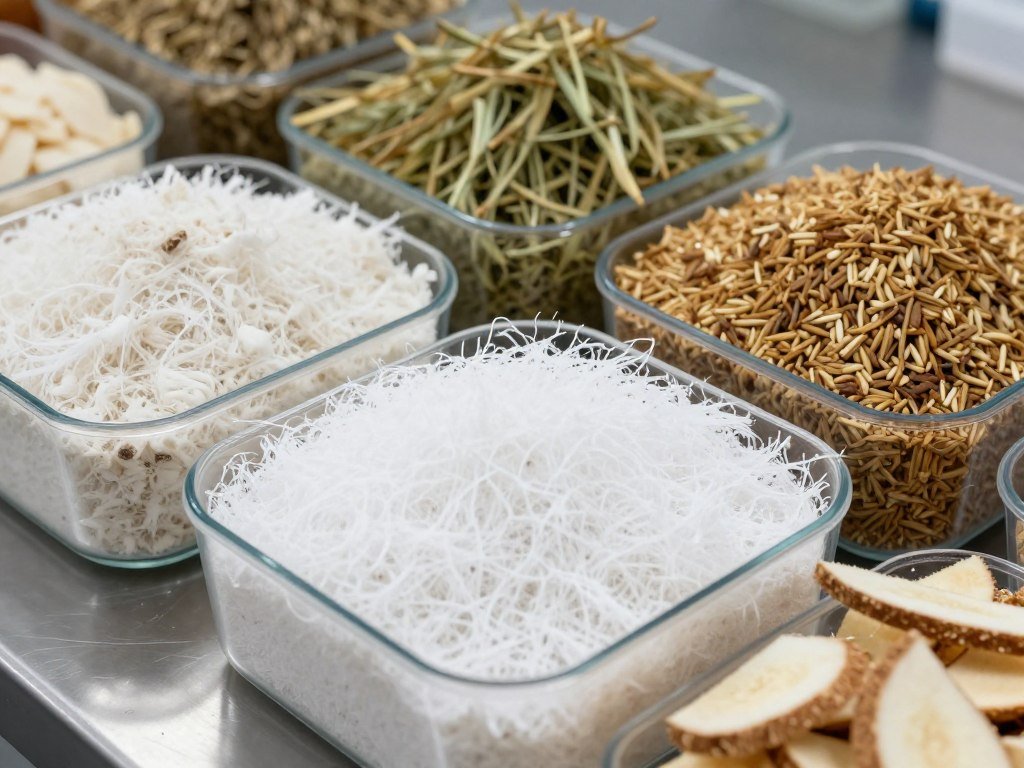
High-Fiber Materials: Copra Meal, Rice Bran, Grass Meals
Fibrous materials common in Philippine ruminant feeds require specific equipment considerations. Copra meal, rice bran hulls, and grass meals contain long fiber strands that resist compression. These materials need either flat die mills that excel with fibrous content or ring die mills with specialized die compression ratios and conditioning systems.
MAIKONG supplies cattle feed pellet machine configurations specifically designed for high-fiber Philippine materials. Our die designs prevent fiber wrapping around rollers while maintaining adequate compression for durable pellets.
Philippine Fiber Content Guidelines: For materials exceeding 15% crude fiber, specify ring die compression ratios of 1:8 to 1:10. Flat die mills handle up to 25% crude fiber without modification. Steam conditioning at 80-85°C improves fiber material pelleting in ring die systems.
High-Starch Materials: Corn, Cassava, Rice
Grains and starchy tubers form the energy base of Philippine poultry and swine feeds. These materials pelletize readily but require proper moisture and temperature control. Corn should be ground to 2-3mm particle size before pelleting. Cassava requires pre-drying to 12-14% moisture for stable pellets.
Our feed pellet machine models include variable-frequency feeders that adjust material flow based on starch content. This prevents die plugging when processing high-starch Philippine formulations.
High-Oil Materials: Fish Meal, Full-Fat Soy, Palm Kernel Cake
Protein sources in Philippine aquaculture feeds often contain significant oil content. Fish meal from sardine and tuna canneries, full-fat soybean, and palm kernel cake present lubrication challenges during pelleting. Excess oil acts as a release agent, preventing pellet formation and causing die blinding.
Philippine fish feed manufacturers using our fish feed pellet machine systems successfully process formulations with 8-12% fat content through proper conditioning and die selection. We recommend frequent die cleaning intervals when oil content exceeds 10%.
Oil Content Management: For Philippine formulations exceeding 8% fat content, implement post-pelleting oil coating systems rather than incorporating all oil pre-pelleting. This improves pellet formation while still delivering required energy density.
Philippine-Specific Equipment Considerations: Voltage, Climate, and Logistics
Purchasing alternative equipment for pellet machine operations requires addressing Philippine electrical standards, tropical climate challenges, and shipping logistics. International equipment suppliers often overlook these local factors, resulting in installations that underperform or fail entirely.
Electrical Voltage Compatibility
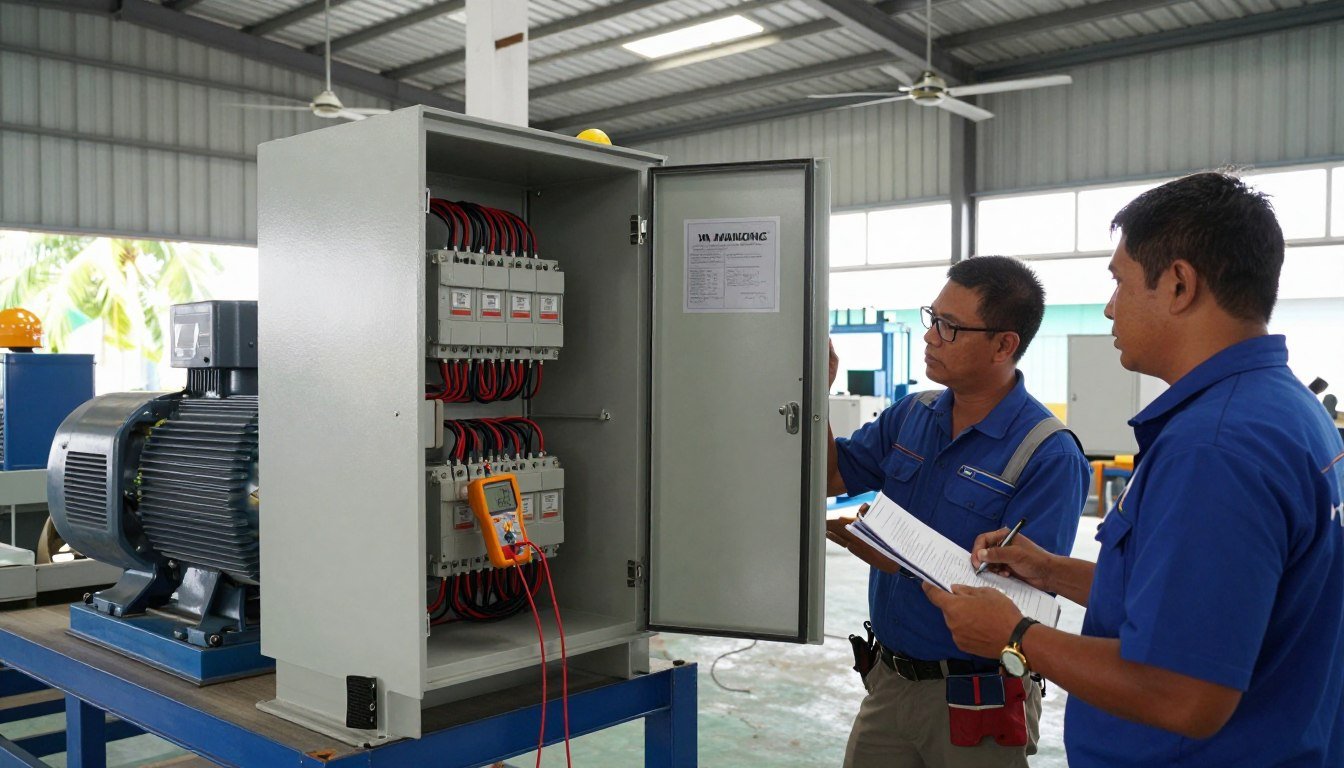
The Philippines operates on 220V single-phase for small equipment and 380V three-phase for industrial motors. International pellet mills designed for 440V or 480V systems require expensive transformers and custom electrical installations. These voltage conversion systems add cost, introduce failure points, and reduce operational efficiency.
MAIKONG manufactures all pellet machine models with Philippine-standard 220V/380V motors as default specification. Our equipment connects directly to Philippine electrical systems without transformers or modifications. This eliminates compatibility concerns and simplifies installation across all Philippine locations.
Philippine-Standard Equipment Benefits
- Direct connection to existing electrical infrastructure
- No transformer costs (saves ₱85,000 – ₱450,000)
- Simplified maintenance using local electrical components
- Eliminates transformer efficiency losses (5-8% energy waste)
- Faster installation without electrical modifications
- Philippine electricians understand standard systems
Non-Standard Voltage Problems
- Requires expensive step-up/step-down transformers
- Transformer failures cause complete production shutdown
- Increased electrical installation complexity and cost
- Continuous energy waste through transformer losses
- Local electricians unfamiliar with non-standard systems
- Replacement parts require international sourcing
Tropical Climate Durability
Philippine humidity, salt air in coastal areas, and temperature extremes demand equipment built for tropical conditions. Standard pellet mills with painted steel components rust rapidly in Philippine environments. Electrical systems without proper sealing fail from moisture intrusion during monsoon season.
Our pellet machines incorporate stainless steel hoppers, moisture-sealed electrical cabinets, and corrosion-resistant fasteners throughout. These specifications prevent the premature degradation common with equipment designed for temperate climates but operated in Philippine conditions.
Shipping and Customs Logistics
MAIKONG’s SZ facility provides efficient shipping to Philippine ports including Manila, Cebu, and Davao. We handle export documentation, customs declarations, and coordinate with Philippine freight forwarders to minimize clearance delays. Our 22 years of Philippine exports means we understand BoC requirements and proper equipment classification to avoid customs complications.
Complete poultry feed production line installations ship as consolidated containers with protective packaging designed for tropical port handling. We provide detailed unpacking and installation instructions in English suitable for Philippine technical teams.
Pricing Factors and Investment Considerations for Philippine Buyers
Understanding what drives pellet machine pricing helps Philippine buyers evaluate quotes and avoid low-quality equipment disguised by attractive prices. The cheapest alternative equipment for pellet machine option often costs more long-term through downtime, repairs, and poor pellet quality that wastes raw materials.
Primary Cost Components
Manufacturing Quality
Die and roller materials determine longevity. Hardened alloy steel dies last 1,500-2,500 hours of Philippine operation. Cheap mild steel dies wear out in 300-600 hours, requiring frequent expensive replacements that eliminate initial savings.
Cost Impact: Quality components add 15-25% to initial price but reduce lifetime costs by 40-60%.
Motor and Drive Systems
Siemens or ABB motors cost more than generic Chinese motors but deliver reliable operation under Philippine tropical loads. Variable frequency drives optimize energy consumption and extend motor life through soft-starting that reduces mechanical stress.
Cost Impact: Premium motors and drives add 12-18% to equipment cost but save 15-30% on energy and maintenance.
Engineering and Support
Experienced manufacturers provide detailed installation guidance, operator training, and responsive technical support. This expertise prevents costly startup problems and optimizes production efficiency. Budget suppliers offer minimal support, leaving Philippine buyers struggling alone.
Cost Impact: Comprehensive support adds 8-12% to project cost but prevents losses worth 3-5× that amount.
Philippine Market Pricing Ranges
Based on MAIKONG’s 22 years supplying the Philippine market, realistic pricing for quality pellet equipment falls within these ranges. Quotes significantly below these levels warrant careful investigation of specifications, warranty terms, and supplier reputation.
| Equipment Type | Capacity Range | Entry-Level Pricing | Professional-Grade Pricing | Premium Pricing |
| Flat Die Pellet Mill | 200-800 kg/hour | ₱180,000 – ₱320,000 | ₱350,000 – ₱580,000 | ₱620,000 – ₱850,000 |
| Small Ring Die Mill | 1-2 tons/hour | ₱480,000 – ₱720,000 | ₱780,000 – ₱1,150,000 | ₱1,250,000 – ₱1,680,000 |
| Medium Ring Die Mill | 3-6 tons/hour | ₱1,250,000 – ₱1,850,000 | ₱1,950,000 – ₱2,850,000 | ₱3,000,000 – ₱4,200,000 |
| Large Ring Die Mill | 10-15 tons/hour | ₱3,500,000 – ₱5,200,000 | ₱5,500,000 – ₱7,800,000 | ₱8,200,000 – ₱11,500,000 |
| Complete Production Line | 3-5 tons/hour | ₱4,200,000 – ₱6,500,000 | ₱7,000,000 – ₱10,500,000 | ₱11,000,000 – ₱15,000,000 |
Beware Unrealistic Pricing: Quotes more than 30% below market ranges indicate substandard components, incomplete specifications, or hidden costs. Philippine buyers have repeatedly learned that “cheap” pellet mills require frequent repairs, produce inconsistent pellets, and fail within 1-2 years – making them far more expensive than quality equipment.
Successful Philippine Installations: MAIKONG Case Studies
MAIKONG has supplied alternative equipment for pellet machine installations across the Philippines for over 22 years. These real-world projects demonstrate our equipment performance in actual Philippine operating conditions serving different livestock sectors.
3 Ton/Hour Chicken Feed Line – Batangas Poultry Cooperative
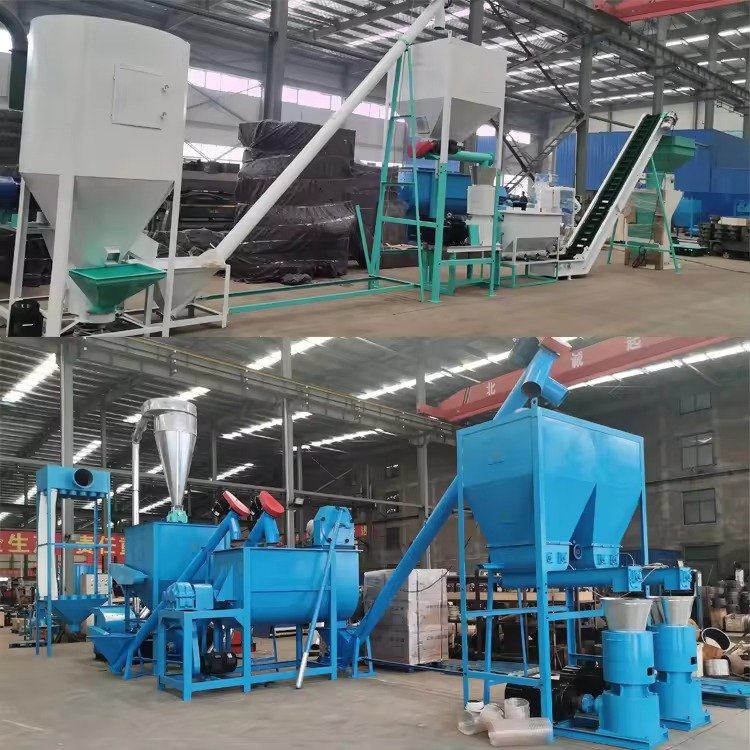
A Batangas farmers’ cooperative serving 45 layer farm members needed independence from commercial feed suppliers. They required equipment producing consistent layer feed while training cooperative members in operation and maintenance.
MAIKONG Solution: Complete 3-ton/hour production line including MK-350 ring die pellet mill, hammer mill, batch mixer, pellet cooler, and semi-automatic bagging system. We provided 5-day on-site training for cooperative technical team.
Results After 18 Months: Producing 18 tons daily across two 6-hour shifts. Feed cost savings of ₱42 per bag compared to commercial feeds. Cooperative members report improved egg production from consistent feed quality. Equipment operates with 98.5% uptime.
- Investment: ₱8,750,000 complete installation
- Payback period: 14 months from member feed sales
- Raw materials: 60% corn, 25% soybean meal, 10% fish meal, 5% premix/minerals
- Pellet specification: 3.5mm layer crumbles
1.5 Ton/Hour Fish Feed System – Pampanga Tilapia Operation
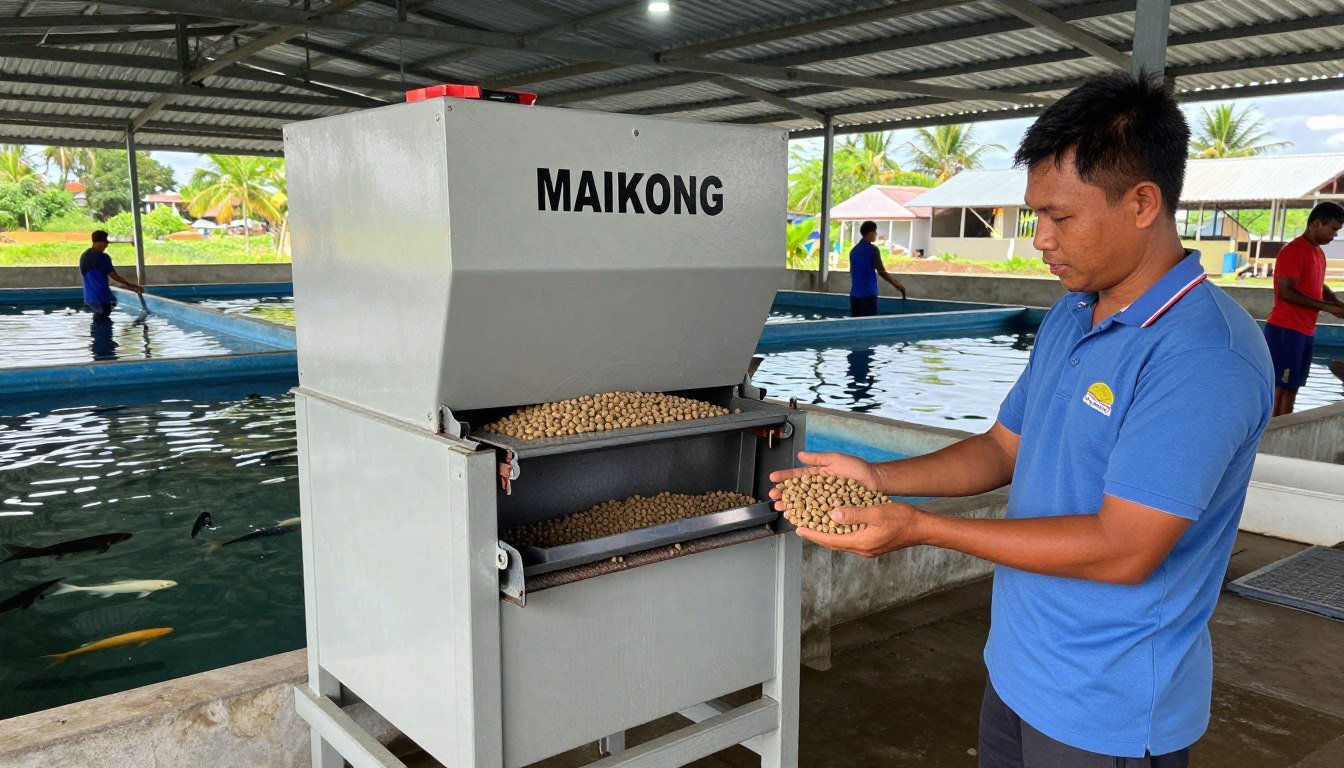
A 25-hectare tilapia farm in Pampanga was spending ₱2.8 million monthly on commercial floating feed. They wanted to produce their own feed using locally-sourced ingredients including fish processing waste from nearby cannery.
MAIKONG Solution: Aqua feed production line featuring MK-320 pellet mill with floating feed die configuration, fish meal grinder, oil coating system, and dryer. Engineering consultation on formulation development for tilapia growth stages.
Results After 12 Months: Producing 9 tons daily of floating tilapia feed. Raw material cost ₱28/kg versus ₱52/kg for commercial feed. Tilapia growth rates improved 8% from fresh feed daily. Farm expanded production by 15% with feed cost savings.
- Investment: ₱4,950,000 including formulation development
- Monthly savings: ₱1,680,000 on feed costs
- Payback period: 3 months
- Added capability: Custom feeds for different growth stages
800kg/Hour Cattle Feed Mill – Mindanao Ranch
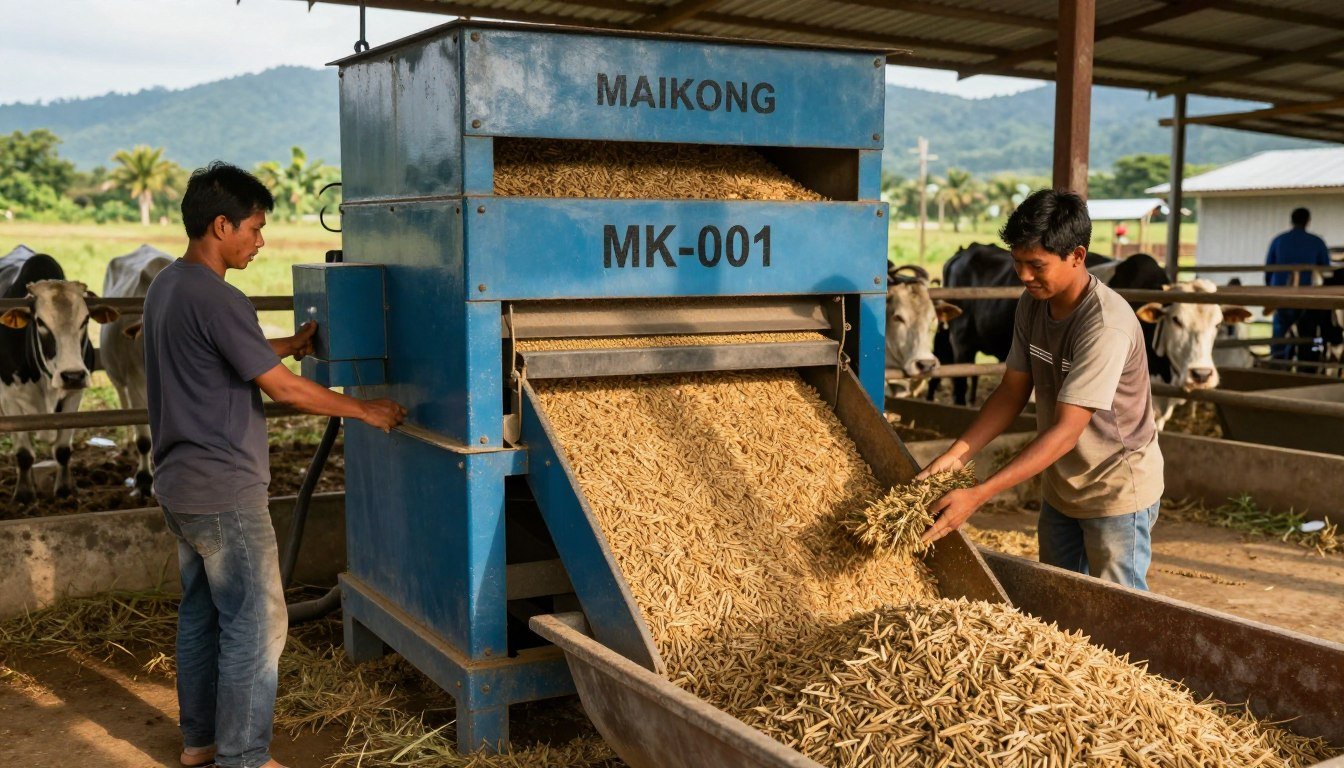
A 500-head cattle ranch in Bukidnon needed to utilize copra meal and grass silage from their own coconut plantation and pastures. They required simple equipment their ranch staff could operate and maintain without specialized training.
MAIKONG Solution: MK-001 flat die pellet mill configured for high-fiber materials, plus simple hammer mill for corn and copra meal grinding. Equipment selected for ease of operation and minimal maintenance requirements.
Results After 24 Months: Processing 4.8 tons daily of cattle finishing pellets. Utilizing previously-wasted copra meal worth ₱180,000 monthly. Cattle finish 3 weeks faster on pelleted rations. Ranch staff maintains equipment without external technical support.
- Investment: ₱890,000 for pellet mill and grinder
- Monthly value from waste utilization: ₱180,000
- Improved cattle performance: ₱95,000 monthly from faster finishing
- Payback period: 4 months
Frequently Asked Questions: Philippine Pellet Equipment Selection
What capacity pellet machine do I need for 3,000 layer chickens?
For 3,000 layer chickens consuming approximately 110-120 grams daily each, you need about 360-400kg of feed daily. A pellet machine with 500-800kg per hour capacity allows production in 1-2 hours daily. MAIKONG recommends our MK-001 model (800kg-1,000kg/hour capacity) which provides buffer capacity for flock expansion and processes a day’s feed in under one hour. This prevents the need to run equipment all day and allows flexibility for maintenance and cleaning.
Can pellet machines handle Philippine coconut meal and rice bran?
Yes, but equipment configuration matters significantly. Copra meal contains 8-12% oil and substantial fiber requiring specific die compression ratios. Rice bran’s oil content can blind die holes during extended operation. MAIKONG pellet mills designed for Philippine materials include larger die hole entry angles and harder die materials that resist oil buildup. We recommend limiting copra meal to 25% of formulation and rice bran to 15% when using standard dies. Special high-oil dies allow up to 35% copra inclusion. Steam conditioning at 75-80°C helps bind these materials effectively.
What’s the difference between flat die and ring die for small Philippine farms?
Flat die pellet mills suit small Philippine farms (under 2 tons daily production) because they cost 40-60% less than ring die systems, operate without steam conditioning equipment, and handle fibrous local materials well. Filipino farm workers can maintain them with basic mechanical skills. Ring die mills deliver higher capacity, more uniform pellets, and better energy efficiency, but require higher investment, steam boilers for conditioning, and more technical operation knowledge. For backyard operations producing 200-1,500kg daily, flat die provides better economics. For commercial operations exceeding 3 tons daily, ring die becomes cost-effective through higher output and efficiency.
How much does it cost to run a pellet machine in the Philippines monthly?
Operating costs depend on production volume and local electricity rates (typically ₱8-12 per kWh in Philippines). A 1-ton/hour pellet mill consumes approximately 22kW, requiring 22kWh per operating hour. At ₱10/kWh, electricity costs ₱220 per operating hour. Producing 8 tons daily (8 hours operation) costs ₱1,760 daily in electricity, or ₱52,800 monthly. Add die replacement (₱35,000-85,000 every 1,500-2,500 hours), roller replacement (₱45,000-95,000 every 2,500-3,500 hours), bearing lubrication (₱3,500 monthly), and labor (₱15,000-25,000 monthly per operator). Total operating cost typically runs ₱8-12 per kg of pellets produced for small systems, decreasing to ₱4-6 per kg at larger scale.
Do MAIKONG pellet machines work with Philippine 220V power?
All MAIKONG pellet machines are manufactured with Philippine-standard electrical specifications as default. Small models under 7.5kW motor can operate on 220V single-phase. Models with 11kW+ motors require 380V three-phase power (standard Philippine industrial supply). We do not require expensive voltage transformers or electrical modifications. Our motors, starters, and control panels match Philippine electrical codes and connect directly to your facility power. This eliminates the transformer costs (₱85,000-450,000) and efficiency losses (5-8%) required when purchasing equipment designed for other countries’ electrical standards. Installation electricians familiar with Philippine systems can complete connections without specialized training.
What warranty and support does MAIKONG provide in the Philippines?
MAIKONG provides comprehensive warranty and support for all Philippine installations. Equipment carries 2-year parts warranty covering manufacturing defects. We maintain spare parts inventory at our SZ facility with 5-7 day delivery to major Philippine ports. Technical support operates via WhatsApp, email, and phone during Philippine business hours with English-speaking technicians familiar with local operating conditions. We provide detailed operation manuals in English, video training materials, and remote troubleshooting assistance. For complete production line installations, we offer optional on-site commissioning (₱120,000-280,000) including 3-5 day installation supervision, operator training, and initial production runs. Our 22 years serving the Philippine market means we understand your specific challenges including tropical climate durability, voltage stability issues, and local raw material characteristics.
Can I start with one pellet machine and expand later?
Yes, and MAIKONG specifically designs systems for staged expansion. Many Philippine clients start with a single pellet mill, then add mixing, cooling, and packaging equipment as production grows. Our equipment uses standardized interfaces allowing integration of additional components without replacing existing machines. For example, you might begin with just an MK-001 pellet mill (₱485,000) producing 800kg/hour. As demand grows, add a hammer mill (₱180,000) for consistent particle size, then a mixer (₱145,000) for uniform formulations, then a cooler (₱220,000) to enable bagging warm pellets. This staged approach spreads investment over time as your business generates revenue. We provide expansion planning consultation showing capacity bottlenecks and optimal upgrade sequences for your specific operation growth trajectory.
MAIKONG Philippine Partnership Opportunities: Dealer and Distributor Network
MAIKONG actively seeks qualified dealers and distributors across the Philippines to expand our alternative equipment for pellet machine market presence. We support partners with technical training, marketing materials, competitive pricing structures, and territorial protection.

Dealer Benefits and Support
Competitive Advantages
- Exclusive territorial rights in assigned Philippine regions
- Dealer-tier pricing (25-35% margin on equipment sales)
- Co-op marketing fund for local advertising and demonstrations
- Technical training at SZ facility or Philippine location
- Demo equipment availability for customer trials
- Priority parts allocation and technical support
- OEM/ODM customization capability for dealer brands
Ideal Dealer Profile
- Existing agricultural equipment or animal nutrition business
- Technical capability for equipment demonstration and basic support
- Warehouse facility for parts inventory and equipment display
- Sales team covering target geographic territory
- Financial capacity for initial inventory investment
- Understanding of Philippine livestock and aquaculture sectors
- Commitment to MAIKONG quality and service standards
Why Partner with MAIKONG
22+ Years Manufacturing Experience
MAIKONG has manufactured feed pellet equipment since 2002, supplying installations across 140+ countries. Our engineering team solved production challenges across diverse climates, raw materials, and livestock systems. This experience translates to reliable equipment that works in real Philippine conditions.
Complete Product Range
From small 200kg/hour flat die mills to complete 40+ ton/hour production lines, we supply all capacity levels. Dealers can serve customers from backyard farms to major feed corporations with equipment from one trusted manufacturer.
Philippine Market Understanding
Years of Philippine sales taught us local requirements: 220V/380V electrical, tropical-climate durability, copra meal and rice bran processing, and Tagalog/English documentation. We don’t just export generic equipment; we provide Philippine-optimized solutions.
Comprehensive Support System
Partners receive technical training, sales materials in English, troubleshooting guides, installation supervision support, and responsive parts supply. We invest in dealer success because your growth becomes our growth.
OEM/ODM Capabilities
Established dealers can develop private-label equipment or customize specifications for specific Philippine market segments. We support branding, special features, and exclusive configurations that differentiate your offering.
Growing Market Opportunity
Philippine livestock and aquaculture sectors expand yearly. Commercial feed prices pressure farm profitability, driving demand for on-farm feed production equipment. This creates growing sales opportunity for positioned dealers.
Become a MAIKONG Dealer in Your Philippine Region
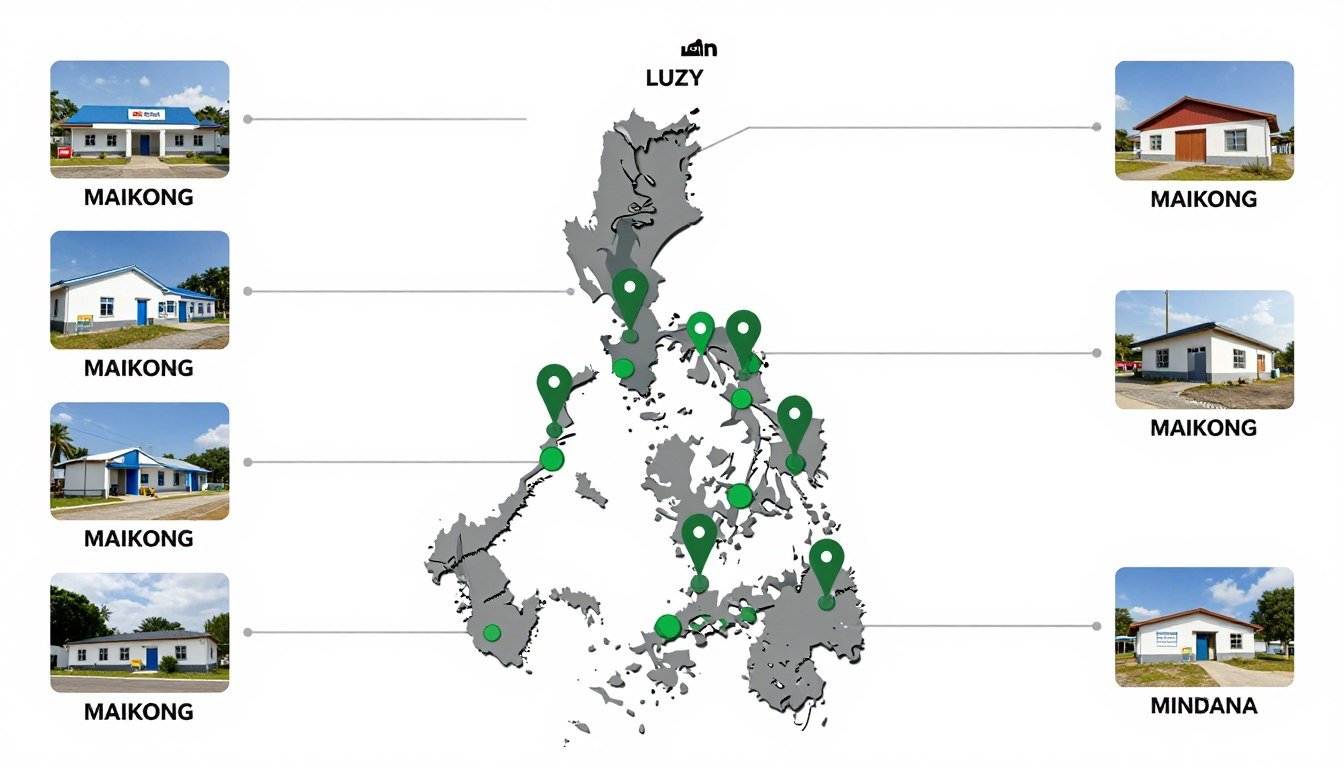
MAIKONG seeks qualified partners in Luzon, Visayas, and Mindanao for exclusive territorial dealerships. Join our network of successful equipment dealers serving the Philippine agricultural market. We provide the products, training, and support needed for your business growth.
Partnership Inquiries: +86 15815556422
Email: Lucy@pelletmachine.ph
Website: pelletmachine.ph
Making an Informed Decision: Your Next Steps
Selecting alternative equipment for pellet machine operations represents a significant investment in your Philippine feed production capability. The right equipment increases profitability through reduced feed costs, improved animal performance, and operational independence. The wrong equipment wastes capital on underperforming machinery that creates more problems than it solves.
Philippine buyers should evaluate pellet equipment based on:
- Capacity Match: Equipment sized appropriately for current production plus 30-50% growth capacity
- Material Compatibility: Die specifications and conditioning systems matched to your actual raw materials
- Philippine Standards: 220V/380V electrical, tropical-climate construction, local support availability
- Total Cost: Initial investment, operating costs, maintenance requirements, and expected lifespan
- Supplier Reputation: Manufacturing experience, reference installations, warranty terms, parts availability
- Technical Support: Installation guidance, operator training, troubleshooting assistance, upgrade options
MAIKONG’s 22+ years manufacturing animal feed pellet machine systems and extensive Philippine installation experience positions us as your reliable partner. We understand local challenges because we’ve solved them repeatedly across hundreds of Philippine projects.
Ready to Start? Contact MAIKONG’s Philippine technical team for free consultation on your specific feed production requirements. We’ll analyze your livestock numbers, raw materials, facility conditions, and budget to recommend the optimal equipment configuration. No obligation – just expert guidance from experienced feed equipment professionals who understand Philippine agriculture.
Start Your Philippine Feed Production Project with MAIKONG
Whether you need a single pellet mill for your farm or a complete production line for commercial manufacturing, MAIKONG provides the equipment, expertise, and support for success. Over 22 years, we’ve helped Philippine operations from backyard farms to major corporations achieve their feed production goals.
Contact our Philippine technical team today:
Direct Call: +86 15815556422
Visit: pelletmachine.ph for complete product catalog and technical resources
Company: MAIKONG Manufacturing – GD Province, SZ City | Serving Philippine Agriculture Since 2002
Your Philippine feed production success starts with the right equipment partner. Let MAIKONG’s experience, quality manufacturing, and comprehensive support help you achieve operational independence and profitability through effective feed pelleting solutions.