
Every farm owner faces a critical decision when production demands grow beyond manual feed preparation capabilities. The choice of machinery directly impacts daily operations, animal health outcomes, and financial returns for years ahead.
Selecting the appropriate feed pellet production line requires understanding specific farm requirements, available space, budget constraints, and long-term expansion goals. This decision affects not only immediate production efficiency but also feed quality consistency, operational costs, and competitive positioning in the Philippine agricultural market.
This comprehensive guide examines essential factors, technical specifications, and practical considerations. Farm operators, feed mill owners, and agricultural investors will find actionable insights for making informed equipment choices that align with their production objectives and market conditions.
Free Resource Available: Download our complete buyer’s checklist covering all technical specifications, capacity calculations, and budget planning worksheets. Request your free guide here.
Understanding Feed Pellet Production Line Fundamentals
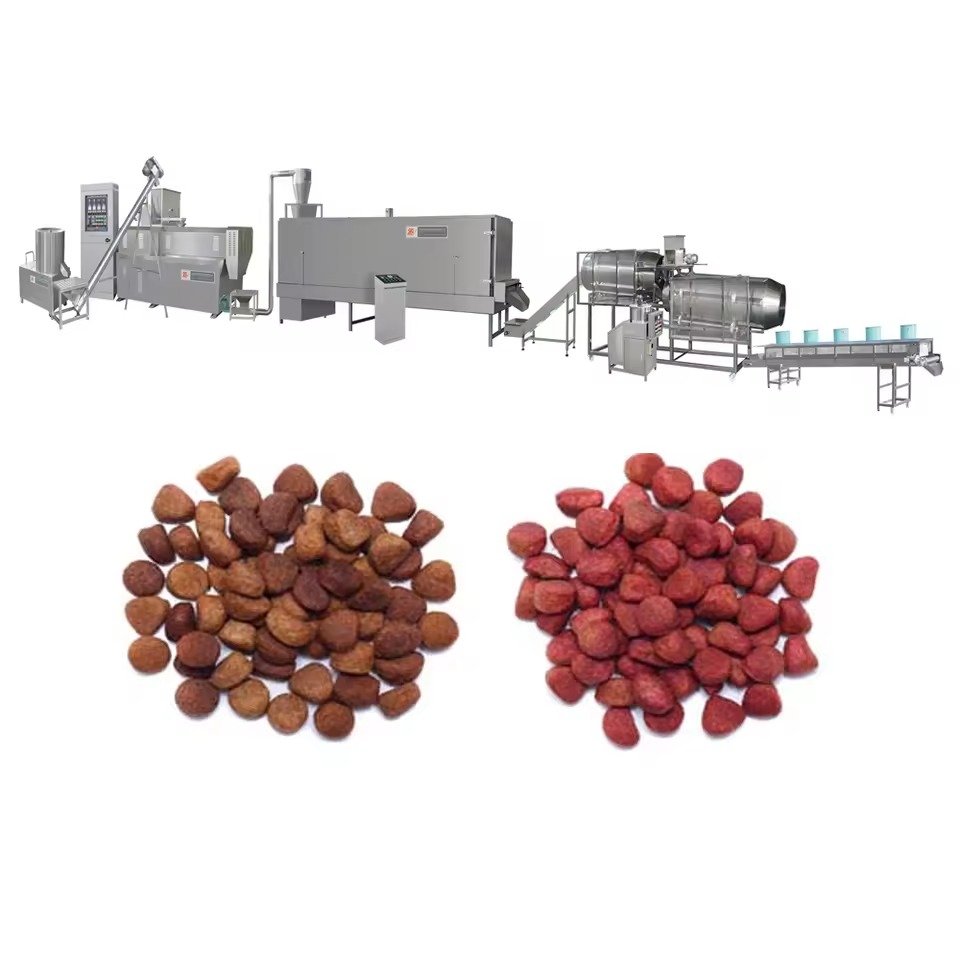
A complete feed pellet production system transforms raw agricultural materials into uniform, nutritious pellets through mechanical and thermal processes. These integrated systems combine multiple specialized machines working in coordinated sequence.
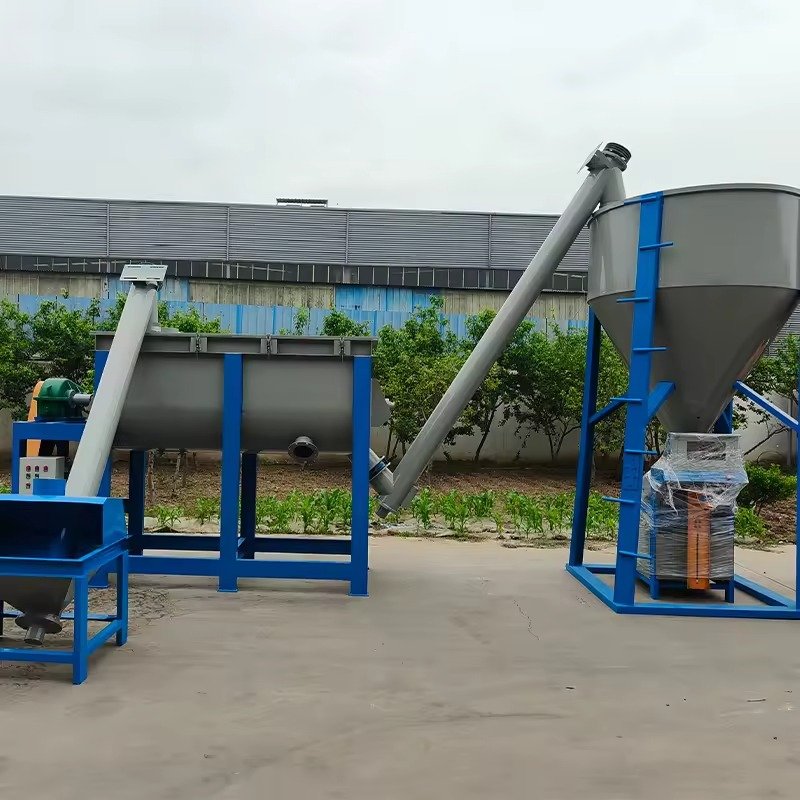
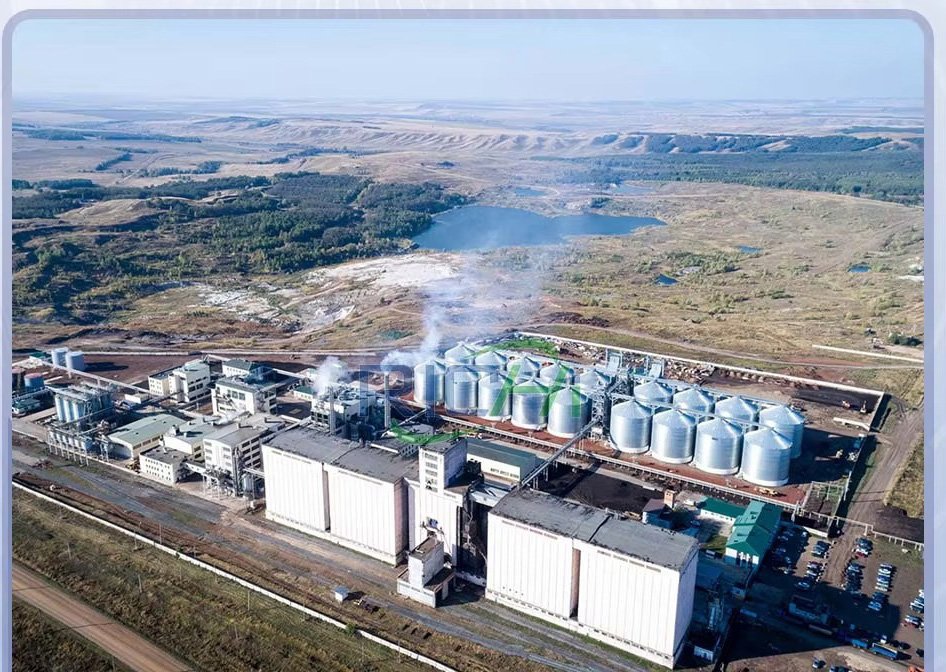
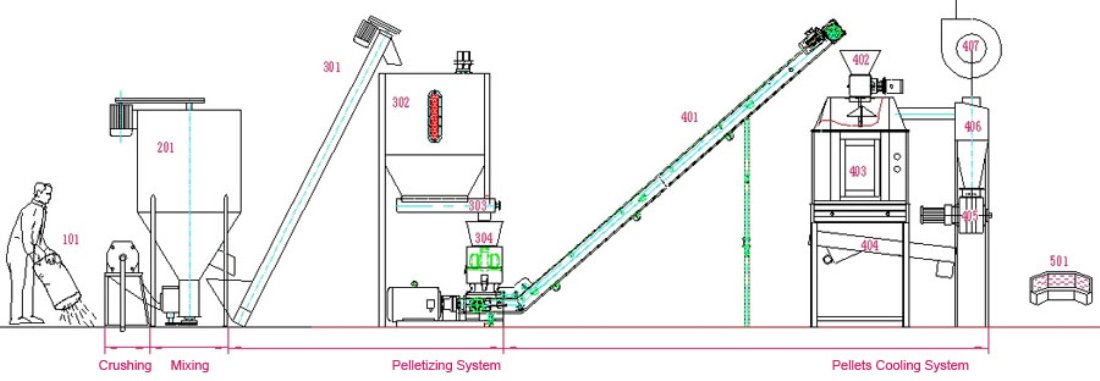
The production process involves several critical stages. Raw materials first undergo cleaning and size reduction. Ingredients then blend according to precise nutritional formulations. The mixed material passes through pelletizers where heat, moisture, and pressure create compact pellets. Finally, pellets cool to appropriate temperatures and moisture levels before storage or packaging.
Core Components Every Production Line Includes
Pre-Processing Equipment
Reception systems receive and store bulk materials. Cleaning equipment removes contaminants, stones, and metal particles. Grinding machines reduce ingredient particle size for optimal mixing and pellet formation. These initial stages determine final product quality.
- Steel silos with capacity monitoring systems
- Magnetic separators and screening equipment
- Hammer mills and roller crushers
- Dust collection and control systems
Processing Core Systems
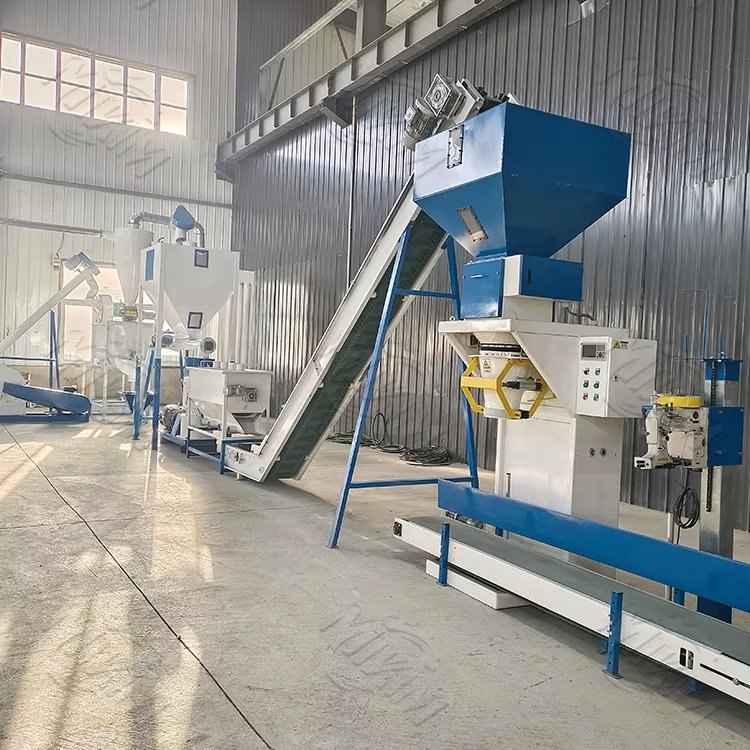
Batching systems measure ingredients with high precision. Mixers ensure uniform distribution of all components. Pellet mills compress material into desired shapes and sizes. Coolers stabilize finished pellets for storage.
- Automated weighing and dosing equipment
- High-efficiency paddle or ribbon mixers
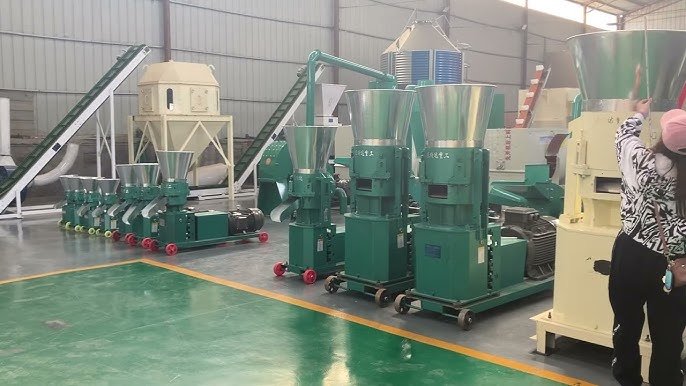
- Ring die or flat die pellet machines
- Counter-flow cooling systems
Post-Processing Equipment
Screening separates pellets by size and removes fines. Coating equipment applies liquid additives. Packaging systems prepare finished products for distribution. Quality control measures verify specifications throughout.
- Rotary grading screens
- Liquid addition and spraying units
- Automated bagging and weighing scales
- Conveying and material handling systems
Control and Monitoring
Modern lines integrate automated control systems. Sensors monitor temperature, moisture, and flow rates. Programmable controllers maintain consistent operation. Data logging enables quality tracking and optimization.
- PLC-based automation systems
- Temperature and moisture sensors
- Production monitoring software
- Safety interlocks and emergency stops
Understanding these fundamental components helps farm operators evaluate equipment specifications and identify necessary features for their specific requirements. Each component contributes to overall system efficiency, product quality, and operational reliability.
Need technical guidance on production line components?
Key Factors When Choosing Your Feed Production Line

Successful equipment selection depends on matching production line capabilities with specific operational requirements. Several critical factors determine which system delivers optimal results for particular farming situations.
Production Capacity Requirements
Accurate capacity planning prevents costly under-sizing or excessive capital expenditure. Farm operators must calculate current demand, projected growth, and potential market expansion opportunities.
Daily feed pellet requirements vary significantly across farm types. Small poultry operations may need 200-500 kilograms daily, while commercial livestock farms require several tons. Aquaculture facilities often operate continuously during feeding seasons.
MAIKONG manufactures systems spanning the complete capacity range. The MK-L003 series offers configurations from 200 kilograms to 200 tons per hour, accommodating farms of all sizes. Modular designs allow capacity expansion as operations grow.
Feed Type and Formula Flexibility
Different livestock categories require distinct nutritional profiles and pellet characteristics. Production equipment must accommodate various ingredient combinations and pellet specifications.
Poultry and Livestock Feed
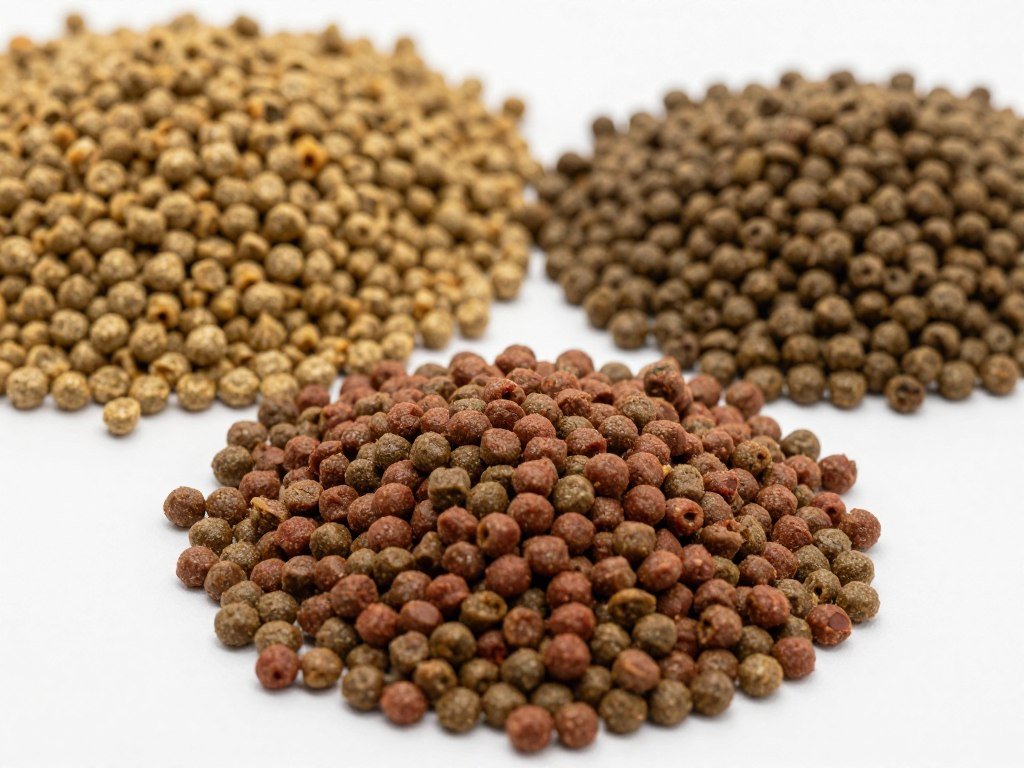
Chicken, duck, and swine feeds typically use 2-4mm diameter pellets. Cattle and sheep feeds range from 6-8mm. Equipment must maintain consistent quality across these size variations.
Aquaculture and Fish Feed
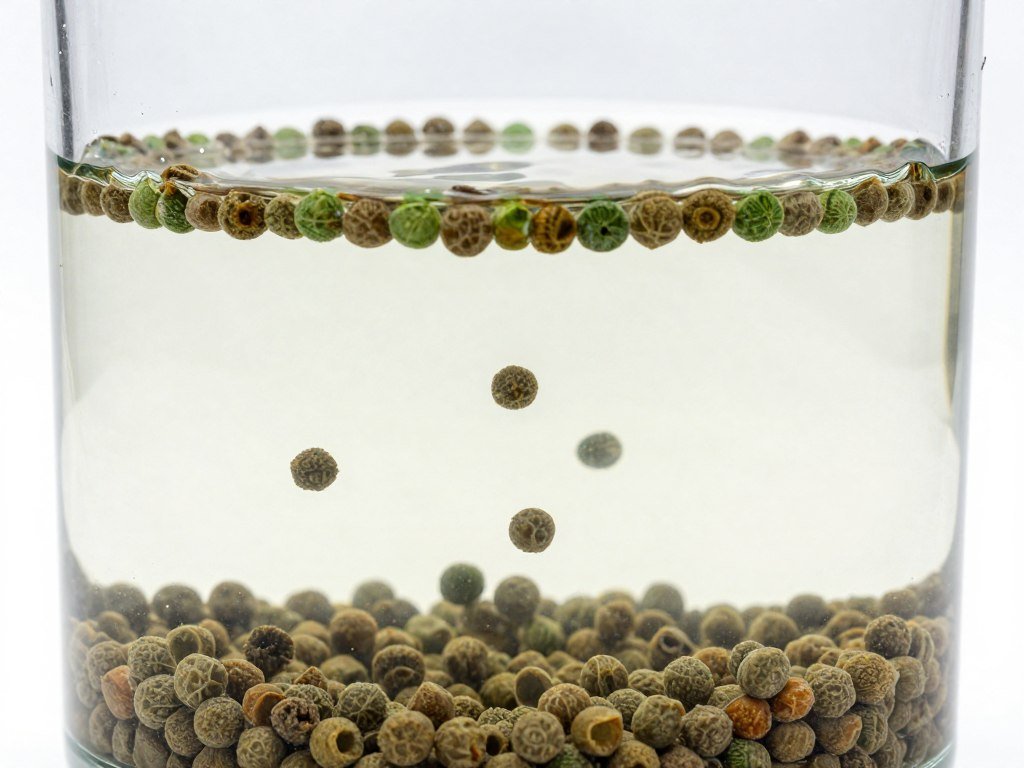
Fish and shrimp feeds require precise density control for floating or sinking properties. Pellet sizes range from 0.5mm for fry to 8mm for large fish. Water stability specifications are critical.
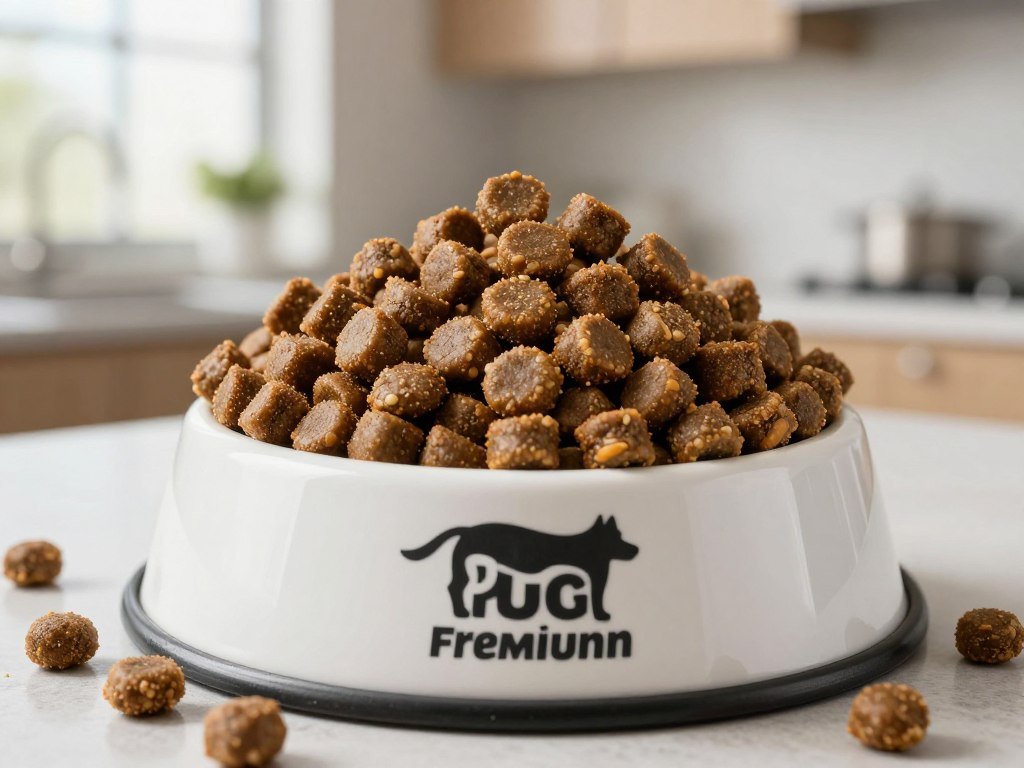
Pet and Specialty Feed
Pet foods often incorporate specialized ingredients and require gentle processing. Rabbit, pigeon, and ornamental bird feeds need customized formulations. Premium markets demand superior pellet appearance.
The animal feed pellet machine within MAIKONG production lines features adjustable die specifications and variable compression settings. This flexibility enables producers to manufacture multiple feed types using the same equipment, maximizing investment efficiency.
Space, Power, and Infrastructure Considerations
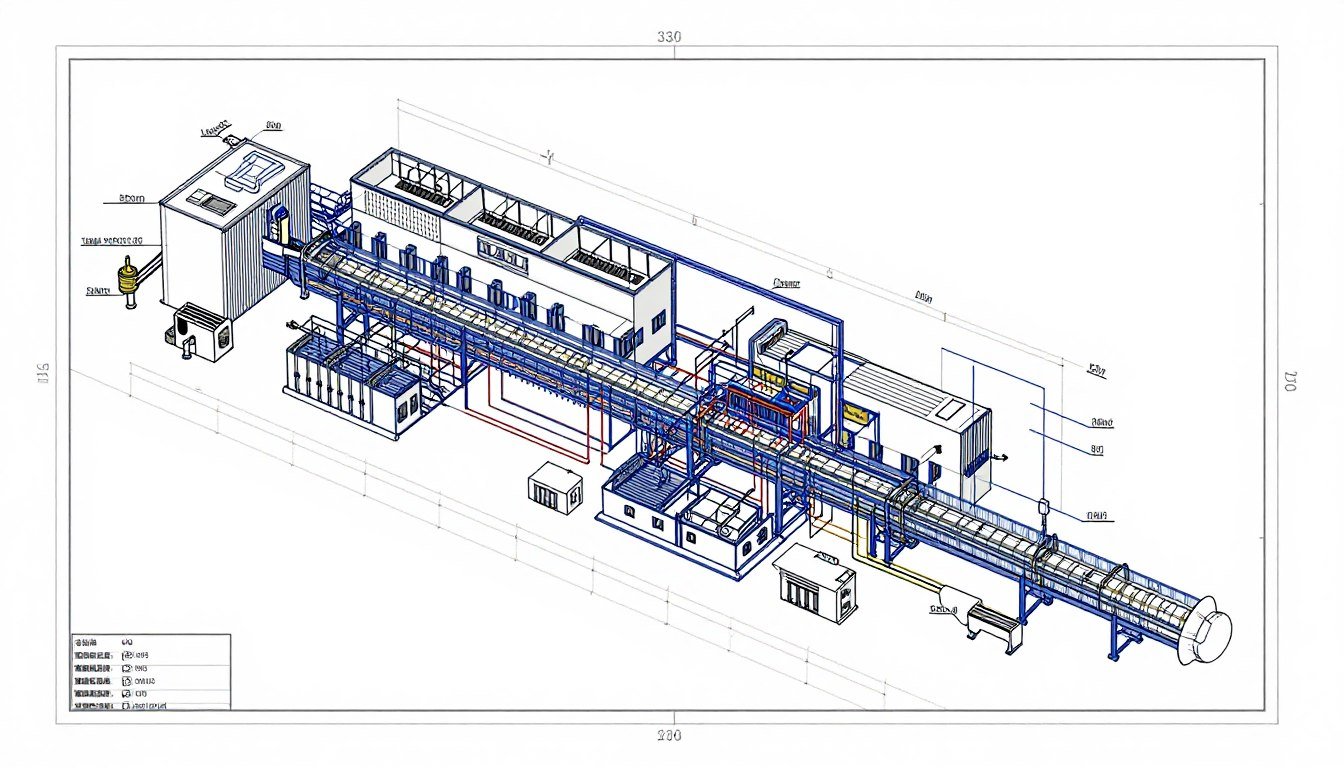
Production facilities require adequate floor space, structural support, electrical capacity, and material handling access. These infrastructure requirements significantly impact installation costs and operational efficiency.
| Production Capacity | Floor Space Required | Power Requirement | Building Height | Installation Time |
| 200-500 kg/hour | 80-120 m² | 30-50 kW | 4-5 meters | 5-7 days |
| 1-2 tons/hour | 150-200 m² | 75-100 kW | 5-6 meters | 10-14 days |
| 5-10 tons/hour | 300-500 m² | 200-300 kW | 6-8 meters | 20-30 days |
| 20+ tons/hour | 800-1200 m² | 500-800 kW | 8-12 meters | 45-60 days |
Philippine electrical standards typically provide 220V single-phase or 380V three-phase power. MAIKONG equipment adapts to local voltage specifications through custom motor configurations. Installation teams coordinate with facility managers to ensure proper electrical infrastructure before equipment arrival.
Get Your Custom Production Line Design
Our engineering team creates detailed facility layouts showing equipment placement, utility connections, and workflow optimization for your specific space. Receive 3D renderings and technical specifications within 48 hours.
Understanding Critical Technical Specifications
Equipment specifications directly determine production efficiency, product quality, and operational costs. Informed buyers evaluate these technical parameters to ensure equipment meets long-term requirements.
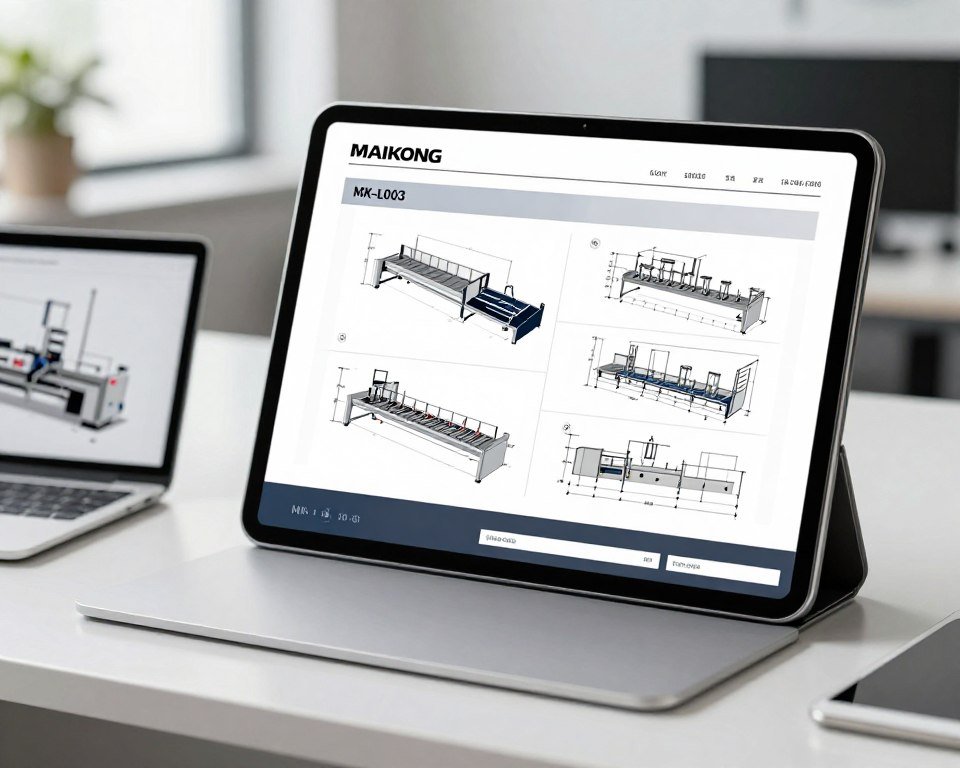
MK-L003 Series Complete Specifications
Main Equipment Parameters
- Model Designation: MK-L003 (customizable configuration codes)
- Capacity Range: 200 kg/h to 200 tons/h (based on configuration)
- Pellet Sizes Available: 1.5mm to 12mm diameter
- Main Material: Food-grade stainless steel contact surfaces, ABS control panels
- Power Options: 220V/380V, 50Hz/60Hz (Philippine standard compatible)
- Total Power Consumption: 35kW to 850kW (capacity dependent)
- Pellet Mill Motor: 22kW to 220kW (variable options)
- Production Efficiency: 85-92% (ingredients to finished pellets)
- Finished Pellet Moisture: 10-12.5% (adjustable)
- Pellet Density: 550-650 kg/m³ (formula dependent)
Physical Dimensions (Mid-Range Configuration)
- Overall Length: 18-25 meters
- Overall Width: 6-8 meters
- Overall Height: 5-7 meters
- Main Equipment Weight: 8,500-15,000 kg
- Foundation Requirements: Reinforced concrete, 300mm minimum thickness
Customization Options for Philippine Market
MAIKONG specializes in adapting production lines to local conditions:
- Voltage Adaptation: All equipment configured for Philippine 220V/380V standards
- Climate Considerations: Enhanced cooling systems for tropical temperatures
- Humidity Protection: Sealed electrical components resistant to high moisture
- Raw Material Flexibility: Processing capability for locally available ingredients (copra meal, rice bran, corn, fishmeal)
- Capacity Matching: Precise sizing for Philippine farm scales and operations
- Color Options: Standard industrial gray, custom colors available
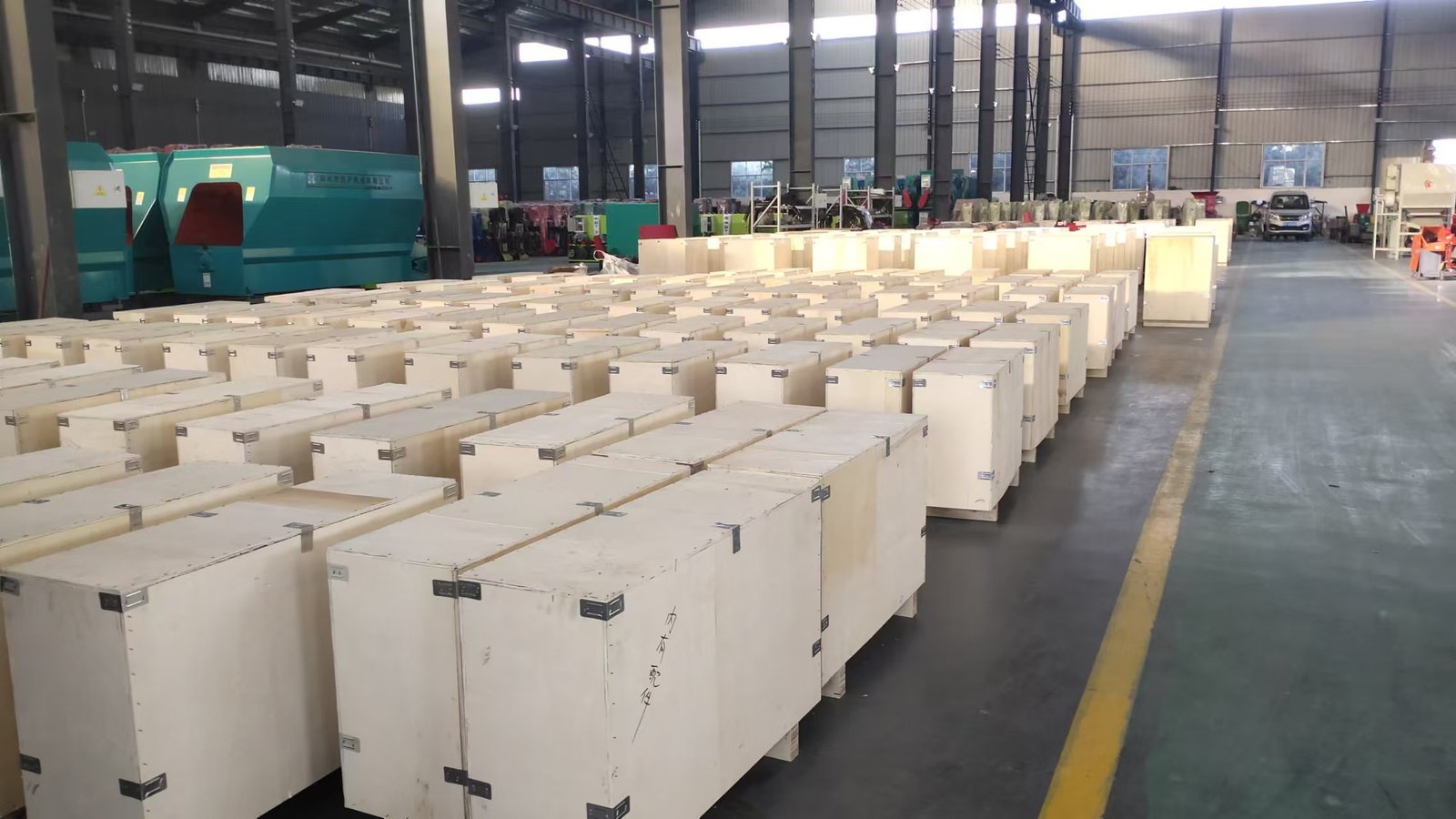
Stock Availability: Standard MK-L003 configurations maintain inventory at our GD Province, SZ City manufacturing facility. Custom configurations require 30-45 day production lead time. Express shipping available to Philippine ports.
Component Quality and Durability Standards
Long-term reliability depends on component manufacturing quality and material selection. MAIKONG employs stringent quality control throughout the 22-year manufacturing process development.
Critical Wear Components
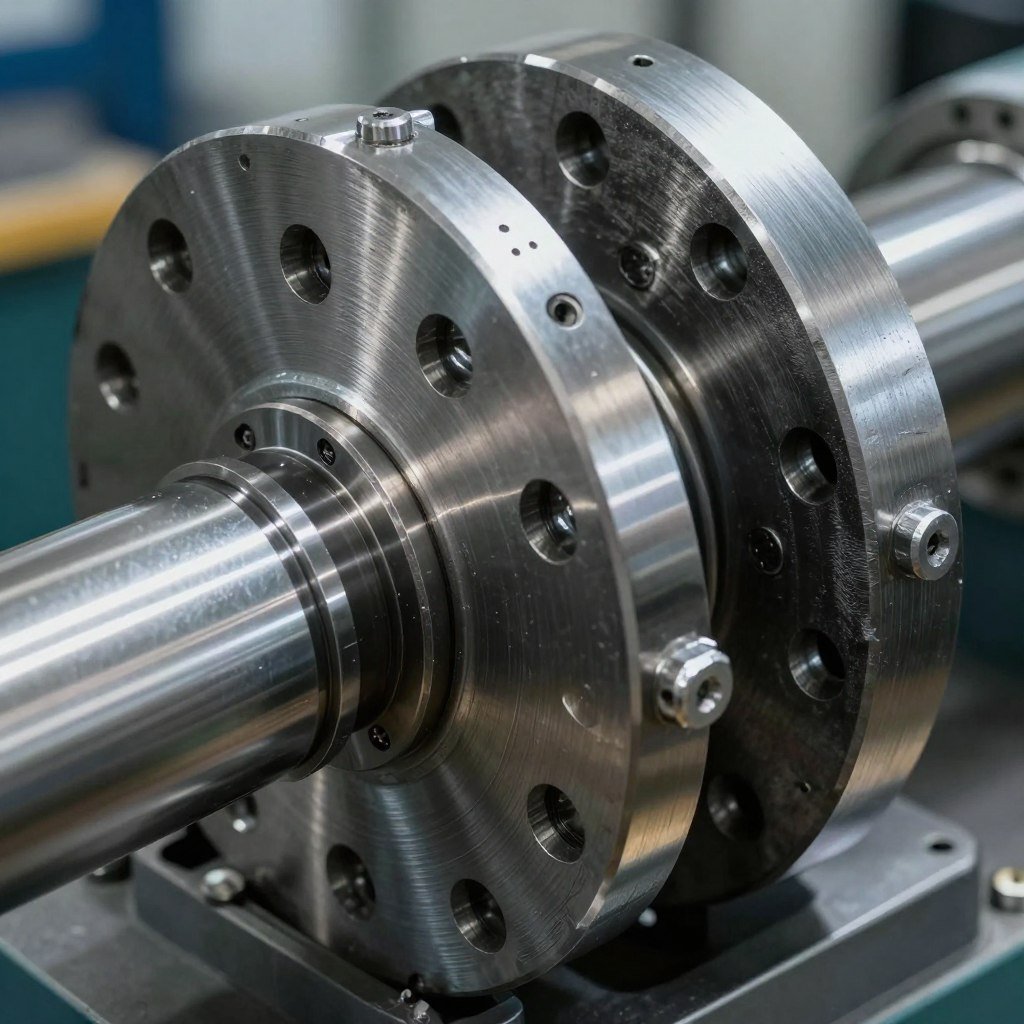
Pellet mill dies and rollers utilize alloy steel with hardness ratings of HRC 55-60. Expected service life exceeds 1,500 operating hours under normal conditions. Hammer mill screens employ manganese steel lasting 800-1,000 hours.
Replacement parts maintain dimensional compatibility across production batches. MAIKONG stocks complete spare parts inventories ensuring minimal downtime during maintenance cycles.
Drive Systems and Motors
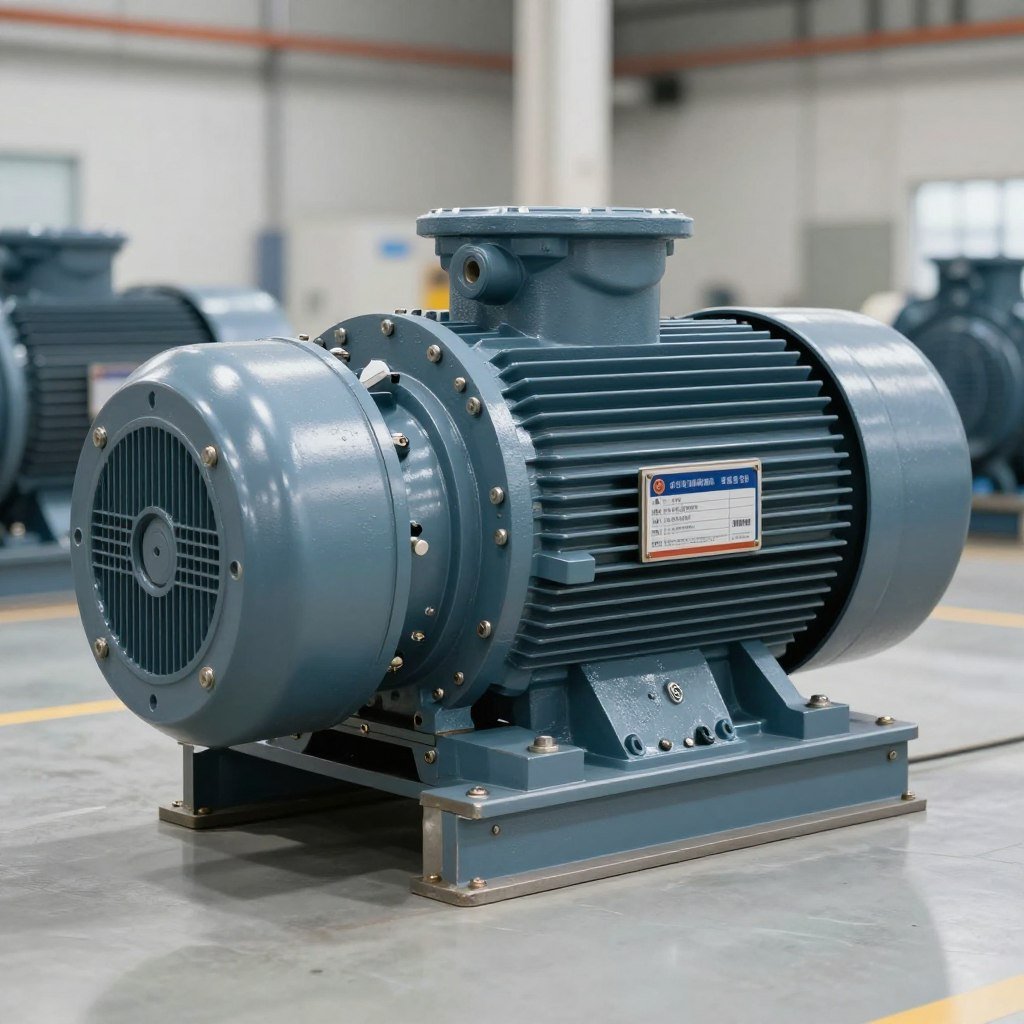
Heavy-duty motors from internationally certified manufacturers provide reliable power transmission. Thermal protection systems prevent damage from overload conditions. Soft-start capabilities reduce electrical demand spikes.
Gearboxes feature helical gear designs for quiet operation and extended lifespan. Sealed bearing assemblies exclude dust and moisture contamination. Lubrication intervals extend to 2,000 operating hours.
Electrical Controls and Safety
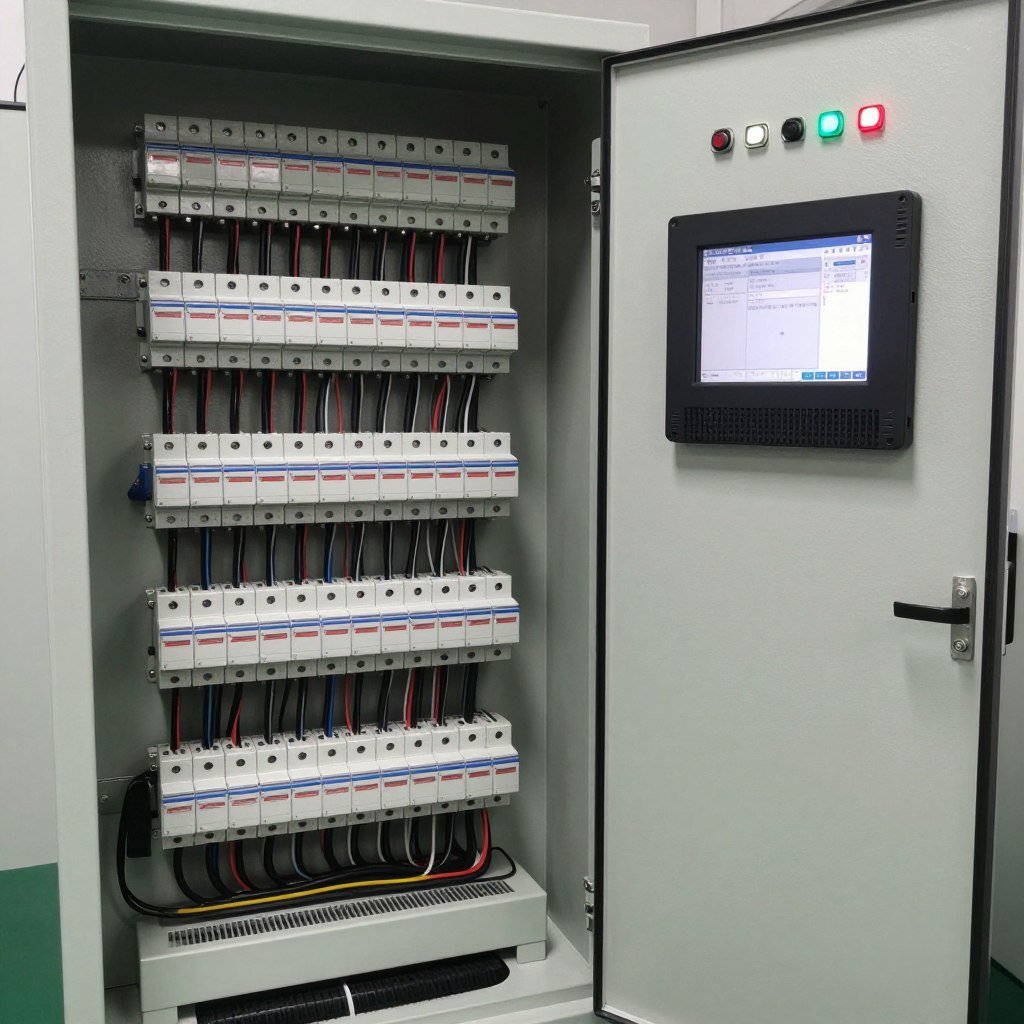
Programmable logic controllers coordinate equipment sequences and safety interlocks. Emergency stop circuits immediately halt all moving components. Overload sensors protect motors from damage during abnormal conditions.
Human-machine interfaces display real-time production data and alarm conditions. Password-protected settings prevent unauthorized parameter changes. Remote monitoring capabilities available for large installations.
Quality certifications verify manufacturing standards compliance. MAIKONG production facilities maintain ISO quality management systems and product safety documentation. Equipment undergoes factory testing before shipment to verify performance specifications.
Investment Costs and Return Analysis

Equipment purchase represents significant capital investment requiring thorough financial analysis. Understanding total ownership costs and revenue potential enables sound business decisions.
Initial Investment Components
Equipment Purchase Costs
Production line pricing varies based on capacity, automation level, and customization requirements. MAIKONG provides transparent pricing structures covering all system components.
Small-scale systems (200-500 kg/hour) typically range from ₱800,000 to ₱1,500,000. Medium capacity lines (1-3 tons/hour) cost ₱2,500,000 to ₱5,000,000. Large commercial installations (10+ tons/hour) require ₱8,000,000 to ₱25,000,000 investment.
These figures include complete production line equipment, standard electrical components, and basic installation materials. Custom features, additional automation, or specialized processing capabilities increase costs proportionally.
Additional Setup Expenses
- Shipping and Import: 8-12% of equipment cost (to Philippine ports)
- Installation Services: ₱150,000-₱800,000 (capacity dependent)
- Electrical Infrastructure: ₱100,000-₱500,000 (transformer, panels, wiring)
- Building Modifications: ₱200,000-₱1,200,000 (foundation, structural)
- Initial Raw Materials: ₱50,000-₱300,000 (testing and startup)
- Operator Training: Included in MAIKONG installation package
- Spare Parts Kit: ₱80,000-₱400,000 (recommended first-year inventory)
Operating Cost Considerations
Monthly operational expenses directly impact profitability. Accurate cost projections help operators set competitive pricing while maintaining healthy margins.
Fixed Monthly Costs
- Electrical power consumption (varies by production hours)
- Equipment loan or lease payments
- Operator salaries and benefits
- Facility rent or mortgage allocation
- Insurance premiums (equipment and liability)
- Maintenance labor (scheduled servicing)
Variable Production Costs
- Raw material purchases (largest expense component)
- Replacement parts and consumables
- Packaging materials (bags, labels, closures)
- Quality testing and analysis
- Transportation and delivery fuel
- Overtime labor during peak seasons
Revenue Optimization Factors
- Premium pricing for consistent quality pellets
- Reduced waste compared to manual methods
- Ability to produce specialty formulations
- Contract manufacturing opportunities
- Bulk discount purchasing of ingredients
- Multi-shift operation during high demand
Return on Investment Timeline
Most Philippine feed pellet plant operators achieve investment recovery within 18-36 months under normal market conditions. Actual timeframes depend on production volume, pricing strategies, and operational efficiency.
Commercial feed producers typically realize faster returns through economies of scale. A 3-ton per hour facility producing 18 tons daily (6-hour operation) generates substantial revenue. At ₱18-25 per kilogram selling price, daily revenue reaches ₱324,000-450,000.
Smaller farm operations benefit from reduced feed purchasing costs rather than direct sales revenue. A 500kg/hour system producing feed at ₱12-15 per kilogram (versus ₱22-28 commercial purchase price) creates ₱5,000-8,000 daily savings on 500kg consumption.
The poultry feed production line configurations popular among Philippine chicken farmers show particularly strong returns. Broiler operations consuming 2-3 tons daily reduce feed costs by 30-40% through in-house production.
Sample ROI Calculation: Medium Farm
Initial Investment: ₱3,200,000 (1-ton/hour complete line)
Monthly Production: 24 tons (800kg/day × 30 days)
Cost Savings vs. Purchasing: ₱10/kg × 24,000kg = ₱240,000/month
Monthly Operating Costs: ₱85,000 (power, labor, parts, materials)
Net Monthly Benefit: ₱155,000
Payback Period: 21 months
Request Detailed ROI Analysis for Your Operation
MAIKONG financial specialists prepare customized investment analyses based on your specific production requirements, local ingredient costs, and market conditions. Receive comprehensive projections including break-even timeline, cash flow forecasts, and sensitivity analysis.
Why Choose MAIKONG for Your Feed Pellet Production Line
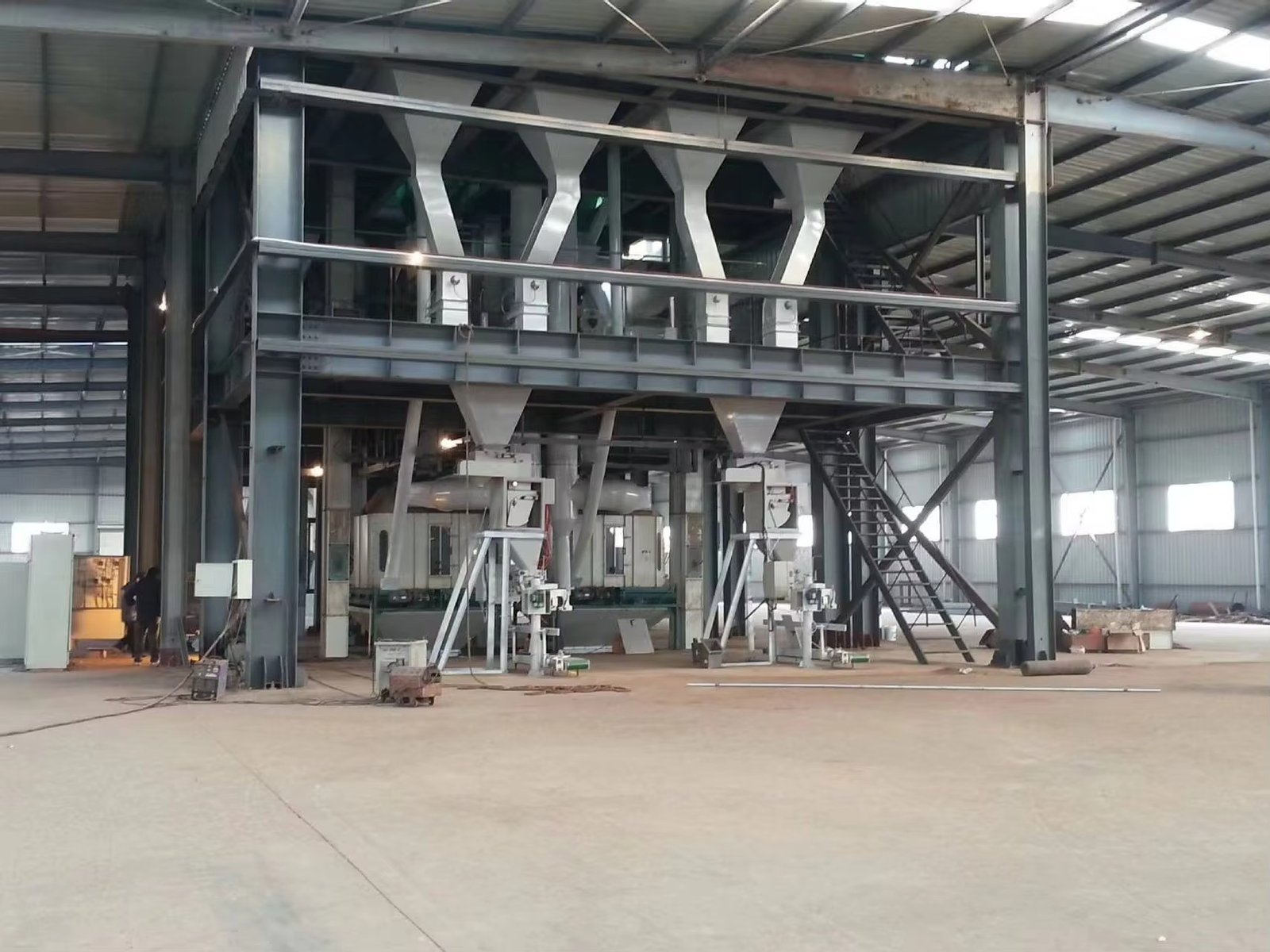
Equipment supplier selection significantly impacts long-term success and operational satisfaction. MAIKONG brings over two decades of specialized manufacturing experience to the Philippine agricultural market.
Manufacturing Excellence and Industry Experience
Since establishing operations 22 years ago, MAIKONG has focused exclusively on feed production equipment development and manufacturing. This specialized concentration enables continuous improvement in equipment design, manufacturing processes, and customer support systems.
Our GD Province, SZ City facilities employ over 200 skilled technicians and engineers. Modern CNC machining centers ensure precise component manufacturing. Assembly teams follow standardized procedures verified through quality checkpoints at each production stage.
Research and development investments drive ongoing innovation. Recent advancements include energy-efficient drive systems reducing power consumption by 15-20%, automated lubrication systems extending maintenance intervals, and enhanced die designs improving pellet quality and production rates.
MAIKONG Global Presence
- Production lines installed in 130+ countries worldwide
- Technical support teams in major agricultural regions
- Multilingual customer service (English, Mandarin, Tagalog, Spanish)
- Regional spare parts warehouses for rapid delivery
- Continuous equipment monitoring and optimization programs
- Partnership network with local distributors and service centers
Philippine Market Focus: MAIKONG actively seeks dealer and distributor partnerships throughout the Philippines. Authorized partners receive exclusive territory rights, technical training, marketing support, and preferential pricing structures.
Comprehensive Support Services
Equipment purchase represents the beginning of a long-term partnership. MAIKONG provides complete support throughout equipment ownership lifecycle.
Pre-Purchase Consultation

Free technical consultations help customers identify optimal equipment configurations. Our specialists evaluate production requirements, facility constraints, budget parameters, and expansion plans.
Detailed proposals include equipment specifications, layout drawings, utility requirements, investment costs, and projected performance. Customers receive multiple configuration options with comparative analysis.
Installation and Commissioning
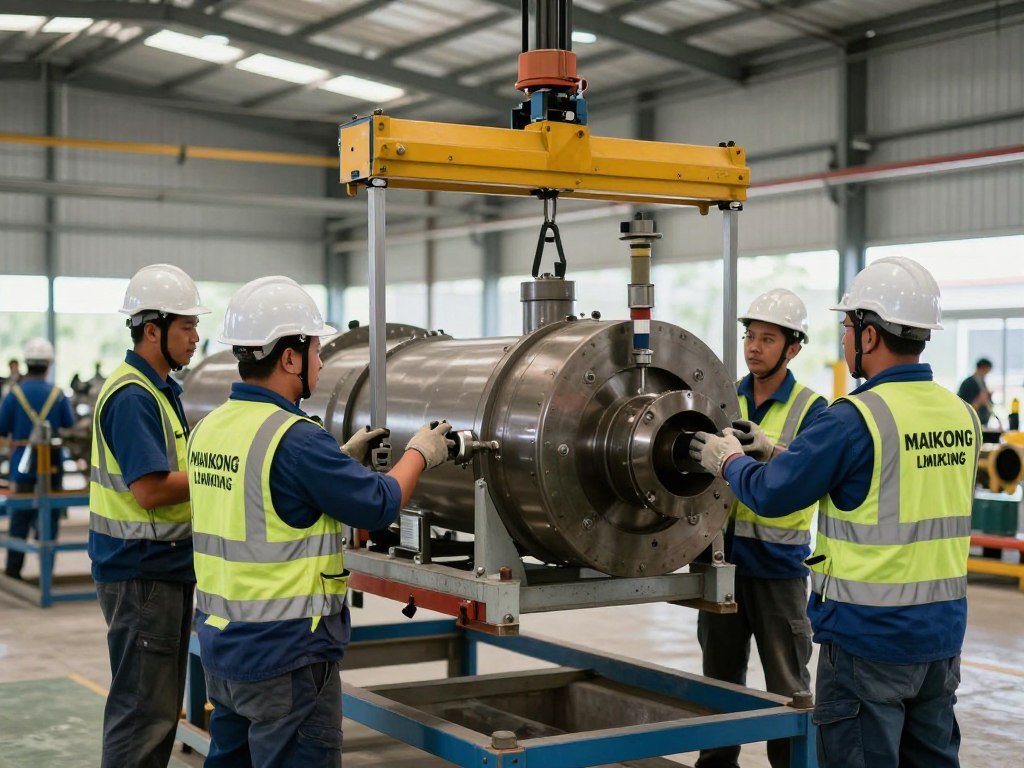
Experienced installation teams travel to customer facilities for equipment setup. Complete commissioning includes mechanical assembly, electrical connections, control system programming, and performance verification.
Operator training programs ensure staff understand equipment operation, safety procedures, routine maintenance, and basic troubleshooting. Training continues until operators demonstrate full competency.
Ongoing Technical Support

24/7 technical support hotline connects customers with experienced troubleshooting specialists. Remote diagnostic capabilities often resolve issues without site visits.
Preventive maintenance programs schedule routine inspections and component replacements. Annual equipment reviews identify optimization opportunities and recommend upgrades or modifications.
Customization and OEM/ODM Capabilities
Standard production lines serve many applications well, but specialized requirements benefit from custom engineering. MAIKONG design teams develop tailored solutions addressing unique operational challenges.
Common Customization Requests
- Modified equipment dimensions fitting existing buildings
- Specialized ingredient handling for unique local materials
- Enhanced automation reducing labor requirements
- Multi-formula capability switching between feed types
- Integrated quality testing equipment and sampling systems
- Remote monitoring and production data collection
- Custom voltage and frequency specifications
- Corrosion-resistant materials for coastal locations
- Dust suppression systems for urban installations
- Noise reduction modifications for residential proximity
OEM/ODM Partnership Opportunities
Agricultural equipment distributors, feed companies, and farming cooperatives partner with MAIKONG for private-label manufacturing. Our OEM/ODM programs enable partners to market equipment under their own brands while leveraging our manufacturing expertise.
Partnership benefits include customized equipment specifications, partner branding and colors, exclusive territory agreements, co-development of specialized features, marketing material support, and technical training for partner staff.
Philippine entrepreneurs interested in feed equipment distribution find MAIKONG partnership programs particularly attractive. We provide complete business development support including market analysis, pricing strategies, and promotional campaigns.
Become a MAIKONG Authorized Dealer in Your Region
MAIKONG actively recruits qualified dealers and distributors throughout the Philippines. Authorized partners receive exclusive territory rights, comprehensive technical training, marketing support materials, preferential wholesale pricing, and ongoing business development assistance. Join our growing network of successful agricultural equipment specialists serving Philippine farming communities.
Global Success Stories: Feed Pellet Production Line Installations
Real-world installations demonstrate equipment capabilities and performance across diverse operational environments. MAIKONG production lines serve customers on every continent, adapting to regional conditions and requirements.
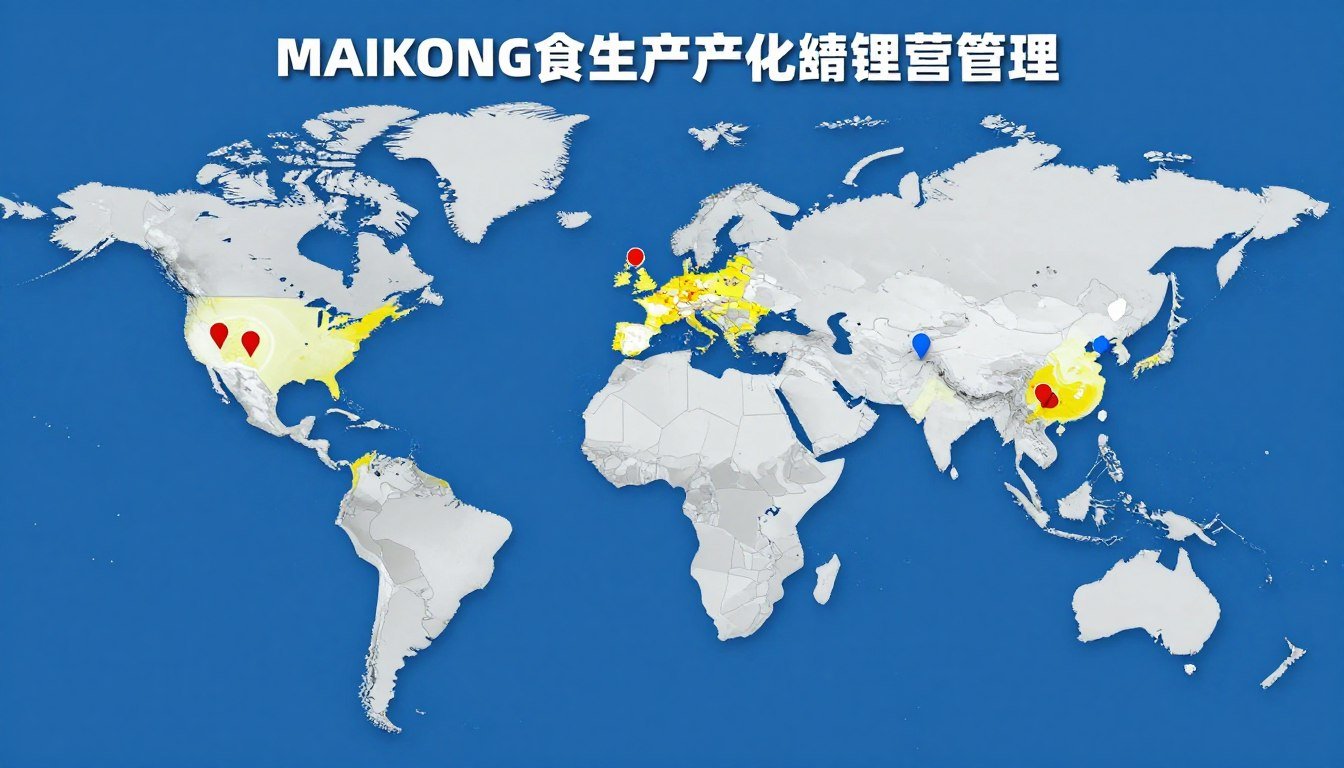
Asian Market Installations
Philippine Broiler Farm Network
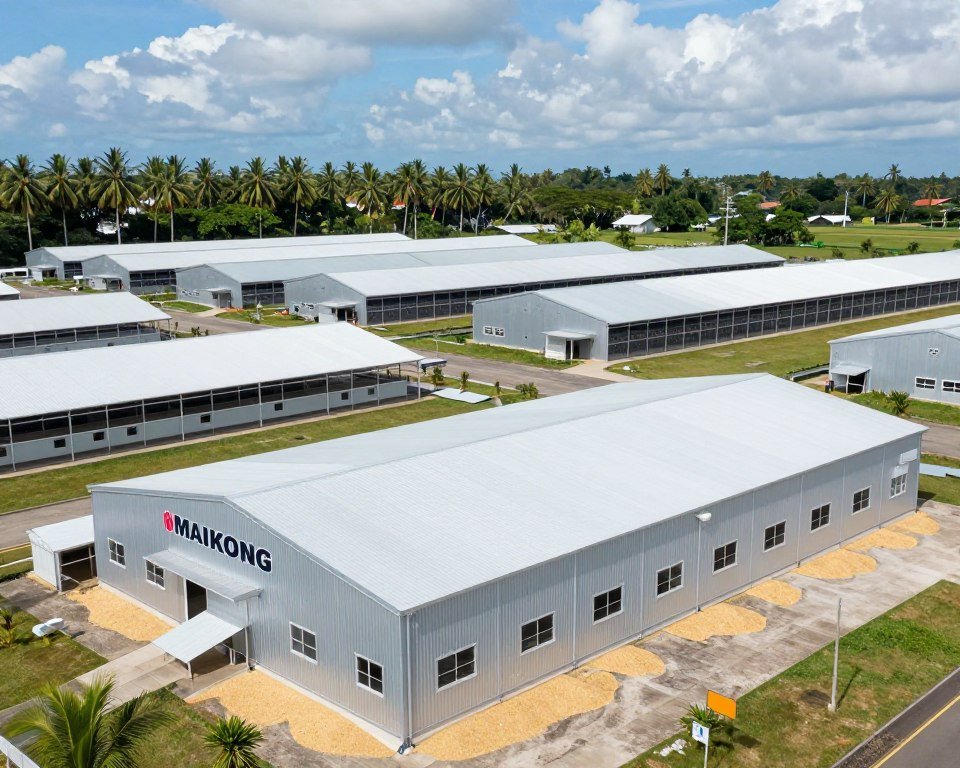
Location: Batangas Province, Luzon
Capacity: 3 tons/hour chicken feed production line
Application: Integrated broiler operation with 150,000 bird capacity
This installation produces complete starter, grower, and finisher formulations. The operation reduced feed costs by 35% compared to purchasing commercial feeds. Equipment operates two shifts daily, producing 36 tons supporting the entire farm plus contract production for neighboring smaller farms.
The operator particularly values MAIKONG’s local technical support availability and rapid spare parts delivery to Manila port facilities.
Vietnamese Aquaculture Cooperative
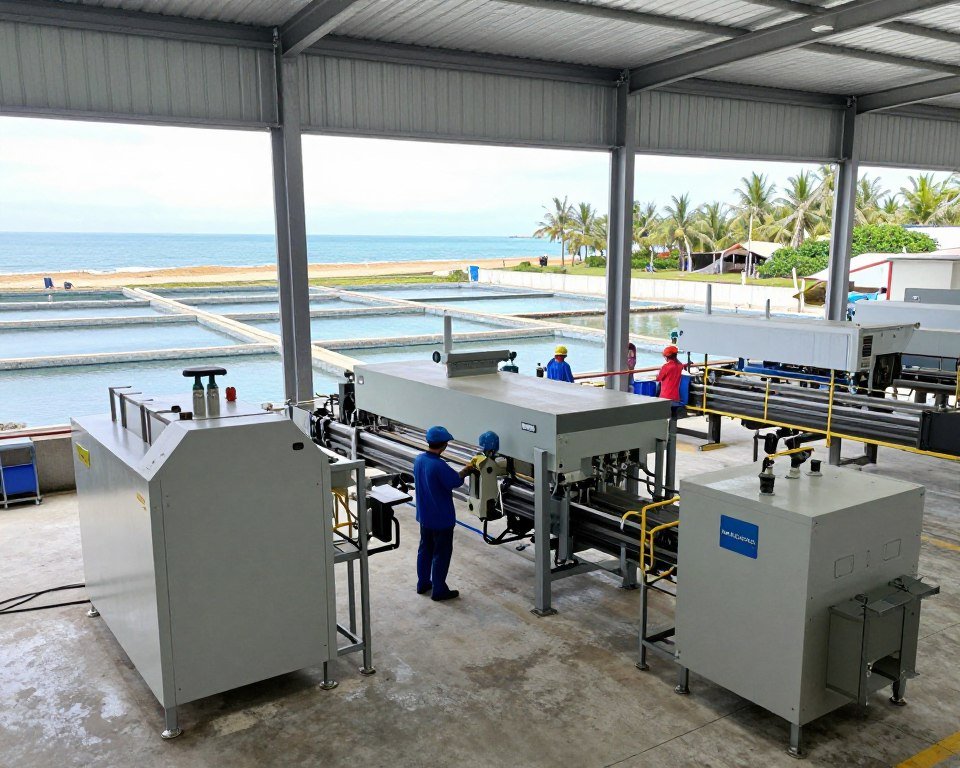
Location: Mekong Delta Region
Capacity: 5 tons/hour fish feed production line
Application: Pangasius and tilapia farming cooperative serving 200+ members
Specialized floating and sinking pellet capabilities serve diverse species requirements. Water stability specifications meet export market quality standards. The cooperative achieves 40% cost reduction versus commercial aqua feeds while maintaining superior nutritional profiles.
Custom formulations developed with MAIKONG technical team support optimized growth rates and feed conversion ratios.
European and Middle Eastern Projects
Polish Commercial Feed Mill
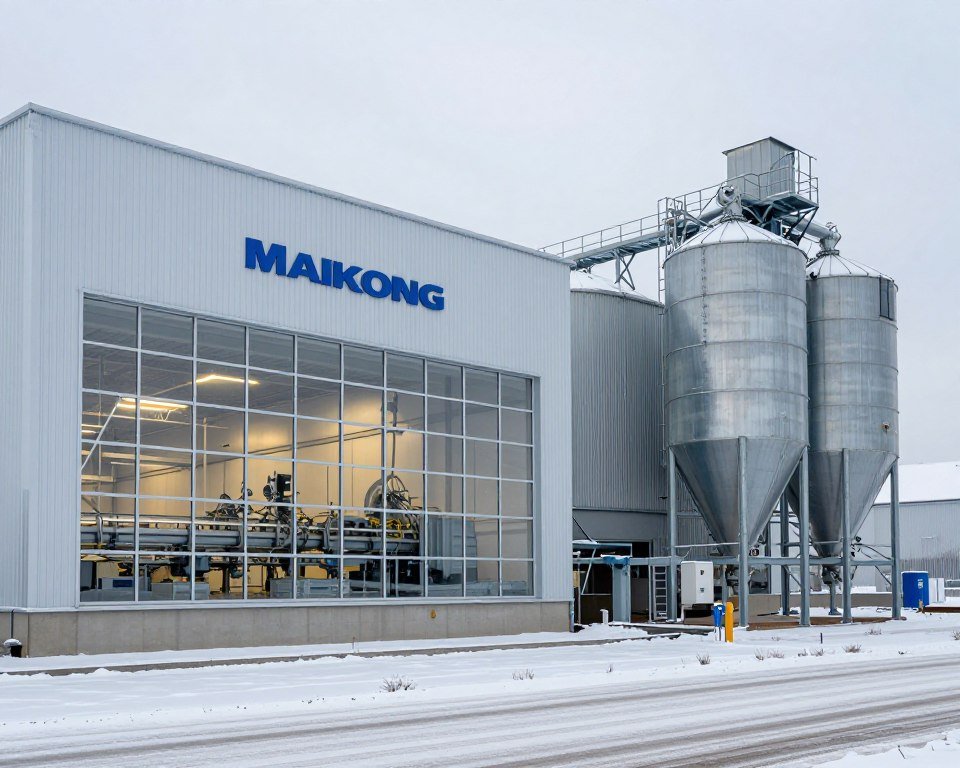
Location: Wielkopolska Region
Capacity: 15 tons/hour multi-species production line
Application: Commercial feed manufacturer serving dairy, swine, and poultry sectors
This fully automated installation operates three shifts producing premium feeds meeting EU quality regulations. Advanced process control maintains precise nutritional specifications batch-to-batch.
Remote monitoring capabilities enable production optimization from central office. Equipment reliability exceeds 98% uptime across three years of continuous operation.
Saudi Arabian Camel and Sheep Operation
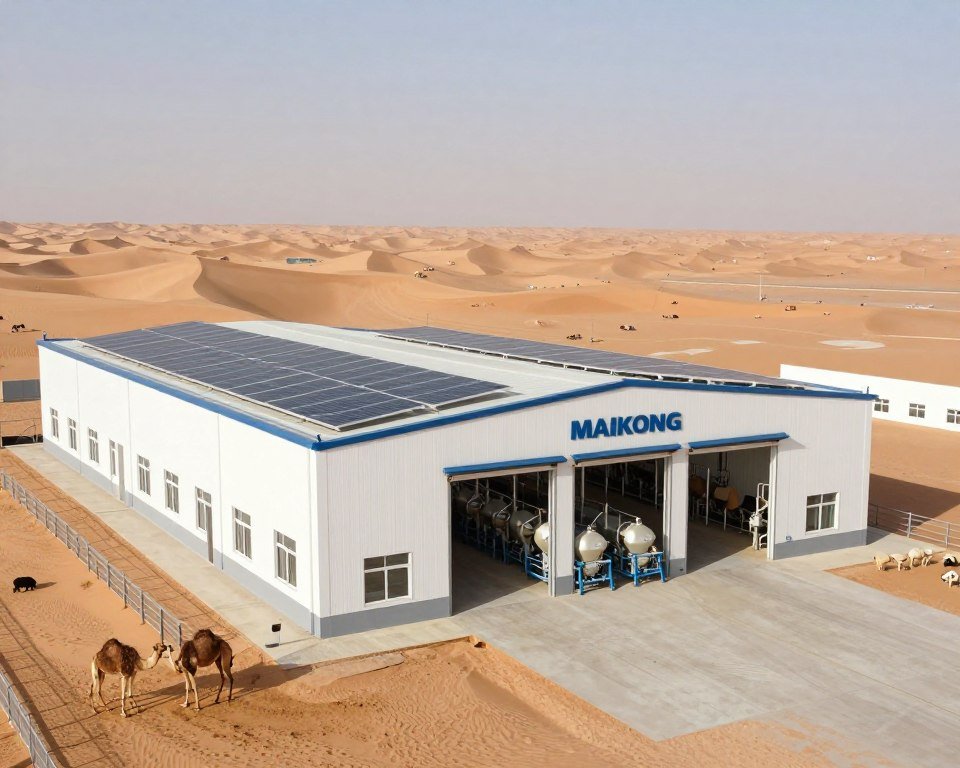
Location: Riyadh Province
Capacity: 2 tons/hour specialized ruminant line
Application: Traditional livestock operation modernizing feed production
Equipment modifications address extreme temperature conditions (40-50°C ambient). Enhanced cooling systems and dust protection ensure reliable operation in challenging desert environment.
Custom formulations incorporate date palm by-products and local forage materials. The operation successfully transitions from imported commercial feeds to in-house production.
Americas and African Installations
Brazilian Cattle Ranch
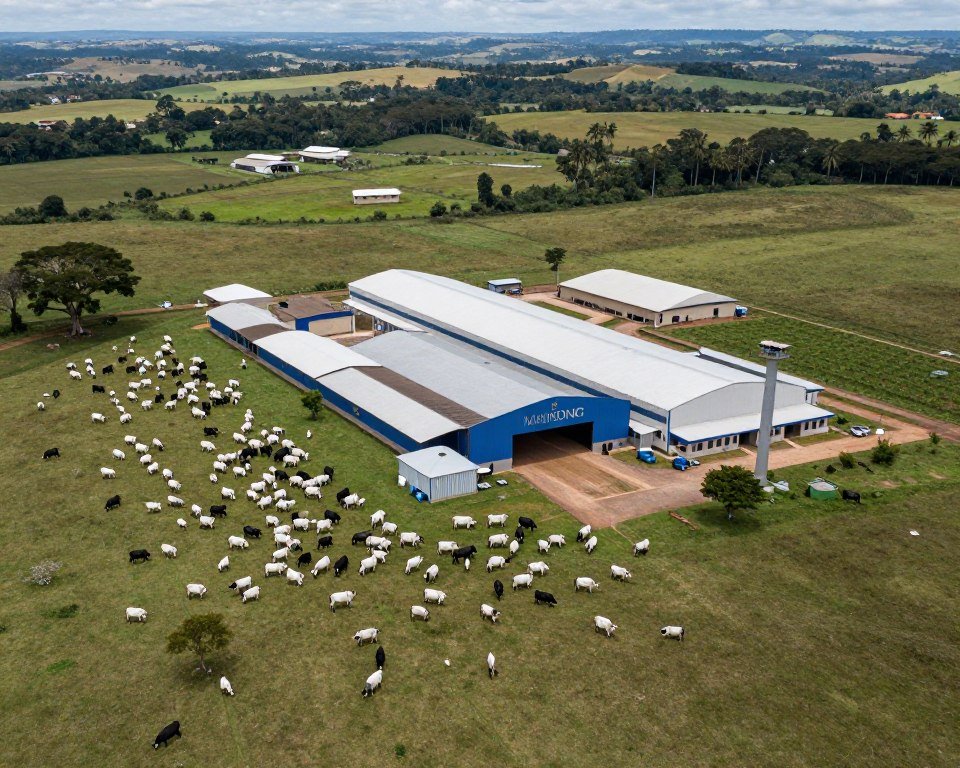
Location: Mato Grosso State
Capacity: 8 tons/hour cattle feed pellet production line
Application: 50,000 head beef cattle operation with feedlot finishing
High-capacity production supports intensive finishing program. Equipment processes local ingredients including soybean hulls, corn silage by-products, and sugarcane bagasse.
Pelletization improves handling efficiency and reduces waste in large-scale feeding operations. Investment recovered within 14 months through feed cost reduction.
Kenyan Poultry Integration
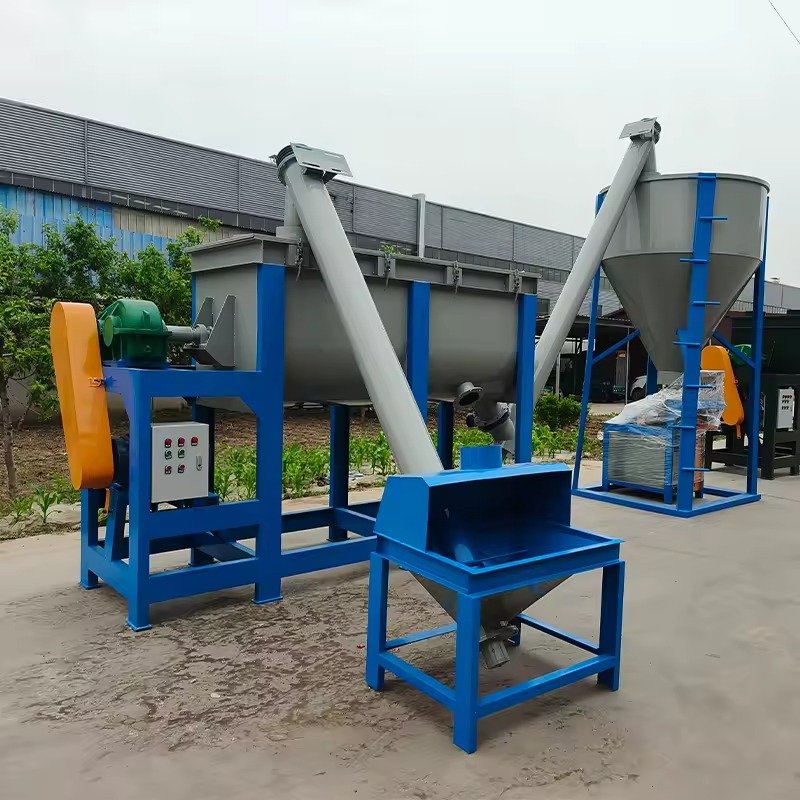
Location: Rift Valley Region
Capacity: 4 tons/hour layer and broiler feed facility
Application: Vertically integrated poultry company supplying eggs and meat to Nairobi market
Equipment enables quality control throughout production chain from feed to finished products. Consistent pellet quality improves bird performance metrics and reduces mortality rates.
MAIKONG provided extensive operator training supporting local employment development. Equipment reliability proves critical in region with limited technical service availability.
These diverse installations demonstrate MAIKONG equipment adaptability across climates, applications, and operational scales. Success stories share common themes: significant cost reduction, improved product quality, operational reliability, and responsive technical support.
Philippine farm operators find particular relevance in Asian case studies reflecting similar climate conditions, ingredient availability, and operational challenges. MAIKONG actively develops Philippine-specific reference installations to support local market growth.
Frequently Asked Questions About Feed Pellet Production Lines
What production capacity do I need for my farm operation?
Capacity requirements depend on daily feed consumption and desired production schedule. Calculate total daily feed needs across all animal groups, then add 20-30% buffer for growth, waste, and potential commercial sales.
For example, a farm consuming 2,000 kg daily feed should consider a 1-ton per hour line operating 3-4 hours daily. This provides production flexibility and allows maintenance time without disrupting feed availability.
MAIKONG technical consultants perform detailed capacity analysis considering your specific livestock numbers, feeding programs, and operational preferences. Contact us for a customized recommendation.
How difficult is it to operate a feed pellet production line?
Modern production lines feature intuitive controls and automated processes requiring minimal specialized knowledge. Most operators achieve competency within 2-3 weeks of training.
MAIKONG provides comprehensive operator training covering startup procedures, routine adjustments, quality monitoring, and basic maintenance. Training continues until your staff demonstrates confident, safe equipment operation.
Routine operation involves ingredient preparation, equipment startup, production monitoring, quality checks, and shutdown procedures. Experienced operators typically manage lines independently after the initial training period.
What maintenance does a production line require?
Regular maintenance includes daily cleaning, weekly lubrication, monthly inspections, and periodic parts replacement. Detailed maintenance schedules accompany equipment delivery.
Daily tasks take 30-60 minutes and include removing product residue, checking belt tensions, and visual component inspection. Weekly lubrication requires 1-2 hours. Monthly detailed inspections examine wear components and electrical connections.
Major components like pellet dies and hammer mill screens require replacement after 1,000-1,500 operating hours depending on materials processed. MAIKONG provides maintenance training and stocks all replacement parts for rapid availability.
Can one production line make different types of feed?
Yes, production lines accommodate multiple formulations through die changes and parameter adjustments. Most customers regularly switch between 2-4 different feed types.
Changing from poultry to livestock feed requires die replacement (15-30 minutes) and thorough cleaning between batches to prevent cross-contamination. Formula changes using the same pellet size require only ingredient adjustment without die changes.
The animal feed production line configurations include die sets for common pellet sizes. Additional dies for specialized applications are available as accessories.
How long does installation take and what preparation is needed?
Installation timeframe depends on production line capacity and facility readiness. Small systems (under 1 ton/hour) typically complete in 5-7 days. Medium capacity lines require 10-14 days. Large installations may need 30-45 days.
Pre-installation preparation includes completing building construction, installing electrical service with proper capacity and voltage, constructing equipment foundations per provided specifications, and ensuring material handling access for equipment delivery.
MAIKONG provides detailed installation requirement documents during the planning phase. Our team coordinates with your contractors to ensure proper preparation before equipment arrival.
What about spare parts availability in the Philippines?
MAIKONG maintains spare parts inventory relationships throughout Asia ensuring rapid delivery to Philippine locations. Common wear items typically arrive within 5-7 days from order placement.
We recommend maintaining on-site spare parts inventory for critical components like pellet dies, hammer mill screens, and drive belts. Initial spare parts kits can be included with equipment purchase.
Philippine dealer partnerships will further improve parts availability and technical support responsiveness. We actively seek qualified distributors to serve local markets effectively.
What warranty and after-sales support does MAIKONG provide?
Standard equipment warranty covers 12 months from commissioning date or 18 months from shipment (whichever occurs first). Warranty includes parts replacement for manufacturing defects and technical support for operational issues.
After-sales support continues throughout equipment ownership. Technical hotline connects customers with experienced troubleshooting specialists 24/7. Remote diagnostic capabilities often resolve issues without site visits.
Extended warranty programs and comprehensive maintenance contracts are available for customers preferring complete support packages. Contact our service department for custom support arrangements.
Can I visit an operating installation before purchasing?
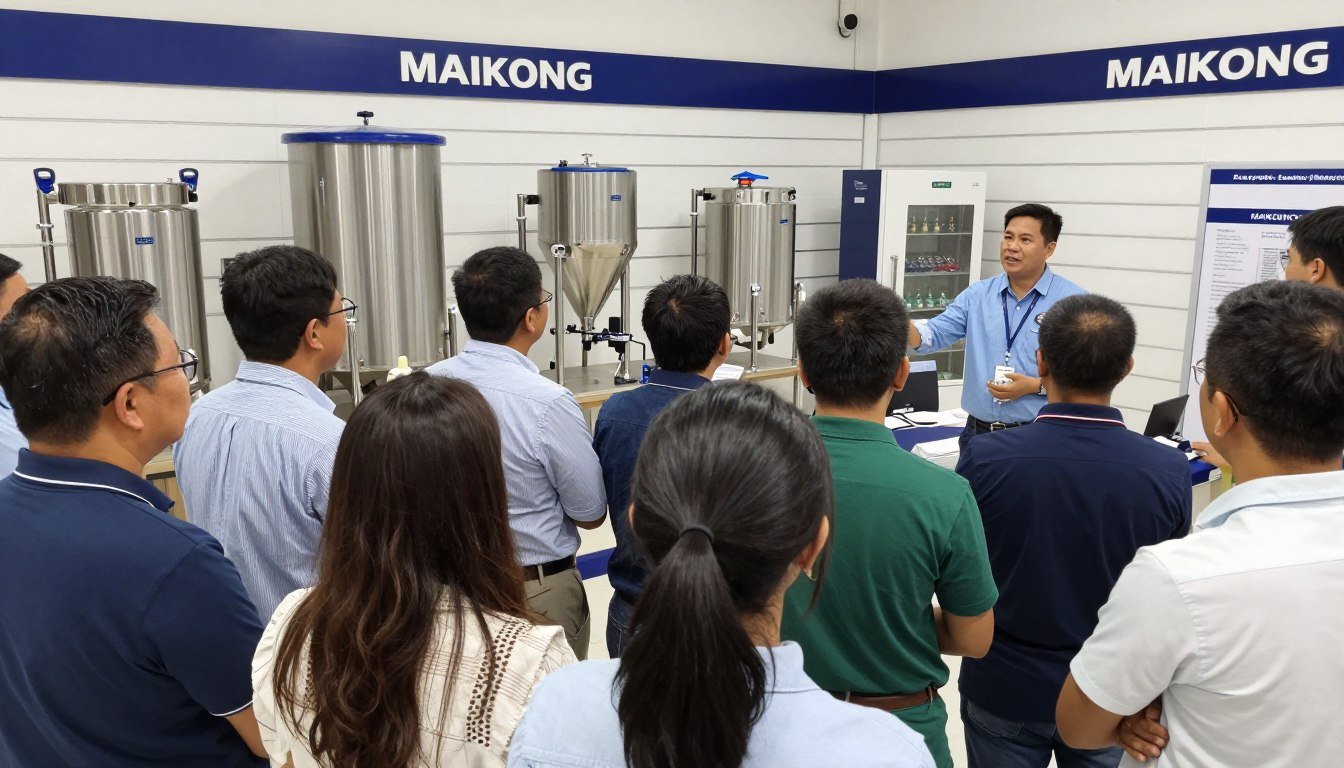
Yes, MAIKONG facilitates customer visits to reference installations when geography permits. We maintain relationships with customers willing to host prospective buyers for equipment demonstrations.
Virtual facility tours via video conference are available for international prospects unable to travel. These sessions include live equipment operation, product quality demonstration, and operator interviews discussing their experience.
Philippine customers interested in site visits to regional installations can contact us to arrange appropriate facility access. Seeing equipment in actual production environments provides valuable decision-making insight.
Have More Questions About Feed Pellet Production?
Our technical specialists provide personalized consultations addressing your specific operational questions, facility requirements, and equipment selection criteria. Schedule a free consultation to discuss your feed production goals and explore optimal solutions for your farm or business.
Taking the Next Step in Feed Production Excellence
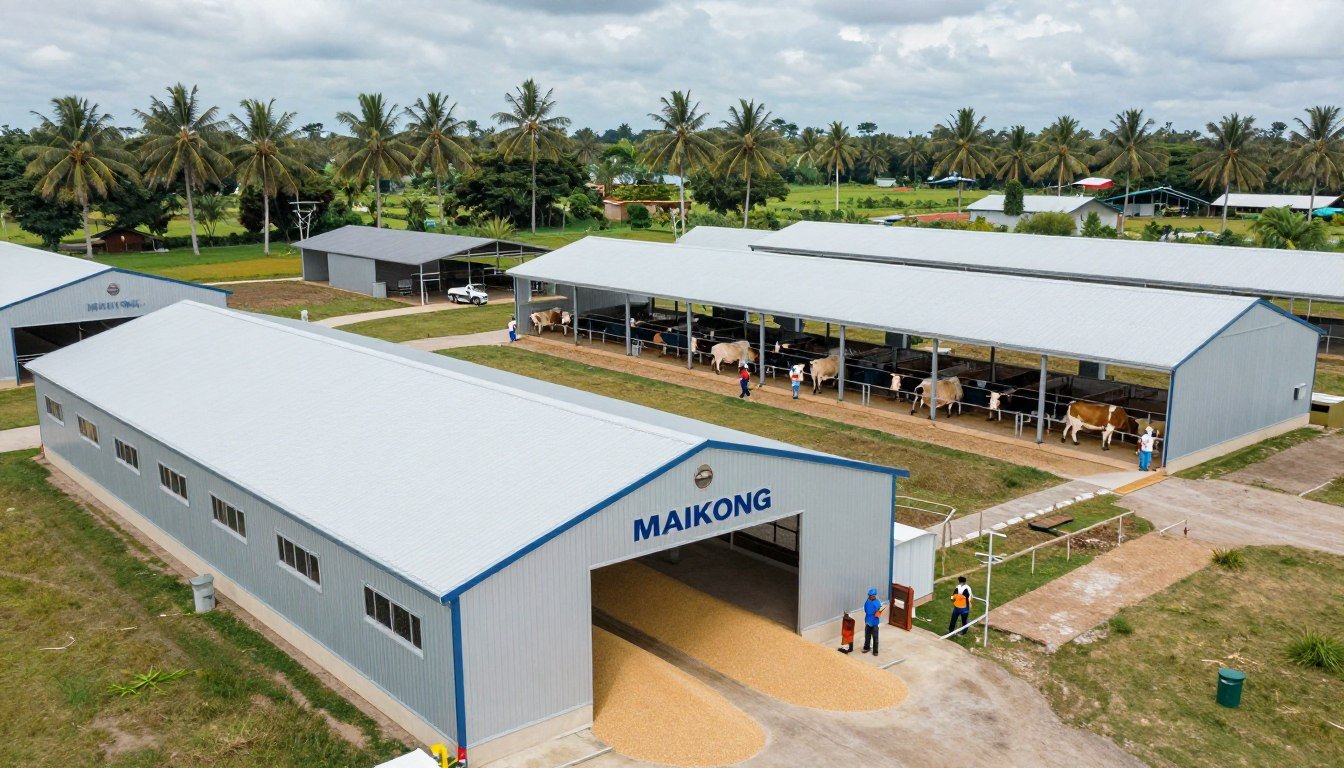
Selecting the right feed pellet production line represents a significant business decision with long-term operational and financial implications. Thorough evaluation of production requirements, technical specifications, supplier capabilities, and support services leads to successful outcomes.
Philippine agricultural operators face unique challenges including tropical climate conditions, diverse livestock production systems, local ingredient availability, and infrastructure considerations. Equipment must adapt to these specific circumstances while delivering reliable performance and economic returns.
MAIKONG brings 22 years of manufacturing specialization to these challenges. Our production lines serve farms and feed mills across 130+ countries, demonstrating adaptability across diverse operational environments. Philippine-specific customizations address voltage standards, climate conditions, and local ingredient processing requirements.
Your Path Forward
Beginning your feed pellet production journey involves several logical steps. First, accurately assess your current and projected feed requirements. Calculate production capacity needs accounting for growth and market opportunities.
Second, evaluate your facility capabilities and infrastructure. Determine available space, electrical capacity, structural support, and material handling access. Identify any necessary improvements before equipment installation.
Third, develop detailed financial projections. Calculate total investment costs, ongoing operational expenses, and expected returns. Consider both direct revenue from feed sales and cost savings from in-house production versus purchasing.
Fourth, engage with qualified equipment suppliers. Request detailed proposals, compare specifications and pricing, verify support capabilities, and check customer references. Visit operating installations when possible.
Finally, plan implementation carefully. Coordinate facility preparation, equipment delivery, installation scheduling, and operator training. Ensure adequate startup inventory of ingredients and spare parts.
MAIKONG Partnership Opportunities
Beyond equipment sales, MAIKONG actively develops Philippine market presence through dealer and distributor partnerships. Qualified partners receive comprehensive business development support.
Partnership benefits include exclusive territory rights, preferential wholesale pricing, technical training programs, marketing material support, co-op advertising opportunities, and ongoing business consultation.
Ideal partners possess agricultural industry knowledge, established customer relationships, technical service capabilities, and entrepreneurial drive. Previous equipment distribution experience is valuable but not required.
Philippine entrepreneurs recognize growing demand for affordable, reliable feed production equipment. MAIKONG partnership provides proven products, manufacturing expertise, and global support infrastructure enabling successful local businesses.
Ready to Start Your Feed Production Success Story?
Contact MAIKONG today for:
- Free production capacity analysis and equipment recommendations
- Detailed technical specifications and pricing quotations
- Custom facility layout design and installation planning
- Financial projections and ROI analysis for your operation
- Information about dealer and distributor partnerships
Start Your Feed Pellet Production Journey with MAIKONG
Whether you’re expanding an existing farm operation, starting a commercial feed business, or exploring distribution opportunities, MAIKONG provides the equipment, expertise, and support for your success. Our Philippine-focused team understands local market conditions and delivers solutions matching your specific needs. Contact us today to discuss how MAIKONG can support your agricultural goals.
Direct Contact Information:
Phone/WhatsApp: 8613-51090-74-01
Email: Lucy@pelletmachine.ph
Website: https://pelletmachine.ph/
About MAIKONG: Learn more about our company
MAIKONG stands ready to partner with Philippine agricultural professionals building sustainable, profitable feed production operations. Our proven equipment, comprehensive support, and commitment to customer success create the foundation for long-term productive relationships.
Join hundreds of satisfied customers across Asia and around the world who trust MAIKONG for their feed pellet production line requirements. Experience the difference that 22 years of specialized manufacturing expertise makes in equipment quality, performance, and reliability.