
This comprehensive guide examines both floating fish feed production line and sinking fish feed production line technologies, helping Philippine aquaculture businesses make informed equipment investments. MAIKONG, with 22 years of manufacturing experience, has supplied customized solutions across Asia, delivering systems from 200KG to 200-ton hourly capacity.
Fish Feed Production Line Technology
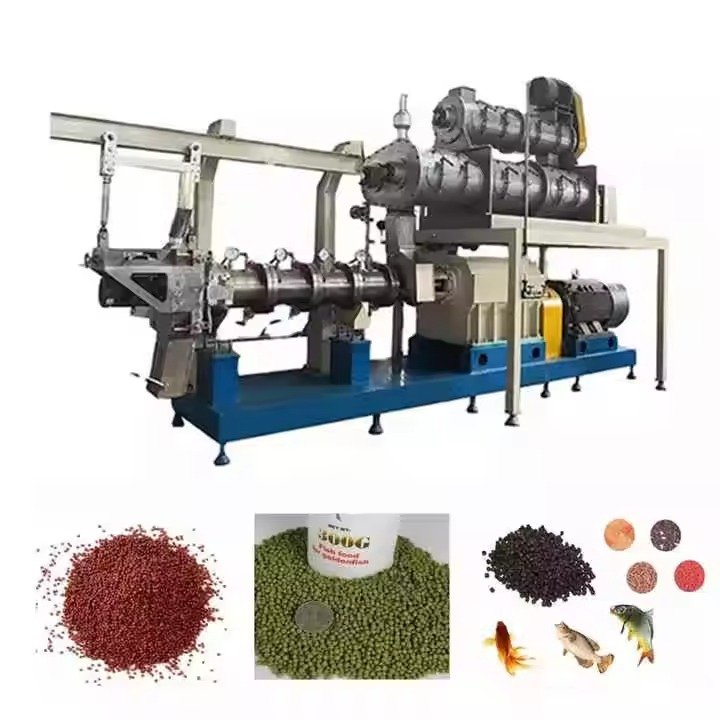
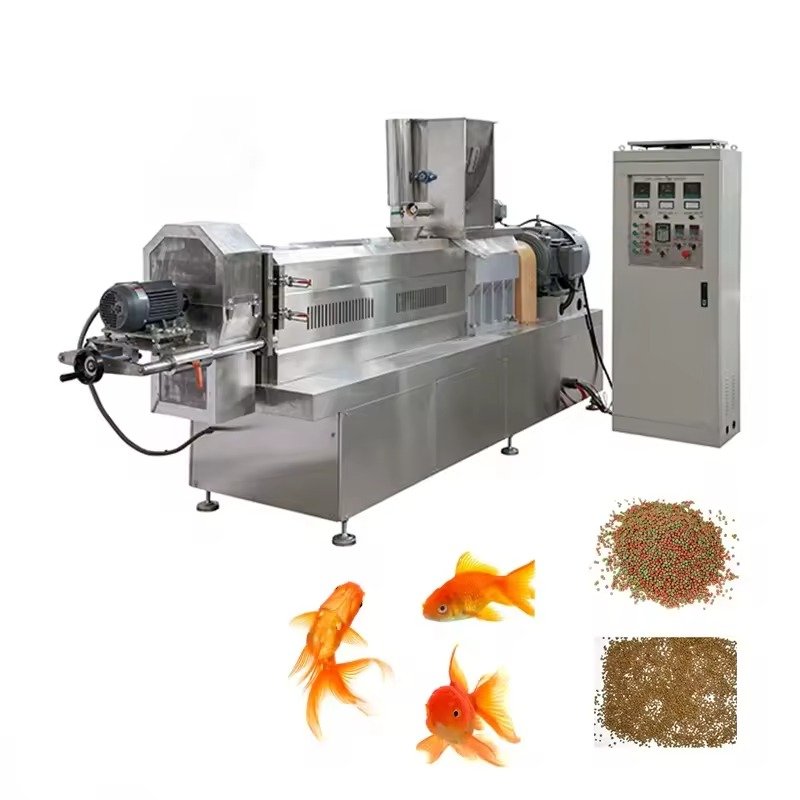
A complete fish feed production line integrates multiple processing stages to transform raw ingredients into nutritionally balanced pellets. The system includes crushers, mixers, pellet machines, dryers, coolers, and packaging equipment working in coordinated sequence.
Philippine fish farmers face unique challenges requiring customized solutions. Water temperatures, fish species diversity, farm scale variations, and local ingredient availability all influence equipment selection. MAIKONG designs production lines specifically addressing these regional requirements.
Core Components of Complete Production Systems
Pre-Processing Equipment
- Raw material receiving and storage silos
- Cleaning systems removing impurities and contaminants
- Hammer mills for ingredient size reduction
- Batch weighing systems ensuring formula accuracy
- Mixing equipment achieving homogeneous blends
Pelletizing and Finishing Equipment
- Conditioning chambers preparing materials for extrusion
- Pellet machines forming feed shapes and densities
- Drying systems reducing moisture content
- Counter flow coolers stabilizing pellet temperature
- Screening equipment separating finished products
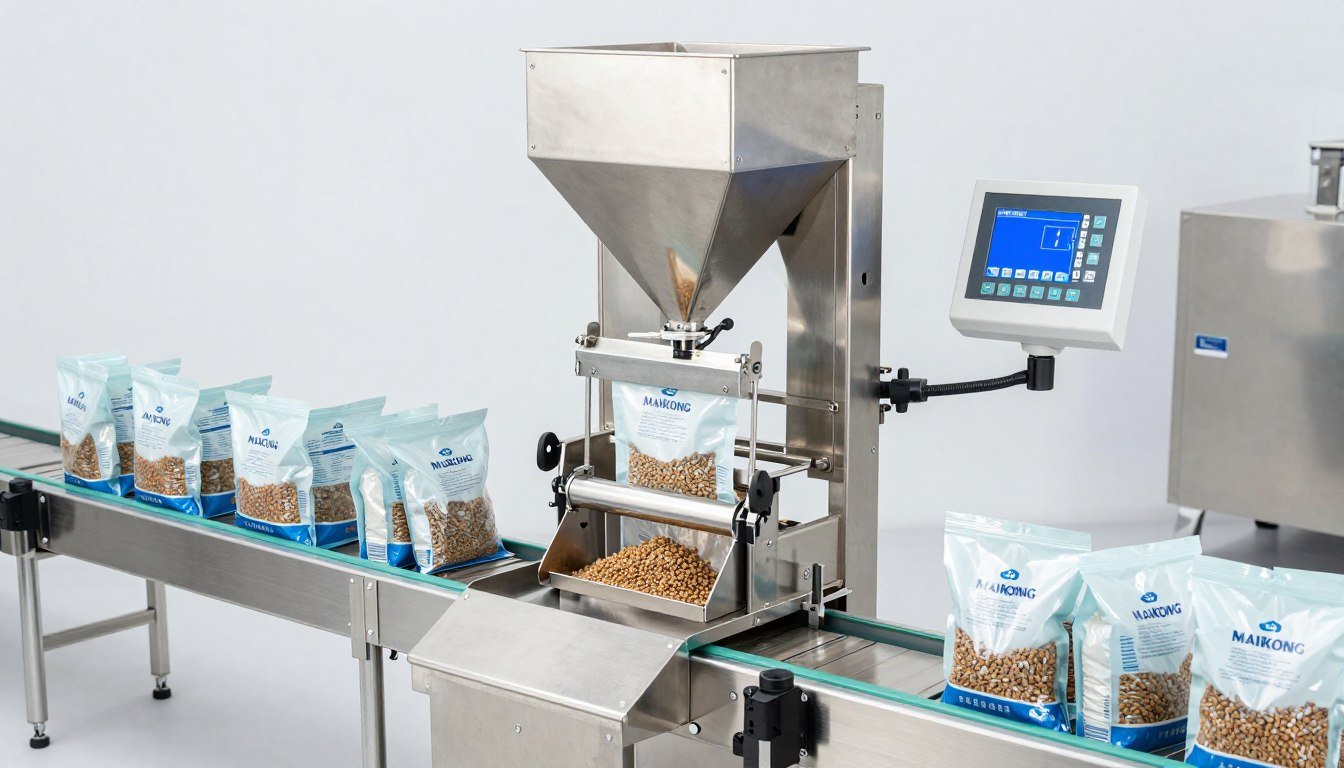
- Automated packing machines for bagging and sealing
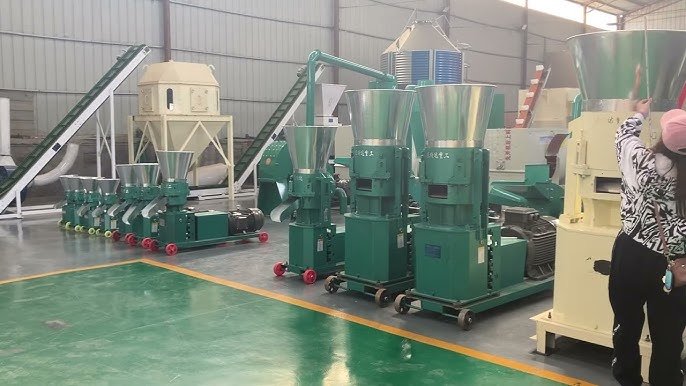
Floating Fish Feed Production Line: Technology and Applications
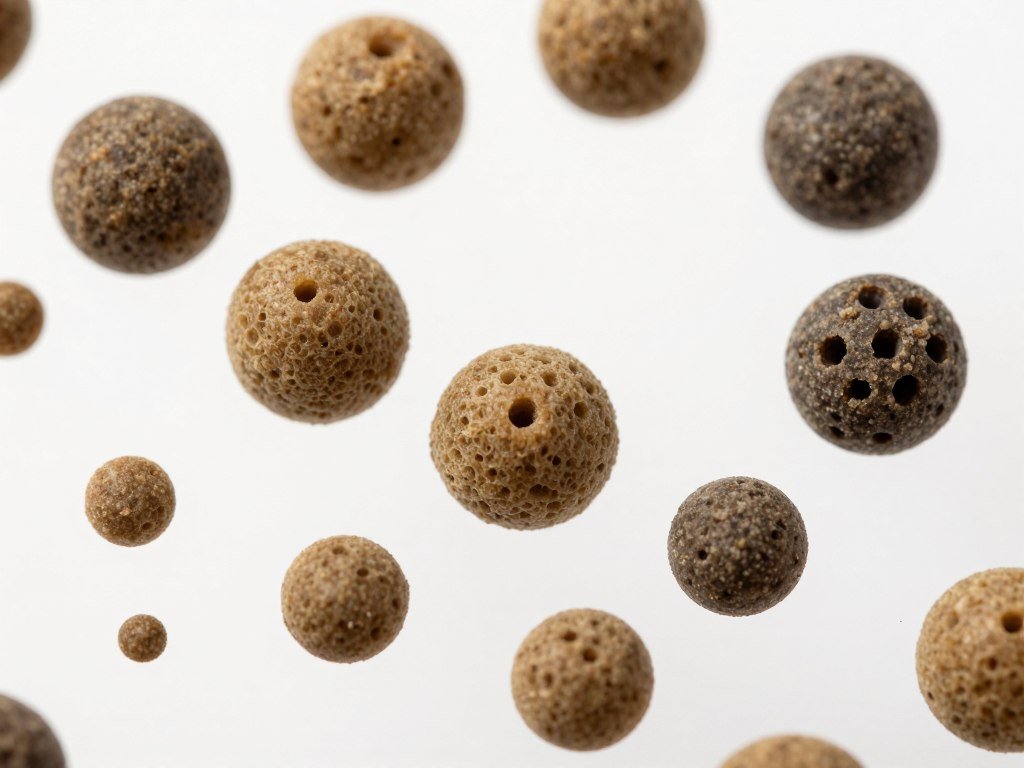
Floating feed production utilizes high-temperature extrusion cooking technology. Raw materials pass through conditioning chambers where steam injection raises temperature to 90-120°C. The mixture then enters twin-screw or single-screw extruders where mechanical pressure and heat gelatinize starches, creating expanded pellets with reduced density.
This floating fish feed production line process produces pellets that remain buoyant for extended periods, typically 12-24 hours in water. The floating characteristic allows farmers to monitor feeding behavior, adjust ration sizes, and reduce waste from uneaten feed settling into pond bottoms.
Floating Feed Production Process Stages
- Ingredient grinding reduces particle size to 60-80 mesh fineness
- Batch weighing systems measure components according to formulation
- Intensive mixing creates homogeneous powder blends
- Steam conditioning raises mixture temperature to 80-95°C
- Extrusion cooking expands materials through pressure and heat
- Cutting systems form pellets to specified diameters
- Multi-layer dryers reduce moisture from 25% to 10-12%
- Coating systems apply oil and vitamin supplements
- Cooling equipment brings pellets to ambient temperature
- Screening separates products by size classification
Need Expert Guidance on Floating Feed Systems?
Our technical team helps Philippine aquaculture businesses select optimal floating fish feed production line configurations. Get customized recommendations for your species, scale, and budget requirements.
Ideal Applications for Floating Feed
Surface-feeding fish species benefit most from floating pellets. Tilapia, catfish, carp, milkfish (bangus), and ornamental fish naturally feed at water surface levels. Floating feed allows farmers to observe consumption rates, adjust feeding schedules, and prevent overfeeding waste.
Intensive cage culture operations particularly benefit from floating feed. Limited space requires precise feeding control. Floating pellets prevent feed loss through cage mesh and enable visual monitoring of fish health and appetite.
- Tilapia farming operations (Nile and red varieties)
- Catfish production systems
- Milkfish (bangus) cage and pond culture
- Carp polyculture systems
- Ornamental fish breeding facilities
- Intensive recirculating aquaculture systems
- Cage culture in lakes and reservoirs
Sinking Fish Feed Production Line: Technology and Applications
Sinking feed production employs lower-temperature pelleting technology compared to floating systems. Raw materials undergo grinding, mixing, and conditioning before entering ring-die or flat-die pellet mills operating at 65-85°C. The compression process creates dense pellets without significant expansion.
This sinking fish feed production line produces pellets with specific gravity greater than water, causing them to sink rapidly. Bottom-feeding fish species and shrimp require this feed characteristic for natural consumption behavior.
Sinking Feed Production Process Stages
- Raw material reception and quality inspection
- Cleaning and magnetic separation removing foreign materials
- Grinding reduces ingredients to appropriate particle sizes
- Micro-ingredient addition systems incorporate vitamins and minerals
- Horizontal or vertical mixers achieve uniform distribution
- Steam conditioning prepares materials for pelleting
- Ring-die pellet mills compress materials into dense cylinders
- Cooling systems reduce pellet temperature and moisture
- Crumbling equipment breaks pellets for smaller fish
- Grading screens separate products by size
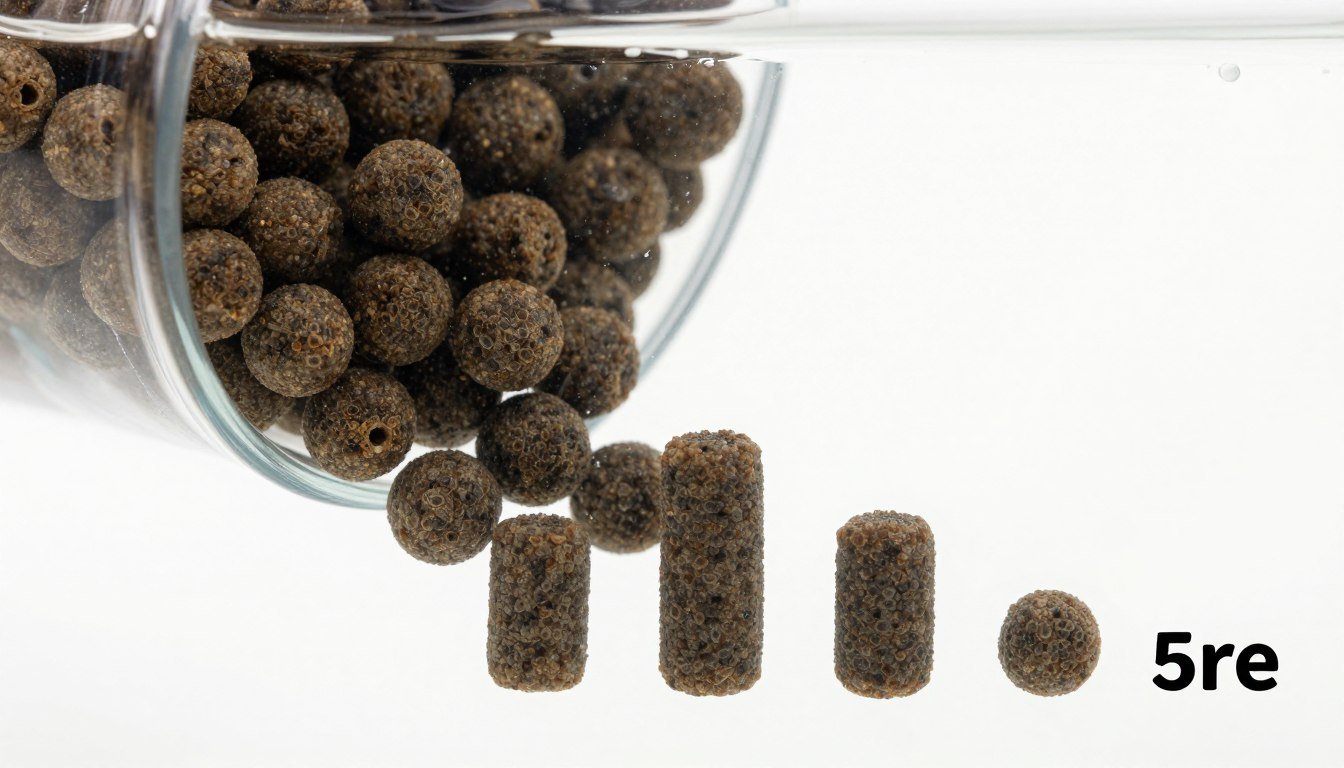
Exploring Sinking Feed Production Options?
MAIKONG designs sinking fish feed production line systems optimized for shrimp, tilapia, and bottom-feeding species. Request detailed quotations including equipment specifications, capacity calculations, and delivered pricing for Philippine locations.
Ideal Applications for Sinking Feed
Bottom-dwelling aquatic species require feed that descends through the water column. Shrimp, prawns, crabs, and bottom-feeding fish cannot effectively consume floating pellets. Sinking feed formulations also accommodate species-specific nutritional requirements and pellet durability needs.
Crustacean Production
- Whiteleg shrimp (Penaeus vannamei)
- Black tiger shrimp (Penaeus monodon)
- Freshwater prawns (Macrobrachium)
- Mud crabs
Bottom-Feeding Fish
- Grouper species
- Siganids (rabbitfish)
- Marine fish larvae
- Eel production
Specialized Applications
- Broodstock nutrition
- Hatchery fry feeding
- Research facilities
- Multi-species systems
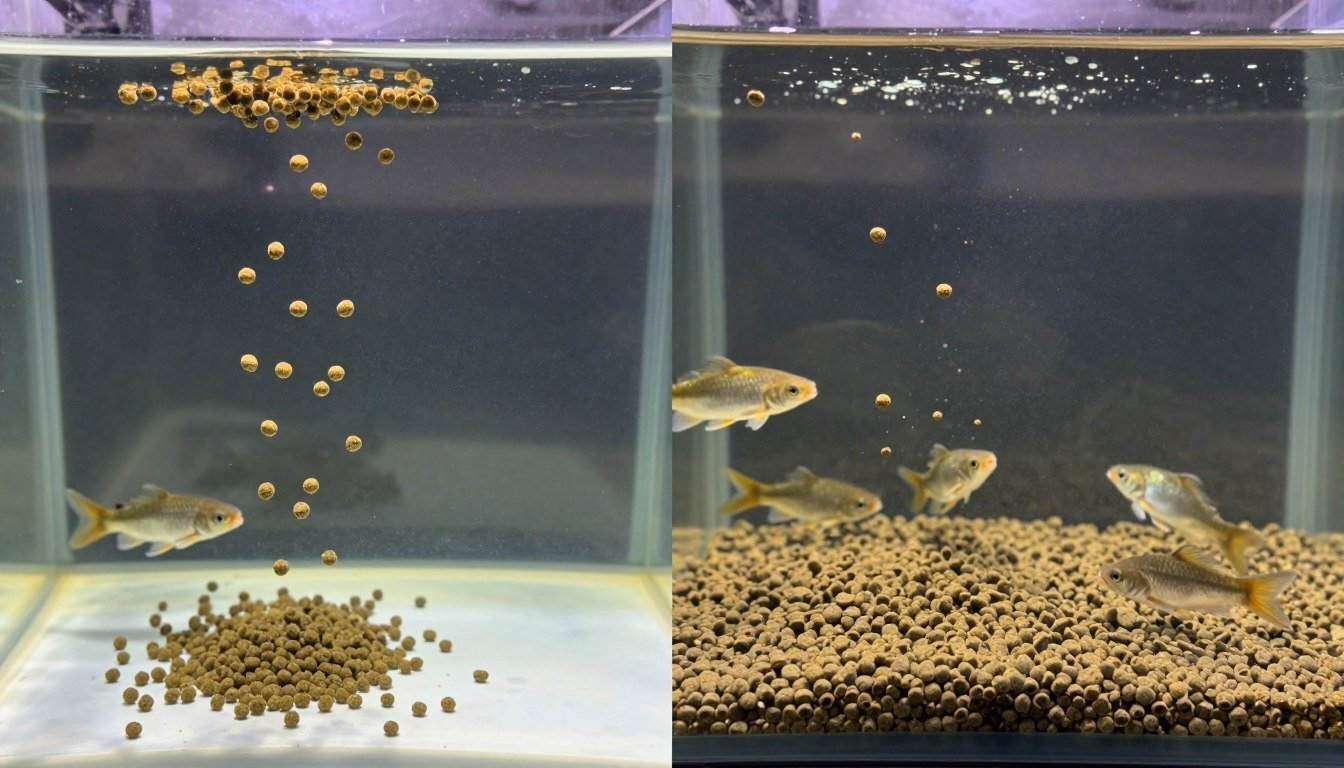
Technical Comparison: Floating Fish Feed Production Line vs Sinking Fish Feed Production Line
Understanding technical differences guides equipment investment decisions. Production costs, energy consumption, ingredient flexibility, and product quality all vary between floating and sinking systems.
| Parameter | Floating Feed Production | Sinking Feed Production |
| Processing Temperature | 90-135°C (high-temperature extrusion) | 65-85°C (steam pelleting) |
| Equipment Type | Twin-screw or single-screw extruders | Ring-die or flat-die pellet mills |
| Energy Consumption | 45-65 kWh per ton | 25-35 kWh per ton |
| Initial Investment | Higher (USD 150,000-850,000 for 10-30T/H) | Lower (USD 100,000-580,000 for 10-30T/H) |
| Pellet Density | 300-600 kg/m³ (low density) | 600-750 kg/m³ (high density) |
| Water Stability | 8-24 hours floating time | 2-8 hours water stability |
| Starch Gelatinization | 85-95% (improved digestibility) | 60-75% (moderate improvement) |
| Pellet Size Range | 0.5-12mm diameter | 0.8-8mm diameter |
| Production Capacity | 200kg-50 tons/hour | 500kg-100 tons/hour |
| Ingredient Flexibility | Requires 20-30% starch content | More flexible formulation options |
| Maintenance Complexity | Higher (specialized extruder components) | Lower (standard pellet mill parts) |
| Pathogen Reduction | Excellent (high temperature sterilization) | Good (moderate temperature treatment) |
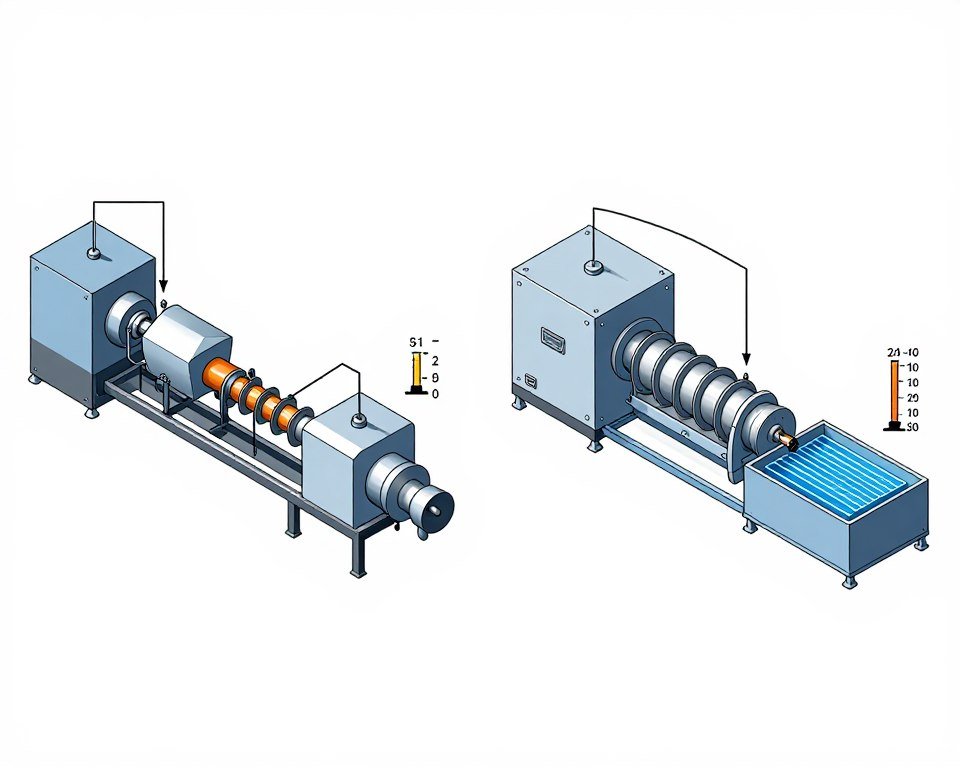
MAIKONG Fish Feed Production Line Model Specifications
MAIKONG manufactures complete aqua fish feed production line systems customized for Philippine market requirements. Our model MK-L001 series offers flexible capacity configurations with voltage adaptation for local power infrastructure.
Featured Production Line Models
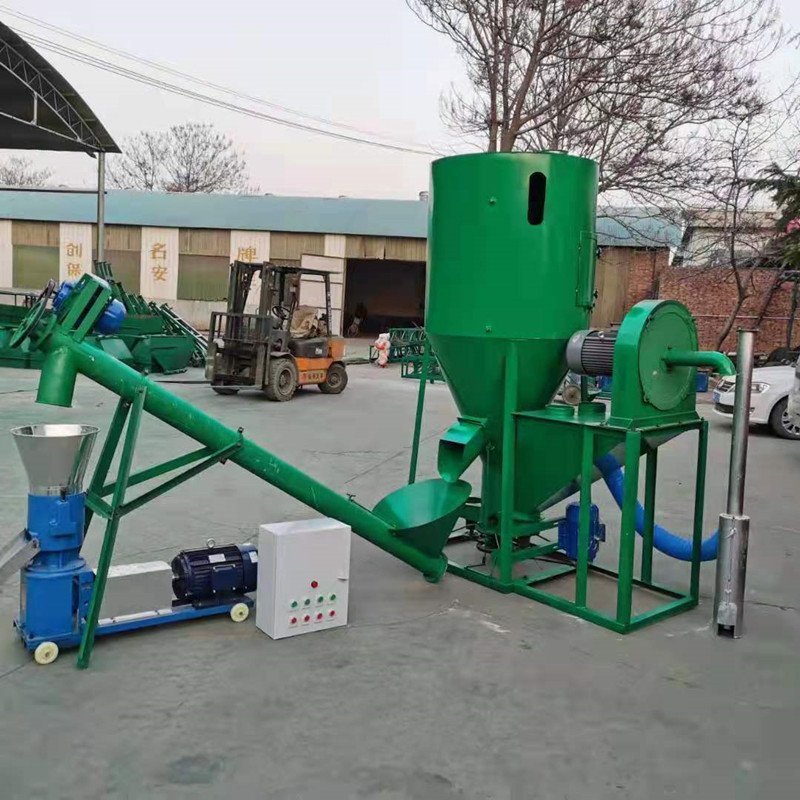
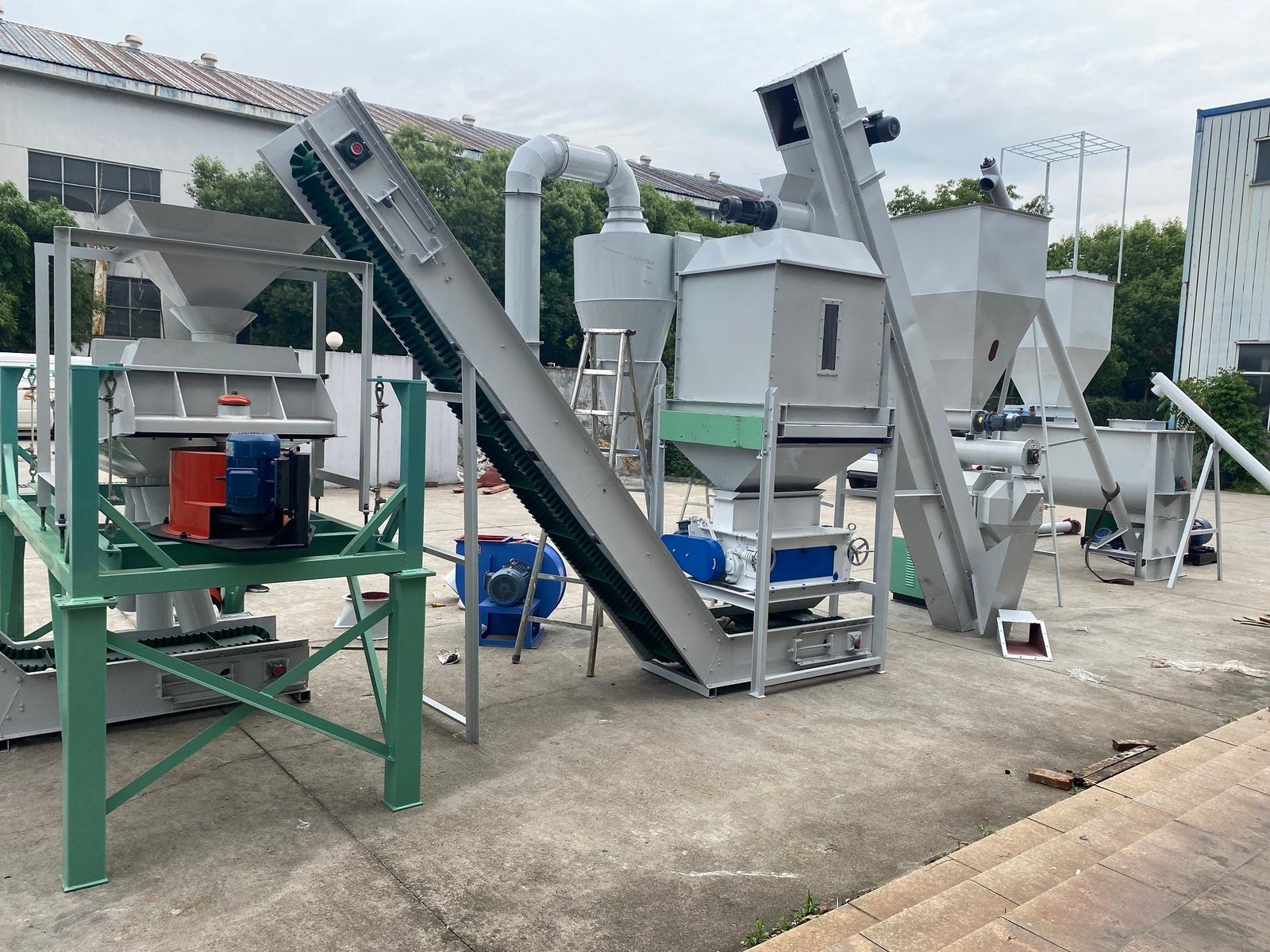
MK-L001-2T Compact Line
- Capacity: 1.5-2.0 tons/hour
- Power Requirement: 75kW total
- Dimensions: 8m × 3m × 4m (L×W×H)
- Weight: 3,200 kg
- Voltage: 220V/380V/440V customizable
- Material: Stainless steel 304 contact surfaces
- Price Range: USD 52,000-68,000
In Stock Popular Choice
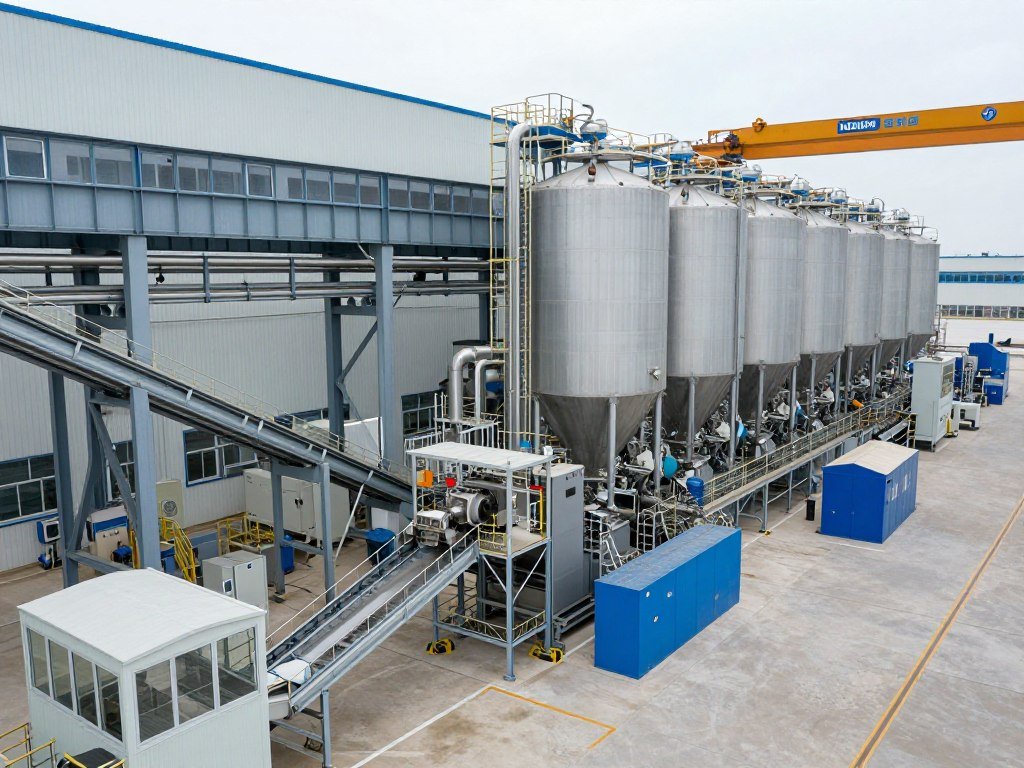
MK-L001-5T Medium Line
- Capacity: 4.5-5.5 tons/hour
- Power Requirement: 165kW total
- Dimensions: 18m × 4m × 5m (L×W×H)
- Weight: 8,500 kg
- Voltage: 380V/440V three-phase
- Material: Full stainless steel 304 construction
- Price Range: USD 125,000-165,000
In Stock Best Seller
MK-L001-10T Industrial Line
- Capacity: 9-11 tons/hour
- Power Requirement: 320kW total
- Dimensions: 35m × 6m × 7m (L×W×H)
- Weight: 18,500 kg
- Voltage: 380V/440V/660V options
- Material: Stainless steel 304/316L components
- Price Range: USD 280,000-380,000
Made to Order Premium
Essential Equipment in Complete Feed Production Line Systems
Understanding individual equipment functions helps operators optimize production efficiency and maintain consistent fish feed pellet quality. Each component contributes specific processing characteristics affecting final product specifications.
Primary Processing Equipment
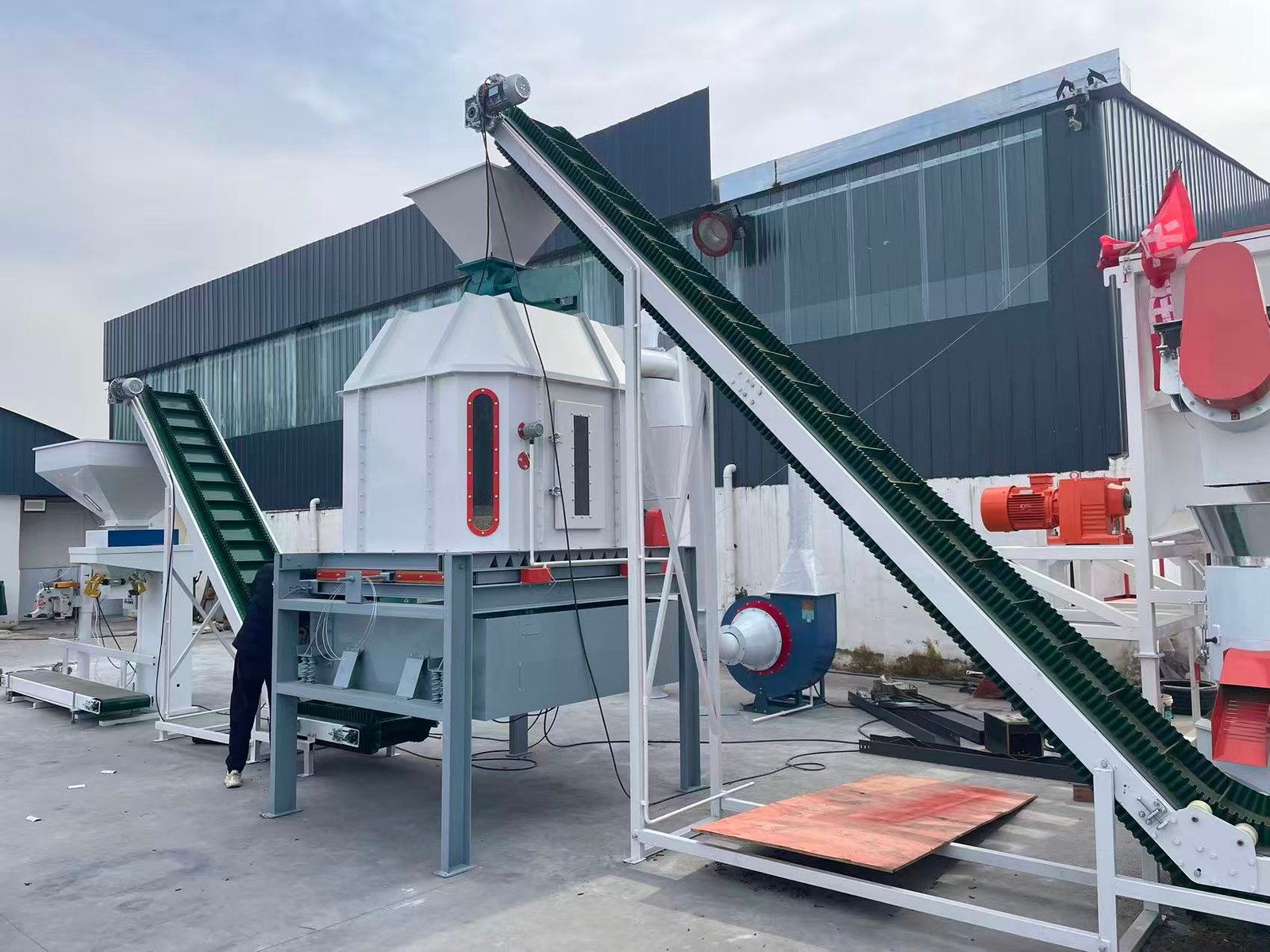
Hammer Mill Crusher
Reduces ingredient particle size to 60-100 mesh fineness. Variable screen sizes accommodate different formulation requirements. High-speed rotating hammers impact materials against perforated screens. Models range from 0.5-25 tons/hour capacity.
MAIKONG crushers feature replaceable hammer assemblies and quick-change screen systems. Wear-resistant materials extend component life reducing maintenance frequency.
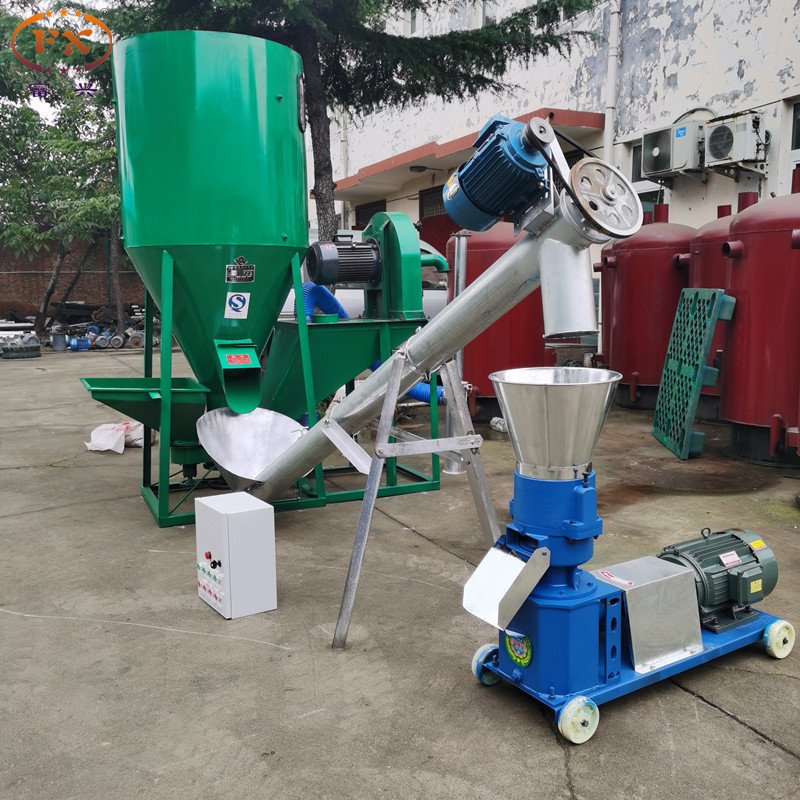
Ribbon Mixer
Achieves homogeneous distribution of ingredients within 3-8 minutes mixing cycles. Horizontal design with ribbon-type agitators ensures thorough blending of micro and macro ingredients.
Batch sizes from 250kg to 6,000kg accommodate various production scales. Liquid addition systems inject oils, molasses, and vitamin solutions during mixing.
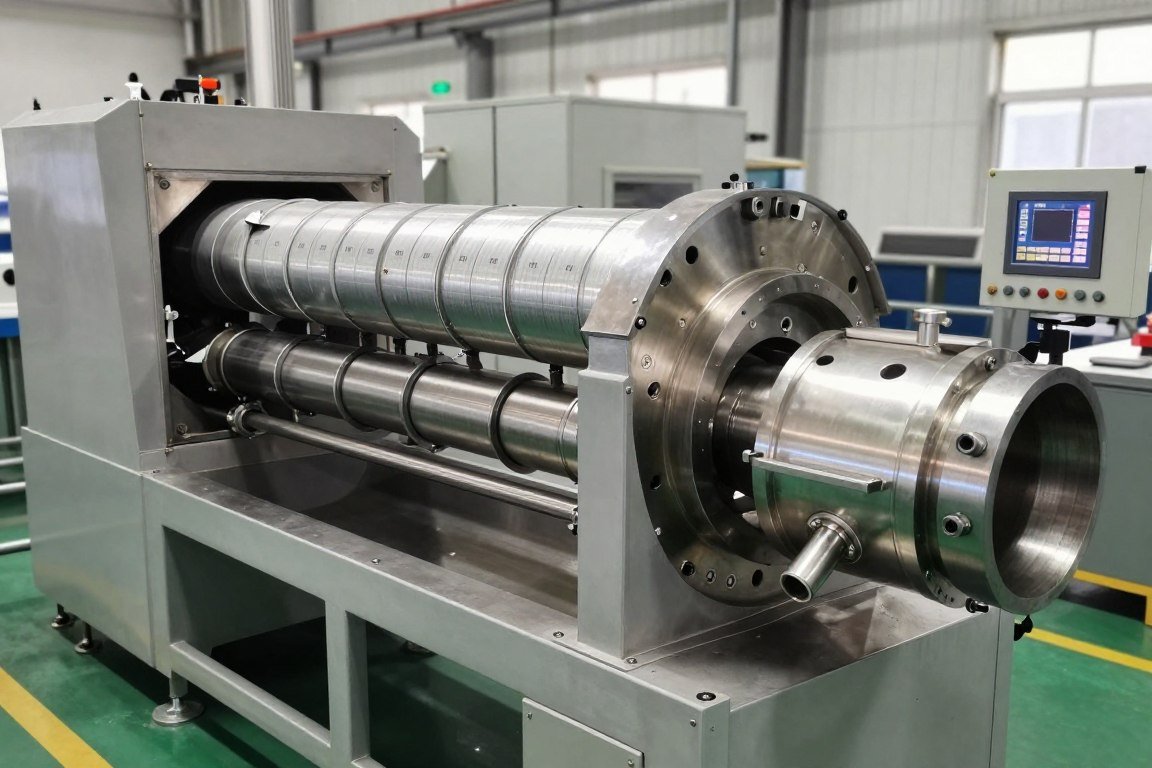
Pellet Extruder
Transforms conditioned materials into expanded floating pellets through high temperature and pressure processing. Twin-screw configurations provide superior cooking uniformity compared to single-screw designs.
Variable screw speed control adjusts pellet density and expansion ratio. Interchangeable die plates produce pellet diameters from 0.8mm to 12mm.
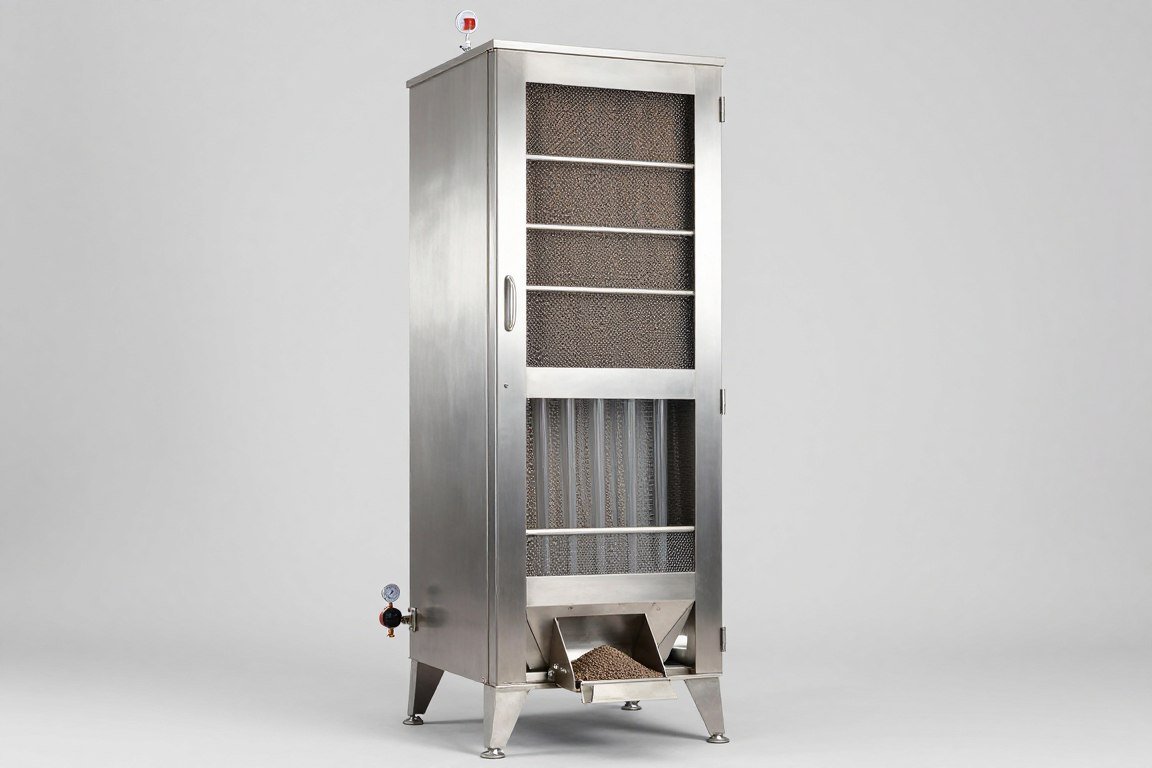
Counter Flow Cooler
Reduces pellet temperature from 80-90°C to ambient levels while lowering moisture content. Vertical design allows ambient air to flow upward through descending pellets achieving efficient heat exchange.
Cooling capacity matches pelletizing output from 1-25 tons/hour. Temperature sensors and variable-speed fans automatically adjust cooling rates.
MAIKONG Fish Feed Production Line Installations Worldwide
Over 22 years, MAIKONG has delivered customized aqua fish feed production line solutions across five continents. Our installations demonstrate reliable performance across diverse climate conditions, regulatory environments, and production requirements.
Regional Installation Highlights
Asia-Pacific Region
Vietnam: 15T/H floating fish feed production line for pangasius farming cooperative
Thailand: 8T/H shrimp feed facility serving coastal provinces
Indonesia: 12T/H multi-species aquaculture feed mill
Malaysia: 5T/H tilapia feed production facility
Middle East
Saudi Arabia: 10T/H marine fish feed production for Red Sea operations
UAE: 6T/H ornamental fish feed facility in Dubai
Egypt: 20T/H Nile tilapia feed mill serving Delta region
Africa
Nigeria: 8T/H catfish feed production supporting Lagos farms
Kenya: 4T/H tilapia feed mill for Lake Victoria region
Tanzania: 6T/H multi-species feed facility
Americas
Ecuador: 15T/H shrimp feed facility for Pacific coast farms
Brazil: 12T/H Amazon fish species feed production
Mexico: 7T/H tilapia feed mill
Philippine installations include successful projects in Pampanga, Batangas, and Mindanao regions. Our local technical support ensures rapid response for maintenance and operational optimization.
Discuss your project requirements with MAIKONG technical specialists:
Selecting the Right Fish Feed Production Line for Your Operation
Equipment selection requires analyzing multiple factors including target species, production scale, ingredient availability, budget constraints, and future expansion plans. Philippine aquaculture businesses must also consider local power infrastructure, spare part availability, and technical support accessibility.
Decision Factors for Philippine Fish Farmers
Floating Feed Advantages
- Visual feeding behavior monitoring
- Reduced feed waste in ponds
- Better feed conversion ratios
- Higher digestibility from cooking
- Suitable for surface-feeding species
- Longer water stability period
- Pathogen reduction through high heat
Floating Feed Considerations
- Higher initial equipment investment
- Greater energy consumption per ton
- More complex maintenance requirements
- Requires higher starch content formulations
- Specialized spare parts needed
- Operator training essential
Sinking Feed Advantages
- Lower equipment investment costs
- Reduced energy consumption
- Simpler operation and maintenance
- More ingredient formulation flexibility
- Standard spare parts availability
- Suitable for bottom-feeding species
- Higher production capacity potential
Sinking Feed Considerations
- Difficult to monitor consumption
- Potential waste from uneaten feed
- Lower starch gelatinization
- Shorter water stability period
- Limited species application
- May contribute to water quality issues
Capacity Planning Guidelines
Calculate daily feed requirements based on stocking density, fish biomass, and feeding rates. Add 20-30% capacity buffer for production flexibility and future growth. Consider seasonal demand variations common in Philippine aquaculture cycles.
| Farm Scale | Daily Feed Requirement | Recommended Capacity | Suitable Models |
| Small Family Farm | 200-500 kg/day | 500kg-1T/hour line | MK-L001-1T (4-6 hours operation) |
| Medium Commercial | 1-5 tons/day | 2-5T/hour line | MK-L001-2T to MK-L001-5T |
| Large Enterprise | 10-30 tons/day | 5-10T/hour line | MK-L001-5T to MK-L001-10T |
| Feed Mill Business | 50-200 tons/day | 10-30T/hour line | Custom industrial configurations |
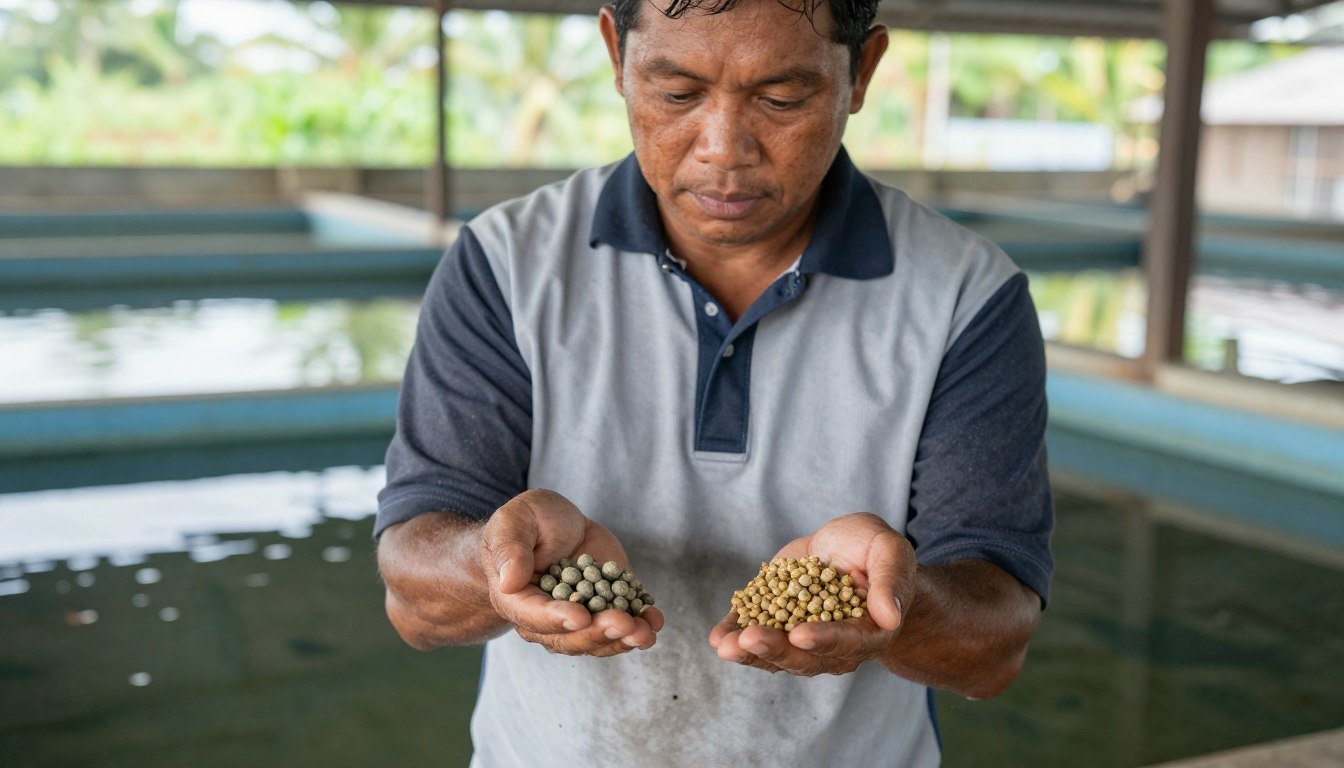
Why Philippine Businesses Choose MAIKONG
MAIKONG combines extensive manufacturing experience with commitment to customer success. Our comprehensive support extends beyond equipment delivery to include installation supervision, operator training, and ongoing technical assistance.
22 Years Manufacturing Excellence
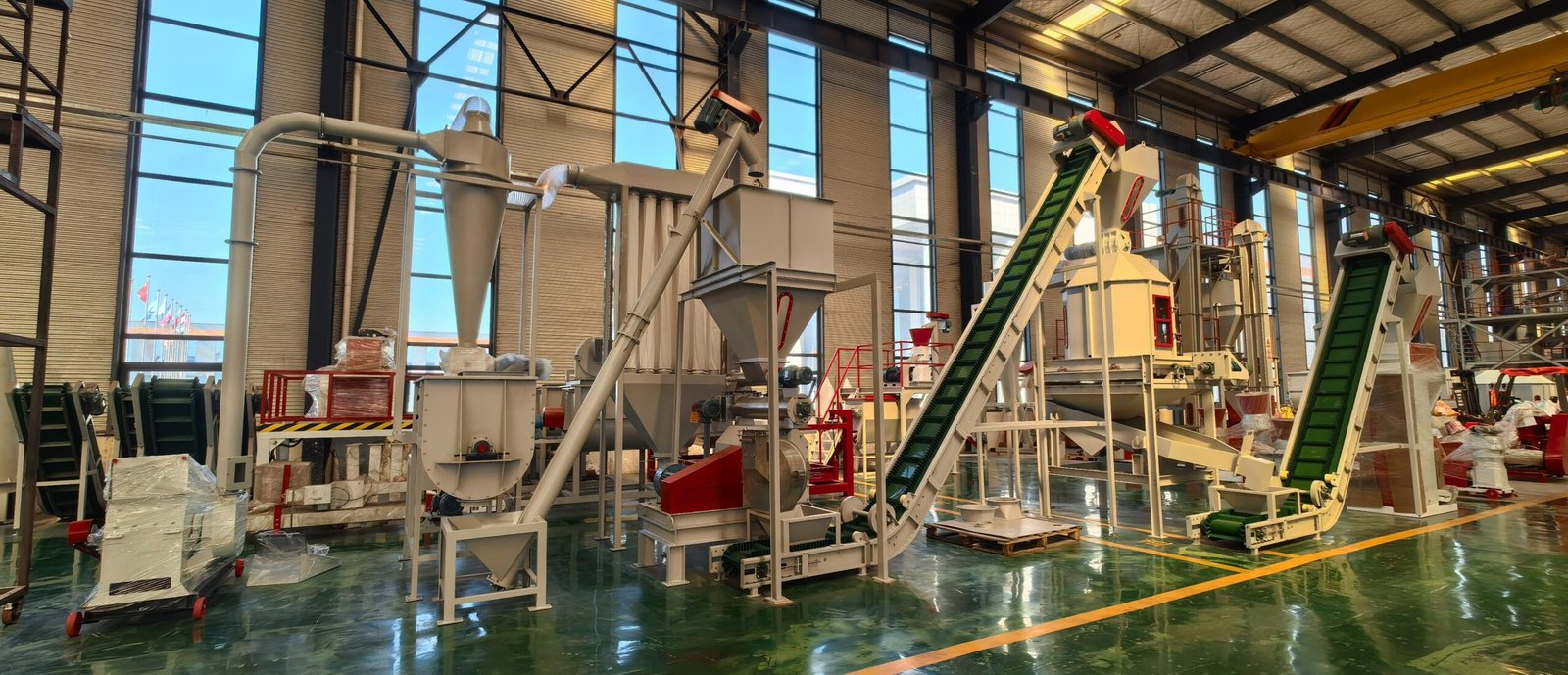
Since 2001, MAIKONG has refined fish feed production line designs through continuous engineering improvements and customer feedback integration. Our GD province facility in SZ city employs advanced CNC machining, precision welding, and rigorous quality testing protocols.
International certifications including ISO 9001, CE compliance, and industry-specific approvals demonstrate our commitment to quality standards. Every production line undergoes factory acceptance testing before shipment.
Comprehensive OEM/ODM Customization
Standard configurations provide starting points for customized solutions addressing specific operational requirements. MAIKONG engineering teams collaborate with customers to modify equipment specifications, adjust capacity ranges, and integrate specialized processing features.
Equipment Customization
- Voltage adaptation (220V/380V/440V/660V)
- Capacity scaling (200kg to 200T/hour)
- Material contact surface specifications
- Control system preferences (PLC/manual)
- Safety compliance (local regulations)
- Space optimization for existing facilities
Process Customization
- Pellet size range modifications
- Feed formulation flexibility
- Coating system integration
- Specialized ingredient handling
- Multi-product capability
- Automation level selection
Support Customization
- Installation supervision options
- Operator training programs
- Spare parts package selection
- Maintenance schedule planning
- Technical documentation language
- Remote support arrangements
Philippine Market Expertise
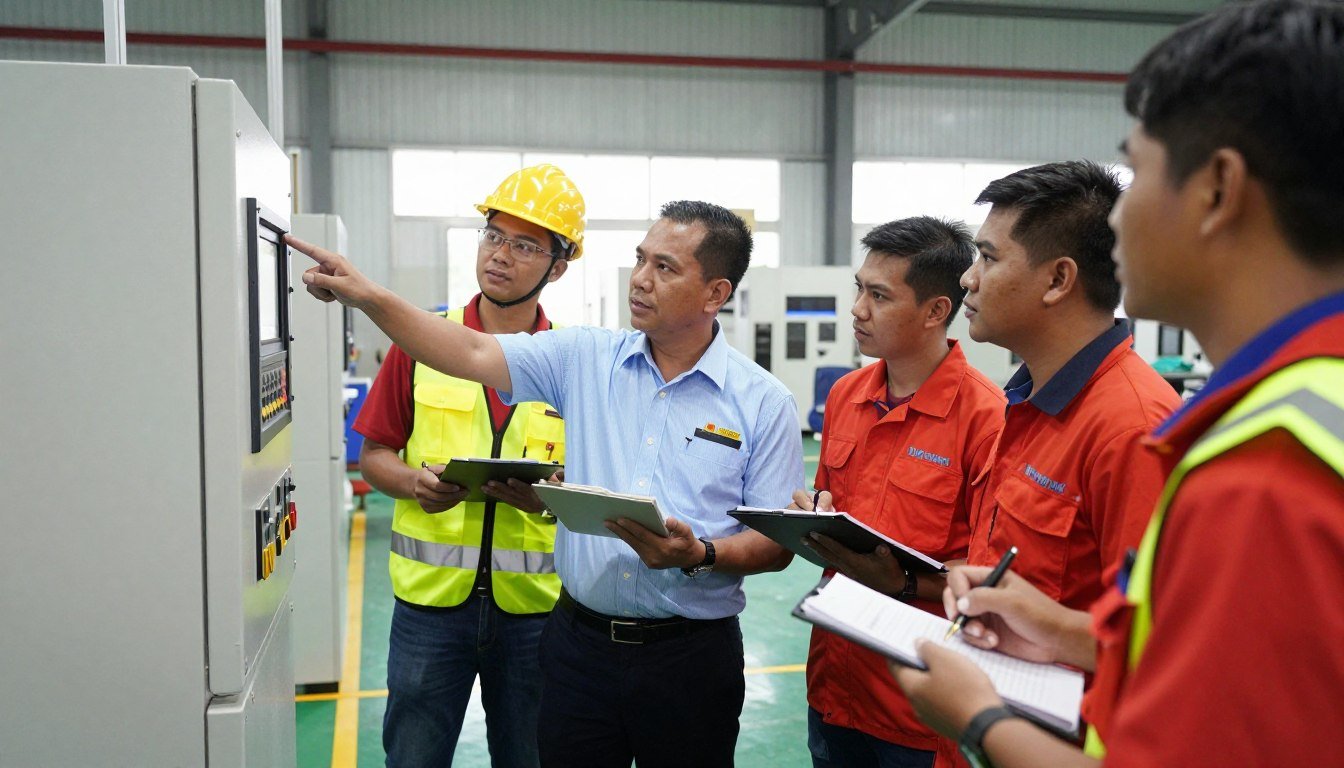
Understanding Philippine aquaculture conditions informs our equipment recommendations. We account for tropical climate effects on production processes, local ingredient characteristics, power infrastructure limitations, and regulatory compliance requirements.
Our dealer network provides localized support reducing downtime and ensuring rapid response to technical questions. Spare parts inventory maintained within the region minimizes waiting periods for component replacement.
Frequently Asked Questions About Fish Feed Production Line Systems
What capacity fish feed production line do I need for a 5-hectare tilapia farm?
A 5-hectare tilapia farm at commercial stocking density (3-5 fish/m²) requires approximately 1.5-2.5 tons of feed daily. A 2-3 ton/hour production line operating 6-8 hours daily provides adequate capacity with buffer for peak demand periods.
MAIKONG recommends the MK-L001-2T or MK-L001-3T models for this scale. Contact our technical team for detailed capacity calculations based on your specific stocking plan: Lucy@pelletmachine.ph
Can one production line make both floating and sinking fish feed pellets?
Standard production lines are optimized for either floating or sinking feed due to fundamental processing differences. Floating feed requires high-temperature extrusion while sinking feed uses lower-temperature pelleting.
However, MAIKONG offers dual-capability systems incorporating both extrusion and pelleting equipment for operations requiring both feed types. These custom configurations cost 40-60% more than single-purpose lines but provide maximum flexibility.
What power supply requirements does a fish feed production line need?
Power requirements vary by capacity and configuration. Small lines (1-2T/hour) typically require 50-75kW total connected load with 220V or 380V three-phase supply. Medium lines (5-7T/hour) need 150-250kW with 380V or 440V supply. Large industrial systems exceed 300kW requiring 440V or 660V infrastructure.
MAIKONG customizes equipment for Philippine standard voltages. Provide your available power specifications when requesting quotations for proper equipment selection.
How long does installation and commissioning take?
Installation timelines depend on production line complexity and facility preparation. Compact systems (1-3T/hour) require 5-10 days for installation and 2-3 days commissioning. Medium systems (5-10T/hour) need 15-25 days installation plus 5-7 days commissioning. Large industrial configurations require 30-60 days complete installation.
MAIKONG provides installation supervision services and comprehensive operator training during commissioning. Factor additional time for facility preparation including foundations, power installation, and material handling infrastructure.
What maintenance schedule should I follow for optimal performance?
Daily maintenance includes visual inspection, lubrication point checks, and cleaning of product contact surfaces. Weekly tasks involve bearing lubrication, belt tension adjustment, and screen condition assessment. Monthly maintenance requires thorough cleaning, wear part inspection, and electrical connection tightening.
Major maintenance every 2,000-3,000 operating hours includes hammer replacement, screen renewal, bearing service, and motor inspection. MAIKONG provides detailed maintenance manuals and schedules with every production line. Spare parts kits covering 6-12 months operation are available at order time.
Can I upgrade production capacity later as my business grows?
MAIKONG designs modular production lines allowing capacity expansion through equipment addition rather than complete replacement. Common upgrade paths include adding parallel processing lines, installing larger pellet mills, or integrating additional dryers and coolers.
Discuss future growth plans during initial equipment selection. Our engineers can design systems with expansion provisions reducing upgrade costs by 30-50% compared to non-planned expansion. Capacity increases of 50-100% are typically achievable through strategic equipment additions.
What formulation flexibility does a floating fish feed production line offer?
Modern extruders accommodate wide ingredient ranges including fish meal (30-50%), soybean meal (20-35%), wheat flour (15-25%), rice bran (5-15%), and supplementary ingredients. Protein content typically ranges from 28% to 55% depending on target species.
Floating feed requires minimum 20-25% starch content for proper expansion. MAIKONG engineers assist with formulation optimization for available Philippine ingredients. Our technical support includes recipe development guidance ensuring optimal pellet quality with local raw materials.
How does MAIKONG support customers after purchase?
MAIKONG provides lifetime technical support including phone consultation, email assistance, and remote troubleshooting via video call. Our Philippine dealer network offers on-site service for major maintenance or repairs.
Standard warranty covers 12 months from commissioning with options for extended coverage. Spare parts shipping typically delivers within 5-10 days to Philippine locations. Training materials, operation manuals, and maintenance videos support your team’s capability development.
MAIKONG Dealer and Distributor Partnership Opportunities in the Philippines
MAIKONG actively seeks qualified partners to expand our Philippine market presence. We offer comprehensive support enabling distributors to build profitable fish feed production line businesses serving local aquaculture industries.
Dealer Partnership Benefits
Business Advantages
- Exclusive territory protection in designated regions
- Competitive dealer pricing structure (25-35% margins)
- Co-marketing support and promotional materials
- Priority access to new product releases
- Technical training for your sales and service teams
- Demo equipment programs for customer facility trials
Support Programs
- Comprehensive product training and certification
- Sales tools including presentations and calculators
- Installation supervision assistance
- After-sales technical backup
- Spare parts inventory consignment options
- Joint customer visits for major projects
Ideal Partner Profile
We seek partners with existing connections in Philippine aquaculture, agricultural equipment, or industrial machinery sectors. Experience with B2B sales, technical product knowledge, and after-sales service capability strengthen partnership potential.
Current Partnership Opportunities
MAIKONG currently seeks distributors in Visayas and Mindanao regions where aquaculture development is accelerating. Partners with warehouse facilities, technical service capabilities, and established customer relationships receive priority consideration.
Investment requirements vary by territory size and inventory commitments. Initial dealer packages start at USD 50,000 including demo equipment, spare parts inventory, and training.

Start Your MAIKONG Dealer Partnership Journey
Join MAIKONG’s growing network of successful Philippine distributors. Represent industry-leading fish feed production line technology with comprehensive factory support and competitive business terms.
Making the Right Fish Feed Production Line Investment Decision
Selecting between floating fish feed production line and sinking fish feed production line systems requires careful analysis of your specific aquaculture operation. Consider target species feeding behavior, farm management practices, production scale requirements, and budget constraints when evaluating options.
MAIKONG provides the technical expertise, manufacturing quality, and ongoing support necessary for successful feed production ventures. Our 22 years of industry experience delivering systems worldwide demonstrates our commitment to customer success.
Philippine aquaculture businesses benefit from our understanding of local conditions, our flexible customization capabilities, and our growing regional dealer network. Whether you operate a small family fish farm or a large commercial feed mill, MAIKONG offers solutions matching your requirements.
Contact MAIKONG Today
Address: GD Province, SZ City, China
WhatsApp/Phone: 8613-51090-74-01
Email: Lucy@pelletmachine.ph
Website: https://pelletmachine.ph/
Office Hours: Monday-Saturday, 8:00 AM – 6:00 PM (Philippine Time)
Explore our complete product range including pellet machines, feed pellet machines, and specialized lines for chicken feed, shrimp feed, and animal feed production. Visit our About MAIKONG page to learn more about our company history and manufacturing capabilities.
Request detailed quotations, arrange factory virtual tours, or schedule technical consultations by contacting our team through any of the channels above. MAIKONG looks forward to supporting your aquaculture feed production success.